
Warmth and ambiance for Winter Park, no chimney required.
Electric fireplaces bring real flame-effect ambiance and supplemental warmth to Winter Park homes and condos, without venting, gas lines, or wood smoke. Find the right unit and connect with a trusted local dealer.
Every Project Starts From One of These Five Situations
A mild climate built for ambiance, not survival heat.
Winter Park logs roughly 468 heating degree days a year and an average winter low near 52 degrees. Compare that to a place like Duluth, Minnesota, where a single January week can rack up more heating degree days than Winter Park sees all winter, and the picture is clear: nobody here is buying a fireplace to survive a cold snap. Most years, the coldest nights around Park Avenue, Lake Virginia, and the historic bungalow neighborhoods near Rollins College dip into the 30s and 40s for a handful of nights, not weeks. Wood stoves and pellet stoves genuinely don't make sense in this climate, and we won't pretend otherwise—but electric fireplaces fill a real niche here that's easy to overlook.
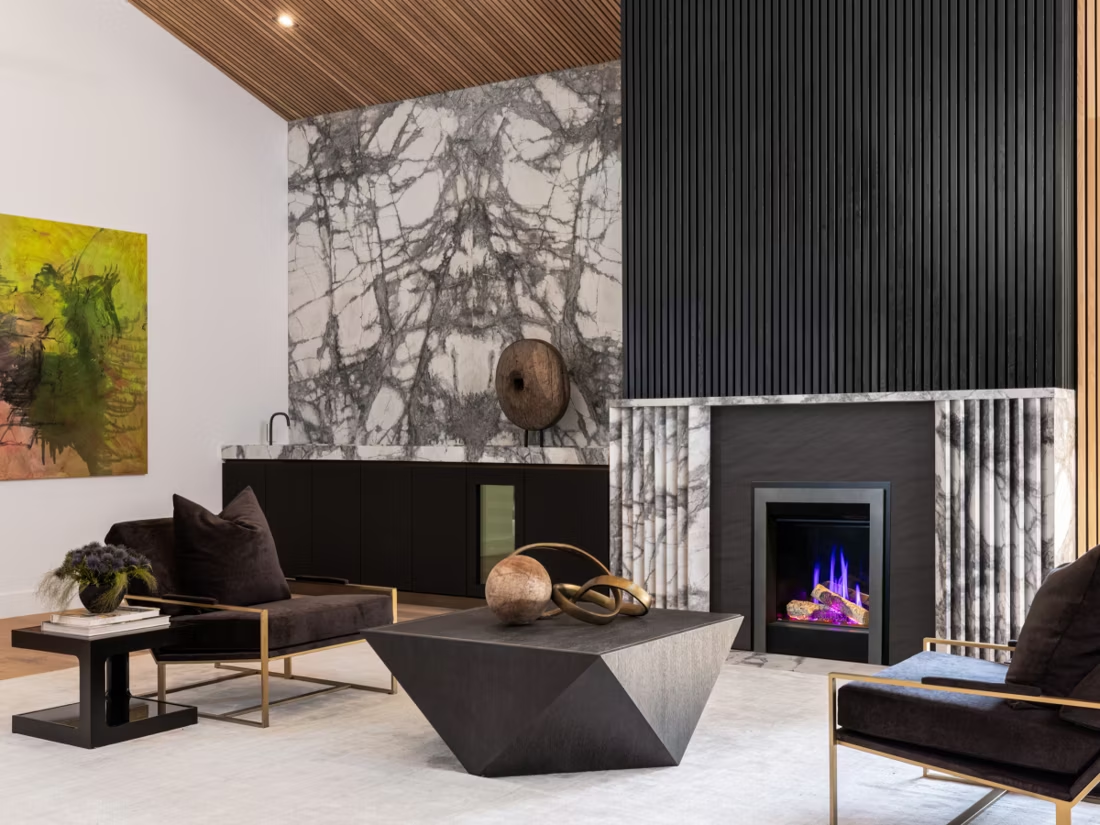
Electric units give Winter Park homeowners the visual warmth of a fire—in a condo near downtown, a historic home with a non-functioning masonry fireplace, or a new-construction lake house—without a flue, a gas line, or combustion byproducts to vent. They plug into a standard outlet or a dedicated circuit, run on whichever utility serves the address (Duke Energy Florida, Reedy Creek Improvement District, or the City of Winter Park's own electric utility all serve different pockets of the city), and provide enough supplemental heat for the occasional cold front without ever needing to be sized for a Central Florida winter that mostly doesn't happen.
Three steps. No salesperson until you're ready.
Tell us about your project
Your zip code, your situation, and the fuel you're leaning toward—or let the answers point you to one.
See what's actually available
The brands dealers within 100 miles genuinely carry—real options, never a catalog mirage.
Get your dealer & Project Guide
A trusted local dealer, plus the free Project Guide & Parts List that names every component of the job.
Frequently Asked Questions
How much does an electric fireplace installation cost in Winter Park?
Electric fireplaces are the least expensive hearth option to install because there's no chimney, no gas line, and no venting to run. A plug-in insert or mantel unit can be self-installed for the cost of the unit alone, often $500 to $2,000. A built-in wall unit or a linear electric fireplace set into a wall or existing masonry opening, which usually needs a dedicated 120V or 240V circuit run by a licensed electrician, typically lands between $1,500 and $4,000 including labor. That's a fraction of what a vented gas fireplace install runs in this area, which is part of why electric is popular in Winter Park's condos and townhomes near downtown.
Why don't wood or pellet stoves make sense in Winter Park?
With only about 468 heating degree days a year and winter lows averaging 52 degrees, Winter Park simply doesn't have the sustained cold that wood and pellet heating are built for. A cord of oak or a ton of pellets from a regional supplier like Lignetics would go largely unused most winters. A handful of homeowners still install wood-burning fireplaces for aesthetics or occasional use on the coldest nights of the year, but as a heating strategy it doesn't pencil out here the way it does in places with real winters. Electric fills that ambiance role without the chimney, the ash, or the wasted fuel.
How much heat does an electric fireplace actually put out?
Most electric fireplaces top out around 1,500 watts, which works out to roughly 5,000 BTU—enough to noticeably warm a single room, but not a whole-home heat source. In Winter Park's climate, that's actually the right amount: on the occasional January night when temps drop into the 30s, a 1,500-watt unit in the living room or primary bedroom is plenty of supplemental warmth. Don't expect it to replace central HVAC, and don't buy a unit oversized for your space—most of the value here is the flame visual plus light, occasional-use heat.
What are my options—insert, mantel, or built-in wall unit?
An electric insert drops into an existing masonry fireplace opening (common in Winter Park's older homes near the Historic District) and instantly converts a decorative or unused fireplace into something functional. A mantel package pairs a freestanding or wall-mounted unit with a surround for homes with no existing fireplace. A linear built-in wall unit is popular in newer condos and remodels around the Interlachen and Baldwin Park side of town, recessed into drywall for a modern, low-profile look. All three run on standard household electric with no combustion, no venting, and no clearance-to-combustible rules like wood or gas.
Do I need a permit to install an electric fireplace in Winter Park?
A plug-in unit that simply sits in an existing opening or against a wall generally doesn't require a permit. If your installer needs to run a new dedicated circuit, cut into drywall for a recessed built-in, or do any electrical work beyond an existing outlet, that does require a permit and licensed electrician sign-off through the City of Winter Park Building & Permitting Services Division, or Orange County Building Safety for addresses outside city limits. Most local dealers handle this paperwork as part of the installation quote.
What will it cost to run an electric fireplace in Winter Park?
Winter Park is served by a mix of providers—Duke Energy Florida, Reedy Creek Improvement District, and the City of Winter Park's municipal electric utility—with residential rates running roughly $0.136 to $0.166 per kWh depending on which one serves your address. A 1,500-watt electric fireplace run for four hours costs somewhere between 8 and 10 cents per hour, or roughly 30 to 40 cents for an evening of use. Compare that to running central AC or heat for the same stretch, and it's a genuinely cheap way to add ambiance and a little warmth to one room.
Is an electric fireplace a good fit for a Winter Park condo?
Yes—it's often the best fit. Many of the condo and townhome communities around downtown Winter Park and the Orwin Manor area don't allow venting penetrations or masonry chimney modifications under HOA rules, which rules out wood and most gas installs. An electric unit sidesteps that entirely: no venting, no gas line, no structural changes, just an outlet or a simple electrician-run circuit. It's also the only fireplace type that's realistic to bring with you if you move, since freestanding and mantel units aren't fixed to the structure.
Electric vs. gas—which is right for my Winter Park home?
Gas fireplaces are still standard here and popular in newer construction with natural gas service, offering a more realistic flame and genuine heat output for the handful of cold nights each winter. Electric fireplaces cost far less to install, require no gas line or venting, and work in any home regardless of utility hookups—which matters in a city with a patchwork of electric providers and inconsistent gas availability outside newer subdivisions. If you want a real fire and already have gas service, gas is worth considering. If you want low-cost ambiance with occasional supplemental heat and zero venting hassle, especially in an older home or a condo, electric is usually the simpler answer for Winter Park.
Can an electric fireplace go into an existing but unused masonry fireplace?
Often, yes. Many Winter Park homes built in the mid-20th century near the Vias and around Lake Osceola have a masonry fireplace that's decorative, damaged, or simply never used because the chimney was never properly maintained. An electric insert sized to that opening can bring it back to life for the cost of the unit, without touching the chimney, flue, or masonry at all. A local dealer can measure the opening and confirm insert dimensions before you buy—most standard openings accommodate off-the-shelf sizes without any masonry modification.
Can I put a TV above my fireplace?
Yes—with an asterisk. Fireplaces are hot and TVs don't like heat. Either put a mantel between them to deflect rising warmth, or choose a fireplace with heat-management technology that creates a cool zone on the wall above—the wall stays around 125 degrees, barely warm, while the room still gets full heat. If you like clean lines and don't want a mantel, heat management is the answer.
Does an electric fireplace need a vent or chimney?
No—that's its superpower. An electric fireplace needs a wall and an outlet, period. No vent pipe, no gas line, no clearances to design around, which is why it works in bedrooms, offices, apartments, and walls where venting a gas or wood unit would be impractical or impossible. Installation is typically the simplest and least expensive of any fireplace type.
Does a fireplace add value to my home?
On average, a fireplace adds back to the home about the same amount you spent installing it. Add the monthly savings from heating the rooms you actually use instead of the whole house—often hundreds of dollars a year—and the value case is strong before you even count what a fire does for how your family uses the room.
Can a fireplace actually lower my heating bill?
Yes—by creating a comfort zone. A furnace heats every square foot of the house just to warm the one room you're in; a gas fireplace on low burns roughly a sixth of the gas a typical furnace does. Set the furnace around 55–60 degrees as a baseline, then heat the rooms your family actually uses. Families who heat this way commonly save $20–$60 a month.
Nearby Dealers
Hearth shops serving Winter Park and the surrounding area.
Electric Service in Winter Park
An electric fireplace's heater draws about 1,500 watts—pennies per hour at local rates.
Duke Energy Florida, LLC
Reedy Creek Improvement Dist
City Of Winter Park - (Fl)
Find your electric fireplace in Winter Park.
Tell us a bit about your home and we'll match you with the right electric fireplace, insert, or built-in wall unit—plus a free Project Guide & Parts List and a trusted local dealer to install it.
Find Your Fireplace →