
Find your gas fireplace for Vero Beach South's mild winters.
With such a short, mild heating season each year, Vero Beach South doesn't need gas heat to survive winter—but plenty of homeowners here want it anyway. Find the right unit and connect with a trusted local dealer.
Every Project Starts From One of These Five Situations
Ambiance most nights, real warmth on the rare cold snap.
Vero Beach South sits at just 23 feet of elevation on Florida's Treasure Coast, in climate zone 2A, where the average winter low hovers around 54°F and the region has a very short, mild heating season each year. Compare that to a place like Duluth, MN, which has a long, intense heating season lasting most of the year, and it's clear this isn't a heating-driven market. Most winters bring only a handful of nights that dip into the 30s or 40s during a passing cold front.
That said, gas fireplaces remain a genuinely popular feature in Indian River County homes—not for survival heat, but for ambiance, resale value, and the occasional January night when a cold front rolls through. Because no natural gas utility currently serves the Vero Beach South area, nearly every gas fireplace installed here runs on propane, typically from a buried or above-ground tank set up by a local propane supplier. Florida Power & Light serves the area's electric needs, which also makes electric fireplaces a low-fuss ambiance option worth comparing before you commit to a propane install.
Three steps. No salesperson until you're ready.
Tell us about your project
Your zip code, your situation, and the fuel you're leaning toward—or let the answers point you to one.
See what's actually available
The brands dealers within 100 miles genuinely carry—real options, never a catalog mirage.
Get your dealer & Project Guide
A trusted local dealer, plus the free Project Guide & Parts List that names every component of the job.
Frequently Asked Questions
How much does a gas fireplace installation cost in Vero Beach South?
Most gas fireplace and insert installations in the Vero Beach South area run $3,500 to $7,500, and since there's no natural gas utility serving this part of Indian River County, that estimate typically includes setting up a propane line rather than tapping into municipal gas. If you don't already have a propane tank on the property, add $500 to $1,500 for tank installation and the initial fill, depending on tank size and whether it's buried or above-ground. Simple direct-vent units installed into an existing masonry opening land on the lower end; new construction or lanai installations requiring fresh gas line runs push toward the higher end.
Do I need natural gas, or does everyone here use propane?
Propane. There's no natural gas utility currently serving Vero Beach South, so virtually every gas fireplace, insert, or outdoor gas feature installed in the 32960, 32962, 32966, and 32968 zip codes runs on propane from a local supplier's tank. This isn't unusual for this part of Indian River County—most gas appliances here, including ranges and water heaters, are propane-fueled. A local hearth dealer can coordinate the propane tank setup alongside the fireplace installation so you're not managing two separate contractors.
Does it make sense to install a gas fireplace in a climate this warm?
It's a fair question with such a short, mild heating season and winter lows that rarely drop below the mid-50s. The honest answer is that most homeowners here aren't installing gas fireplaces for daily heat—they're doing it for the ambiance of a real flame on a January evening, for the design value in a living room or lanai, and for the handful of cold-front nights each winter when temperatures can dip into the 30s or 40s. Coastal Florida buyers also increasingly expect a fireplace feature in higher-end homes, which supports resale value even in a climate that never demands one.
Are wood-burning fireplaces an option in Vero Beach South instead?
Wood stoves and wood-burning fireplaces are uncommon in Vero Beach South—the mild climate simply doesn't create the heating demand, and Florida's humidity and termite pressure make wood storage less practical than in colder states. A small number of homeowners still install wood-burning fireplaces for aesthetics or for vacation properties they own elsewhere, sometimes burning local oak or pine, but gas and electric units are far more practical and far more common here for both indoor and outdoor installations.
What's the difference between vented and vent-free gas fireplaces, and does it matter here?
Vented (direct-vent) gas fireplaces draw combustion air from outside and exhaust gases back outside through a sealed pipe—they're the safest and most universally code-compliant option. Vent-free units burn propane directly into the room without external venting, which simplifies installation but releases some water vapor and combustion byproducts indoors, something worth weighing carefully in Florida's already-humid climate. Vent-free units are legal in Florida with proper room-sizing and oxygen-depletion sensors, but many Vero Beach South homeowners opt for direct-vent models specifically to avoid adding humidity to already-humid interior air.
Do I need a permit to install a gas fireplace in Vero Beach South?
Yes. Since Vero Beach South is unincorporated, permits go through the Indian River County Building Division, and installations require both a building permit and sign-off on the propane gas line work, which must be done by a licensed gas contractor. Most established local hearth dealers handle this paperwork as part of the installation, coordinating the propane supplier, the gas line, and the county inspection so you don't have to juggle multiple trades.
Will my gas fireplace work during a hurricane-season power outage?
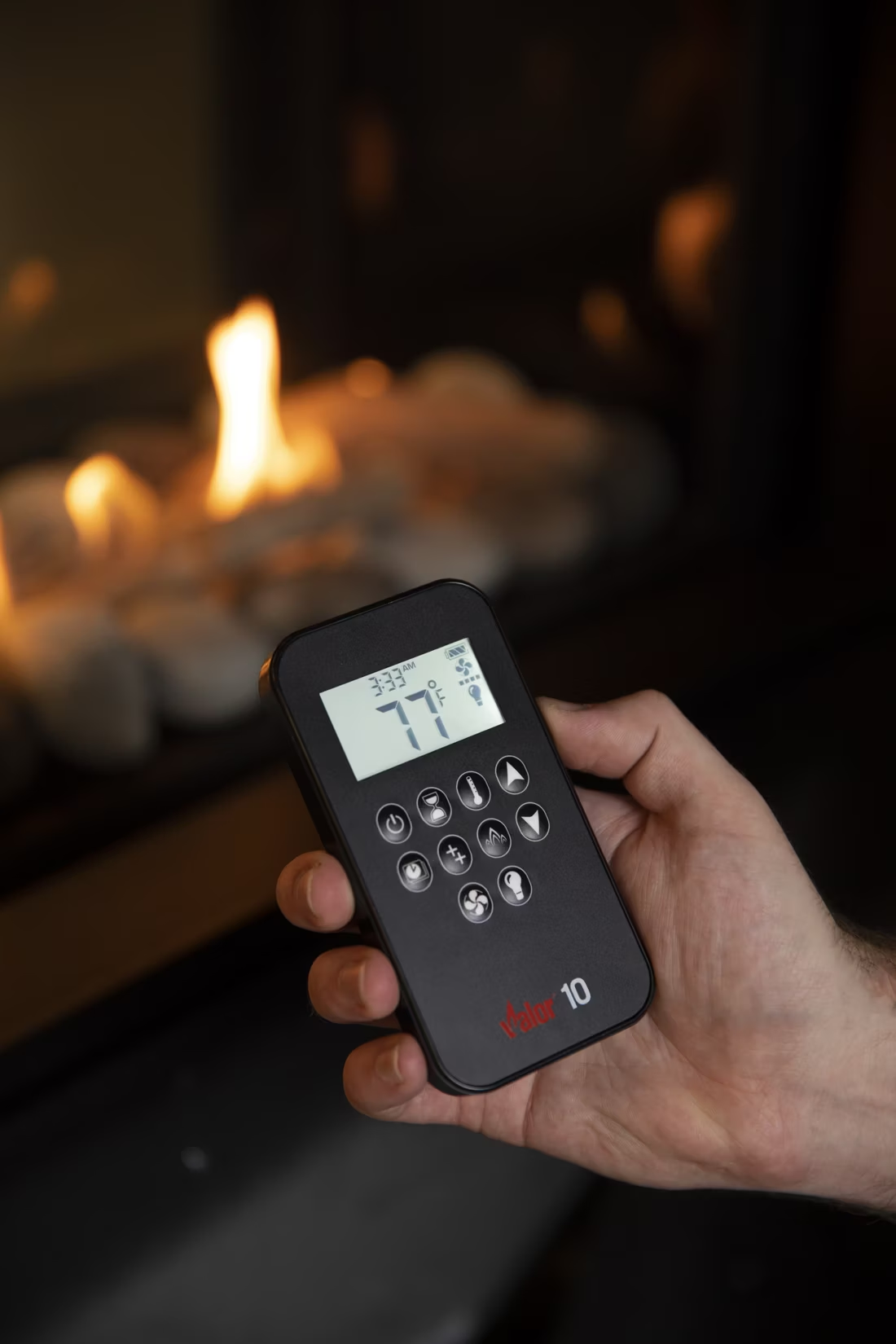
This is actually one of the more practical reasons Vero Beach South homeowners choose gas over electric. Units with intermittent pilot ignition (IPI) run on battery backup and continue operating when the power drops—relevant given how often Indian River County sees outages during hurricane season. Valor fireplaces take it a step further, generating their own electricity through the pilot's thermocouple so there's no battery to remember to replace. If storm-season resilience is a priority, ask your local dealer specifically about the ignition system on any unit you're considering.
How often does a gas fireplace need to be serviced in Vero Beach South?
An annual inspection is recommended, and it matters more here than the mild climate might suggest—coastal humidity and salt air can accelerate corrosion on venting components and gas connections faster than in drier inland climates. A certified technician should check the burner, pilot assembly, propane connections, and venting once a year, typically before the winter ambiance season kicks in around November. Expect to pay roughly $150 to $250 for a standard annual inspection from a local gas appliance service provider.
Gas vs. electric fireplace—which makes more sense in Vero Beach South?
Given the mild climate, this is a genuinely close call. Electric fireplaces run on Florida Power & Light service at roughly 13.7 cents per kWh, require no propane tank or gas line, install in an afternoon, and produce zero real heat output concerns since heating isn't the point anyway—just flip a switch for the flame effect. Gas fireplaces cost more upfront and require propane infrastructure, but they deliver real radiant warmth on cold-front nights and continue working during power outages, which matters during hurricane season. If ambiance is your only goal, electric is the simpler, cheaper path. If you want genuine backup heat during storms and cold snaps, propane gas is worth the extra investment.
Can I put a TV above my fireplace?
Yes—with an asterisk. Fireplaces are hot and TVs don't like heat. Either put a mantel between them to deflect rising warmth, or choose a fireplace with heat-management technology that creates a cool zone on the wall above—the wall stays around 125 degrees, barely warm, while the room still gets full heat. If you like clean lines and don't want a mantel, heat management is the answer.
Why is a fireplace insert so efficient?
An insert does two things: it seals the chimney completely, so you stop losing air you already paid to heat, and it radiates warmth into the room through the firebox and glass. Most add a heat-exchange fan that pulls cool room air underneath, wraps it around the hot firebox, and pushes it back out warm. Your home is more efficient before you've even lit the first fire.
What is an in-home preview and do I need one?
It's a visit where a hearth professional measures your space, confirms the model you picked actually works in your home, and walks the specs—framing, gas line, venting, finish work—before anything is ordered. Some details you just can't know until you see the house. Never make a down payment without one; it's the single most-skipped step that burns buyers.
Does a fireplace add value to my home?
On average, a fireplace adds back to the home about the same amount you spent installing it. Add the monthly savings from heating the rooms you actually use instead of the whole house—often hundreds of dollars a year—and the value case is strong before you even count what a fire does for how your family uses the room.
Nearby Dealers
Hearth shops serving Vero Beach South and the surrounding area.
Find your gas fireplace in Vero Beach South.
Tell us a bit about your home and we'll match you with the right gas fireplace or insert for Vero Beach South's climate, then hand you a free Project Guide & Parts List with your recommended local dealer.
Find Your Fireplace →