
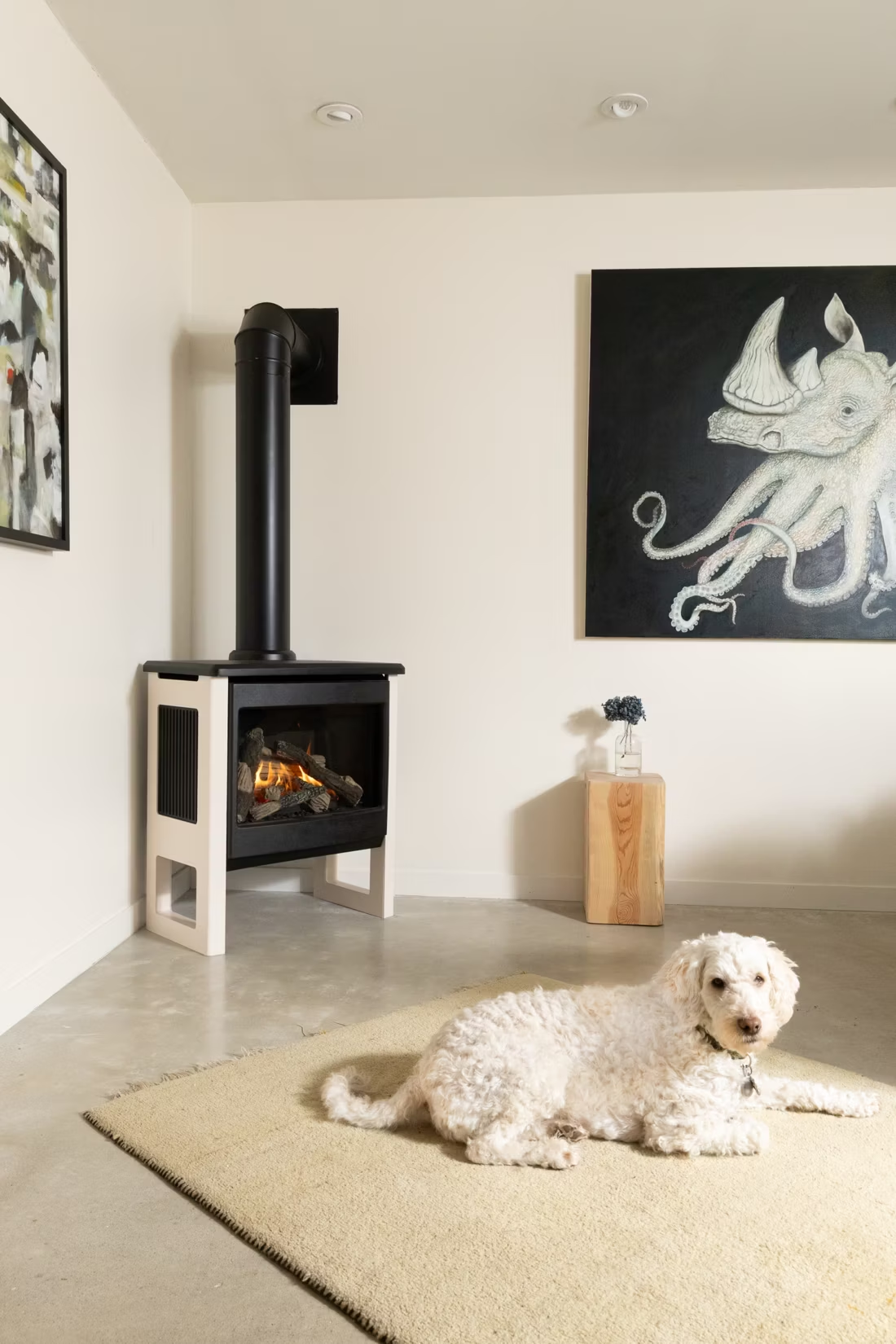
A gas flame built for University's mild, humid winters.
With such a short, mild heating season each year and winter lows averaging 53°F, nobody in University, FL is heating their whole house with a fireplace. I'll match you with a local dealer who knows how to do this right for ambiance, occasional cold snaps, and outdoor living.
Every Project Starts From One of These Five Situations
Built for atmosphere, not survival heat.
At 46 feet of elevation just north of Tampa, University sits in climate zone 2A, where winter lows average 53°F and the heating season is short and mild—a fraction of what a place like Duluth, MN racks up in a single cold month. There's no wildfire smoke, no winter inversion, no air quality advisory season to plan around. What that means for a fireplace decision is simple: almost nobody here is installing gas for warmth. They're installing it for the look of a flame on a cool January evening, for a focal point in a living room or lanai, and for the handful of nights each winter when the mercury actually drops into the 30s.
One local wrinkle worth knowing before you shop: there's no widely available natural gas utility serving University the way Tampa Electric and Duke Energy Florida cover electricity here. Most gas fireplace installs in this part of Hillsborough County run on propane, delivered and stored in a small tank rather than piped in from the street. That shapes both the cost and the layout of a project—and it's exactly the kind of detail a local installer sorts out before anyone orders a unit. Outdoor gas fire features on screened lanais and pool decks are also genuinely popular here, since University's climate makes outdoor living usable most of the year in a way that just isn't true in colder parts of the country.
Three steps. No salesperson until you're ready.
Tell us about your project
Your zip code, your situation, and the fuel you're leaning toward—or let the answers point you to one.
See what's actually available
The brands dealers within 100 miles genuinely carry—real options, never a catalog mirage.
Get your dealer & Project Guide
A trusted local dealer, plus the free Project Guide & Parts List that names every component of the job.
Frequently Asked Questions
How much does a gas fireplace installation cost in University, FL?
Plan on roughly $3,500 to $8,500 for most projects. Because there's no established natural gas utility line running to most homes in this area, a big chunk of that range depends on whether you already have a propane tank and line in place—say, for a pool heater or outdoor grill—or need one set up from scratch. A direct-vent unit added to an existing propane setup lands toward the lower end; a new build-out with tank placement, gas line run, and framing for an outdoor kitchen or lanai fire feature pushes toward the top.
Do I need a permit to install a gas fireplace in University, FL?
Yes. University is unincorporated, so permitting runs through Hillsborough County Development Services rather than a city building department. You'll need both a building permit and a gas permit pulled by a licensed propane or gas contractor, plus an inspection before the unit is signed off. Most established hearth dealers in the Tampa Bay area handle this paperwork as part of the installation rather than leaving it to the homeowner.
Should I use propane or is natural gas available in University?
For most addresses in the 33612, 33613, 33549, and 33559 zip codes, propane is the practical answer—there isn't a natural gas utility serving this part of Hillsborough County the way Tampa Electric and Duke Energy Florida cover power. If you already run propane for a pool heater, water heater, or outdoor grill, adding a fireplace to that tank is usually straightforward. If not, your installer will spec a new above-ground or buried tank sized for the fireplace's BTU load, which is a smaller ask than it sounds given how modest most residential gas fireplace demand actually is.
What size gas fireplace do I actually need in a climate this mild?
Smaller than you'd think. With winter lows averaging 53°F and only occasional dips into the 30s, a fireplace here is doing ambiance and spot-warming duty, not carrying a heating load through a Fargo-style winter. Most living rooms in University do fine with a unit in the 20,000 to 30,000 BTU range—enough to take the chill off a January evening without overheating a room that's otherwise comfortable most of the year. Oversizing is the more common mistake locally, since homeowners sometimes size off national charts built for much colder climates.
Are outdoor gas fireplaces or fire features popular here?
Very. Given how usable outdoor living space is in University most months of the year, gas fire features on screened lanais, pool decks, and covered patios are at least as common a request as indoor fireplaces—sometimes more so. These typically run off the same propane setup as an indoor unit and give you a gathering spot that works whether it's a rare 40°F evening or a comfortable 65°F night in November. A local dealer can tell you what's realistic for your outdoor structure and whether your existing propane tank has enough capacity for both an indoor and outdoor appliance.
Will my gas fireplace still work during a hurricane-related power outage?
It can, and that's a genuinely useful feature in this part of Florida. Gas fireplaces with IPI (intermittent pilot ignition) run on AA battery backup that kicks in automatically when Tampa Electric or Duke Energy Florida power drops during storm season. That won't replace air conditioning, but it does mean you have a working appliance and some usable light and heat if a summer or fall storm knocks out power for a few days—worth mentioning to your dealer if outage resilience matters to you.
Vented vs. vent-free gas fireplaces—what should I know in University?
Direct-vent units draw combustion air from outside and exhaust it back outside through sealed venting, which keeps humidity and combustion byproducts out of the house—a real consideration in a climate as humid as this one, where excess indoor moisture already invites mold concerns. Vent-free units are legal in Florida with proper room-sizing, but most local dealers steer University homeowners toward direct-vent for exactly that humidity reason, especially for any room that isn't heavily air-conditioned and ventilated.
How often does a gas fireplace need servicing in this climate?
An annual check is still the right baseline, but Tampa Bay's humidity and proximity to salt air make corrosion and moisture intrusion a bigger factor here than in drier climates. A technician should check the burner, pilot assembly, propane line connections, and venting, and it's worth having them look specifically at any exterior components for corrosion if your unit sits near a lanai or pool deck. Expect to pay in the $150-$250 range for a standard visit, similar to national averages.
Does it make more sense to convert an old wood fireplace to gas here?
Often, yes. Older homes in the University area were sometimes built with wood-burning fireplaces meant for local oak, mahogany, or pine—but with such a short, mild heating season each year, wood as a heat source rarely makes practical sense here, and Florida's humidity makes stored firewood and chimney upkeep more of a hassle than in drier climates. Converting an existing masonry firebox to a propane gas insert is a common, straightforward upgrade for homeowners who want the look of a fire without the wood supply, splitting, or ash cleanup—and it typically costs less than a new build-out since the chimney structure is already in place.
Is my gas fireplace wasting gas?
If it was installed more than 15 years ago, probably. Older gas fireplaces keep a standing pilot light burning all the time, and that little flame can cost a couple hundred dollars a year. Newer models use pilot-on-demand ignition—the pilot lights only when you use the fireplace and goes out when you turn it off.
Why is a fireplace insert so efficient?
An insert does two things: it seals the chimney completely, so you stop losing air you already paid to heat, and it radiates warmth into the room through the firebox and glass. Most add a heat-exchange fan that pulls cool room air underneath, wraps it around the hot firebox, and pushes it back out warm. Your home is more efficient before you've even lit the first fire.
How much should I budget for a fireplace?
For an average home—covering the fireplace, the vent pipe, and basic installation—a budget between $3,900 and $5,500 gives you a lot of options across wood, gas, and pellet. By the time you add finish work, gas line, and electrical, the average complete installation lands between $5,000 and $12,000 all-in. In a remodel or new build, a good rule is to put about 2.5% of the total project cost toward the fireplace.
Can I install a fireplace myself?
If you're putting a fire in your house on purpose, it's best to work with an expert. Unless you're genuinely experienced in framing, gas line, vent pipe, and the national code on clearances to combustibles, have a professional do it—and ideally the same company that sells you the fireplace, so warranty, service, and liability all live under one roof.
Nearby Dealers
Hearth shops serving University and the surrounding area.
Get your free Project Guide & Parts List for a gas fireplace in University, FL.
Tell me about your home, your propane setup (or lack of one), and whether you're thinking indoor, outdoor, or both—I'll match you with a trusted local dealer and send a free Project Guide & Parts List with the exact gas line and vent kit your project needs.
Find Your Fireplace →