
Warmth and ambiance, no chimney required.
For barrier-island condos and elevated Gulf-front homes, electric is the fireplace that actually fits. Find the right unit and connect with a trusted local dealer.
Every Project Starts From One of These Five Situations
The easiest fireplace fit for barrier-island homes.
Treasure Island sits at 4 feet above sea level on a Gulf barrier island in Pinellas County, where the average winter low is 54°F and the entire heating season is barely noticeable—practically nonexistent compared to colder climates. In fact, a single cold month in Duluth, MN can demand more heating than a full winter here. Wood heat has essentially no functional role in this climate, and natural gas service is rare on the island—most gas use is limited to propane grills, not fireplaces. Electric is the standard, sensible choice, and it's not a compromise: modern electric fireplaces produce a convincing flame with real supplemental heat for the handful of nights each winter when a cold front actually pushes temperatures into the 40s.
Housing stock here matters too. A lot of Treasure Island living happens in Gulf-front condos and elevated stilt homes built to FEMA flood-zone requirements, where HOA rules often prohibit anything that needs a flue or chimney penetration. An electric fireplace sidesteps that entirely—no venting, no gas line, no masonry. Duke Energy Florida serves the island at a residential rate around 16.6 cents per kWh, which keeps operating costs modest, and salt air off the Gulf means any unit installed near an exterior wall, lanai, or pool cage should be rated for coastal/marine conditions to avoid corrosion.
Three steps. No salesperson until you're ready.
Tell us about your project
Your zip code, your situation, and the fuel you're leaning toward—or let the answers point you to one.
See what's actually available
The brands dealers within 100 miles genuinely carry—real options, never a catalog mirage.
Get your dealer & Project Guide
A trusted local dealer, plus the free Project Guide & Parts List that names every component of the job.
Frequently Asked Questions
How much does an electric fireplace installation cost in Treasure Island?
A plug-in wall-mounted or freestanding electric fireplace runs roughly $300 to $1,200 for the unit itself and needs no installation beyond mounting—it plugs into a standard outlet. A built-in linear electric fireplace or insert wired to a dedicated 20-amp circuit typically runs $1,500 to $4,500 installed, depending on unit size and whether an electrician needs to run new wiring through existing framing. Condo installations are usually on the lower end since most units are smaller and there's no masonry or flue work involved. Local dealers will quote a firm number after seeing your wall and electrical panel.
Do I need a permit to install an electric fireplace in Treasure Island?
A plug-in electric fireplace needs no permit at all—it's treated like any other appliance. A hardwired built-in unit on a dedicated circuit requires an electrical permit through the City of Treasure Island Building Department (or Pinellas County Building Services for unincorporated parcels), since it involves new circuit work. Most licensed electricians and hearth dealers pull this permit as part of the install, so it's rarely something you have to manage yourself. If you're in a condo, check your HOA's alteration rules too—some buildings restrict any wall modification, even minor electrical work.
What's the best electric fireplace option for a Gulf-front condo?
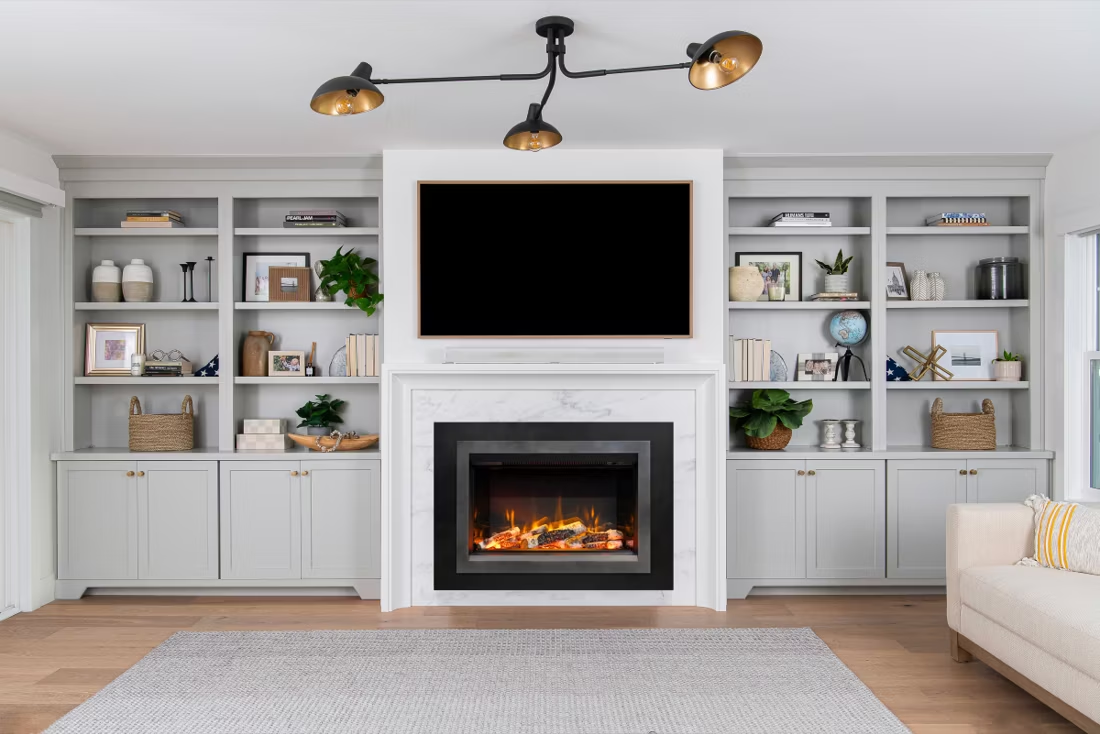
For condos and elevated homes on the island, wall-mounted linear electric fireplaces are the most popular choice—they mount flush or recessed into drywall, need no venting, and read as a real architectural feature rather than a plug-in heater. Freestanding electric stoves and mantel packages work well in single-family homes with more floor space. Because so many buildings here restrict anything requiring a chimney or exterior vent, electric units are often the only fireplace option HOAs will approve, which is part of why they're the standard fuel choice on the island.
How much does it cost to run an electric fireplace here?
At Duke Energy Florida's residential rate of about 16.6 cents per kWh, a typical 1,500-watt electric fireplace on heat mode costs roughly 25 cents per hour to run. Most units let you run the flame effect alone, without the heater, which draws only a fraction of that—often under 3 cents per hour. Given how few genuinely cold nights Treasure Island sees, most owners run the flame for ambiance most of the year and only switch on the heat during the occasional January or February cold front.
Will salt air damage an electric fireplace installed near the Gulf?
It can, if the unit isn't built for it. Standard indoor electric fireplaces are fine in interior rooms away from open windows and sea breeze, but any unit installed on a lanai, pool cage, or exterior-facing wall near the water should be rated for coastal or marine use—look for sealed electronics and corrosion-resistant housings. Salt-laden air accelerates corrosion on standard electrical components faster than most manufacturers' warranties anticipate. A local dealer familiar with barrier-island installs can point you to models that hold up to Gulf exposure.
Electric vs. gas fireplace—why is electric more common in Treasure Island?
Natural gas infrastructure barely exists on the island, so a gas fireplace usually means a propane tank and a venting path—both tough to arrange in an elevated stilt home or a condo with no exterior wall access for a direct-vent flue. Electric needs neither. It plugs in or runs off a standard circuit, works in any unit on any floor of a high-rise, and clears HOA rules that often ban combustion appliances outright. For genuinely cold-climate homes, gas would have real advantages; on a Gulf barrier island with a 54°F average winter low, those advantages mostly disappear.
Why don't more homes in Treasure Island use wood-burning fireplaces?
Wood heat just doesn't have a functional role here—with a heating season this short and mild, there's no real cold season to justify the chimney, clearances, and ash cleanup wood requires, and most condo buildings and many HOAs prohibit wood-burning appliances entirely due to fire and flue restrictions in shared structures. A small number of single-family homeowners still install a wood-burning fireplace for atmosphere at a second home or as a design feature, but it's the exception, not the norm. If ambiance and radiant fire-look matter but heat output doesn't need to compete with a Northern winter, electric delivers the same visual effect without any of the wood-heat tradeoffs.
Do electric fireplaces actually put out real heat, or is it just for looks?
Most electric fireplaces include a real heater, typically rated around 4,600 to 5,200 BTU (1,500 watts), enough to noticeably warm a single room. That's plenty for Treasure Island's occasional 40s-and-below nights, when a cold front rolls through the Gulf. The flame effect and the heater run independently, so you can have the visual with the heat off most of the year and switch on heat only when a front actually makes it worth it. It won't replace central HVAC as primary heat, but it was never designed to in a climate this mild—it's built for ambiance with heat as a bonus.
Can an electric fireplace be installed in an elevated or stilt-built home?
Yes, and it's often simpler than in a slab-on-grade house. Since electric fireplaces need no hearth pad, no floor clearance to combustibles, and no flue penetration, there's no conflict with FEMA flood-zone construction requirements the way a masonry hearth might create. The main thing to plan for is the electrical path—a licensed electrician will need to run a dedicated circuit through the elevated framing to the fireplace location, which is straightforward in most stilt-home layouts but worth discussing with your installer before demo or drywall work begins.
Can I put a TV above my fireplace?
Yes—with an asterisk. Fireplaces are hot and TVs don't like heat. Either put a mantel between them to deflect rising warmth, or choose a fireplace with heat-management technology that creates a cool zone on the wall above—the wall stays around 125 degrees, barely warm, while the room still gets full heat. If you like clean lines and don't want a mantel, heat management is the answer.
Do electric fireplaces actually produce heat?
Yes—most put out around 4,800–5,000 BTUs from a standard outlet, which comfortably warms a bedroom, office, or den as a comfort-zone heater. What they won't do is carry a whole house the way wood, gas, or pellet can. Think of electric as ambiance-first with honest supplemental heat: flames on with no heat in July, flames plus warmth in January.
Can I install a fireplace myself?
If you're putting a fire in your house on purpose, it's best to work with an expert. Unless you're genuinely experienced in framing, gas line, vent pipe, and the national code on clearances to combustibles, have a professional do it—and ideally the same company that sells you the fireplace, so warranty, service, and liability all live under one roof.
Can a fireplace actually lower my heating bill?
Yes—by creating a comfort zone. A furnace heats every square foot of the house just to warm the one room you're in; a gas fireplace on low burns roughly a sixth of the gas a typical furnace does. Set the furnace around 55–60 degrees as a baseline, then heat the rooms your family actually uses. Families who heat this way commonly save $20–$60 a month.
Nearby Dealers
Hearth shops serving Treasure Island and the surrounding area. Every listing shows whether it is a WhyFire partner, a dealer we have verified as authorized for the brands we recommend, or a local business carrying hearth products. No manufacturer pays for placement. How we verify dealers →
We’ve paused dealer listings for this connection today. Enter your zip or postal code above to find dealers near you, or come back tomorrow.
Popular Electric Brands
Where each brand came from, what's inside it today, and every current model. No brand pays to be here. Not every dealer carries every brand, so enter your zip code to see what's sold near Treasure Island.
Fireplace Xtrordinair
Fireplace Xtrordinair, now often called FireplaceX, is the fireplace brand of Travis Industries, Inc., of Mukilteo, Washington.
5 electric models →DaVinci
DaVinci Custom Fireplaces is a brand of Travis Industries, Inc., of Mukilteo, Washington, the company behind Lopi and Fireplace Xtrordinair.
5 electric models →Kozy Heat
Kozy Heat was founded in 1976 by Dudley Hussong in Lakefield, Minnesota, and incorporated as Hussong Manufacturing Co., Inc. in 1978.
3 electric models →Forge & Flame
Forge & Flame is the stove brand Hearth & Home Technologies introduced in August 2023 to bring Vermont Castings, Harman, and Quadra-Fire under one name.
1 electric model →Electric Service in Treasure Island
An electric fireplace's heater draws about 1,500 watts—pennies per hour at local rates.
Duke Energy Florida, LLC
Find your electric fireplace in Treasure Island.
Tell us a bit about your home or condo and we'll help you find the right electric fireplace or insert, plus a free Project Guide & Parts List and a trusted local dealer to install it.
Find Your Fireplace →