
Find your electric fireplace in St. Johns County.
With winter lows averaging 48°F and just 803 heating degree days a year, most St. Johns County homes want ambiance and a supplemental warm-up, not a furnace substitute. We match you with a trusted local dealer who installs the right electric unit for your space.
Every Project Starts From One of These Five Situations
Coastal warmth means fireplaces are about the room, not the heat load.
St. Johns County sits in climate zone 2A, with a winter low average of 48°F and only 803 heating degree days a year—a fraction of what a place like Duluth, MN sees in a single month. That's the context for nearly every fireplace conversation here, from St. Augustine's historic district to newer subdivisions in Fruit Cove and World Golf Village. Nobody in this county is sizing a fireplace to carry a home through January. They're looking for the visual and emotional payoff of a hearth—a focal point in a living room, a mantel that anchors a remodel, real-feeling flame in a primary suite—without adding a combustion source, a chimney, or a fuel delivery to manage.
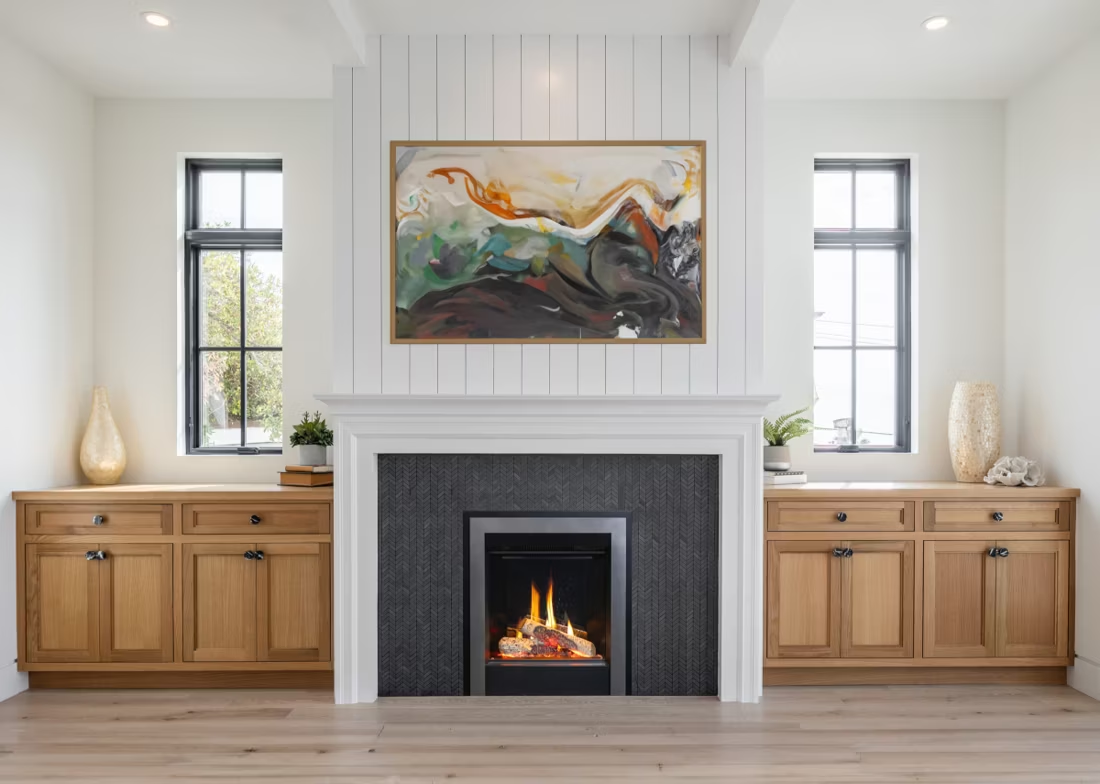
That's exactly where electric fireplaces do their best work. Modern electric inserts and built-ins produce flame effects that read as convincing from across the room, install into almost any wall or existing masonry opening without venting or gas lines, and add supplemental heat for the occasional cool front that drops overnight lows into the 30s. Since there's no chimney, no combustion, and no fuel to store, permitting is minimal compared to gas or wood—mostly electrical work, which matters in a fast-growing county where new construction and remodels are common. A local dealer can walk you through unit sizing, mounting options for stucco or block construction typical here, and which models hold up best in coastal humidity.
Three steps. No salesperson until you're ready.
Tell us about your project
Your zip code, your situation, and the fuel you're leaning toward—or let the answers point you to one.
See what's actually available
The brands dealers within 100 miles genuinely carry—real options, never a catalog mirage.
Get your dealer & Project Guide
A trusted local dealer, plus the free Project Guide & Parts List that names every component of the job.
Frequently Asked Questions
How much does an electric fireplace installation cost in St. Johns County?
Most electric fireplace installations in St. Johns County run $400 to $1,200, which is a fraction of a gas or wood project because there's no venting, chimney, or gas line involved. The low end covers a plug-in insert or wall-mount unit into an existing opening; the higher end covers a built-in linear unit with a custom surround, dedicated electrical circuit, or in-wall wiring for a clean, cordless look. Homes in St. Augustine's historic district sometimes carry a small additional cost if the installer needs to work around existing masonry or preserve a historic mantel.
Do I need a permit to install an electric fireplace in St. Johns County?
Usually not for a plug-in unit that uses an existing outlet—those install like any other appliance. If your project involves a new dedicated circuit, in-wall wiring, or a built-in unit tied into your home's electrical panel, a licensed electrician typically pulls an electrical permit through the St. Johns County Building Services division or, if you're inside St. Augustine city limits, through the City of St. Augustine's permitting office. Most local dealers coordinate this as part of the install rather than leaving you to sort out jurisdiction.
Is an electric fireplace actually going to heat my home?
Think of it as supplemental warmth for a single room rather than a heat source for the house. With St. Johns County's average winter low around 48°F and only 803 heating degree days per year, most homes don't need a fireplace to carry heating load the way a home in a place like Bozeman, MT would. Electric units typically add 1,500 watts of heat, enough to take the edge off a cool evening in the room they're installed in, while your central HVAC handles the rest of the house. If you want a stronger heat boost for the occasional 30s-degree night, ask your dealer about models with a higher-output heater coil.
What's the difference between an electric insert and an electric built-in?
An electric insert is sized to slide into an existing fireplace opening, including old wood-burning masonry fireplaces common in older St. Augustine and Ponte Vedra Beach homes, and it plugs into a nearby outlet or is hardwired by an electrician. An electric built-in is a linear or wall-mounted unit designed for new construction or remodels, often set into a custom frame or surround with no existing opening required. For a historic home with a masonry fireplace already in place, an insert is usually the simpler, lower-cost route. For new construction or an accent wall in a great room, a built-in gives more design flexibility.
Are wood-burning fireplaces common in St. Johns County?
Not really, and that's by design of the climate more than preference. With winter lows averaging 48°F and minimal heating degree days, wood heat isn't a practical necessity here the way it is in northern climates, and air quality concerns that drive wood-burning restrictions elsewhere aren't a factor locally either. A small number of homeowners still install wood-burning fireplaces or stoves for ambiance, holiday use, or because they have a vacation property up north—oak, mahogany, and pine are the common local species when people do burn—but electric and gas dominate new installs and remodels across the county.
Should I get electric or gas for my St. Johns County home?
Gas is the standard choice here when homeowners want a stronger, more authentic-feeling flame and don't mind venting and a gas line—it's rated as standard fuel relevance for the county and works well for primary living spaces. Electric is the choice when you want a lower-cost, no-venting installation, flexibility to put a fireplace almost anywhere in the house (including bedrooms and bathrooms, where gas isn't typically allowed), and simpler upkeep with no annual gas appliance service required. Many St. Johns County homeowners choose electric for secondary rooms and gas for the main living area.
Can an electric fireplace go in any room, including a bedroom or bathroom?
Yes, and this is one of electric's biggest advantages over gas or wood in a St. Johns County home. Because there's no combustion, no venting, and no open flame, electric units are permitted in bedrooms, bathrooms (with appropriate moisture-rated models), and other rooms where gas fireplaces typically aren't allowed by code. This makes electric a popular choice for primary suite additions in newer Fruit Cove and World Golf Village construction, where a fireplace is more about creating a focal point than adding heat.
How long does an electric fireplace installation take?
A straightforward plug-in insert or wall-mount unit can be installed in a few hours. A built-in linear unit requiring a new electrical circuit, in-wall wiring, or custom surround work typically takes a full day, sometimes two if drywall or trim carpentry is involved. Local dealers in St. Johns County generally schedule installs within one to two weeks of your consultation, faster than gas or wood projects that require coordinating gas line permits or chimney work.
Will humidity or coastal air affect my electric fireplace?
It can, if the unit isn't rated for it. St. Johns County's coastal, humid climate means electrical components and heating elements benefit from moisture-resistant housings, particularly for units installed near bathrooms, outdoor-adjacent living spaces, or homes close to the Intracoastal or ocean. A local dealer familiar with the area's conditions will steer you toward models with sealed components and can advise on placement that avoids direct humidity exposure, which matters more here than it would in a drier inland climate.
Can I put a TV above my fireplace?
Yes—with an asterisk. Fireplaces are hot and TVs don't like heat. Either put a mantel between them to deflect rising warmth, or choose a fireplace with heat-management technology that creates a cool zone on the wall above—the wall stays around 125 degrees, barely warm, while the room still gets full heat. If you like clean lines and don't want a mantel, heat management is the answer.
Does an electric fireplace need a vent or chimney?
No—that's its superpower. An electric fireplace needs a wall and an outlet, period. No vent pipe, no gas line, no clearances to design around, which is why it works in bedrooms, offices, apartments, and walls where venting a gas or wood unit would be impractical or impossible. Installation is typically the simplest and least expensive of any fireplace type.
Can a fireplace actually lower my heating bill?
Yes—by creating a comfort zone. A furnace heats every square foot of the house just to warm the one room you're in; a gas fireplace on low burns roughly a sixth of the gas a typical furnace does. Set the furnace around 55–60 degrees as a baseline, then heat the rooms your family actually uses. Families who heat this way commonly save $20–$60 a month.
What is an in-home preview and do I need one?
It's a visit where a hearth professional measures your space, confirms the model you picked actually works in your home, and walks the specs—framing, gas line, venting, finish work—before anything is ordered. Some details you just can't know until you see the house. Never make a down payment without one; it's the single most-skipped step that burns buyers.
Stove and Fireplace Dealers in St. Johns County
Courtesy Gas Co., Inc.
Get your St. Johns County electric fireplace Project Guide & Parts List.
Tell us about your space and we'll match you with a trusted local dealer and send a free Project Guide & Parts List—the exact unit, mounting, and electrical requirements for your electric fireplace project in St. Johns County.
Find Your Fireplace →