
Warmth on demand, even where winter barely shows up.
San Antonio's winters average a 49°F low and a short, mild heating season, so an electric fireplace is built for ambiance and the occasional cold snap—not survival heat. Find the right unit and connect with a trusted local dealer.
Every Project Starts From One of These Five Situations
Heat sized for a mild Pasco County winter.
San Antonio sits at 160 feet in rural Pasco County, a small historic town founded around what's now Saint Leo University, where the climate zone is 2A and the winter heating season is short and mild—a fraction of what a place like Duluth, MN sees in a single hard month. Winter lows average 49°F, and a hard freeze is a newsworthy event rather than a weekly occurrence. That climate reality is why wood stoves and pellet stoves are essentially absent here—there's no cordwood-heating culture, no need to size a stove for single-digit nights, and propane-fed gas fireplaces remain a rare, occasional-use choice rather than a mainstream one.
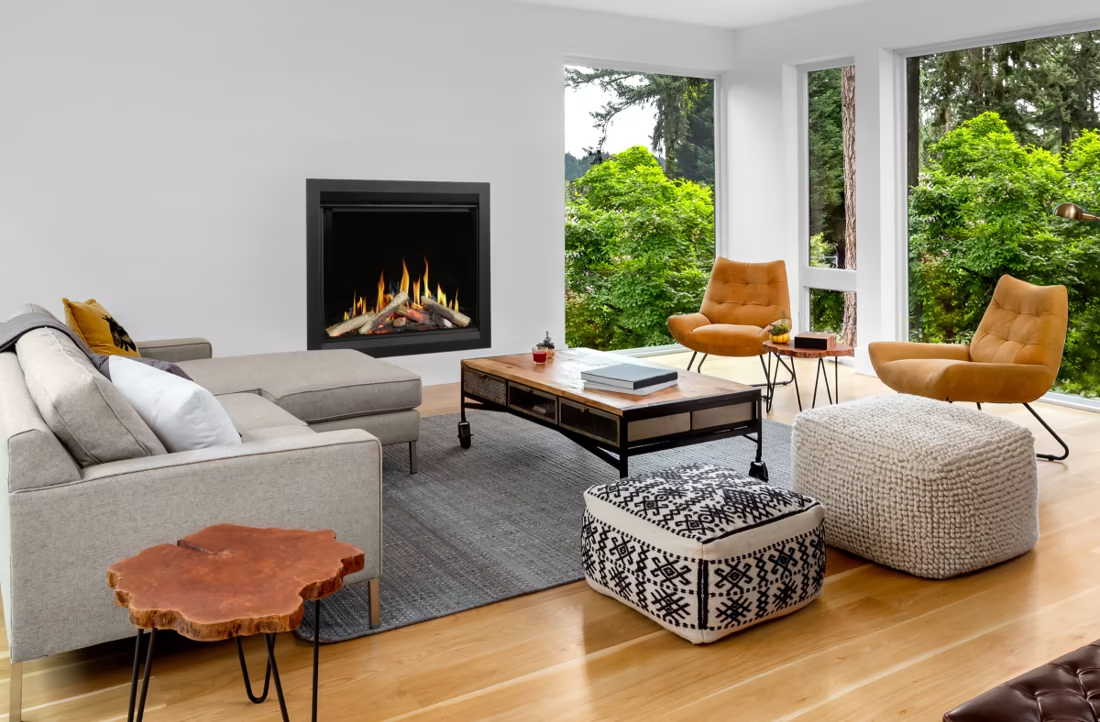
Electric is the fuel that actually fits how San Antonio homes use supplemental heat. Depending on which side of town you're on, your home is served by Tampa Electric, Duke Energy Florida, or Withlacoochee River Electric Cooperative, with residential rates running from about $0.1235 to $0.1663 per kWh—WREC customers see the lowest rate of the three. An electric fireplace plugs into a standard outlet or a dedicated circuit, needs no chimney, no gas line, and no annual sweep, and it delivers real ambiance plus a few thousand BTU of zone heat for the mornings when temperatures dip into the 30s.
Three steps. No salesperson until you're ready.
Tell us about your project
Your zip code, your situation, and the fuel you're leaning toward—or let the answers point you to one.
See what's actually available
The brands dealers within 100 miles genuinely carry—real options, never a catalog mirage.
Get your dealer & Project Guide
A trusted local dealer, plus the free Project Guide & Parts List that names every component of the job.
Frequently Asked Questions
How much does an electric fireplace installation cost in San Antonio?
Most electric fireplace projects in San Antonio run $300 to $1,200 for a plug-in insert or freestanding unit that drops into an existing opening or media console—no electrician required. Built-in wall units or linear fireplaces that need a dedicated 120V or 240V circuit run higher, typically $1,200 to $2,500, once an electrician runs new wiring and a local installer handles the framing and finish work. Because there's no venting, chimney, or gas line involved, electric is consistently the least expensive fireplace category to install in Pasco County.
Do I need a permit to install an electric fireplace in San Antonio?
A simple plug-in electric fireplace or insert typically doesn't require a permit since it's treated like any other appliance. If your project involves a built-in unit that needs a new dedicated circuit or an electrical panel upgrade, that electrical work does require a permit through Pasco County Building Construction Services, and it needs to be pulled by a licensed electrician. Most local dealers can tell you within a few minutes whether your specific unit crosses that line.
Which electric utility serves my home, and does it matter for a fireplace?
San Antonio homes are served by one of three providers depending on location: Tampa Electric, Duke Energy Florida, or Withlacoochee River Electric Cooperative. Rates run about $0.1467, $0.1663, and $0.1235 per kWh respectively, so a WREC customer pays noticeably less to run the same unit than a Duke Energy customer across town. A typical 1,500-watt electric fireplace run a few hours an evening costs only a few dollars a month regardless of provider, but if you're deciding between a smaller unit and a higher-wattage model, it's worth checking your bill to see which utility you're on.
Why don't more San Antonio homes use wood or gas fireplaces?
It comes down to climate. San Antonio has only a short, mild winter heating season and winter lows that average 49°F—mild enough that wood stoves and pellet stoves are essentially not a category here, since there's no need to size for sustained cold and no local cordwood-heating tradition the way there is farther north in the Panhandle. Gas fireplaces exist but are genuinely rare; without widespread natural gas infrastructure in rural Pasco County, a gas fireplace usually means a propane tank and a fairly involved install for what amounts to occasional ambiance. Electric sidesteps all of that—no fuel storage, no venting, and a unit you can turn on for a chilly December evening and forget about the rest of the year.
What type of electric fireplace works best in a San Antonio home?
For the older homes near downtown San Antonio with existing masonry fireplaces and oak or pine mantels, an electric insert that slides into the existing firebox is the cleanest retrofit—it keeps the historic look without ever needing a chimney sweep or a wood-cutting permit. For newer construction or a Florida room addition, a linear wall-mounted electric fireplace or a built-in unit framed into new construction tends to look more current and doubles as a focal point without radiating unwanted heat into an already warm house most of the year.
Will an electric fireplace actually produce useful heat, or is it just for looks?
Most residential electric fireplaces put out around 4,600 to 5,000 BTU on a 1,500-watt heater setting—enough to noticeably warm a single room, which is exactly the job in San Antonio. Given the area's 49°F average winter low, that's plenty of heat for the handful of genuinely cold mornings each year; you're not asking it to replace central heat during a sustained cold spell the way a wood stove would in a colder climate. Many homeowners here run the flame effect year-round for ambiance and only switch on the heater during the occasional freeze warning.
Should I consider a gas fireplace instead of electric for more authentic ambiance?
You could, but it's a genuinely uncommon path in San Antonio. Without natural gas mains reaching most of rural Pasco County, a gas fireplace here almost always means installing and maintaining a propane tank for a unit that, given the mild climate, will mostly be used for looks rather than heat. Electric fireplaces now offer LED flame effects that are convincing at a fraction of the installation cost and with none of the fuel logistics, which is why the large majority of San Antonio homeowners land on electric rather than gas.
What does it cost to run an electric fireplace each month?
Running a 1,500-watt electric fireplace for about 3 hours an evening uses roughly 135 kWh a month. At Withlacoochee River Electric Cooperative's rate of $0.1235 per kWh that's about $17 a month; at Duke Energy Florida's $0.1663 rate it's closer to $22. Since most San Antonio households only run the heater function during the coolest weeks of the year and use the flame-only mode the rest of the time, actual annual operating costs are typically much lower than those monthly estimates suggest.
Does anyone in San Antonio still install a wood-burning fireplace?
It happens, but rarely. A small number of homeowners with older masonry chimneys or a taste for a real wood fire—often burning local oak or pine—keep a wood-burning fireplace or add a decorative wood insert, but it's a lifestyle choice here rather than a heating necessity given the area's short, mild winter heating season. Because there's no real cutting-permit infrastructure or cordwood culture in this part of Pasco County the way there is farther north, most local hearth dealers will steer you toward electric unless you specifically want the wood-burning experience.
Do electric fireplaces actually produce heat?
Yes—most put out around 4,800–5,000 BTUs from a standard outlet, which comfortably warms a bedroom, office, or den as a comfort-zone heater. What they won't do is carry a whole house the way wood, gas, or pellet can. Think of electric as ambiance-first with honest supplemental heat: flames on with no heat in July, flames plus warmth in January.
Can I put a TV above my fireplace?
Yes—with an asterisk. Fireplaces are hot and TVs don't like heat. Either put a mantel between them to deflect rising warmth, or choose a fireplace with heat-management technology that creates a cool zone on the wall above—the wall stays around 125 degrees, barely warm, while the room still gets full heat. If you like clean lines and don't want a mantel, heat management is the answer.
Does a fireplace add value to my home?
On average, a fireplace adds back to the home about the same amount you spent installing it. Add the monthly savings from heating the rooms you actually use instead of the whole house—often hundreds of dollars a year—and the value case is strong before you even count what a fire does for how your family uses the room.
Can I install a fireplace myself?
If you're putting a fire in your house on purpose, it's best to work with an expert. Unless you're genuinely experienced in framing, gas line, vent pipe, and the national code on clearances to combustibles, have a professional do it—and ideally the same company that sells you the fireplace, so warranty, service, and liability all live under one roof.
Nearby Dealers
Hearth shops serving San Antonio and the surrounding area. Every listing shows whether it is a WhyFire partner, a dealer we have verified as authorized for the brands we recommend, or a local business carrying hearth products. No manufacturer pays for placement. How we verify dealers →
We’ve paused dealer listings for this connection today. Enter your zip or postal code above to find dealers near you, or come back tomorrow.
Popular Electric Brands
Where each brand came from, what's inside it today, and every current model. No brand pays to be here. Not every dealer carries every brand, so enter your zip code to see what's sold near San Antonio.
Fireplace Xtrordinair
Fireplace Xtrordinair, now often called FireplaceX, is the fireplace brand of Travis Industries, Inc., of Mukilteo, Washington.
5 electric models →DaVinci
DaVinci Custom Fireplaces is a brand of Travis Industries, Inc., of Mukilteo, Washington, the company behind Lopi and Fireplace Xtrordinair.
5 electric models →Kozy Heat
Kozy Heat was founded in 1976 by Dudley Hussong in Lakefield, Minnesota, and incorporated as Hussong Manufacturing Co., Inc. in 1978.
3 electric models →Forge & Flame
Forge & Flame is the stove brand Hearth & Home Technologies introduced in August 2023 to bring Vermont Castings, Harman, and Quadra-Fire under one name.
1 electric model →Electric Service in San Antonio
An electric fireplace's heater draws about 1,500 watts—pennies per hour at local rates.
Tampa Electric Co
Duke Energy Florida, LLC
Withlacoochee River Elec Coop
Find your electric fireplace in San Antonio.
Tell us a bit about your home and we'll help you find the right electric fireplace or insert, plus a free Project Guide & Parts List with the exact parts and your recommended local dealer.
Find Your Fireplace →