
Real Flame, Zero Hassle—Built for Nocatee Evenings.
A gas fireplace built for Northeast Florida's mild winters—instant ambiance most nights, real backup warmth on the rare cold snap. Find the right unit and connect with a trusted local dealer.
Every Project Starts From One of These Five Situations
A fireplace built for ambiance, not survival.
Nocatee sits at just 28 feet of elevation in coastal St. Johns County, where the average winter low hovers around 49°F and the entire heating season adds up to roughly 829 heating degree days—a fraction of what a place like Duluth, MN or Burlington, VT racks up in a single January. Homeowners here aren't burning gas to keep pipes from freezing; they're running it in the great room on the handful of nights each winter when a cold front pushes temperatures into the 30s, or simply because a real flame in the living room or on the lanai is part of the lifestyle in a master-planned community built around outdoor living.
Because Nocatee is largely new construction, most gas fireplace installs here are propane rather than municipal natural gas—many neighborhoods weren't built with gas mains in place, so a propane tank (existing or new) is often part of the project. Electric service comes from Florida Power & Light or JEA depending on which side of the community you're on, and both utilities' residential rates run in the 12–14 cent range, which matters if you're weighing gas against an electric unit for a secondary room. Either way, a properly vented gas fireplace or insert gives you instant, controllable heat with none of the smoke, ash, or humidity concerns that make wood a poor fit for this climate.
Three steps. No salesperson until you're ready.
Tell us about your project
Your zip code, your situation, and the fuel you're leaning toward—or let the answers point you to one.
See what's actually available
The brands dealers within 100 miles genuinely carry—real options, never a catalog mirage.
Get your dealer & Project Guide
A trusted local dealer, plus the free Project Guide & Parts List that names every component of the job.
Frequently Asked Questions
How much does a gas fireplace installation cost in Nocatee?
Most gas fireplace installs in Nocatee run $3,500 to $8,500, with the spread driven mainly by whether propane infrastructure already exists at the home. New-construction homes with a builder-installed propane tank and stub-out are on the lower end—often just the fireplace unit, venting, and finish work. Homes needing a new propane tank set, a longer gas line run, or a fully framed built-in surround for a great room will land toward the higher end. Local dealers will quote a firm number after seeing your gas setup in person.
Does my home use natural gas or propane for a fireplace?
In most of Nocatee, it's propane. Because the community was built out relatively recently, municipal natural gas mains don't reach every section, and many homes already run on propane for the range or water heater through a community or individual tank. A handful of older or more established pockets near Ponte Vedra may have natural gas access—worth checking with your HOA or a local dealer before assuming either way. Gas fireplace units themselves can typically be configured for propane or natural gas, so the fuel source rarely limits which fireplace you can choose.
Do I even need a fireplace if Nocatee winters are this mild?
Need is a stretch, but useful isn't. With an average winter low around 49°F, most gas fireplace use here is ambiance-driven—evenings on the lanai, a focal point in the great room, or a cozy fire for the handful of true cold snaps each winter when an Arctic front can push overnight lows into the 20s or low 30s. Unlike a mountain-climate home where the fireplace is a survival appliance, a Nocatee gas fireplace is chosen for how it looks and feels, with real backup heat as a bonus during outages or cold events.
Will my gas fireplace work during a power outage?
This matters more in Nocatee than the mild climate might suggest, since hurricane season regularly knocks out power across St. Johns County for days at a time. Most gas fireplaces with IPI (intermittent pilot ignition) run on battery backup and will light on demand even with the grid down, as long as the batteries are fresh. Valor fireplaces go a step further—their pilot generates its own electricity through the thermocouple, so there are no batteries to check or replace at all. For a coastal Florida home where a tropical system can take out FPL or JEA service for a week, that kind of self-sufficiency is worth asking about.
Gas fireplace, insert, or gas stove—which fits a Nocatee home?
Because most homes in Nocatee are new construction rather than older houses with existing masonry fireplaces to retrofit, a built-in direct-vent gas fireplace is by far the most common choice—it's designed into the great room or lanai wall from the start. Gas inserts matter more in older housing stock with an existing wood-burning fireplace, which is rare in this community. A freestanding gas stove is an option for a den, bonus room, or outdoor living space where a built-in unit isn't practical. A local dealer can walk your floor plan and tell you which format actually works with your framing.
Do I need a permit to install a gas fireplace in Nocatee?
Yes. Nocatee falls under St. Johns County jurisdiction for building permits, and any new gas fireplace requires both a building permit and a gas line permit, with the gas work performed by a licensed gas-fitter. Most reputable local dealers handle the permitting and inspection scheduling as part of the installation, which is one of the main reasons to avoid a big-box or handyman install—coordinating the gas line, framing, and venting under one licensed team keeps the project on the county's radar and off your plate.
Should I get a vented or vent-free gas fireplace in Nocatee?
Vented (direct-vent) units draw combustion air from outside and exhaust it back outside through sealed venting—the safest, cleanest option and the one most local dealers steer homeowners toward. Vent-free fireplaces burn directly into the room and are legal in Florida under strict room-sizing and ventilation rules, but they also release water vapor into the living space. In a humid coastal climate like Nocatee's, where indoor moisture and mold are already a year-round concern, adding a vent-free appliance's exhaust to the air isn't ideal for most homes. Direct-vent is the more common and generally recommended choice here.
How often should my gas fireplace be serviced in Nocatee?
Plan on an annual inspection, ideally before hurricane season ramps up, since a working fireplace is one more thing you may rely on if a storm knocks out power for an extended stretch. A certified technician checks the burner, pilot assembly, gas connections, and battery backup, and cleans the glass and interior. Coastal humidity and salt air can also accelerate wear on venting components, so an annual check is worth keeping on the calendar even though gas systems need far less maintenance than a wood-burning setup.
Gas vs. electric fireplace—which makes more sense in Nocatee?
Gas delivers real flame, genuine heat output, and battery or thermocouple backup during power outages—a real plus given how often storms interrupt FPL and JEA service here. Electric fireplaces cost far less to install (often under $1,500, with no gas line or venting needed), plug into a standard outlet, and work in any room, but they produce little real heat and go dark the moment the power drops—exactly when a coastal Florida home might want backup warmth most. For a primary great-room fireplace, gas is usually the better long-term choice in Nocatee; electric fits well as a low-cost secondary unit in a bedroom, office, or rental property.
What's the difference between an insert and a zero-clearance fireplace?
An insert is a fireplace that slides into a pre-existing wood-burning fireplace—if you don't have one, there's nothing to insert it into. A zero-clearance fireplace is built into a framed wall, which makes it the answer for remodels and new construction. Simple test: existing masonry fireplace means insert; blank or framed wall means zero-clearance.
Can I put a TV above my fireplace?
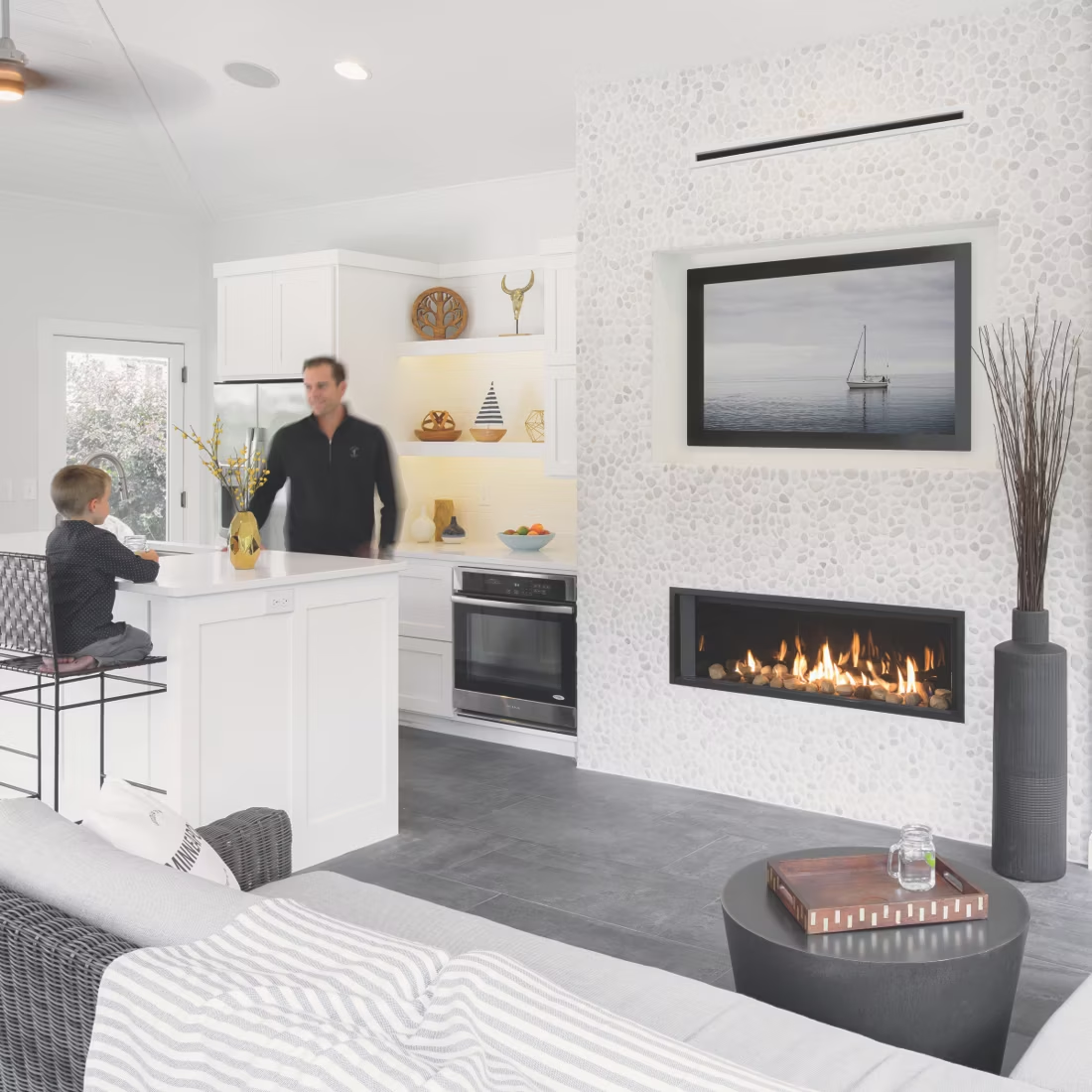
Yes—with an asterisk. Fireplaces are hot and TVs don't like heat. Either put a mantel between them to deflect rising warmth, or choose a fireplace with heat-management technology that creates a cool zone on the wall above—the wall stays around 125 degrees, barely warm, while the room still gets full heat. If you like clean lines and don't want a mantel, heat management is the answer.
How much should I budget for a fireplace?
For an average home—covering the fireplace, the vent pipe, and basic installation—a budget between $3,900 and $5,500 gives you a lot of options across wood, gas, and pellet. By the time you add finish work, gas line, and electrical, the average complete installation lands between $5,000 and $12,000 all-in. In a remodel or new build, a good rule is to put about 2.5% of the total project cost toward the fireplace.
What is an in-home preview and do I need one?
It's a visit where a hearth professional measures your space, confirms the model you picked actually works in your home, and walks the specs—framing, gas line, venting, finish work—before anything is ordered. Some details you just can't know until you see the house. Never make a down payment without one; it's the single most-skipped step that burns buyers.
Nearby Dealers
Hearth shops serving Nocatee and the surrounding area.
Courtesy Gas Co., Inc.
Find your gas fireplace in Nocatee.
Tell us a bit about your home and we'll put together your free Project Guide & Parts List—the right gas fireplace or insert, the exact parts including your vent kit, and a trusted local Nocatee dealer to install it.
Find Your Fireplace →