
Real flame-look warmth, no gas line or chimney required.
Miramar rarely needs real heat, but an electric fireplace still adds ambiance and takes the edge off a January cold snap—with none of the venting a gas or wood unit would require.
Every Project Starts From One of These Five Situations
Built for South Florida living, not South Florida winters.
Miramar sits in climate zone 1A with an incredibly short, mild heating season and an average winter low near 59°F—a fraction of what a place like Duluth, MN or Burlington, VT sees in a single cold week. Wood stoves and pellet stoves are essentially nonexistent here for good reason: there's no sustained cold to justify the chimney, the fuel storage, or the venting work. Electric is a different story. It doesn't need to fight Florida's climate to earn a spot in the living room.
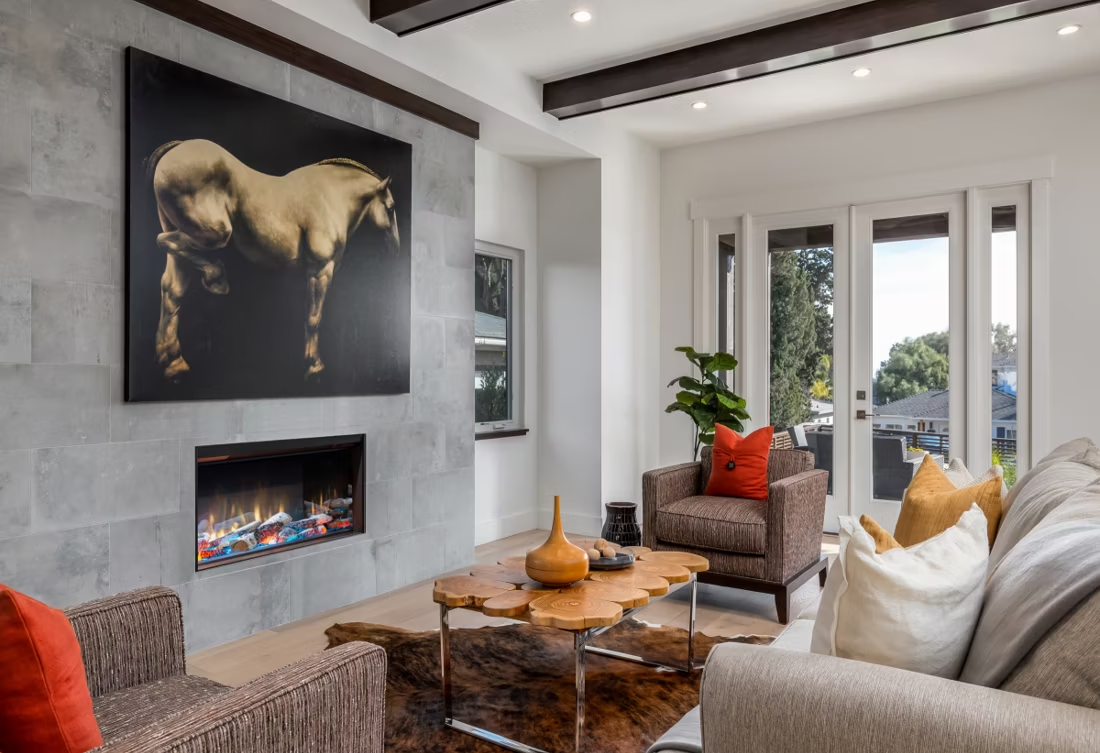
Most Miramar housing stock—from the townhomes in Monarch Lakes and Silver Falls to the CBS single-family homes throughout the 33025 and 33027 zips—is concrete block construction without a masonry chimney to work with. An electric fireplace or insert sidesteps that entirely: no flue, no gas line, no exterior venting to clear an HOA architectural review. Plug in a freestanding unit or have a wall-mounted linear model wired to a dedicated circuit, and you get real flame-effect ambiance year-round plus supplemental heat for the handful of nights each winter when a cold front actually pushes lows into the 40s.
Three steps. No salesperson until you're ready.
Tell us about your project
Your zip code, your situation, and the fuel you're leaning toward—or let the answers point you to one.
See what's actually available
The brands dealers within 100 miles genuinely carry—real options, never a catalog mirage.
Get your dealer & Project Guide
A trusted local dealer, plus the free Project Guide & Parts List that names every component of the job.
Frequently Asked Questions
How much does an electric fireplace installation cost in Miramar?
Plug-in freestanding electric fireplaces and mantel packages typically run $300 to $1,200 installed, since there's no venting or gas work involved—you're really just paying for the unit, delivery, and placement. A built-in linear electric insert or a wall-mounted unit that needs a dedicated 120V or 240V circuit run by a licensed electrician usually lands between $1,200 and $3,500, depending on wall framing and whether the circuit already exists nearby. Compare that to the $4,500-plus a gas fireplace install can run once a gas line has to be extended, and it's clear why electric is the low-friction option for most Miramar remodels and condo upgrades.
Does an electric fireplace actually put out useful heat in Miramar's climate?
Some, but don't expect it to be your primary heat source—with such a short, mild winter here, it doesn't need to be. Most electric fireplaces include a 1,500-watt heater rated for roughly 400 to 1,000 square feet, which is plenty to warm a family room during a January cold front when Broward County lows dip into the 40s or low 50s. The rest of the year, homeowners run the flame effect with the heater switched off, since Miramar's average winter low of 59°F rarely calls for supplemental heat at all.
Do I need a permit for an electric fireplace in Miramar?
A freestanding, plug-in electric fireplace typically doesn't require a permit—it's treated like any other appliance you plug into an existing outlet. A built-in or wall-mounted unit that requires new electrical wiring or a dedicated circuit does need an electrical permit through the City of Miramar Building & Permitting Division, and the work needs to be done by a licensed electrician. If you're in an HOA community like Monarch Lakes, Sunset Lakes, or Silver Falls, it's worth checking your community's architectural guidelines too, though electric units are usually approved without issue since there's no exterior venting or roofline change involved.
Will an electric fireplace be an issue with my Miramar HOA?
Generally no. Because electric fireplaces don't require a flue, exterior vent termination, or any change to the building envelope, they clear HOA architectural review far more easily than a gas insert with a wall penetration would. Many of Miramar's newer master-planned communities restrict exterior modifications closely, but an electric insert or wall-mounted unit installed on an interior wall typically doesn't even require a submission. If your unit needs new wiring, you may still need a standard electrical permit from the city, separate from any HOA sign-off.
Electric vs. gas—which makes more sense for a Miramar home?
Gas is available and standard in Miramar for homeowners who want a stronger heat output or the look of a real, larger flame, but it comes with the cost of a gas line and venting work. Electric skips both of those and runs on your existing FPL service at about $0.1371 per kWh—a 1,500-watt heater setting costs roughly 20 cents an hour to run, and the flame-only mode costs pennies. For a climate with such a short, mild winter, most Miramar homeowners are buying ambiance first and heat second, which is exactly what electric is built to deliver at a lower installed cost.
Will my electric fireplace work during a hurricane-related power outage?
No—electric fireplaces need grid power or a generator to run, so during an FPL outage after a storm, an electric unit won't provide heat or flame effect. This isn't usually a practical problem in Miramar given how mild winters are here, but it's worth knowing if you're weighing electric against a vented gas fireplace with battery-backup ignition, which can still operate during an outage. If backup heat during storm season matters to you specifically, that's a conversation to have with a local dealer before you choose a fuel type.
What styles of electric fireplaces work best in Miramar homes?
Frameless linear electric inserts have become popular in newer Miramar construction and remodels because they fit cleanly into a drywall or built-in media wall without any masonry surround. For condos and townhomes in the 33029 and 33023 zips, compact wall-mounted units or freestanding mantel packages are common since they need no structural changes. Brands like Dimplex, Napoleon, and Amantii show up frequently in South Florida hearth showrooms for their realistic flame technology and multiple heat-off ambiance settings—a local dealer can show you options sized to your wall and room.
How much does it cost to run an electric fireplace in Miramar?
At FPL's residential rate of about $0.1371 per kWh, a typical 1,500-watt electric fireplace running its heater on high costs roughly 20 cents per hour. Running just the flame effect with the heater off—which is how most Miramar homeowners use these units outside of a January cold snap—draws closer to 30 to 100 watts, or a couple cents per hour. Compare that to a gas fireplace's fuel cost, and electric is consistently the cheaper unit to operate, even if the upfront hardware cost is similar for comparable-looking models.
Why don't more Miramar homes use wood or pellet stoves?
With average winter lows around 59°F and such a short, mild heating season, there's simply no sustained cold to justify a wood or pellet stove here the way there would be in a place like Bozeman, MT or Minneapolis, MN. A small number of Miramar homeowners do install wood-burning fireplaces for aesthetics in custom homes, but pellet stoves in particular are effectively absent from the market—the fuel isn't stocked locally and the appliance solves a heating problem this climate rarely has. Electric and gas cover the ambiance-and-occasional-warmth use case that actually applies in South Florida.
Does an electric fireplace need a vent or chimney?
No—that's its superpower. An electric fireplace needs a wall and an outlet, period. No vent pipe, no gas line, no clearances to design around, which is why it works in bedrooms, offices, apartments, and walls where venting a gas or wood unit would be impractical or impossible. Installation is typically the simplest and least expensive of any fireplace type.
Do electric fireplaces actually produce heat?
Yes—most put out around 4,800–5,000 BTUs from a standard outlet, which comfortably warms a bedroom, office, or den as a comfort-zone heater. What they won't do is carry a whole house the way wood, gas, or pellet can. Think of electric as ambiance-first with honest supplemental heat: flames on with no heat in July, flames plus warmth in January.
Does a fireplace add value to my home?
On average, a fireplace adds back to the home about the same amount you spent installing it. Add the monthly savings from heating the rooms you actually use instead of the whole house—often hundreds of dollars a year—and the value case is strong before you even count what a fire does for how your family uses the room.
Can a fireplace actually lower my heating bill?
Yes—by creating a comfort zone. A furnace heats every square foot of the house just to warm the one room you're in; a gas fireplace on low burns roughly a sixth of the gas a typical furnace does. Set the furnace around 55–60 degrees as a baseline, then heat the rooms your family actually uses. Families who heat this way commonly save $20–$60 a month.
Nearby Dealers
Hearth shops serving Miramar and the surrounding area. Every listing shows whether it is a WhyFire partner, a dealer we have verified as authorized for the brands we recommend, or a local business carrying hearth products. No manufacturer pays for placement. How we verify dealers →
Lifestyle Barn LLC
Impel America Appliance
One Space Solution LLC
Home Gas
The Kitchenworks
Brandel Masonry
A&S Reclaimed Wood
Electric Service in Miramar
An electric fireplace's heater draws about 1,500 watts—pennies per hour at local rates.
Florida Power & Light Co
Find your electric fireplace in Miramar.
Tell us about your space and we'll put together a free Project Guide & Parts List for your Miramar electric fireplace project, matched with a trusted local dealer who can install it right.
Find Your Fireplace →