
Real Flame for a Barrier Island—Even When the Power Isn't There.
Merritt Island doesn't need heat most of the year, but hurricane season, cool January snaps, and long outages are real. Find the right gas fireplace and connect with a trusted local dealer.
Every Project Starts From One of These Five Situations
Warm nights are the norm here. Fire still earns its place.
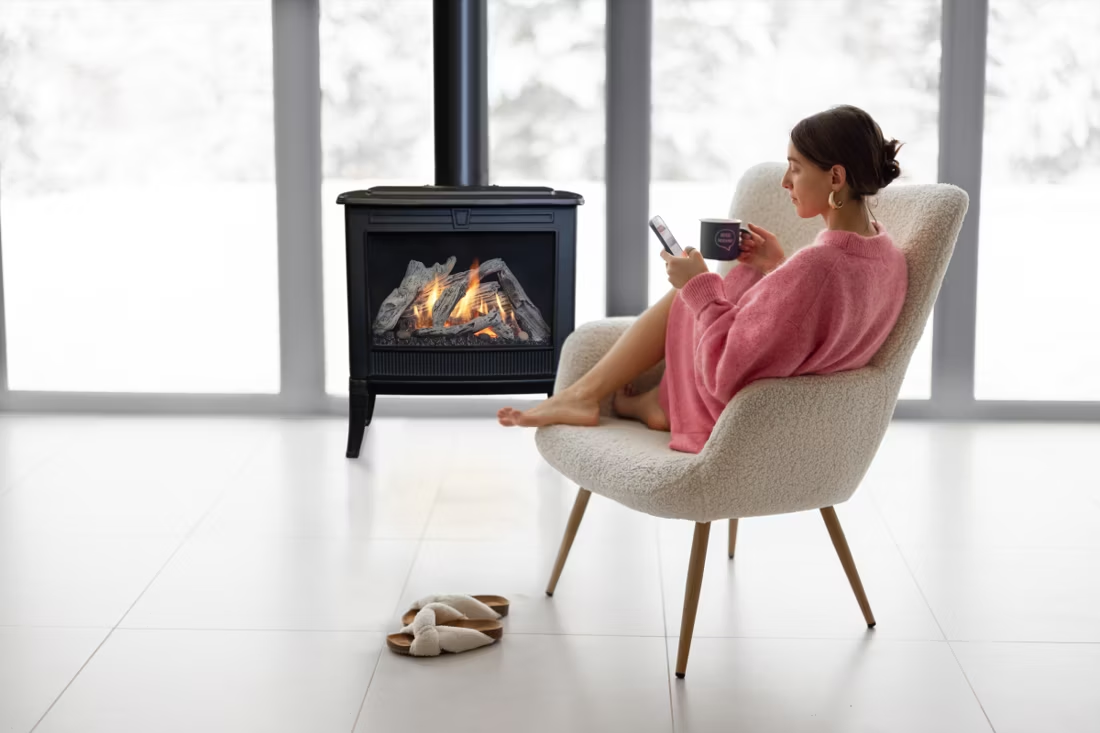
At sea level on a barrier island in Brevard County, Merritt Island averages a winter low around 50°F and logs roughly 501 heating degree days a year—a fraction of what a place like Burlington, VT sees in a single January. Nobody here is heating a home with a woodstove, and pellet stoves don't make sense in this climate either. What does make sense is a gas fireplace: instant ambiance for cool evenings, a design centerpiece in a new build or remodel, and—increasingly—a source of real, dependable heat during the multi-day power outages that come with hurricane season.
Most homes on Merritt Island are slab-built without a traditional masonry chimney, so factory-built, direct-vent gas units are the standard installation path here, not wood-style masonry inserts. Piped natural gas service is limited on the island, so the large majority of gas fireplace installs run on propane from a small owned or leased tank. Florida Power & Light serves the electric side of the equation, which matters more than you'd think: a gas fireplace with battery-backup ignition is one of the few heat sources on the island that keeps working when the grid doesn't.
Three steps. No salesperson until you're ready.
Tell us about your project
Your zip code, your situation, and the fuel you're leaning toward—or let the answers point you to one.
See what's actually available
The brands dealers within 100 miles genuinely carry—real options, never a catalog mirage.
Get your dealer & Project Guide
A trusted local dealer, plus the free Project Guide & Parts List that names every component of the job.
Frequently Asked Questions
How much does a gas fireplace installation cost in Merritt Island?
Most gas fireplace installations on Merritt Island run $3,500 to $8,500, depending on the unit, whether it's a linear/contemporary model or a traditional look, and whether a new propane line and tank need to be set. Because most homes here are slab construction without an existing chimney, a factory-built direct-vent unit with new framing and venting is the typical scope—that's more work than dropping an insert into an existing masonry fireplace, which is rare on the island. Homes already running on propane for a range or water heater tend to land on the lower end since the fuel infrastructure is already in place.
Can I convert an existing wood-burning fireplace to gas?
It's less common here than in colder markets simply because fewer Merritt Island homes have a wood-burning fireplace to begin with—oak, mahogany, and pine show up in the area's tree canopy, but almost nobody is heating with them. For the older homes that do have a masonry firebox, a vented gas log set or gas insert is a straightforward upgrade that keeps the existing chimney as the vent path and typically runs $2,500 to $6,000. It's a popular choice for owners who want the look of a fire without the humidity and pest issues that come with an open masonry flue in a coastal climate.
Should I plan on propane or natural gas for a Merritt Island installation?
Plan on propane. Piped natural gas service doesn't reach most of Merritt Island's residential streets, so the standard setup is a propane tank—either a small tank tucked beside the house or, for larger homes, an underground tank sized to also serve a range, water heater, or pool heater. Most gas fireplace models on the market can be configured for propane at the factory or in the field, so fuel type shouldn't limit which unit you pick. A local dealer will confirm tank placement relative to setback and flood-zone rules before installing.
Will a gas fireplace still work if the power goes out during a hurricane?
Yes, and this is one of the strongest reasons islanders here install one. Units with IPI (intermittent pilot ignition) run on a small battery backup that kicks in automatically when FPL power drops, so the fireplace lights on demand just like normal. Valor's line goes a step further—their pilot assembly generates its own electricity through the thermocouple, so there's no battery to remember at all. After a storm knocks out power for days, a gas fireplace can be the one appliance in the house still producing real heat and light without a generator running.
Fireplace, insert, or linear unit—what fits a Merritt Island home?
Since most homes here are slab-built without an existing masonry firebox, a built-in direct-vent gas fireplace or a modern linear unit is the more common install than a retrofit insert. Linear, frameless designs have become popular in newer waterfront and remodel projects up and down Merritt Island for their contemporary look. For the smaller number of homes with an existing wood-burning fireplace, a vented gas insert is the right call. Freestanding gas stoves are less common here but work well in a lanai or Florida room conversion.
What permits does a gas fireplace need in Brevard County?
New gas fireplace installations require a building permit and a separate gas permit through the Brevard County Building Department (or the applicable municipal building department if you're inside city limits), and the gas line work has to be done by a licensed gas contractor. Because Merritt Island sits in a high-wind hurricane zone, factory-built units and any exterior venting also need to meet Florida Building Code wind-load and anchoring requirements. A trusted local dealer will pull and coordinate these permits as part of the install rather than leaving you to manage separate trades.
Vented or vent-free—which makes sense in a coastal Florida home?
Vent-free units are legal in Florida under specific room-sizing and ventilation rules, but they release water vapor into the living space—a real downside in a climate where Merritt Island homes are already fighting humidity and mildew nine months out of the year. Direct-vent, sealed-combustion units exhaust everything outside and don't add moisture load to the house, which is why they're the more common and more strongly recommended choice for homes on the island. Ask a local dealer about both, but expect the vented option to be the better fit given the humidity here.
How often should a gas fireplace be serviced on Merritt Island?
An annual inspection is standard for any gas appliance, but coastal salt air makes it more important here than inland. Salt exposure accelerates corrosion on venting components, exterior caps, and burner assemblies faster than it would in a drier or inland climate, so a yearly check of the vent termination and hardware is worth keeping on schedule even if the fireplace only runs occasionally. Expect to pay roughly $150 to $250 for a standard annual service call from a local hearth technician.
Gas vs. electric fireplace—which is the better fit here?
With Florida Power & Light rates around 13.7 cents per kWh and Merritt Island's mild 501 heating-degree-day climate, either option can work well since neither is doing heavy lifting as a primary heat source. Electric fireplaces install almost anywhere with no venting or gas line, cost far less upfront ($400–$1,500 installed), and are a simple retrofit into an existing wall or mantel. Gas fireplaces cost more to install but deliver real radiant heat, a live flame, and—with battery-backup ignition—functional heat during hurricane outages when electric units go dark along with the rest of the house. If storm-season resilience matters to you, gas has a clear edge.
What's the difference between an insert and a zero-clearance fireplace?
An insert is a fireplace that slides into a pre-existing wood-burning fireplace—if you don't have one, there's nothing to insert it into. A zero-clearance fireplace is built into a framed wall, which makes it the answer for remodels and new construction. Simple test: existing masonry fireplace means insert; blank or framed wall means zero-clearance.
Why is my open fireplace making my house colder?
Open fireplaces suck—literally. As the fire burns, it consumes air your furnace already paid to heat and pulls it out through the chimney, so the house is actually colder after the fire goes out than before you lit it. An insert fixes this: it seals the chimney, puts fixed glass across the front, and turns that hole in your house into a real heat source.
Can a fireplace actually lower my heating bill?
Yes—by creating a comfort zone. A furnace heats every square foot of the house just to warm the one room you're in; a gas fireplace on low burns roughly a sixth of the gas a typical furnace does. Set the furnace around 55–60 degrees as a baseline, then heat the rooms your family actually uses. Families who heat this way commonly save $20–$60 a month.
How much should I budget for a fireplace?
For an average home—covering the fireplace, the vent pipe, and basic installation—a budget between $3,900 and $5,500 gives you a lot of options across wood, gas, and pellet. By the time you add finish work, gas line, and electrical, the average complete installation lands between $5,000 and $12,000 all-in. In a remodel or new build, a good rule is to put about 2.5% of the total project cost toward the fireplace.
Nearby Dealers
Hearth shops serving Merritt Island and the surrounding area.
Flame Tech Fireplace And Grill
Find your gas fireplace in Merritt Island.
Tell us a bit about your home and we'll match you with a trusted local dealer and send over your free Project Guide & Parts List—the exact fireplace, vent kit, and parts recommended for your Merritt Island project.
Find Your Fireplace →