
Add Real Warmth to Your Melbourne Home—No Chimney Required.
Real flame ambiance and supplemental warmth for Space Coast homes and beachside condos—no chimney, no gas line, and no HOA headaches. Find the right unit and connect with a trusted local dealer.
Every Project Starts From One of These Five Situations
A practical fit for Melbourne's mild winters.
Melbourne sits on Florida's Space Coast at just 25 feet of elevation, where the average winter low hovers around 50°F and the entire heating season is remarkably short and mild—a fraction of what a home in Duluth MN or Burlington VT accumulates in a single month. Wood stoves and pellet stoves are essentially absent here, and for good reason: there's no meaningful heating load to justify the flue work, the wood supply chain, or the ash cleanup, and coastal humidity makes seasoned firewood hard to keep dry. What Melbourne homeowners actually want most winters is a few degrees of supplemental warmth on a rare cold snap and a fireplace that looks the part the other ten months of the year.
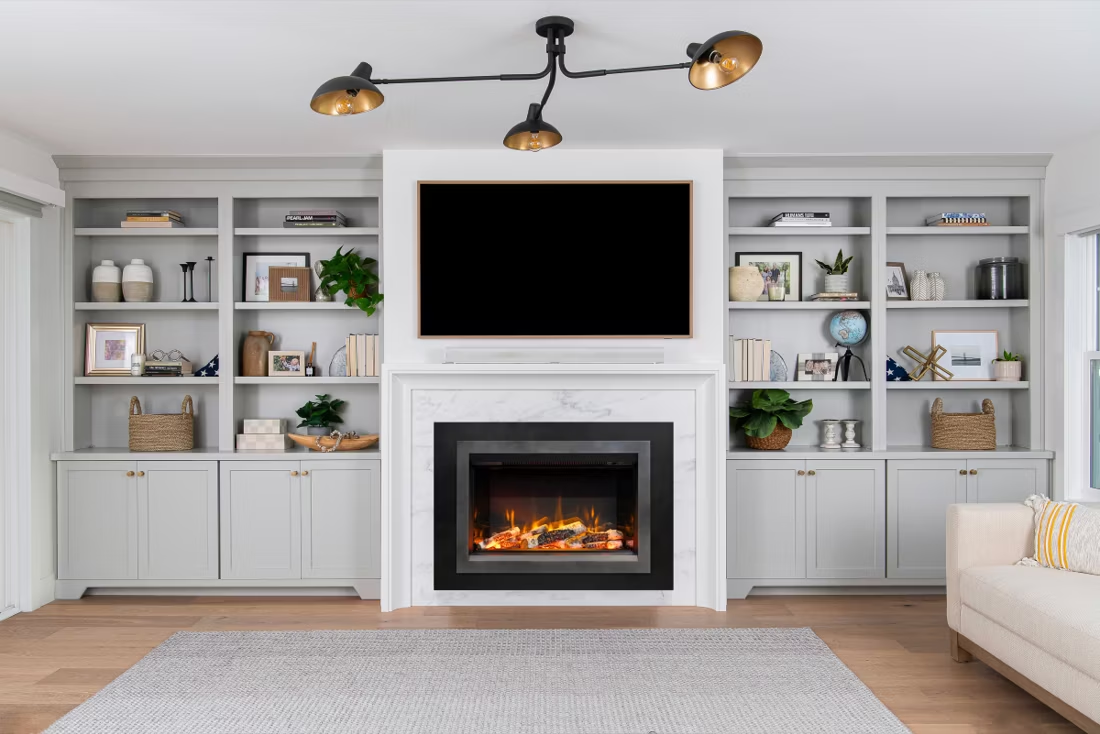
That's exactly what electric fireplaces deliver, and why they're the standard choice across Brevard County's beachside condos in Indialantic and Melbourne Beach, the older neighborhoods around Eau Gallie, and newer construction toward West Melbourne. Electric units need no chimney, no gas line, and no combustion air—many plug directly into a standard outlet, and even hardwired wall units typically need nothing more than a dedicated circuit. Florida Power & Light and Duke Energy Florida both serve the area at competitive residential rates (13.71¢ and 16.63¢ per kWh respectively), which keeps the occasional evening of supplemental heat inexpensive, while most models offer a flame-only mode for the nine months a year when Melbourne homeowners want the ambiance without adding any heat at all.
Three steps. No salesperson until you're ready.
Tell us about your project
Your zip code, your situation, and the fuel you're leaning toward—or let the answers point you to one.
See what's actually available
The brands dealers within 100 miles genuinely carry—real options, never a catalog mirage.
Get your dealer & Project Guide
A trusted local dealer, plus the free Project Guide & Parts List that names every component of the job.
Frequently Asked Questions
How much does an electric fireplace installation cost in Melbourne?
Plug-in electric fireplace inserts and freestanding stoves are the least expensive option, running $300 to $1,200 installed since most just need an existing outlet and a bit of trim carpentry. Built-in wall units and linear electric fireplaces set into custom media walls run higher—typically $1,500 to $3,500—once you factor in a licensed electrician running a dedicated 20-amp circuit and any drywall or millwork. Homes inside Melbourne city limits pull permits through the City of Melbourne Building Division; addresses in unincorporated Brevard County (parts of Suntree and West Melbourne's outer edges) go through Brevard County instead. Either way, a local dealer will tell you upfront whether your project needs a permit at all—plug-in units usually don't.
Will an electric fireplace keep my home warm during a power outage or hurricane?
No—and this is worth knowing before you buy, especially in a hurricane-prone county like Brevard. Electric fireplaces run entirely on grid power, so when FPL or Duke Energy Florida crews are still working through a post-storm outage, your electric fireplace goes dark along with everything else. If backup heat during outages matters to you, a propane or natural gas unit with a standing pilot is the better hedge; electric fireplaces here are best understood as a daily-use ambiance and supplemental-heat appliance, not a storm-preparedness tool.
What's the difference between an electric fireplace, insert, and stove?
An electric fireplace is typically a built-in unit set into a wall, mantel surround, or media console—the most common style in newer Melbourne construction and remodels. An electric insert is sized to slide into an existing masonry firebox, which is useful for the smaller number of older homes around downtown Melbourne and Eau Gallie that still have a wood-era fireplace opening they want to convert. An electric stove is a freestanding cabinet-style unit that mimics a wood stove's footprint without any venting—popular in condos and smaller homes where a built-in isn't practical. All three run on standard household current and use the same LED flame technology; the choice mostly comes down to what opening or footprint you're working with.
Are electric fireplaces allowed in beachside condos and HOA communities like Indialantic and Melbourne Beach?
Generally yes, and it's one of the main reasons electric is the dominant fireplace fuel in Melbourne's barrier-island communities. Because electric units require no venting, chimney, or gas line, they sidestep the fire-code and exterior-modification restrictions that make wood or gas installations difficult or impossible in most condo associations in 32903 and along Highway A1A. Most HOAs treat an electric fireplace as an appliance rather than a structural fire feature, though it's still worth checking your specific association's rules before a built-in wall installation, since some restrict alterations to shared walls.
What does it cost to run an electric fireplace in Melbourne?
A typical 1,500-watt electric fireplace draws 1.5 kWh per hour of heater use. At Florida Power & Light's residential rate of about 13.71¢ per kWh, that's roughly 20 cents an hour; at Duke Energy Florida's rate of about 16.63¢ per kWh, closer to 25 cents an hour. Since most Melbourne homeowners only run the heat function on the handful of nights each winter when temperatures dip into the 30s or 40s, and use flame-only mode the rest of the year (which draws only a few watts), annual operating costs are modest compared to running a wood or gas appliance.
Can an electric fireplace replace my central heating system?
No—and in Melbourne it doesn't need to. With such a short, mild winter season and an average winter low around 50°F, most homes here rely on a heat pump for the rare cold snap and don't need a primary combustion heat source at all. An electric fireplace is best used for zone heating a single room during that occasional cold front, or purely for the visual effect the rest of the year. If you're chasing whole-home backup heat, that's a conversation better had with an HVAC contractor, not a fireplace dealer.
What features should I look for in an electric fireplace for a Florida home?
The single most useful feature for Melbourne buyers is an independent flame-only mode—a switch that lets you run the visual flame effect without engaging the heating element, since air conditioning runs most months of the year and the last thing most homes need is added heat in July. Beyond that, look for realistic flame technology (multi-layer LED or water-vapor units look far better than older single-color LEDs), a thermostat with a remote, and—for homes near the coast in 32903 or 32901—corrosion-resistant components, since salt air can be tough on electronics left near an open window or lanai.
Wall-mounted vs. mantel-style electric fireplaces—which is right for my home?
Wall-mounted linear electric fireplaces are the popular choice in newer Melbourne construction and condo remodels along the beachside, where they set into a media wall above or beside the TV and read as a clean architectural feature. Mantel-style units—a freestanding surround with the electric firebox built in—work well in older homes around Eau Gallie or downtown where there's already a traditional living room layout, and they require zero installation since most just plug in and sit against a wall. If you're renting or in a condo where wall modifications aren't allowed, a mantel-style unit is usually the easier and fully reversible option.
Electric vs. gas fireplace—which is right for my Melbourne home?
Gas fireplaces (typically propane in this area, since natural gas service is limited around Brevard County) deliver real heat output and can run during a power outage if equipped with a battery-backup or millivolt ignition system—a real advantage during hurricane season. Electric fireplaces cost far less to install, need no gas line or venting, and work in condos and HOAs where combustion appliances are restricted, but they go dark in an outage and are built for ambiance and light supplemental heat rather than serious heat output. For most Melbourne homes without an existing gas line, electric is the simpler and less expensive path; homeowners who want a functioning backup heat source lean toward propane gas instead.
Do electric fireplaces actually produce heat?
Yes—most put out around 4,800–5,000 BTUs from a standard outlet, which comfortably warms a bedroom, office, or den as a comfort-zone heater. What they won't do is carry a whole house the way wood, gas, or pellet can. Think of electric as ambiance-first with honest supplemental heat: flames on with no heat in July, flames plus warmth in January.
Does an electric fireplace need a vent or chimney?
No—that's its superpower. An electric fireplace needs a wall and an outlet, period. No vent pipe, no gas line, no clearances to design around, which is why it works in bedrooms, offices, apartments, and walls where venting a gas or wood unit would be impractical or impossible. Installation is typically the simplest and least expensive of any fireplace type.
Can I install a fireplace myself?
If you're putting a fire in your house on purpose, it's best to work with an expert. Unless you're genuinely experienced in framing, gas line, vent pipe, and the national code on clearances to combustibles, have a professional do it—and ideally the same company that sells you the fireplace, so warranty, service, and liability all live under one roof.
Can a fireplace actually lower my heating bill?
Yes—by creating a comfort zone. A furnace heats every square foot of the house just to warm the one room you're in; a gas fireplace on low burns roughly a sixth of the gas a typical furnace does. Set the furnace around 55–60 degrees as a baseline, then heat the rooms your family actually uses. Families who heat this way commonly save $20–$60 a month.
Nearby Dealers
Hearth shops serving Melbourne and the surrounding area.
Flame Tech Fireplace And Grill
Electric Service in Melbourne
An electric fireplace's heater draws about 1,500 watts—pennies per hour at local rates.
Florida Power & Light Co
Duke Energy Florida, LLC
Find your electric fireplace in Melbourne.
Tell us a bit about your home and we'll match you with the right electric fireplace or insert, plus a free Project Guide & Parts List with your recommended local dealer.
Find Your Fireplace →