
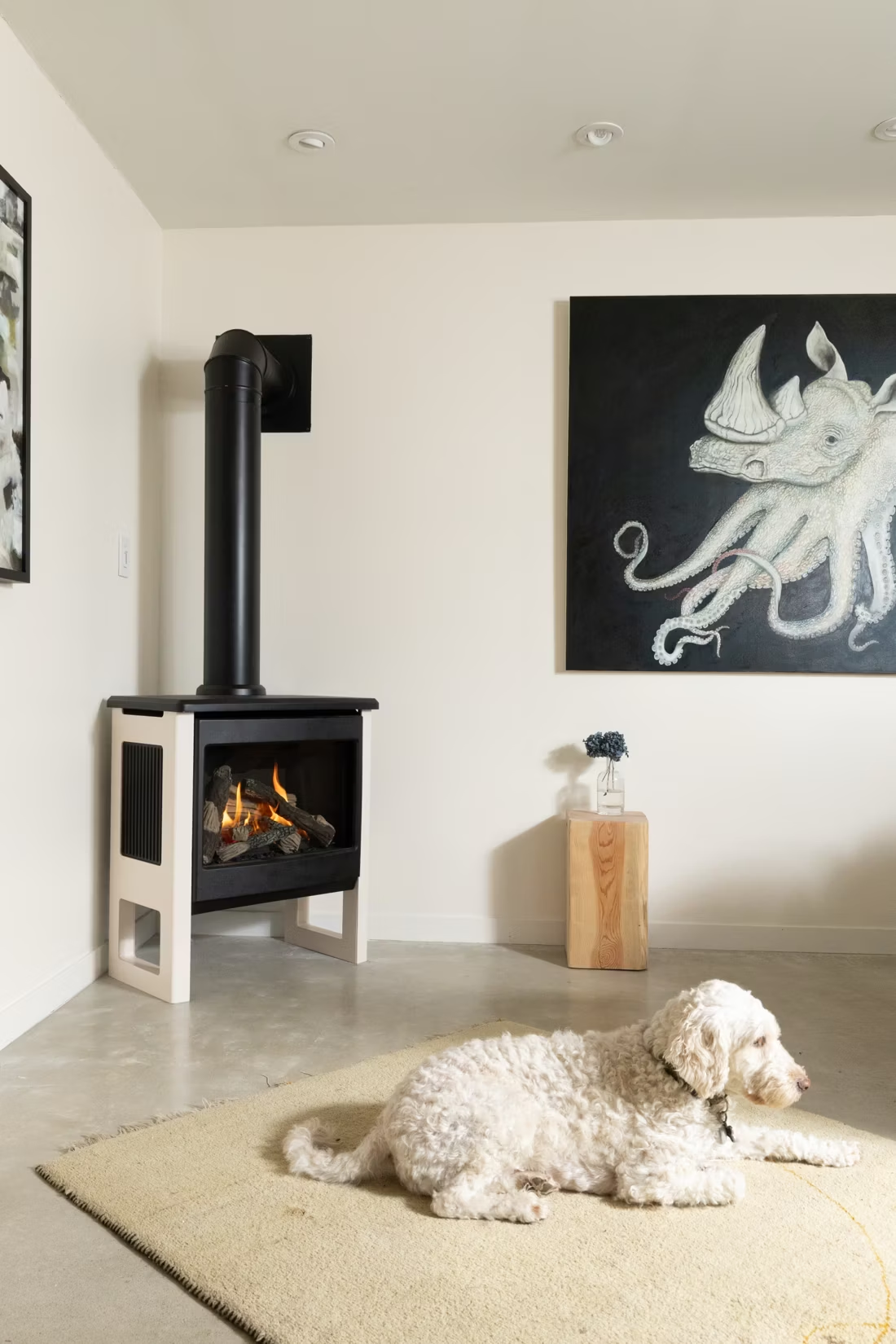
A gas fireplace built for Madison's short, mild winters.
With such a short, mild heating season and winter lows averaging 40°F, Madison doesn't need a furnace-replacement fireplace. What it does need is dependable ambiance and backup heat for the occasional freeze and the hurricane-season outage. We'll help you find a trusted local dealer who knows propane setups in this part of the Big Bend.
Every Project Starts From One of These Five Situations
In Madison, it's ambiance first, backup heat second.
Madison sits in the Big Bend region of North Florida at just 191 feet of elevation, and the climate numbers make it one of the mildest heating markets Find My Fireplace covers: climate zone 2A, a 40°F average winter low, and a winter heating season so light it adds up to just a fraction of what a place like Duluth, Minnesota logs in a single month of January. That said, arctic outbreaks do occasionally push down through the Big Bend and drop overnight temperatures into the 20s for a night or two, which is exactly the kind of cold snap a gas fireplace handles without anyone touching the thermostat.
No natural gas utility serves Madison—this is propane country, with homes running on above-ground tanks rather than a municipal gas main. Electric service comes from Duke Energy Florida and Tri-County Electric Cooperative, with residential rates running 16.6 to 17.6 cents per kWh, which makes an electric-only heat strategy pricier to lean on during a cold snap than a propane fireplace used for zone heat. Wood and pellet heat, by contrast, are essentially non-factors here—oak, mahogany, and pine grow all over Madison County, but with heating demand this low, splitting and storing wood in a humid Gulf Coast climate doesn't pencil out for most homeowners the way a propane insert or fireplace does.
Three steps. No salesperson until you're ready.
Tell us about your project
Your zip code, your situation, and the fuel you're leaning toward—or let the answers point you to one.
See what's actually available
The brands dealers within 100 miles genuinely carry—real options, never a catalog mirage.
Get your dealer & Project Guide
A trusted local dealer, plus the free Project Guide & Parts List that names every component of the job.
Frequently Asked Questions
How much does a gas fireplace installation cost in Madison?
Because Madison runs on propane rather than a natural gas main, your cost includes the appliance and venting plus propane infrastructure—a new or upsized tank, a regulator, and the line run from tank to firebox. A straightforward propane insert into an existing masonry fireplace, using a tank you already have for a grill or water heater, lands toward the lower end of a typical $3,500 to $8,500 range. A new direct-vent fireplace for a remodel, with a fresh tank setup and longer line run, sits toward the top. Your local dealer will quote it firm once they've seen the site.
Does Madison have natural gas service, or is it propane only?
Propane only. There's no natural gas utility serving Madison the way Duke Energy Florida and Tri-County Electric Cooperative serve electric, so every gas fireplace in town runs on propane stored in a tank on the property—typically a 100 or 250-gallon tank set at the side or rear of the house. This is standard for small Big Bend towns of Madison's size, and most local propane suppliers offer either a lease-and-fill arrangement or a tank you own outright. Your installer can advise on tank sizing based on whether the fireplace is your only propane appliance or one of several.
Does a gas fireplace even make sense in a climate this mild?
It's a fair question given how mild Madison's winters run—Madison isn't trying to survive a Fargo or Duluth winter, and a fireplace here won't be your primary heat source the way it would be in a place with a winter heating season several times longer and colder. What it does well is cover the handful of nights each winter when temperatures drop into the 20s or 30s, add real ambiance the rest of the year, and keep a room warm during a power outage. Most Madison homeowners install one for exactly that mix of occasional comfort and backup reliability, not daily heating load.
Will a propane fireplace keep working if the power goes out during a hurricane?
It can, depending on the ignition system, and that matters in Madison County where tropical storms moving through the Big Bend regularly knock out Duke Energy Florida and Tri-County Electric Cooperative service for days at a time. A standing pilot or millivolt-system propane fireplace lights and runs with zero electricity—no battery, no backup needed. Units with intermittent pilot ignition (IPI) need battery backup to fire without grid power. If storm resilience is a priority for your household, tell your local dealer up front so they steer you toward a millivolt model rather than an IPI unit.
Do I need a permit to install a gas fireplace in Madison?
Yes. New construction and fireplace installs go through the Madison County Building Department, and because propane line work is involved, it needs a licensed propane or gas contractor rather than a general handyman. Most established hearth dealers who work in Madison County coordinate the building permit, the propane tank setup or line extension, and the final inspection as part of the installation, so you're not managing separate trades and paperwork yourself.
Why not just install a wood stove instead, since Madison has plenty of oak and pine?
Oak, mahogany, and pine are common trees around Madison County, so the raw material exists, but wood heat doesn't make much practical sense given how mild the winters are—with such a short, mild heating season, most households would burn through a fraction of a cord a year, and storing wood in this humidity for occasional use invites mold and pest problems without much heating payoff. A propane fireplace gives you the same fire-in-the-hearth appeal on demand, without a woodpile taking up yard space for a handful of cold nights a year.
Vented vs. vent-free propane fireplace—what's right for a humid Florida home?
Direct-vent (sealed combustion) units are the safer default in a climate as humid as Madison's—they pull combustion air from outside and exhaust it back outside, so they don't add moisture or combustion byproducts to the living space. Vent-free propane units are legal in Florida and burn efficiently, but they release moisture directly into the room, which can aggravate humidity and mildew issues in a house that's already fighting Gulf Coast dampness for much of the year. Most local dealers steer Madison homeowners toward direct-vent for that reason, reserving vent-free for well-ventilated secondary spaces.
What size gas fireplace do I need for a Madison home?
Smaller than you'd guess if you're used to seeing fireplace sizing charts built for colder climates. With winter lows averaging 40°F and such a short, mild heating season, most Madison homes only need enough output to warm a single living or family room, not carry the whole house through a season. A compact to mid-size direct-vent unit in the 20,000 to 30,000 BTU range covers most great rooms here comfortably; going bigger just means more cycling on mild nights, which is most of them.
Gas vs. electric fireplace—which makes more sense in Madison?
Electric fireplaces are cheap to install—often $400 to $1,200 with no venting or propane line required—and they're a reasonable fit for a home that just wants supplemental warmth and ambiance in a bedroom or den. But at 16.6 to 17.6 cents per kWh from Duke Energy Florida or Tri-County Electric Cooperative, running one as your main backup heat source during an extended outage gets expensive fast, and electric units do nothing without grid power unless you've got a generator. A propane fireplace costs more upfront but delivers real heat output and, with a standing pilot model, keeps working through the storm-driven outages that hit this part of the Big Bend most summers and falls.
Why is my open fireplace making my house colder?
Open fireplaces suck—literally. As the fire burns, it consumes air your furnace already paid to heat and pulls it out through the chimney, so the house is actually colder after the fire goes out than before you lit it. An insert fixes this: it seals the chimney, puts fixed glass across the front, and turns that hole in your house into a real heat source.
Why is a fireplace insert so efficient?
An insert does two things: it seals the chimney completely, so you stop losing air you already paid to heat, and it radiates warmth into the room through the firebox and glass. Most add a heat-exchange fan that pulls cool room air underneath, wraps it around the hot firebox, and pushes it back out warm. Your home is more efficient before you've even lit the first fire.
Can I install a fireplace myself?
If you're putting a fire in your house on purpose, it's best to work with an expert. Unless you're genuinely experienced in framing, gas line, vent pipe, and the national code on clearances to combustibles, have a professional do it—and ideally the same company that sells you the fireplace, so warranty, service, and liability all live under one roof.
Does a fireplace add value to my home?
On average, a fireplace adds back to the home about the same amount you spent installing it. Add the monthly savings from heating the rooms you actually use instead of the whole house—often hundreds of dollars a year—and the value case is strong before you even count what a fire does for how your family uses the room.
Nearby Dealers
Hearth shops serving Madison and the surrounding area. Every listing shows whether it is a WhyFire partner, a dealer we have verified as authorized for the brands we recommend, or a local business carrying hearth products. No manufacturer pays for placement. How we verify dealers →
We’ve paused dealer listings for this connection today. Enter your zip or postal code above to find dealers near you, or come back tomorrow.
Popular Gas Brands
Where each brand came from, what's inside it today, and every current model. No brand pays to be here. Not every dealer carries every brand, so enter your zip code to see what's sold near Madison.
Kozy Heat
Kozy Heat was founded in 1976 by Dudley Hussong in Lakefield, Minnesota, and incorporated as Hussong Manufacturing Co., Inc. in 1978.
28 gas models →Fireplace Xtrordinair
Fireplace Xtrordinair, now often called FireplaceX, is the fireplace brand of Travis Industries, Inc., of Mukilteo, Washington.
25 gas models →Town & Country
Town & Country Fireplaces is the luxury gas fireplace brand of Pacific Energy Fireplace Products Ltd., of Duncan, British Columbia.
14 gas models →Lopi
Lopi is a wood, pellet, and gas stove brand founded by Kurt Rumens in Bellevue, Washington, in 1979.
7 gas models →Forge & Flame
Forge & Flame is the stove brand Hearth & Home Technologies introduced in August 2023 to bring Vermont Castings, Harman, and Quadra-Fire under one name.
6 gas models →Vermont Castings
Vermont Castings was founded in 1975 by Duncan Syme, the designer, and his brother-in-law Murray Howell, the business partner, in Randolph, Vermont.
6 gas models →Get your free Project Guide & Parts List for a gas fireplace in Madison.
Tell us about your home, your propane setup or plans for one, and what you want from the fireplace—ambiance, backup heat, or both—and we'll help you find a trusted local dealer and send a free Project Guide & Parts List with the exact vent kit and parts your project needs.
Find Your Fireplace →