
Bring the Glow of a Real Flame to Your Largo Home.
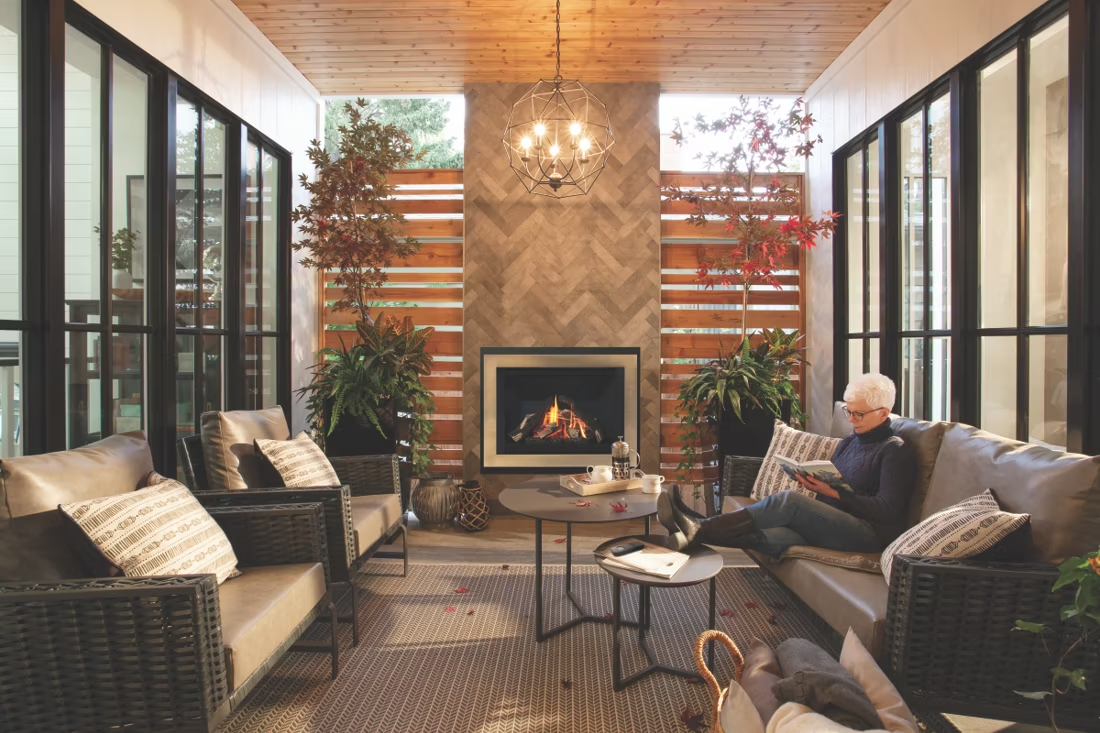
Largo winters rarely demand heat, but a gas fireplace still adds real ambiance to a Florida room, lanai, or living room on the cooler nights. Find a unit that fits your home and connect with a trusted local dealer.
Every Project Starts From One of These Five Situations
A fireplace built for comfort, not survival.
Largo sits at 6 feet of elevation on the Pinellas peninsula, in climate zone 2A, where the average winter low hovers around 52°F and the whole heating season adds up to just 446 heating degree days. That's a fraction of what a place like Burlington, Vermont racks up in a single month of January. Wood stoves and pellet stoves are essentially absent here for good reason—there's rarely enough sustained cold to justify one—but gas fireplaces occupy a different niche entirely. They're installed for atmosphere, for the occasional January cold front that drops nighttime temperatures into the 30s and 40s, and for the resale appeal a real flame adds to a Florida room or family room.
Because Largo and the rest of Pinellas County see so little sustained cold, natural gas infrastructure is patchier here than in northern markets, and a meaningful share of local gas fireplace installs run on propane rather than municipal gas—especially in older ranch homes and homes further from the coast's main gas corridors. Duke Energy Florida serves the area's electric grid at roughly 16.6 cents per kWh, which makes electric fireplaces a genuine no-venting alternative worth comparing. Whichever fuel you land on, the right local installer will match the unit to your actual gas service, your HOA's rules on visible venting, and how you actually plan to use it—daily ambiance versus a once-a-month cold snap.
Three steps. No salesperson until you're ready.
Tell us about your project
Your zip code, your situation, and the fuel you're leaning toward—or let the answers point you to one.
See what's actually available
The brands dealers within 100 miles genuinely carry—real options, never a catalog mirage.
Get your dealer & Project Guide
A trusted local dealer, plus the free Project Guide & Parts List that names every component of the job.
Frequently Asked Questions
How much does a gas fireplace installation cost in Largo?
A vent-free propane log set or small ventless fireplace insert typically runs $1,200 to $3,000 installed, and it's the most common upgrade for existing masonry fireboxes in older Largo homes. A direct-vent gas fireplace or insert with proper outside venting runs higher, generally $4,000 to $8,500, depending on whether a gas line needs to be run and how far the vent has to travel through an exterior wall. Because so few Largo homes already have a natural gas line to the fireplace location, propane tank setup or gas line extension is often the biggest cost variable—get a firm number from a local installer after they've seen your actual gas service.
Can I convert an existing wood-burning fireplace to gas?
Yes, and it's a common project in Largo's older ranch-style neighborhoods that were built with a traditional masonry firebox decades ago. A gas log set or direct-vent insert can usually go into that existing opening, using a stainless liner run through the existing chimney for venting, or converting to a sealed vent-free system if your local code and room size allow it. Since actual wood-burning use is rare here—most of these fireboxes see a handful of fires a year, if any—homeowners often prefer the low-maintenance, on-demand convenience of gas over dealing with ash and creosote for occasional use.
Should I go with natural gas or propane for my fireplace?
It depends on what's already running to your house. If your Largo home already has natural gas for cooking or water heating, tying the fireplace into that line is usually the cheaper path. If you're not on natural gas—common in parts of unincorporated Pinellas County and older Largo subdivisions—propane is the standard fallback, either from a small exchangeable tank for a modest vent-free unit or a buried tank for a larger direct-vent fireplace. Most manufacturers build units in both natural gas and propane configurations, so fuel type shouldn't limit which fireplace style or brand you choose. Your local dealer will confirm what's actually feasible at your address before you commit to a model.
Will my gas fireplace work if the power goes out?
Most will, which matters more in Largo than the mild winters might suggest—this is hurricane country, and summer storm outages are common even if winter power loss is rare. Units with intermittent pilot ignition (IPI) run on a small battery backup that keeps the igniter working even with the grid down. Valor fireplaces take it a step further: their pilot assembly generates its own electricity through the thermocouple, so there's no battery to remember or replace. If storm-readiness is part of why you want a fireplace, ask your local dealer specifically about the ignition system on any unit you're considering.
What's the difference between vented and vent-free gas fireplaces, and which is allowed in Largo?
Vented (direct-vent) fireplaces draw combustion air from outside and exhaust it back outside through sealed piping—they're the cleanest option and there's no debate about air quality. Vent-free units burn fuel directly into the room without exterior venting; Florida allows them, but they come with strict room-size and ventilation requirements, plus an oxygen depletion sensor that shuts the unit off automatically if oxygen levels drop. Vent-free is popular in Largo specifically because so many fireboxes here weren't built with real chimneys, making a sealed vent path impractical. Ask your local installer which option fits your room's actual dimensions—it's a code question, not just a preference.
Do I need a permit to install a gas fireplace in Largo?
In most cases, yes. Gas fireplace installations typically require a building permit and, if new gas or propane lines are involved, a separate mechanical or gas permit—coordinated through the City of Largo's Building Services Division for properties inside city limits, or Pinellas County Building & Development Review Services for unincorporated areas nearby. A licensed gas contractor handles the line work either way. Most established hearth dealers pull these permits as part of the installation, so you're not left coordinating inspections yourself.
How often does a gas fireplace need to be serviced?
Once a year is the standard recommendation, even for a fireplace that only gets lit a dozen times a winter in a climate as mild as Largo's. A technician checks the burner, pilot or ignition system, gas connections, and glass, and cleans out any dust or insect nests that build up in the venting or logs during the long stretches the unit sits unused between cool fronts. That last part matters more here than in colder states—a fireplace that goes ten months without a flame is exactly the kind of place wasps and spiders like to move in.
Is a gas fireplace actually worth it in a climate as warm as Largo's?
For most homeowners here, the honest answer is that it's about atmosphere and resale value, not survival heat—with a 52°F average winter low, you're not relying on this fireplace to keep pipes from freezing. That said, Pinellas County does get genuine cold fronts most winters that push overnight lows into the 30s and occasionally the upper 20s, and a gas fireplace turns those nights into something enjoyable rather than something to endure with a space heater. It's also a real selling point in Tampa Bay's competitive real estate market, where a working fireplace in a Florida room or living area stands out. If you're deciding between gas and electric for pure ambiance with zero heat need, that's a fair question to bring to a local dealer.
Gas vs. electric fireplace—which makes more sense for a Largo home?
Gas delivers a real flame, genuine radiant heat for the occasional cold snap, and the ability to keep working during a power outage on models with battery or self-powered ignition—a meaningful plus during hurricane season. Electric fireplaces need no venting or gas line at all, install in an afternoon, and run on Duke Energy Florida's grid at about 16.6 cents per kWh, which makes them popular in condos, HOA communities along the beaches, and rental properties where gas line work or exterior venting isn't practical. For a permanent living-room upgrade in a single-family Largo home, gas usually wins on realism and ambiance; for a rental, condo, or a quick style refresh, electric is often the simpler call. Local dealers carry both and can walk you through the tradeoffs for your specific space.
Why is a fireplace insert so efficient?
An insert does two things: it seals the chimney completely, so you stop losing air you already paid to heat, and it radiates warmth into the room through the firebox and glass. Most add a heat-exchange fan that pulls cool room air underneath, wraps it around the hot firebox, and pushes it back out warm. Your home is more efficient before you've even lit the first fire.
Can I put a TV above my fireplace?
Yes—with an asterisk. Fireplaces are hot and TVs don't like heat. Either put a mantel between them to deflect rising warmth, or choose a fireplace with heat-management technology that creates a cool zone on the wall above—the wall stays around 125 degrees, barely warm, while the room still gets full heat. If you like clean lines and don't want a mantel, heat management is the answer.
Does a fireplace add value to my home?
On average, a fireplace adds back to the home about the same amount you spent installing it. Add the monthly savings from heating the rooms you actually use instead of the whole house—often hundreds of dollars a year—and the value case is strong before you even count what a fire does for how your family uses the room.
Can I install a fireplace myself?
If you're putting a fire in your house on purpose, it's best to work with an expert. Unless you're genuinely experienced in framing, gas line, vent pipe, and the national code on clearances to combustibles, have a professional do it—and ideally the same company that sells you the fireplace, so warranty, service, and liability all live under one roof.
Nearby Dealers
Hearth shops serving Largo and the surrounding area.
Urban Concepts Modern Hearth & Outdoor
Urban Concepts Modern Patio And Fireplace
Find your gas fireplace in Largo.
Tell us a bit about your home and we'll put together a free Project Guide & Parts List—the right gas fireplace or insert, the vent kit it needs, and a trusted local Largo dealer to install it.
Find Your Fireplace →