
Gas Fireplace Warmth for Kissimmee's Mild Winter Nights.
With only a light, short winter heating season each year, Kissimmee doesn't need a furnace-replacement fireplace—it needs one built for ambiance, curb appeal, and the occasional cool snap. Find the right unit and connect with a trusted local dealer.
Every Project Starts From One of These Five Situations
Fire as a feature, not a furnace.
Kissimmee sits at 71 feet elevation in climate zone 2A, where the average winter low hovers around 48°F and true heating need is rare—compare that to a place like Duluth, MN, which faces a winter heating season nearly 20 times longer than what Kissimmee sees in a year. Nobody here is burning gas to survive a cold snap. Instead, gas fireplaces in Kissimmee's fast-growing subdivisions, vacation-rental communities, and new-construction homes near the Disney corridor function as a design centerpiece—a linear feature wall, a focal point in a great room, or a selling point for a short-term rental listing.
One local wrinkle worth knowing: Kissimmee doesn't have the widespread piped natural gas infrastructure you'd find in an older Northeast or Midwest city. Outside a handful of master-planned communities, most homes here run on propane for gas appliances, delivered and tanked by local suppliers. Electric service comes through Duke Energy Florida, Kissimmee Utility Authority, or Reedy Creek Improvement District depending on your neighborhood—a useful comparison point if you're weighing gas against an electric fireplace instead. Either way, a properly installed direct-vent gas unit gives Kissimmee homeowners instant flame at the push of a button, no ash, and (with the right ignition system) heat that keeps working when a summer storm knocks out the grid.
Three steps. No salesperson until you're ready.
Tell us about your project
Your zip code, your situation, and the fuel you're leaning toward—or let the answers point you to one.
See what's actually available
The brands dealers within 100 miles genuinely carry—real options, never a catalog mirage.
Get your dealer & Project Guide
A trusted local dealer, plus the free Project Guide & Parts List that names every component of the job.
Frequently Asked Questions
How much does a gas fireplace installation cost in Kissimmee?
Most Kissimmee installations run $3,500 to $9,000 for a direct-vent gas fireplace or insert, depending on the unit and venting path. Because most homes here run on propane rather than piped natural gas, add $500 to $1,500 if you need a new propane tank set and line run from a local supplier. Homes in communities with existing gas service—including some newer developments near Reedy Creek—tend to land on the lower end since the fuel line is already in place. A local installer will give you a firm number after seeing your framing and chimney (or lack of one).
Do I need natural gas, or is propane the standard here?
For most Kissimmee neighborhoods, propane is the standard fuel for a gas fireplace—the city and unincorporated Osceola County simply don't have piped natural gas mains running to most single-family subdivisions the way older cities do. A handful of newer master-planned communities have developer-installed gas service, but if you're not sure, your installer can check during the site visit. The good news: nearly every gas fireplace, insert, or log set on the market today can be configured for propane just as easily as natural gas—it's a matter of the correct orifice and regulator, not a different product line.
Will my gas fireplace still work if a hurricane knocks out power?
This is a bigger deal in Kissimmee than in most of the country, and it's worth asking about directly. Units with IPI (intermittent pilot ignition) run on a small battery backup that kicks in automatically when the grid drops, so the fireplace still lights on demand. Valor's gas fireplaces go a step further—the pilot's thermocouple generates its own electricity, so there are no batteries to remember or replace, ever. Given how long outages can stretch after a named storm moves through Osceola County, that's a real advantage worth discussing with your local dealer before you pick a model.
Do I need a permit to install a gas fireplace in Kissimmee?
Yes. Depending on your address, permitting runs through either the City of Kissimmee Building Division or the Osceola County Building Department, and both a building permit and gas/propane line permit are typically required for a new installation. Most established hearth retailers in the area handle this paperwork as part of the install rather than leaving it to the homeowner. If a propane tank is being added, your propane supplier will usually coordinate that portion of the permitting separately from the fireplace installer.
Are vent-free gas fireplaces allowed in Kissimmee?
Florida permits vent-free (unvented) gas units, unlike states such as California or Colorado that restrict or ban them outright. That said, most Kissimmee homeowners still choose direct-vent models, which pull combustion air from outside and exhaust it back out through a sealed vent—a better fit for Central Florida's humidity, since they don't add extra moisture or combustion byproducts into an already humid living space. Vent-free units can make sense for supplemental installations like a lanai or a small den where running venting isn't practical, but talk through room-sizing rules with your installer before committing.
What's the difference between a gas fireplace, insert, and stove for a Florida home?
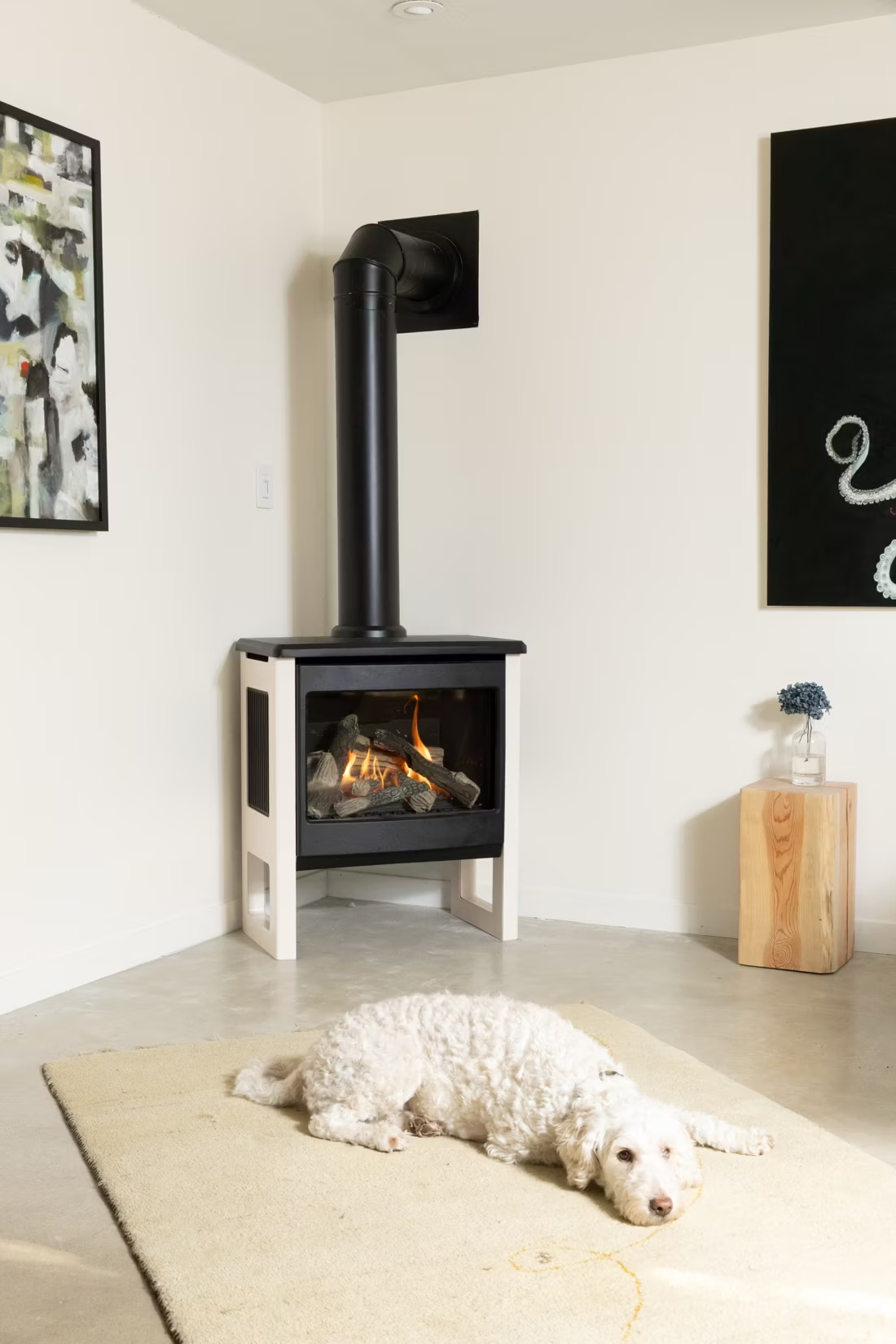
A gas fireplace is a built-in unit framed into a wall—the most common choice in Kissimmee's newer construction, since so many homes are being built with a great-room fireplace as a design element rather than a retrofit. A gas insert drops into an existing masonry fireplace, which shows up more in older homes around downtown Kissimmee that were originally built with a wood-burning hearth. A gas stove is a freestanding cabinet-style unit, less common here but occasionally used in a den or lanai conversion. Because heat output matters less in this climate than appearance, linear and see-through gas fireplace models are especially popular in Kissimmee's open-concept new builds.
What's the best gas fireplace for a warm-climate home like mine?
Since you're not relying on it for daily heat, prioritize flame appearance, glass clarity, and design flexibility over raw BTU output. Linear direct-vent models with reflective glass media or driftwood log sets are popular in Kissimmee's contemporary new-construction homes, and moderate BTU ratings (around 20,000–30,000) are plenty even on the coolest nights the area sees. If the fireplace is going into a vacation rental or a home near the tourist corridor, ask your local dealer about remote-start models—a fireplace that turns on with a wall switch or app photographs well and shows well to renters or buyers.
How often should my gas fireplace be serviced in Kissimmee?
An annual inspection is still recommended even in a climate where the unit only runs occasionally—humidity and insect intrusion in vent lines are a bigger issue here than soot buildup. A certified technician will check the burner, pilot assembly, glass seal, and venting, and confirm nothing has nested in the exterior vent termination over the summer, which is a genuinely common problem in Central Florida. Most local service providers charge in the $150–$250 range for a standard annual visit.
Gas vs. electric fireplace—which makes more sense in Kissimmee?
Given how little actual heating Kissimmee needs, this is a real question rather than a formality. Electric fireplaces cost far less to install—often under $1,000—plug into a standard outlet, and produce zero real heat load on your utility bill beyond running a light and a fan. On Kissimmee Utility Authority's roughly $0.132/kWh rate or Duke Energy Florida's roughly $0.166/kWh rate, that's pennies per hour of use. Gas costs more upfront and needs a fuel line (propane, in most cases), but delivers a real flame and can double as emergency heat during a power outage if you choose an IPI or Valor model. For a primary living room feature in a full-time residence, gas tends to win on look and resale value; for a secondary room, rental property, or budget-conscious remodel, electric is hard to beat.
Why is my open fireplace making my house colder?
Open fireplaces suck—literally. As the fire burns, it consumes air your furnace already paid to heat and pulls it out through the chimney, so the house is actually colder after the fire goes out than before you lit it. An insert fixes this: it seals the chimney, puts fixed glass across the front, and turns that hole in your house into a real heat source.
Is my gas fireplace wasting gas?
If it was installed more than 15 years ago, probably. Older gas fireplaces keep a standing pilot light burning all the time, and that little flame can cost a couple hundred dollars a year. Newer models use pilot-on-demand ignition—the pilot lights only when you use the fireplace and goes out when you turn it off.
What is an in-home preview and do I need one?
It's a visit where a hearth professional measures your space, confirms the model you picked actually works in your home, and walks the specs—framing, gas line, venting, finish work—before anything is ordered. Some details you just can't know until you see the house. Never make a down payment without one; it's the single most-skipped step that burns buyers.
Can I install a fireplace myself?
If you're putting a fire in your house on purpose, it's best to work with an expert. Unless you're genuinely experienced in framing, gas line, vent pipe, and the national code on clearances to combustibles, have a professional do it—and ideally the same company that sells you the fireplace, so warranty, service, and liability all live under one roof.
Get your Kissimmee gas fireplace plan started.
Tell us a bit about your home and we'll put together a free Project Guide & Parts List—the right unit, the vent kit or propane setup you'll need, and a trusted local Kissimmee dealer to install it.
Find Your Fireplace →