
Gas Fire, Coastal Ease—Made for Jupiter Evenings.
Jupiter's subtropical winters rarely call for serious heat, but a gas fireplace still delivers instant ambiance, real flame, and genuine resale appeal—indoors or out on the lanai. We'll match you with a trusted local dealer who knows what actually works on the Treasure Coast.
Every Project Starts From One of These Five Situations
A fireplace built for ambiance, not survival heat.
Jupiter sits in climate zone 2A at just 10 feet of elevation, with a winter heating season so light it barely counts as one and a winter low averaging 58°F. Compare that to Duluth, MN, where the heating season stretches on for months and single-digit nights are routine—wood stoves and pellet stoves simply don't make sense here, which is why we mark those fuels not-applicable for this market. Gas is different. Even in a town where furnaces barely run, a gas fireplace earns its keep on the handful of genuinely chilly January and February evenings, and year-round as a design centerpiece in great rooms, primary suites, and outdoor living spaces.
Fuel sourcing in Jupiter is a mixed picture. Florida Public Utilities extends natural gas lines into pockets of Palm Beach County, but a large share of Jupiter homes—particularly newer developments off Indiantown Road, Jupiter Farms, and the barrier island communities—run gas appliances off propane tanks instead. Either way, local installers are used to routing lines for both linear indoor fireplaces and outdoor fire features built into lanai kitchens and pool decks, which is where a lot of the local gas fireplace demand actually lives. Coastal salt air also matters here in a way it doesn't inland: stainless burners and marine-grade finishes hold up; standard steel components corrode fast a few blocks from the Intracoastal.
Three steps. No salesperson until you're ready.
Tell us about your project
Your zip code, your situation, and the fuel you're leaning toward—or let the answers point you to one.
See what's actually available
The brands dealers within 100 miles genuinely carry—real options, never a catalog mirage.
Get your dealer & Project Guide
A trusted local dealer, plus the free Project Guide & Parts List that names every component of the job.
Frequently Asked Questions
How much does a gas fireplace installation cost in Jupiter?
An indoor linear or direct-vent gas fireplace installation in Jupiter typically runs $3,000 to $8,500, depending on the unit, whether it's new construction or a retrofit, and whether gas line work is involved. Outdoor installations—a common request here given how much time Jupiter homeowners spend on the lanai or pool deck—often run less, around $1,500 to $4,000 for a linear burner built into an existing outdoor kitchen island. If you're not already on propane, tack on $500 to $1,500 for a tank setup. Local dealers will give you a firm number after seeing the space and confirming your gas source.
Should I use natural gas or propane for my fireplace in Jupiter?
It depends on your address. Florida Public Utilities runs natural gas lines through parts of Palm Beach County, but coverage is uneven—many Jupiter neighborhoods, especially newer developments and the barrier island, aren't on the natural gas grid at all and rely on propane tanks instead. If your home already has a propane tank for a range or water heater, adding a fireplace to that line is usually the simplest path. If you're unsure what's available at your address, a local installer can check FPU's service footprint before you commit to a unit.
Do I need a permit to install a gas fireplace in Jupiter?
Yes. If your address falls within town limits, permitting runs through the Town of Jupiter Building Division; if you're in unincorporated areas like Jupiter Farms, it's the Palm Beach County Building Division instead. Both require a building permit for the fireplace unit and a separate mechanical/gas permit for any gas line work, which has to be pulled by a licensed gas fitter or plumber. Most hearth retailers coordinate all of this as part of the installation, so you're not left managing multiple permit applications yourself.
Are vent-free gas fireplaces legal in Jupiter?
Yes—Florida allows vent-free (unvented) gas fireplaces under NFPA 54, provided the room meets minimum size requirements and the unit includes an oxygen depletion sensor. They're a reasonable option in condos or homes without an existing chimney or exterior wall for direct-vent piping, which comes up more often than you'd think in Jupiter's mid-rise coastal buildings. That said, most single-family homeowners here still opt for direct-vent units when the layout allows it, since they don't release any combustion byproducts into the living space.
Can I install a gas fireplace outdoors on my lanai or pool deck?
Absolutely—it's one of the more popular gas installs in Jupiter given how much of the year is spent outside. Linear gas fire features built into outdoor kitchen islands, fire pits set into pool decks, and freestanding outdoor fireplaces along the Intracoastal or Loxahatchee River waterfront are all common. The one thing to insist on: stainless steel burners and corrosion-resistant hardware. Standard steel components don't last long a few blocks from saltwater, and a local installer will know which manufacturers actually build for that environment versus which ones just sell into it.
Will my gas fireplace still work if the power goes out?
Most direct-vent gas fireplaces with IPI (intermittent pilot ignition) run on a battery backup that kicks in automatically when power drops, which matters in Jupiter given how often summer storms and hurricane season knock out electricity. Valor units take it a step further—their pilot generates its own electricity through the thermocouple, so there's no battery to remember or replace. Worth asking about specifically if you're buying with storm season in mind rather than just daily use.
Should I get a gas fireplace or an electric fireplace in Jupiter's climate?
Given how few genuinely cold nights Jupiter sees, this is a real question worth asking. Electric fireplaces cost far less to install—usually $400 to $1,200—need no gas line or venting, and run fine on standard household circuits through Florida Power & Light. They're a strong fit for a room where you mainly want the visual and occasional warmth. Gas costs more upfront but delivers real flame, noticeably more heat output for those rare 40-degree mornings, and tends to carry more weight with buyers when the home eventually goes on the market. Many Jupiter homeowners put gas in the main living area and electric in a bedroom or den.
What's the difference between a gas fireplace, insert, and stove for a Jupiter home?
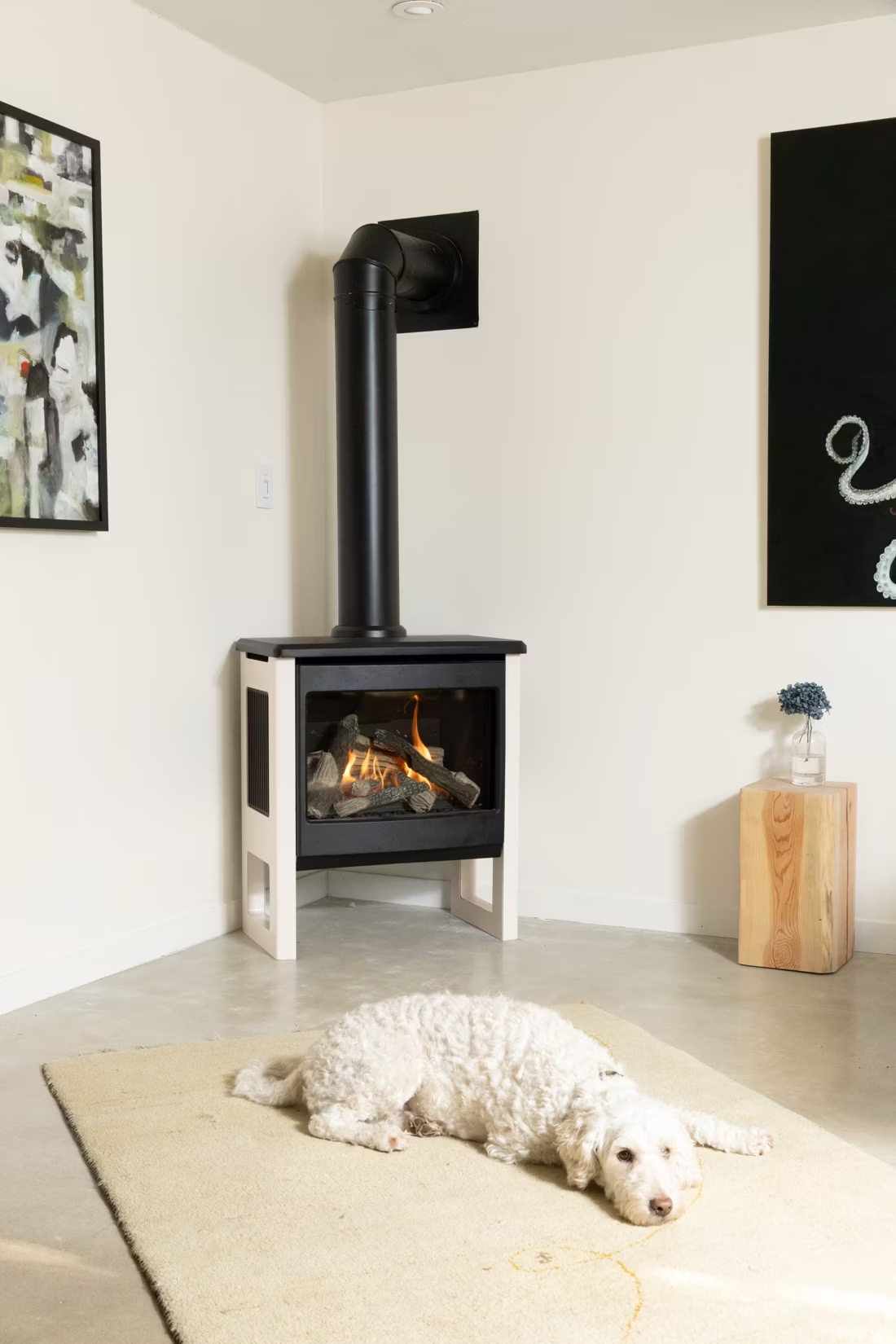
A gas fireplace is a fully built-in unit framed into a wall—the most common choice in Jupiter's newer construction and remodels, since most local homes are CBS builds without an existing masonry chimney to retrofit. A gas insert fits into an existing wood-burning fireplace and is less common here simply because fewer Jupiter homes have one to begin with. A gas stove is a freestanding unit, occasionally used in older Florida cottages or as a design statement piece. For most homeowners here, a built-in linear gas fireplace is the default answer.
How often does a gas fireplace need to be serviced in Jupiter?
Plan on an annual inspection, and take it seriously here—coastal salt air accelerates corrosion on burners, ignition components, and glass seals faster than it would inland. A technician will check the gas connections, clean the burner and glass, and test the ignition system, which typically runs $150 to $250. Homes on the barrier island or directly along the Intracoastal sometimes benefit from a mid-year check as well, particularly for outdoor units that take the brunt of humidity and salt exposure year-round.
What's the difference between an insert and a zero-clearance fireplace?
An insert is a fireplace that slides into a pre-existing wood-burning fireplace—if you don't have one, there's nothing to insert it into. A zero-clearance fireplace is built into a framed wall, which makes it the answer for remodels and new construction. Simple test: existing masonry fireplace means insert; blank or framed wall means zero-clearance.
Can I put a TV above my fireplace?
Yes—with an asterisk. Fireplaces are hot and TVs don't like heat. Either put a mantel between them to deflect rising warmth, or choose a fireplace with heat-management technology that creates a cool zone on the wall above—the wall stays around 125 degrees, barely warm, while the room still gets full heat. If you like clean lines and don't want a mantel, heat management is the answer.
What is an in-home preview and do I need one?
It's a visit where a hearth professional measures your space, confirms the model you picked actually works in your home, and walks the specs—framing, gas line, venting, finish work—before anything is ordered. Some details you just can't know until you see the house. Never make a down payment without one; it's the single most-skipped step that burns buyers.
Can a fireplace actually lower my heating bill?
Yes—by creating a comfort zone. A furnace heats every square foot of the house just to warm the one room you're in; a gas fireplace on low burns roughly a sixth of the gas a typical furnace does. Set the furnace around 55–60 degrees as a baseline, then heat the rooms your family actually uses. Families who heat this way commonly save $20–$60 a month.
Nearby Dealers
Hearth shops serving Jupiter and the surrounding area.
Gas Fire Distributors
Gas Utility Service
Find your gas fireplace in Jupiter.
Tell us about your home, whether you're on natural gas or propane, and where you want the fireplace—indoors or out. We'll match you with a trusted local Jupiter dealer and send over a free Project Guide & Parts List with the exact components, including the vent kit, for your project.
Find Your Fireplace →