
A Gas Fireplace for Ambiance, Not Necessity.
With winter lows averaging 51°F, Jasmine Estates homes rarely need heat—but a well-placed propane fireplace still adds real value, hurricane-season backup, and a focal point most Pasco County living rooms don't have.
Every Project Starts From One of These Five Situations
Gulf Coast winters rarely call for real heat.
Jasmine Estates sits at 11 feet of elevation on Florida's Gulf Coast in Pasco County, in climate zone 2A, where winters are so mild that heating season barely registers. Compare that to a place like Duluth, Minnesota, which has a long, brutal heating season nearly all year—and it's clear why gas fireplaces here are the exception, not the rule. Most homes were built without any provision for supplemental heat because the region simply doesn't need it most winters.
That said, gas fireplaces aren't unheard of in Jasmine Estates. Homeowners who install them are usually after ambiance, a stronger resale look, or a reliable heat source for the handful of nights each winter when a cold front pushes lows into the 30s or 40s. Because there's no municipal natural gas main serving most of this part of Pasco County, propane is the standard fuel for the gas units that do go in—fed by a small residential tank rather than a utility line. For homes that skip gas entirely, Duke Energy Florida and Withlacoochee River Electric Cooperative both serve the area, which is part of why electric fireplaces are the more common choice locally.
Three steps. No salesperson until you're ready.
Tell us about your project
Your zip code, your situation, and the fuel you're leaning toward—or let the answers point you to one.
See what's actually available
The brands dealers within 100 miles genuinely carry—real options, never a catalog mirage.
Get your dealer & Project Guide
A trusted local dealer, plus the free Project Guide & Parts List that names every component of the job.
Frequently Asked Questions
Are gas fireplaces common in Jasmine Estates?
Not especially—and it's worth saying plainly. With an average winter low around 51°F and only a light dusting of chilly days each year, most Jasmine Estates homes have no real heating need, and the majority of local retrofit fireplace projects here are electric, not gas. The homeowners who do install a gas unit are usually motivated by ambiance, a design upgrade for resale, or wanting real heat on hand for the occasional Gulf Coast cold snap or post-hurricane power outage. It's a legitimate project, just a less typical one than it would be in a colder part of the country.
How much does a gas fireplace installation cost in Jasmine Estates?
Because there's no natural gas main running through most Jasmine Estates neighborhoods, almost every gas fireplace project here runs on propane, fed by a small residential tank rather than a utility hookup. A direct-vent propane fireplace or insert, including the tank setup and venting, typically runs $3,500 to $7,500 depending on the unit and whether it's a new install or a retrofit into an existing opening. Homes without an existing masonry fireplace—common in this area's block-and-slab construction—may run toward the higher end once framing and venting are factored in. A local dealer can give you a firm number after seeing the space.
Can I get natural gas, or is propane my only option?
For most of Jasmine Estates, propane is the practical answer. There's no widespread natural gas utility service through this part of Pasco County, so a gas fireplace here almost always means a propane tank—either a small buried or above-ground tank installed alongside the fireplace project. Some newer developments closer to New Port Richey may have limited natural gas access; a local hearth dealer can confirm what's actually available at your address before you commit to a unit.
Will a gas fireplace still work if the power goes out?
This is a genuinely useful feature in a hurricane-prone area like Jasmine Estates. Most modern gas fireplaces use IPI (intermittent pilot ignition) with a battery backup—typically a few AA batteries built into the unit—so they'll still light and run on propane even when the grid is down. A few brands, like Valor, go a step further and generate their own electricity from the pilot's thermocouple, so there's no battery to remember to replace. For a region where Duke Energy Florida and Withlacoochee River Electric Cooperative customers can see multi-day outages after a storm, that's a real consideration worth raising with your dealer.
What's the difference between a gas fireplace, insert, and stove?
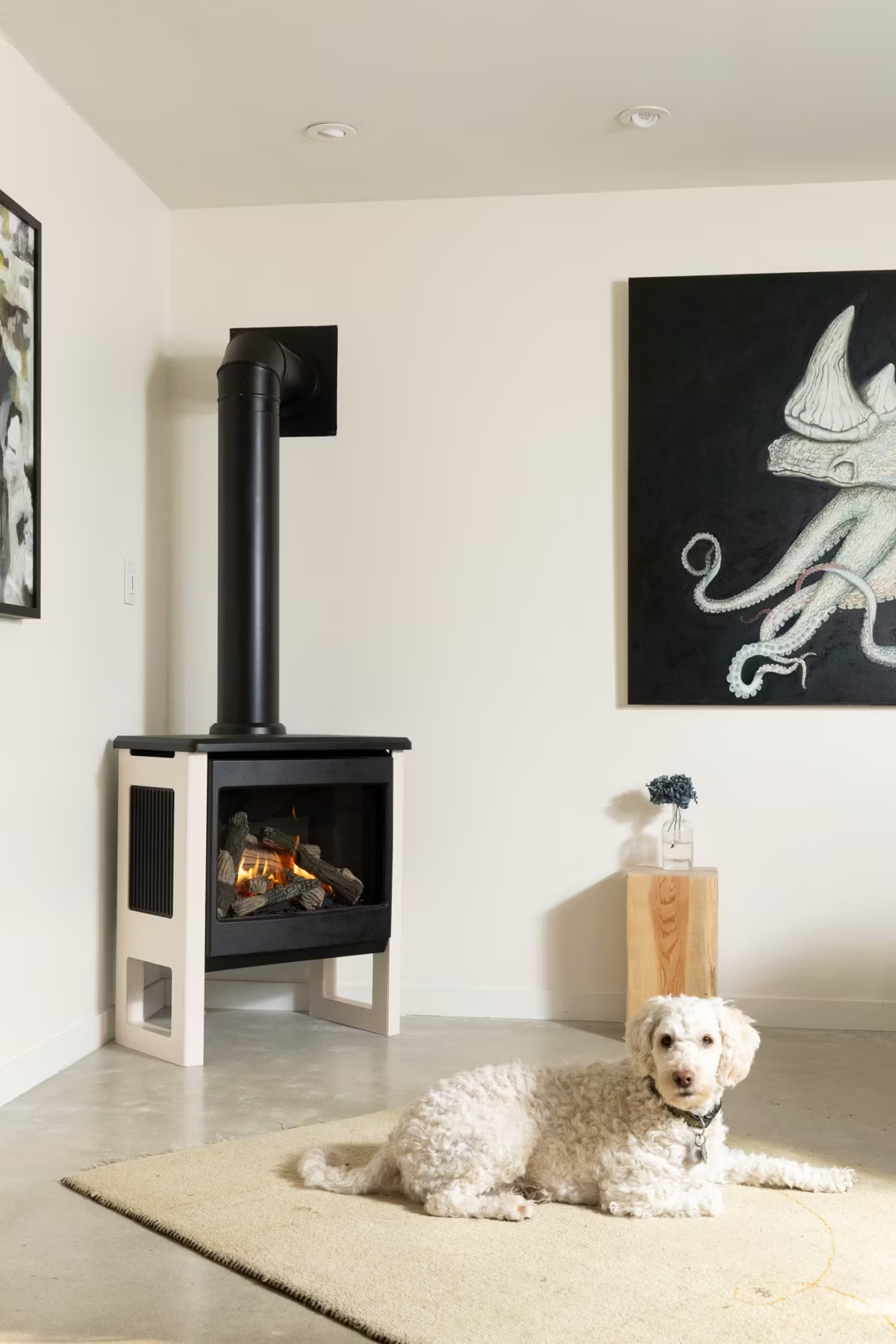
A gas fireplace is a fully built-in, zero-clearance unit framed into a wall—common in Jasmine Estates remodels since most homes here were built on slab without a masonry chimney to begin with. A gas insert is made to slide into an existing masonry fireplace opening, which is less common locally since traditional wood fireplaces are rare in this climate. A gas stove is a freestanding cabinet-style unit that sits on the floor. For the typical Jasmine Estates home without an existing fireplace, a zero-clearance built-in gas fireplace or a freestanding stove is usually the more realistic fit than an insert.
Do I need a permit to install a gas fireplace in Jasmine Estates?
Yes. Pasco County Building Construction Services requires a building permit for the fireplace installation and a separate permit for the propane line work, which has to be run by a licensed gas fitter. A reputable local dealer will pull both permits as part of the job and schedule the required inspections, so you're not left coordinating trades yourself. Given how few gas fireplace projects this office processes compared to, say, water heater or AC permits, it pays to use an installer who's done one before.
Should I go with a vented or vent-free gas fireplace?
Vented (direct-vent) units draw combustion air from outside and exhaust it back outside through sealed venting—they're the safer, more universally recommended choice, especially in tightly sealed, air-conditioned Florida homes where indoor air exchange is already limited. Vent-free units are technically permitted in Florida under specific room-size and ventilation rules, but given how sealed and humidity-controlled homes in Jasmine Estates tend to be, most local dealers steer customers toward a vented unit. It's a conversation worth having directly with whoever you're matched with.
How often does a gas fireplace need to be serviced in this climate?
An annual inspection is still the standard recommendation even in a mild climate like this one—a technician checks the burner, pilot assembly, propane connections, and venting, and cleans the glass. Because Jasmine Estates units often sit unused for long stretches during the warm months, it's worth scheduling that service before hurricane season starts in June, so the fireplace is a reliable heat and light source if a storm knocks out power rather than an unknown quantity that's gone eight months without a flame.
Gas vs. electric fireplace—which makes more sense in Jasmine Estates?
For a climate with only a light dusting of chilly days each year, electric fireplaces are the more common local choice—they plug into existing household wiring, need no propane tank or gas line, and run on power from Duke Energy Florida (around 16.6 cents per kWh) or Withlacoochee River Electric Cooperative (around 12.4 cents per kWh), depending on your address. Gas still wins if you want real, usable heat during a multi-day power outage after a storm, or if you want the ambiance of an actual flame rather than an LED simulation. Most Jasmine Estates homeowners choose electric for simplicity and reserve gas for the households that specifically want storm-ready backup heat or a more traditional hearth look.
Why is a fireplace insert so efficient?
An insert does two things: it seals the chimney completely, so you stop losing air you already paid to heat, and it radiates warmth into the room through the firebox and glass. Most add a heat-exchange fan that pulls cool room air underneath, wraps it around the hot firebox, and pushes it back out warm. Your home is more efficient before you've even lit the first fire.
What's the difference between an insert and a zero-clearance fireplace?
An insert is a fireplace that slides into a pre-existing wood-burning fireplace—if you don't have one, there's nothing to insert it into. A zero-clearance fireplace is built into a framed wall, which makes it the answer for remodels and new construction. Simple test: existing masonry fireplace means insert; blank or framed wall means zero-clearance.
What is an in-home preview and do I need one?
It's a visit where a hearth professional measures your space, confirms the model you picked actually works in your home, and walks the specs—framing, gas line, venting, finish work—before anything is ordered. Some details you just can't know until you see the house. Never make a down payment without one; it's the single most-skipped step that burns buyers.
Does a fireplace add value to my home?
On average, a fireplace adds back to the home about the same amount you spent installing it. Add the monthly savings from heating the rooms you actually use instead of the whole house—often hundreds of dollars a year—and the value case is strong before you even count what a fire does for how your family uses the room.
Nearby Dealers
Hearth shops serving Jasmine Estates and the surrounding area.
Find your gas fireplace in Jasmine Estates.
Tell us about your home and we'll put together a free Project Guide & Parts List—the exact propane fireplace, tank, and vent kit your project needs—and match you with a trusted local Pasco County dealer who can install it.
Find Your Fireplace →