
A Real Flame for South Florida Evenings.
With winter lows averaging 58°F, Greenacres doesn't need a fireplace to survive January—but a gas flame indoors or on the lanai still makes a home. Find the right unit and connect with a trusted local dealer.
Every Project Starts From One of These Five Situations
Fire for ambiance, not survival heat.
Greenacres sits at just 16 feet of elevation in climate zone 2A, with roughly 202 heating degree days a year—a fraction of what a place like Bismarck, ND rings up in a single January week. Wood stoves and pellet stoves have essentially no place here, and we'll say so plainly on those pages. Gas is different. It doesn't need to justify itself on BTUs; it earns its place through design, resale value, and the handful of genuinely chilly mornings South Florida gets every winter when a real flame feels good with the windows cracked.
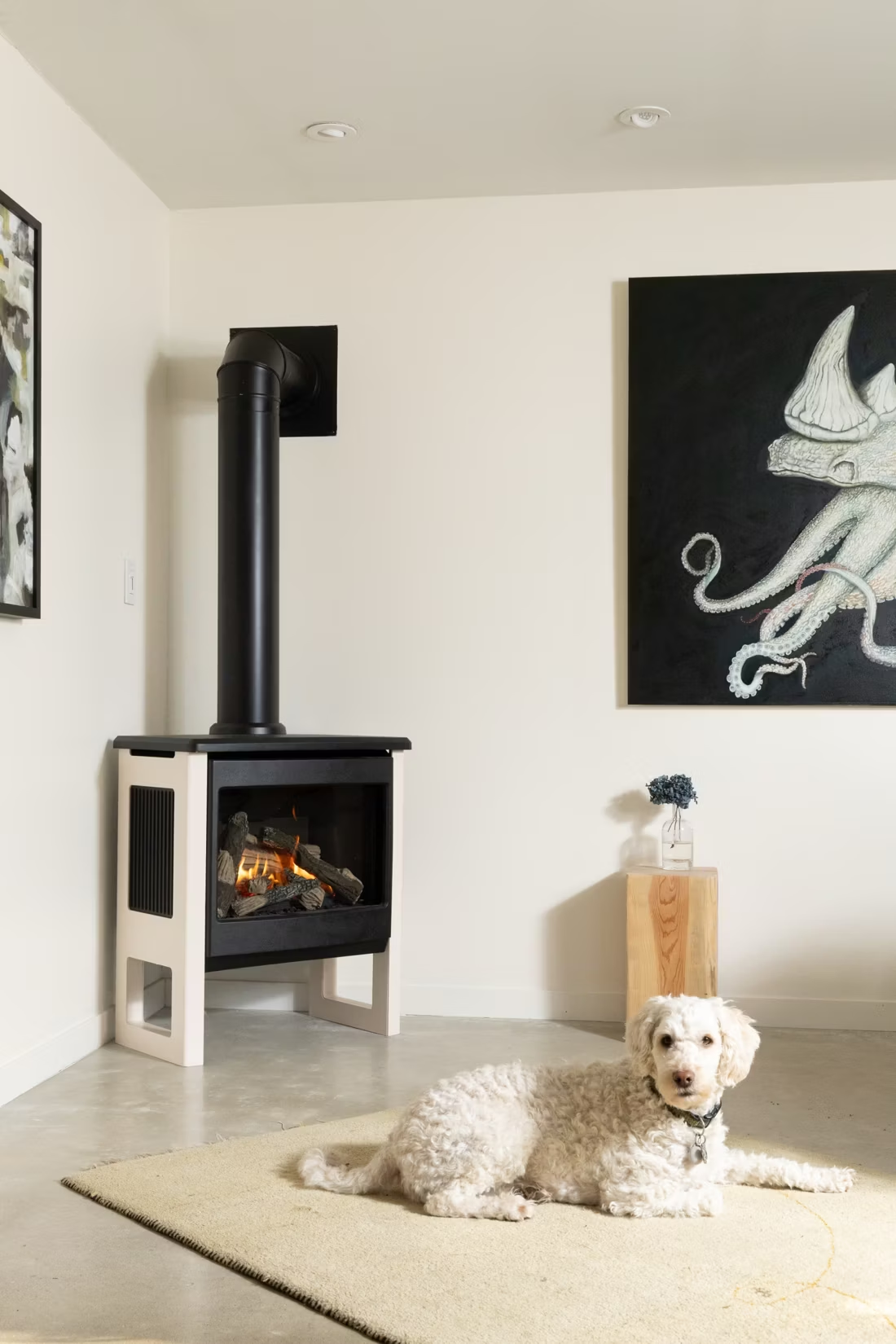
A lot of what we see requested in Greenacres isn't a living-room heater at all—it's a linear gas fireplace as a design centerpiece, a gas log set dropped into an existing decorative masonry fireplace that's never once needed to heat the house, or an outdoor gas fire feature built into a lanai or pool deck for year-round evening use. Because no natural gas utility serves most of Palm Beach County's residential subdivisions the way Florida Power & Light serves electric, propane is the fuel that actually shows up on these installs—tank-fed, sized by a local propane supplier, and set up by an installer who knows the difference between a vented unit and a ventless one under Florida's building code.
Three steps. No salesperson until you're ready.
Tell us about your project
Your zip code, your situation, and the fuel you're leaning toward—or let the answers point you to one.
See what's actually available
The brands dealers within 100 miles genuinely carry—real options, never a catalog mirage.
Get your dealer & Project Guide
A trusted local dealer, plus the free Project Guide & Parts List that names every component of the job.
Frequently Asked Questions
How much does a gas fireplace installation cost in Greenacres?
Most indoor gas fireplace or insert projects in the Greenacres area run roughly $3,500 to $9,000, with the spread driven mainly by whether you're dropping a log set or linear insert into an existing masonry fireplace (lower end) versus building out a new direct-vent unit with framing and a fresh gas line (higher end). Outdoor installations—a gas fire feature on a lanai or pool deck—often land in a similar range once a propane line or dedicated tank is run. Because this part of Palm Beach County isn't broadly served by a piped natural gas utility, plan on propane tank costs or delivery service as part of the estimate a local dealer gives you.
Is natural gas available in Greenacres, or is everything propane?
Most residential areas in and around Greenacres don't have a piped natural gas utility running to the house—Florida Power & Light and the City of Lake Worth Beach serve electricity here, not gas. That means the overwhelming majority of gas fireplaces, log sets, and outdoor fire features in this area run on propane, either from a buried or above-ground tank sized for your appliance or through a local propane delivery service. It's a normal, well-understood setup in South Florida—your installer will size the tank and regulator to match whatever unit you choose.
Can I add a gas fire feature to my lanai or pool deck?
Yes, and it's one of the more common gas requests we see in this part of Palm Beach County. A propane-fed linear fire feature or fire pit built into a pool deck or screened lanai extends outdoor living into the cooler months—December through February evenings here can dip into the 50s, which is exactly when these get used most. The main considerations are wind exposure (open lanais need a unit rated for outdoor wind conditions) and salt-air proximity, since coastal humidity accelerates corrosion on lower-grade metal components. A local dealer familiar with South Florida outdoor installs will spec stainless steel or marine-grade components accordingly.
Does a gas fireplace even make sense in a climate this warm?
Honestly, not as a heating necessity—with about 202 heating degree days a year and winter lows that average 58°F, a Greenacres home will never depend on a fireplace to stay warm the way a house in Duluth or Fargo does. What a gas fireplace does here is add a design focal point, support resale value in a market where buyers expect a fireplace or fire feature in higher-end listings, and give you real, on-demand flame for the genuinely cool snaps South Florida gets a handful of nights each winter. If you're on the fence, that's the honest framing: it's an amenity project, not a survival one.
Vented vs. vent-free gas fireplace—which is allowed in Florida?
Both are used in Florida, but they serve different rooms. Vented (direct-vent) units draw combustion air from outside and exhaust gases back outside through a sealed pipe—they're the safer, more universally recommended choice and what most local dealers install by default. Vent-free units burn directly into the room and are legal in Florida under specific room-size and ventilation requirements, but they release some moisture and combustion byproducts indoors, which matters more in a humid climate like Greenacres's than it would somewhere drier. For most living rooms and lanai installs here, direct-vent is the more common and more comfortable choice long-term.
Do I need a permit to install a gas fireplace in Greenacres?
Yes—a gas fireplace or fire feature installation typically requires a building permit and, since most of the area runs on propane rather than piped utility gas, a separate mechanical/gas permit covering the tank and line work. The City of Greenacres Building Department handles permitting inside city limits; unincorporated pockets of Palm Beach County fall under the county's Building Division instead. A licensed installer who regularly pulls these permits will know which office applies to your address and will typically handle the paperwork as part of the job.
Gas vs. electric fireplace—which is the better fit in Greenacres?
Electric fireplaces are genuinely strong option here: no propane tank, no gas line, and running one costs pennies per hour at Florida Power & Light's residential rate of roughly $0.137/kWh (about $0.126/kWh if you're on City of Lake Worth Beach service). They're also the easiest retrofit into an existing space. Gas wins when you want an actual flame with real heat output for those cooler evenings, or when you're building an outdoor fire feature where an electric unit isn't practical. A lot of Greenacres homeowners end up with electric for an interior accent wall and gas or propane for the lanai or pool deck—they're not mutually exclusive.
What's the best type of gas fireplace for a humid, coastal-adjacent climate?
For indoor installs, a standard direct-vent gas fireplace or insert holds up fine—humidity isn't a major factor once it's sealed and vented. For anything outdoors on a lanai or pool deck, the material spec matters more: look for stainless steel burners and marine-grade or powder-coated components rather than standard steel, since salt air and pool chemical drift both accelerate corrosion in this part of Florida. A local dealer who regularly installs outdoor fire features in Palm Beach County will already default to the right-grade hardware.
Can I convert my existing decorative fireplace to gas?
Many Greenacres homes, especially older construction, have a masonry fireplace that's rarely or never been used for a wood fire. Converting it with a vented gas log set or gas insert is a straightforward, popular project—it turns a decorative feature into something you'll actually use on cool evenings, without any wood, ash, or smoke. Since piped natural gas isn't standard in most neighborhoods here, the conversion usually involves running a propane line to the fireplace and having a licensed installer verify the existing flue can be safely used or lined for gas venting.
Is my gas fireplace wasting gas?
If it was installed more than 15 years ago, probably. Older gas fireplaces keep a standing pilot light burning all the time, and that little flame can cost a couple hundred dollars a year. Newer models use pilot-on-demand ignition—the pilot lights only when you use the fireplace and goes out when you turn it off.
Why is my open fireplace making my house colder?
Open fireplaces suck—literally. As the fire burns, it consumes air your furnace already paid to heat and pulls it out through the chimney, so the house is actually colder after the fire goes out than before you lit it. An insert fixes this: it seals the chimney, puts fixed glass across the front, and turns that hole in your house into a real heat source.
Can I install a fireplace myself?
If you're putting a fire in your house on purpose, it's best to work with an expert. Unless you're genuinely experienced in framing, gas line, vent pipe, and the national code on clearances to combustibles, have a professional do it—and ideally the same company that sells you the fireplace, so warranty, service, and liability all live under one roof.
What is an in-home preview and do I need one?
It's a visit where a hearth professional measures your space, confirms the model you picked actually works in your home, and walks the specs—framing, gas line, venting, finish work—before anything is ordered. Some details you just can't know until you see the house. Never make a down payment without one; it's the single most-skipped step that burns buyers.
Nearby Dealers
Hearth shops serving Greenacres and the surrounding area.
Gas Fire Distributors
Gas Utility Service
Find your gas fireplace in Greenacres.
Tell us about your space—indoors, lanai, or pool deck—and we'll match you with a trusted local dealer and a free Project Guide & Parts List for your gas fireplace project in Greenacres.
Find Your Fireplace →