
Gas fire, Golden Gate style: ambiance over necessity.
With winter lows averaging 52°F and only 344 heating degree days a year, Golden Gate doesn't need a furnace substitute—but a propane fireplace or lanai fire feature still earns its keep on cool December evenings and during hurricane-season power outages.
Every Project Starts From One of These Five Situations
Golden Gate's climate makes gas heat optional, not essential.
Golden Gate sits just 12 feet above sea level in Collier County, squarely inside ASHRAE hot-humid climate zone 2A. The average winter low is 52°F, and the city logs roughly 344 heating degree days a year—for comparison, a place like Duluth, MN racks up more than 9,000. That means gas fireplaces in Golden Gate almost never function as a home's primary heat source. What they do here instead is add glow, ambiance, and a focal point to a great room, lanai, or pool area on the handful of nights each winter when temperatures actually dip.
There's no citywide natural gas utility serving Golden Gate the way Florida Power & Light serves electric—homeowners who want a gas flame here run on propane, delivered and refilled by local LP suppliers and stored in an above-ground or buried tank. Because true heating demand is so low, the most common installs I see in this part of Collier County are outdoor gas fire features built into lanai and pool-cage living spaces, plus a smaller number of indoor units chosen for their light and warmth during power outages after tropical storms and hurricanes.
Three steps. No salesperson until you're ready.
Tell us about your project
Your zip code, your situation, and the fuel you're leaning toward—or let the answers point you to one.
See what's actually available
The brands dealers within 100 miles genuinely carry—real options, never a catalog mirage.
Get your dealer & Project Guide
A trusted local dealer, plus the free Project Guide & Parts List that names every component of the job.
Frequently Asked Questions
Are gas fireplaces common in Golden Gate?
Not especially—and it wouldn't be honest to pretend otherwise. With winter lows averaging 52°F and heating degree days barely cracking 344 for the whole year, most Golden Gate homes get by with central AC/heat strips and never touch a fireplace. The homeowners who do install a gas unit are usually after the visual of a real flame, a focal point for a great room, or an outdoor fire feature for a lanai or pool deck—not a way to survive winter.
How much does a gas fireplace installation cost in Golden Gate?
An indoor propane fireplace or insert typically runs $3,500 to $7,000 installed, depending on the unit and whether a new gas line from the propane tank needs to be run. Outdoor lanai or pool-deck fire features tend to be simpler and land closer to $2,000 to $4,500, since many Golden Gate homes already have concrete pads and open-air framing that make venting a non-issue. A local propane and hearth dealer can give you a firm number after seeing your lanai or living room layout.
Do I need natural gas, or is propane the only option?
Propane is effectively the only practical option in Golden Gate. There's no citywide natural gas distribution network here the way there is in some larger Florida metros—homes run on electricity through Florida Power & Light, and any gas appliance, including a fireplace, is fed by a propane tank installed and refilled by a local LP supplier. Your installer will size the tank and regulator based on the fireplace's BTU output plus any other propane appliances, like a range or pool heater, already on the property.
Can I install a vent-free gas fireplace in Golden Gate?
Vent-free propane fireplaces are legal under Florida building code in most residential applications, and they're popular in this climate precisely because they skip the need for exterior venting through a stucco wall or tile roof. That said, room-size minimums and oxygen-depletion sensor requirements still apply, and Collier County permitting will check for both. A vented direct-vent unit is still the safer, more universally recommended choice for any fireplace that will see regular indoor use—vent-free models are best reserved for occasional-use spaces.
Do I need a permit for a gas fireplace in Golden Gate?
Yes. Collier County's Growth Management Department handles building and mechanical permits for unincorporated areas like Golden Gate, and any new propane line, tank installation, or fireplace unit needs sign-off. A licensed propane contractor typically pulls the gas-side permit while your fireplace installer handles the appliance and clearance inspection. Reputable local dealers coordinate both pieces so you're not stuck chasing two separate inspections yourself.
Should I get an indoor fireplace or an outdoor fire feature?
For most Golden Gate homes, the outdoor option makes more sense. This is lanai and pool-cage country—outdoor living space gets used year-round, and a propane fire table or built-in fire feature extends comfortable evening use into the cooler months without heating a space you don't need heated indoors. Indoor gas fireplaces still make sense for homeowners who want a visual centerpiece in a great room or who specifically want a backup light-and-heat source for storm season. Either way, sizing is really about how you use the space, not how cold it gets.
Will a gas fireplace help during a hurricane power outage?
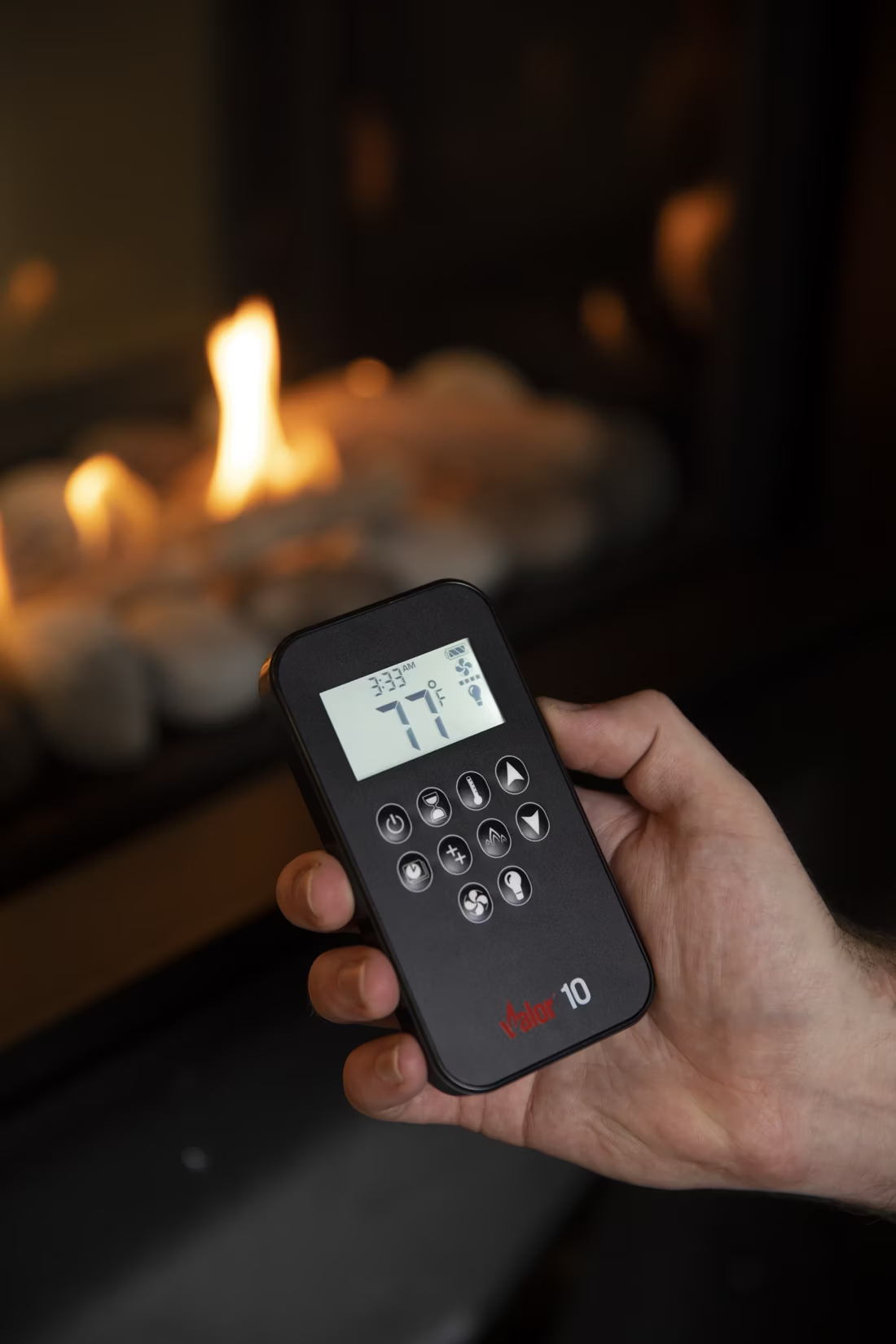
It can, and it's a real reason some Golden Gate homeowners choose gas over electric. A propane fireplace with an on-demand pilot ignition—Valor's models generate their own electricity through the pilot's thermocouple and need no batteries at all—will still light and produce heat and light when Florida Power & Light service is down after a storm. In a county that sees regular tropical storm and hurricane activity, that's a meaningful backup, even if the everyday use case is purely decorative.
Should I just get an electric fireplace instead?
For a lot of Golden Gate homeowners, yes. Electric fireplaces are the more common choice here precisely because Collier County's climate rarely calls for real heat output—an electric unit plugs into an existing outlet, needs no propane tank or gas line, and skips the permitting that comes with any LP gas work. At Florida Power & Light's residential rate of about 13.7 cents per kWh, running one occasionally for the flame effect costs very little. Gas still wins if you want a genuine flame, more heat output for a large great room, or hurricane-outage backup—but if ambiance is the whole goal, electric is the simpler, cheaper path.
What about a wood-burning fireplace instead of gas?
Wood heat has essentially no functional role in Golden Gate. Even though oak, mahogany, and pine all grow locally, a winter low averaging 52°F means there's no real heating need to justify a wood stove or insert, and the humidity and pest pressure of storing firewood in Southwest Florida make it more hassle than benefit. Gas and electric fireplaces both deliver the visual and ambiance homeowners here actually want without the upkeep—if you're choosing between real flame options in Golden Gate, it's a gas-versus-electric decision, not a wood-versus-gas one.
What's the difference between an insert and a zero-clearance fireplace?
An insert is a fireplace that slides into a pre-existing wood-burning fireplace—if you don't have one, there's nothing to insert it into. A zero-clearance fireplace is built into a framed wall, which makes it the answer for remodels and new construction. Simple test: existing masonry fireplace means insert; blank or framed wall means zero-clearance.
Why is my open fireplace making my house colder?
Open fireplaces suck—literally. As the fire burns, it consumes air your furnace already paid to heat and pulls it out through the chimney, so the house is actually colder after the fire goes out than before you lit it. An insert fixes this: it seals the chimney, puts fixed glass across the front, and turns that hole in your house into a real heat source.
Can I install a fireplace myself?
If you're putting a fire in your house on purpose, it's best to work with an expert. Unless you're genuinely experienced in framing, gas line, vent pipe, and the national code on clearances to combustibles, have a professional do it—and ideally the same company that sells you the fireplace, so warranty, service, and liability all live under one roof.
How much should I budget for a fireplace?
For an average home—covering the fireplace, the vent pipe, and basic installation—a budget between $3,900 and $5,500 gives you a lot of options across wood, gas, and pellet. By the time you add finish work, gas line, and electrical, the average complete installation lands between $5,000 and $12,000 all-in. In a remodel or new build, a good rule is to put about 2.5% of the total project cost toward the fireplace.
Nearby Dealers
Hearth shops serving Golden Gate and the surrounding area.
Smoky Stone Outdoor Kitchens - Naples
Southern Coast Fireplace Showroom (By Appointment)
Find your gas fireplace in Golden Gate.
Tell us about your space—indoor great room, lanai, or pool deck—and we'll send your free Project Guide & Parts List: the right propane fireplace or fire feature for your home, the exact parts including tank and line sizing, and a match with a trusted local Golden Gate dealer.
Find Your Fireplace →