
Warmth and ambiance for Apalachicola Bay's mild winters.
From downtown Apalachicola to Carrabelle, Eastpoint, and St. George Island, Franklin County winters rarely demand serious heat—which is exactly why electric fireplaces fit so well here. Find the right unit for your home or rental property, and connect with a trusted local dealer.
Every Project Starts From One of These Five Situations
Real heat isn't really the job here—ambiance and safety are.
Franklin County sits in climate zone 2A along the Gulf, with an average winter low around 39°F and roughly 1,499 heating degree days a year—for comparison, a place like Duluth, Minnesota logs closer to 10,000. That's not a typo; it means most homes here spend the winter needing a jacket, not a furnace overhaul. Wood and pellet heat, common up north, simply don't have a job to do in Apalachicola, Eastpoint, or on St. George Island, and most local homes were never built with a chimney or hearth in mind.
What Franklin County does have is a lot of elevated homes on pilings (a byproduct of building in flood zones after storms like Hurricane Michael and Hurricane Idalia), a large stock of vacation rentals and second homes, and a historic downtown in Apalachicola where altering exterior walls for venting isn't always simple. An electric fireplace sidesteps all of that: no chimney, no gas line, no combustion byproducts, and no structural changes to a pier-and-beam or stilt-built home. It adds real ambiance and a bit of supplemental warmth on the occasional cold front, which is really all this climate asks for.
Three steps. No salesperson until you're ready.
Tell us about your project
Your zip code, your situation, and the fuel you're leaning toward—or let the answers point you to one.
See what's actually available
The brands dealers within 100 miles genuinely carry—real options, never a catalog mirage.
Get your dealer & Project Guide
A trusted local dealer, plus the free Project Guide & Parts List that names every component of the job.
Frequently Asked Questions
How much does an electric fireplace installation cost in Franklin County?
Electric fireplaces are the least expensive hearth option to install, and that's especially true here since there's no chimney, gas line, or masonry work involved. A plug-in wall-mount or freestanding unit can run a few hundred dollars installed. A recessed, hardwired built-in unit set into a wall or existing mantle—the more common choice for a permanent living-room installation in Apalachicola or Carrabelle—typically costs more once an electrician runs a dedicated circuit. Because there's no venting to size and no combustion appliance to inspect, electric installs are usually the fastest hearth project a local dealer will quote.
Will my electric fireplace still work during a hurricane power outage?
No—and this is worth being direct about given where you live. Electric fireplaces run entirely on household current, whether your home is served by Duke Energy Florida in and around Apalachicola or Talquin Electric Cooperative in the more rural parts of the county. If a storm knocks out power, the fireplace goes dark along with everything else, and it won't come back until the grid or a generator does. If backup heat during outages actually matters to you—less common in a 39°F-average-low climate, but not unheard of after a cold front behind a storm—a propane option is worth discussing with your dealer alongside the electric unit.
What's the difference between an electric insert, a wall-mount, and a built-in unit?
A wall-mount unit hangs on the wall like a large flat-screen and plugs into a standard outlet—the simplest option for a rental unit or a room without an existing fireplace. An electric insert is designed to drop into an existing masonry or wood-burning fireplace opening, which works well for the handful of older Apalachicola homes that still have a hearth from an earlier era. A built-in unit is framed into a wall or custom mantle surround and typically needs a dedicated circuit run by an electrician. For most Franklin County homes without an existing fireplace, a built-in or a quality wall-mount is the more common route.
Do I need a permit to install an electric fireplace in Franklin County?
A simple plug-in electric fireplace generally doesn't require a permit since there's no new wiring or structural work involved. A hardwired built-in unit that needs a new circuit does typically require an electrical permit through the Franklin County Building Department, and homes inside Apalachicola's historic district may have additional review if the installation changes an exterior wall or a visible mantle surround. Your local dealer can tell you which category your project falls into before work starts.
Electric vs. gas—which makes more sense for a Franklin County home?
Gas is the more common choice for homeowners who want a real flame and genuine heat output, and propane is the standard fuel here since municipal natural gas service isn't available across most of the county. Electric skips the flame realism but wins on cost, installation simplicity, and safety—no open flame, no combustion byproducts, and no venting to maintain, which matters in a coastal, humid, salt-air environment where metal chimney components corrode faster. For rental properties on St. George Island or Alligator Point especially, electric's lower liability and easier remote operation (many units have app or timer control) make it the more practical pick for an owner who isn't on-site.
Are wood or pellet stoves ever installed in Franklin County?
Rarely, and it's worth saying plainly: with 1,499 heating degree days and winter lows averaging around 39°F, there's little practical need for a wood or pellet stove here, and most local homes weren't built with a chimney or hearth to support one. The oak, mahogany, and pine common to the region are occasionally burned in outdoor fire pits or the odd legacy fireplace in an older Apalachicola home, but as a primary heat source, wood and pellet appliances just don't fit this climate or this building stock the way they do further north.
Can an electric fireplace be installed in a home built on pilings?
Yes, and it's often the easiest hearth option for elevated construction. Homes built on pilings or stilts due to flood zone requirements—common throughout Eastpoint, Carrabelle, and St. George Island—don't have to route a chimney or gas line up through the structure, which can be a real headache with wood or gas appliances. An electric unit can be recessed into interior wall framing or mounted flush against it, with only a standard electrical run required. It's one less thing to coordinate with your framing and one less penetration through an elevated floor system.
How much heat does an electric fireplace actually put out?
Most residential electric fireplaces put out around 4,600 to 5,000 BTU on their heat setting, enough to comfortably warm a single room in the 400 to 1,000 square foot range. Given Franklin County's mild winters, that's typically more than sufficient—most homeowners here are using the heat function occasionally, on the handful of nights when a cold front pushes through, and running the flame effect on ambiance alone the rest of the time. If you're trying to heat a larger open living space, talk to a local dealer about a larger built-in model or a second unit rather than relying on one small fireplace to do it all.
Is an electric fireplace a good fit for a vacation rental on St. George Island?
It's often the top choice for exactly that use case. With no open flame, no gas line, and no combustion exhaust to maintain, electric fireplaces are lower-liability for an owner managing a rental remotely, easier to explain to guests, and simpler for a property manager to reset between bookings. Many units include app or remote control, which lets an off-site owner adjust settings without a site visit. Pair that with the coastal humidity and salt air that can be tough on any exposed metal venting components, and electric's sealed, vent-free design holds up better over time than a gas or wood alternative in a rental setting.
Can I put a TV above my fireplace?
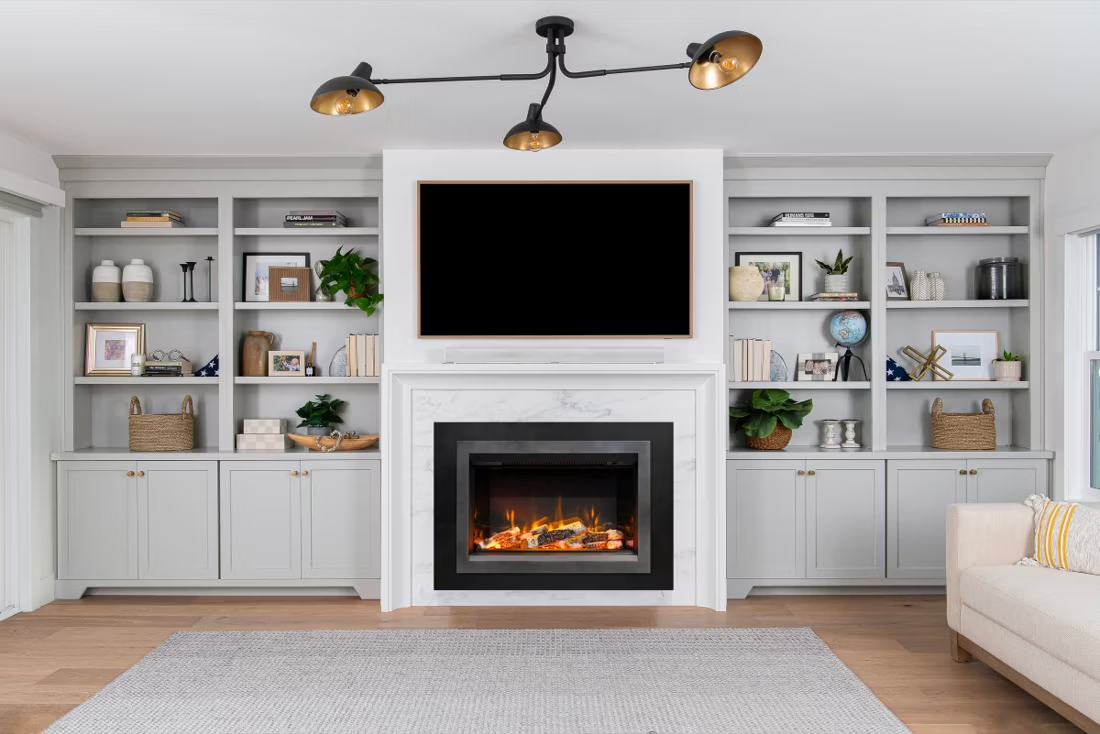
Yes—with an asterisk. Fireplaces are hot and TVs don't like heat. Either put a mantel between them to deflect rising warmth, or choose a fireplace with heat-management technology that creates a cool zone on the wall above—the wall stays around 125 degrees, barely warm, while the room still gets full heat. If you like clean lines and don't want a mantel, heat management is the answer.
How much does an electric fireplace cost to run?
With the heater on, a typical unit draws about 1,500 watts—at average electric rates that's roughly 20 cents an hour. Run the flame effect alone and it costs pennies; the flames are LED-driven and use about as much power as a light bulb. There's no pilot light, no fuel delivery, and essentially no maintenance.
How much should I budget for a fireplace?
For an average home—covering the fireplace, the vent pipe, and basic installation—a budget between $3,900 and $5,500 gives you a lot of options across wood, gas, and pellet. By the time you add finish work, gas line, and electrical, the average complete installation lands between $5,000 and $12,000 all-in. In a remodel or new build, a good rule is to put about 2.5% of the total project cost toward the fireplace.
What is an in-home preview and do I need one?
It's a visit where a hearth professional measures your space, confirms the model you picked actually works in your home, and walks the specs—framing, gas line, venting, finish work—before anything is ordered. Some details you just can't know until you see the house. Never make a down payment without one; it's the single most-skipped step that burns buyers.
Stove and Fireplace Dealers in Franklin County
Find your electric fireplace in Franklin County.
Tell us a bit about your home or rental property and we'll match you with the right electric fireplace or insert, plus a free Project Guide & Parts List—the exact parts and a recommended local Franklin County dealer to get it installed right.
Find Your Fireplace →