
Warmth on demand for Duval County's mild, humid winters.
A gas fireplace in Jacksonville isn't about survival heat—it's ambiance most nights and real comfort during the occasional hard freeze. Find the right unit and get matched with a trusted local dealer anywhere in Duval County.
Every Project Starts From One of These Five Situations
Ambiance first, warmth when it counts.
Duval County sits in climate zone 2A—hot and humid, with only 944 heating degree days a year. That's a rounding error compared to the 8,000-plus HDD racked up annually in Duluth, Minnesota, and it means almost no home in Jacksonville, Arlington, Mandarin, or the Southside is heating-dependent the way a Northern home is. Average winter lows hover around 47°F, but Duval County does get genuine cold snaps most winters—nights that dip into the 20s, occasionally accompanied by a hard freeze warning for the county's remaining agricultural pockets out toward the Westside. Wood and pellet stoves are essentially non-existent here; with population above 1.3 million and a climate this mild, there's no real market for cordwood heat, and most residents wouldn't have anywhere to source or store it even if they wanted to.
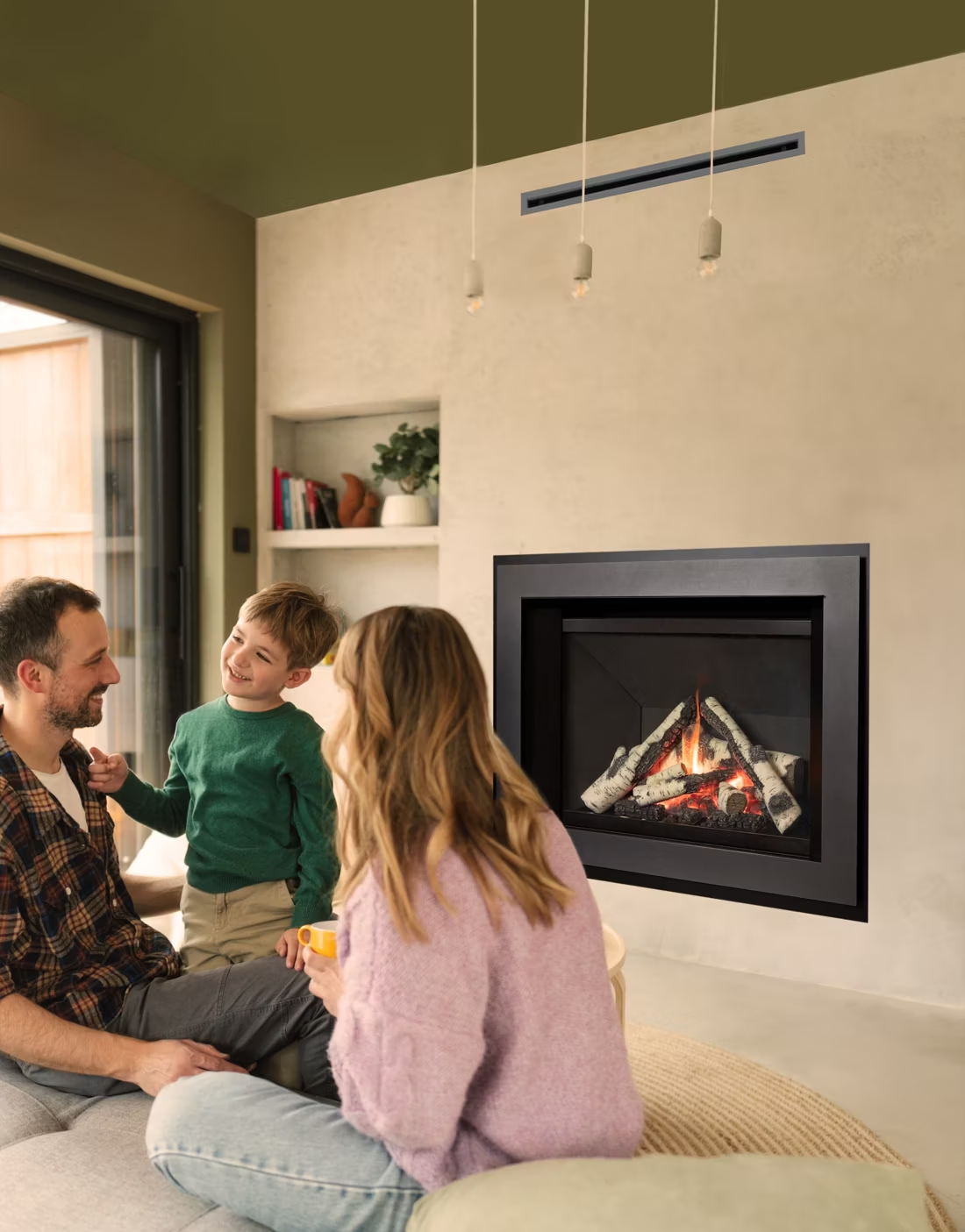
Gas fireplaces, by contrast, are genuinely standard across Duval County—installed for the flip-a-switch ambiance of a fire in the family room, the resale appeal in neighborhoods like Riverside and San Marco, and the occasional need for real supplemental heat on those 20-degree nights. Peoples Gas (a TECO Energy company) runs natural gas service through most of urban and suburban Jacksonville; homes further out toward rural western Duval or without a gas main nearby typically run on a propane tank instead. Either way, a properly installed direct-vent gas fireplace or insert gives you instant heat with none of the humidity, insects, or storage headaches that would come with burning wood in a climate this damp.
Three steps. No salesperson until you're ready.
Tell us about your project
Your zip code, your situation, and the fuel you're leaning toward—or let the answers point you to one.
See what's actually available
The brands dealers within 100 miles genuinely carry—real options, never a catalog mirage.
Get your dealer & Project Guide
A trusted local dealer, plus the free Project Guide & Parts List that names every component of the job.
Frequently Asked Questions
How much does a gas fireplace installation cost in Duval County?
A typical gas fireplace or insert installation in Duval County runs $3,800 to $8,500, and installs here tend to land toward the lower end of what you'd see in a colder state—there's no chimney rebuild or complex cold-climate venting to account for. A direct-vent insert going into an existing masonry fireplace in an older Riverside or Avondale bungalow, with a gas line already nearby, sits on the lower end. A new built-in unit in a remodel or new-construction home in Nocatee-adjacent Mandarin or the Southside, requiring fresh gas line work and framing, runs closer to the top. Propane setups without an existing tank add cost for the tank itself. A local dealer will give you a firm number after seeing the space.
Can I convert my existing wood-burning fireplace to gas?
Yes, and it's a common project in Duval County's older housing stock—Riverside, Avondale, Springfield, and San Marco all have plenty of homes with original masonry fireboxes that were built decades ago for wood but haven't burned an actual log in years. A gas insert drops into that existing opening and uses a stainless liner run up the current chimney, typically for $3,800 to $7,000 depending on whether you're on natural gas from Peoples Gas or need a propane setup. It keeps the historic mantel and surround intact while giving you real heat output and none of the humidity and pest issues that come with storing firewood in North Florida.
Do I need natural gas, or is propane the right call in Duval County?
It depends on where in the county you are. Peoples Gas service covers most of the urban and inner-suburban parts of Jacksonville—if your home already has gas for a water heater or range, adding a fireplace is straightforward. Outside that footprint, especially in the more rural stretches of western and southern Duval County, propane is the standard fallback, either from an existing tank or a new tank set by a local propane supplier. Nearly every gas fireplace model on the market can be configured for either fuel; your installer sets the correct orifice and regulator for whichever you're running.
Will my gas fireplace still work if the power goes out?
Most will, which matters in Duval County given hurricane season. Units with IPI (intermittent pilot ignition) run on a small battery backup inside the unit that kicks in the moment power drops, so the fireplace still lights on demand—just remember to keep the batteries fresh. Valor fireplaces work a bit differently: their pilot generates its own electricity through the thermocouple, so there's no battery to maintain at all. After a named storm knocks out JEA electric service for days, a gas fireplace that still lights without power is a real asset. Ask your local dealer which ignition system a given model uses.
What's the difference between a gas fireplace, gas insert, and gas stove?
A gas fireplace is a fully built-in unit framed into a wall—the standard choice for new construction in Duval County's newer subdivisions out toward Nocatee-adjacent areas and the Southside. A gas insert fits into an existing masonry firebox, which is the common route for older homes in Riverside, Avondale, and San Marco with fireplaces that haven't burned wood in years. A gas stove is a freestanding cabinet-style unit that sits out on the floor, less common here but occasionally chosen for a den or Florida room. For most Duval County homeowners with an existing fireplace, an insert is the straightforward answer.
Do I need a permit to install a gas fireplace in Duval County?
Yes. Because Jacksonville and Duval County operate under consolidated government, permitting for both the building work and the gas line runs through the City of Jacksonville's Building Inspection Division rather than a separate county office. A licensed gas-fitter is required for the line work, and most installations also need a mechanical or building permit depending on the scope. Reputable local dealers handle this paperwork as part of the install, which is one of the real advantages of working with a certified retailer instead of a handyman.
Should I go vented or vent-free in a climate this humid?
For Duval County, vented (direct-vent or B-vent) is the clear recommendation. Vent-free units burn fuel directly into the room and release combustion byproducts, including water vapor, into the living space—and Jacksonville's air is already loaded with humidity most of the year. Adding more moisture indoors invites mold and window condensation issues that homes here don't need. Direct-vent units draw combustion air from outside and exhaust everything back outside through a sealed system, which keeps indoor air quality unaffected regardless of how sticky it already is outside. Vent-free is technically legal in Florida, but nearly every local dealer will steer you toward direct-vent for this climate.
How often should a gas fireplace be serviced in Duval County?
Plan on an annual inspection, and don't skip it if you're within a few miles of the St. Johns River or the coast—the salt-laden, humid air common to Jacksonville accelerates corrosion on burner components and venting hardware faster than it would inland. A certified technician checks the burner, pilot assembly, gas connections, and venting, and cleans the glass and interior. Local gas appliance service providers typically charge $150 to $250 for this visit, and it's cheap insurance against a burner that won't ignite reliably by the time the next cold front rolls through.
Gas vs. electric fireplace—which makes more sense in Duval County?
Given how mild Duval County's winters are, this is a more relevant question here than it would be up north. A gas fireplace delivers real heat output—useful on those 20-degree nights—plus the look and sound of an actual flame, but it requires a gas line or propane tank and professional venting. An electric fireplace needs nothing but a standard outlet, can go anywhere in the house including a condo on the Southside or an apartment near San Marco, and produces zero combustion byproducts—but it's supplemental ambiance only, not a real heat source for a cold snap. For a primary living room where you want both credible warmth and resale appeal, gas usually wins. For a bedroom, guest suite, or rental property where flexibility matters more than BTUs, electric is often the simpler, cheaper answer.
Why is a fireplace insert so efficient?
An insert does two things: it seals the chimney completely, so you stop losing air you already paid to heat, and it radiates warmth into the room through the firebox and glass. Most add a heat-exchange fan that pulls cool room air underneath, wraps it around the hot firebox, and pushes it back out warm. Your home is more efficient before you've even lit the first fire.
What's the difference between radiant and convective fireplace heat?
Most fireplaces are a thin metal box—they heat fine, but you rely on the fan to move the warmth into the room. Radiant models use a thick cast-ceramic firebox, about an inch and a quarter thick, that soaks up the fire's heat and radiates roughly 25–30% more warmth into the room with no fan running. If you watch TV in the same room or want heat in a power outage, radiant is worth asking about.
Does a fireplace add value to my home?
On average, a fireplace adds back to the home about the same amount you spent installing it. Add the monthly savings from heating the rooms you actually use instead of the whole house—often hundreds of dollars a year—and the value case is strong before you even count what a fire does for how your family uses the room.
How much should I budget for a fireplace?
For an average home—covering the fireplace, the vent pipe, and basic installation—a budget between $3,900 and $5,500 gives you a lot of options across wood, gas, and pellet. By the time you add finish work, gas line, and electrical, the average complete installation lands between $5,000 and $12,000 all-in. In a remodel or new build, a good rule is to put about 2.5% of the total project cost toward the fireplace.
Stove and Fireplace Dealers in Duval County
Find your gas fireplace in Duval County.
Tell us a bit about your home and we'll match you with a trusted local dealer and send over a free Project Guide & Parts List—the exact parts, vent kit included, for your gas fireplace project in Duval County.
Find Your Fireplace →