
The easiest fireplace upgrade for beachfront living in Daytona Beach Shores.
No chimney, no permits, no wood smoke—just ambiance and occasional heat, sized for a barrier-island climate where furnace-grade warmth is rarely the point.
Every Project Starts From One of These Five Situations
Heat is optional here. Ambiance isn't.
Daytona Beach Shores sits on a narrow barrier island in Volusia County, in climate zone 2A, where winters average a low of 49°F and the entire heating season is barely there—just a fraction of what a place like Duluth, MN racks up in a single cold month. Wood-burning fireplaces are essentially absent here: masonry chimneys are rare in the mid-rise condo towers and beachfront homes that make up most of the housing stock, and coastal homeowners insurance tends to discourage open combustion appliances near salt air and shared walls. Electric fireplaces fill the gap, delivering the look of a fire with none of the venting, fuel storage, or smoke.
Both Florida Power & Light and Duke Energy Florida serve addresses in and around Daytona Beach Shores, with residential rates running roughly 13.7¢ to 16.6¢ per kWh depending on which utility reaches your street. That makes electric fireplaces cheap to run for a few hours of evening ambiance, and most plug-in inserts and mantels need nothing more than a standard outlet—no gas line, no chimney, no combustion permit. For condo owners and HOA communities along A1A, that simplicity is usually the deciding factor over a gas or propane alternative.
Three steps. No salesperson until you're ready.
Tell us about your project
Your zip code, your situation, and the fuel you're leaning toward—or let the answers point you to one.
See what's actually available
The brands dealers within 100 miles genuinely carry—real options, never a catalog mirage.
Get your dealer & Project Guide
A trusted local dealer, plus the free Project Guide & Parts List that names every component of the job.
Frequently Asked Questions
How much does an electric fireplace cost to install in Daytona Beach Shores?
Plug-in electric fireplace inserts and freestanding mantels typically run $300 to $1,200 installed, since most models just need a standard 120V outlet and no permit. Built-in linear electric fireplaces set into a wall or an existing masonry opening run higher—usually $1,500 to $3,500—once you factor in framing, a dedicated circuit, and finish work like tile or a custom surround. Because there are almost no existing wood fireplaces to retrofit here, most projects are new installations in a den, living room, or lanai rather than conversions.
Do I need a permit or a licensed electrician?
A plug-in electric fireplace that runs off a standard outlet doesn't require a permit. A hardwired built-in unit on its own circuit does require an electrical permit through the City of Daytona Beach Shores or Volusia County Building Division depending on your address, and that work should go through a licensed electrician—most local hearth dealers either employ one or coordinate with one directly. If you're in a condo or HOA building along A1A, check your association's rules before any wall-mounted install; many require board approval for anything that alters a shared wall or exterior-facing unit.
What will an electric fireplace cost me to run each month?
A typical 1,500-watt electric fireplace running on heat mode for 3 hours a night uses about 4.5 kWh a day. At Florida Power & Light's residential rate of roughly 13.7¢/kWh, that's about $18-19 a month; at Duke Energy Florida's rate closer to 16.6¢/kWh, it's closer to $22-23. Most owners here run the flame-only mode far more often than heat mode, given winter lows average only 49°F, which cuts the real-world cost to just a few dollars a month.
Why don't more homes in Daytona Beach Shores have wood-burning fireplaces?
Wood heat doesn't make much sense in this climate or this housing stock. With such a short, mild heating season each year and winter lows averaging 49°F, there's rarely a need for real heating output from a fireplace—most demand here is for ambiance on the occasional cool evening. The city is also mostly mid-rise condos and coastal homes without existing masonry chimneys, and adding one is a major structural project on a barrier island. A handful of owners with mainland Volusia County properties keep wood stoves for the genuinely cold nights, and oak, mahogany, and pine are the species most available locally when they do—but within Daytona Beach Shores itself, electric is by far the practical choice.
What's the difference between an electric insert, a built-in linear unit, and a freestanding electric fireplace?
An electric insert drops into an existing fireplace opening—useful if you have an old masonry firebox you want to convert without touching the chimney. A built-in linear electric fireplace is framed into a wall like a piece of architecture, popular in condo renovations and open-concept living rooms along the beachside corridor. A freestanding or mantel-style unit is furniture—no installation beyond plugging it in, and it moves with you if you relocate. For renters and condo owners still deciding on long-term plans, freestanding units are the lowest-commitment option; for a permanent renovation, a built-in linear unit gives the cleanest look.
Are electric fireplaces reliable in humid, salty coastal air?
Yes, provided you choose a unit built for it. Standard electric fireplace components can corrode faster in a barrier-island environment than they would further inland, so look for models with sealed electronics and corrosion-resistant housings—Dimplex and Napoleon both make lines rated for coastal or high-humidity installs. A local dealer familiar with Daytona Beach Shores installs will know which specific models hold up here versus ones better suited to drier inland Florida.
Electric vs. gas fireplace—which makes more sense here?
Gas is a real option in Daytona Beach Shores, but it usually means propane rather than piped natural gas, since gas utility infrastructure on the barrier island is limited—that means a tank, a fuel delivery contract, and gas line work that electric installs skip entirely. Electric wins on simplicity and upfront cost for anyone who wants ambiance without adding a fuel system to a condo or beach house. Gas can make sense if you specifically want heat that keeps working during a power outage after a storm, since electric fireplaces go dark when the grid does. Given how mild winters are here, most homeowners choose electric and treat storm backup power, if any, as a separate conversation.
Can I add an electric fireplace to a condo unit in a high-rise building?
In most cases, yes—electric fireplaces are one of the few hearth options condo boards along Daytona Beach Shores' oceanfront corridor readily approve, precisely because a plug-in unit involves no venting, no combustion, and no change to the building's fire-rated wall assemblies. Built-in units that require cutting into a wall for a linear fireplace usually need board sign-off and sometimes a contractor's certificate of insurance. Always check your association's documents before ordering—it's a five-minute call that avoids a returned fireplace.
What about pellet stoves—are those an option here?
Not really, and it's worth being direct about that. Pellet stoves need combustion venting and a hopper refilled with fuel, and there's essentially no local demand or distribution for pellet brands like Lignetics or Hamer Pellet Fuel this far south—those get stocked for colder parts of the state and region, not barrier-island Volusia County. With such a short, mild heating season each year and winter lows in the high 40s, there's no real heating case for a pellet appliance in Daytona Beach Shores, and electric covers the ambiance use case without any fuel logistics at all.
Can I put a TV above my fireplace?
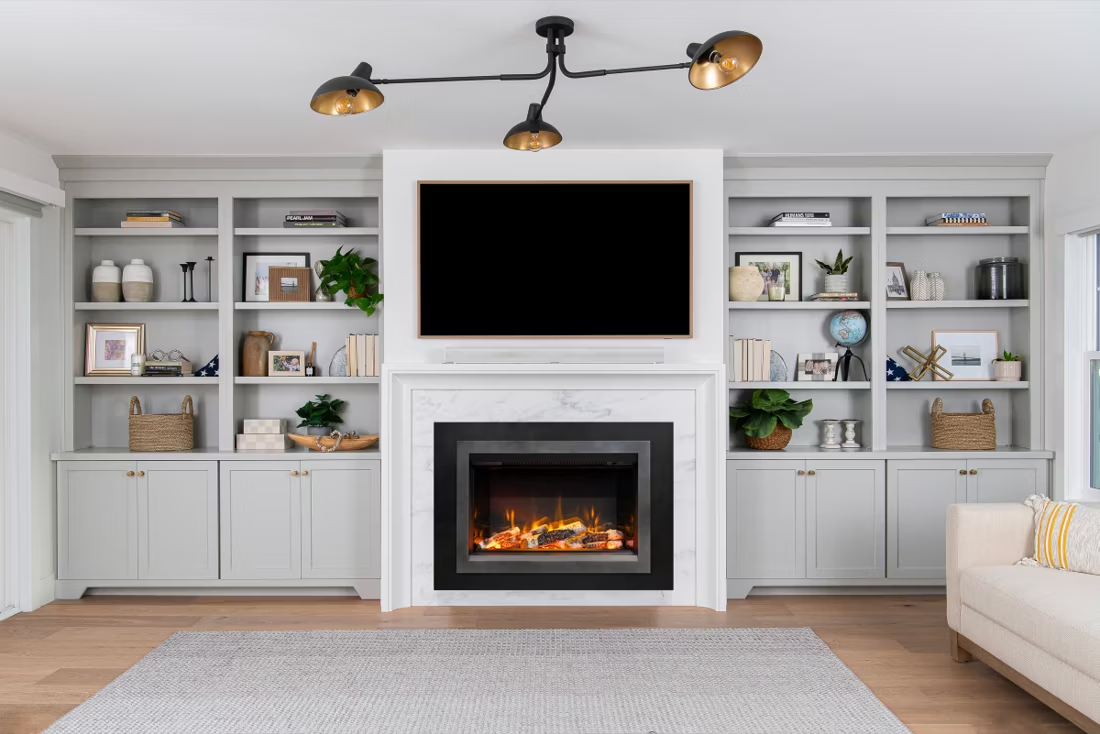
Yes—with an asterisk. Fireplaces are hot and TVs don't like heat. Either put a mantel between them to deflect rising warmth, or choose a fireplace with heat-management technology that creates a cool zone on the wall above—the wall stays around 125 degrees, barely warm, while the room still gets full heat. If you like clean lines and don't want a mantel, heat management is the answer.
Does an electric fireplace need a vent or chimney?
No—that's its superpower. An electric fireplace needs a wall and an outlet, period. No vent pipe, no gas line, no clearances to design around, which is why it works in bedrooms, offices, apartments, and walls where venting a gas or wood unit would be impractical or impossible. Installation is typically the simplest and least expensive of any fireplace type.
What is an in-home preview and do I need one?
It's a visit where a hearth professional measures your space, confirms the model you picked actually works in your home, and walks the specs—framing, gas line, venting, finish work—before anything is ordered. Some details you just can't know until you see the house. Never make a down payment without one; it's the single most-skipped step that burns buyers.
Can a fireplace actually lower my heating bill?
Yes—by creating a comfort zone. A furnace heats every square foot of the house just to warm the one room you're in; a gas fireplace on low burns roughly a sixth of the gas a typical furnace does. Set the furnace around 55–60 degrees as a baseline, then heat the rooms your family actually uses. Families who heat this way commonly save $20–$60 a month.
Nearby Dealers
Hearth shops serving Daytona Beach Shores and the surrounding area. Every listing shows whether it is a WhyFire partner, a dealer we have verified as authorized for the brands we recommend, or a local business carrying hearth products. No manufacturer pays for placement. How we verify dealers →
John's Appliance City
Daytona Gas & Grill
Electric Service in Daytona Beach Shores
An electric fireplace's heater draws about 1,500 watts—pennies per hour at local rates.
Florida Power & Light Co
Duke Energy Florida, LLC
Find your electric fireplace in Daytona Beach Shores.
Tell us about your condo or coastal home and we'll match you with a trusted local dealer and a free Project Guide & Parts List—the exact unit, mounting hardware, and electrical requirements for your space.
Find Your Fireplace →