
Find a gas fireplace built for Clay County's mild winters.
With only about 944 heating degree days a year and winter lows averaging 47°F, Clay County homes don't need a furnace-grade fire—they need real flame, instant on-off control, and a backup during hurricane-season outages. Find the right unit and connect with a trusted local dealer.
Every Project Starts From One of These Five Situations
Ambiance first, heat second—and that's the right call here.
Clay County sits in climate zone 2A, which means winters that rarely test a home's heating system the way they do in Duluth or Bismarck. A typical January night lands in the high 40s, and even the sharpest cold-front snaps into the 20s pass in a day or two. That's a fraction of the roughly 944 heating degree days the county racks up in a year—for comparison, a place like Burlington, VT sees more than seven times that. Plenty of older homes in Green Cove Springs and Orange Park still have a wood-burning masonry fireplace built decades ago for oak or pine, but true wood heat has never been a necessity here the way it is farther north—most of those fireplaces sat unused more often than not.
That's exactly why gas has become the go-to upgrade across the county. In developed areas like Fleming Island and Oakleaf Plantation, Peoples Gas System (TECO) runs natural gas service, making a direct-vent gas fireplace or insert a straightforward add if the line is already nearby. Out in Middleburg, Keystone Heights, and much of unincorporated Clay County, propane is the standard, supplied by regional tank services rather than a utility main. Either way, a gas fireplace gives you real flame at the flip of a switch—useful for the handful of genuinely cold nights each winter, and, with the right ignition system, a source of heat and light during the power outages that come with hurricane season and the county's mature pine tree canopy.
Three steps. No salesperson until you're ready.
Tell us about your project
Your zip code, your situation, and the fuel you're leaning toward—or let the answers point you to one.
See what's actually available
The brands dealers within 100 miles genuinely carry—real options, never a catalog mirage.
Get your dealer & Project Guide
A trusted local dealer, plus the free Project Guide & Parts List that names every component of the job.
Frequently Asked Questions
How much does a gas fireplace installation cost in Clay County?
Cost depends heavily on what you're starting with. Converting an existing masonry fireplace to a direct-vent gas insert—common in older Orange Park and Green Cove Springs homes—is usually the most affordable path, since the chimney is already in place and just needs a liner. A new built-in gas fireplace for a remodel or a newer Fleming Island or Oakleaf Plantation build costs more once framing and venting are factored in, and homes relying on propane may need a tank install or line run if one isn't already on the property. Rather than guess at a number that doesn't reflect your actual home, a local dealer will walk your space and give you a firm quote as part of your free Project Guide & Parts List.
Can I convert my existing wood fireplace to gas?
Yes, and it's one of the most common projects in Clay County's older housing stock. Many homes in Green Cove Springs and the original Orange Park neighborhoods were built with a masonry fireplace designed for oak or pine, and a gas insert can usually be fitted into that same firebox using the existing chimney as a liner path. It keeps the mantel and hearth you already have while eliminating ash, smoke, and the hassle of sourcing firewood you rarely need in a 2A climate. A local dealer can confirm your chimney's condition and whether it's natural gas or propane compatible before recommending a specific insert.
Do I need natural gas, or does propane work in Clay County?
Both are used locally, and which one applies depends on where you live. Peoples Gas System (TECO) provides natural gas service in more developed pockets of the county, including parts of Fleming Island and Oakleaf. Outside those service areas—Middleburg, Keystone Heights, and much of the unincorporated county served by Clay Electric Cooperative for power—propane is the standard, delivered and stored in a tank on the property. Most gas fireplace models can be set up for either fuel with the correct orifice, so the choice usually comes down to what's already reaching your address rather than the unit itself.
Will my gas fireplace still work if the power goes out?
It can, and in Clay County that's worth planning for given how often hurricane season and downed pines take out power for days at a time. Gas fireplaces with IPI (intermittent pilot ignition) run on a small battery backup that kicks in automatically when the grid drops, so the unit lights on demand just like normal—as long as the batteries are fresh. Valor fireplaces take a different approach: their pilot generates its own electricity through the thermocouple, so there's no battery to remember at all. For a county that regularly sees storm-related outages, that distinction is worth asking your local dealer about before you pick a model.
What's the difference between a gas fireplace, gas insert, and gas stove?
A gas fireplace is a fully built-in unit framed into a wall—the right call for newer construction in Fleming Island or Oakleaf without an existing hearth. A gas insert slides into an existing masonry firebox, which fits the older wood-burning fireplaces common in Green Cove Springs and Orange Park. A gas stove is a freestanding unit that sits on its own hearth pad and can go almost anywhere with the right clearances, which works well in a Middleburg home without a fireplace at all. Most Clay County homeowners already have a fireplace opening to work with, so an insert is the most common upgrade.
Do I need a permit to install a gas fireplace in Clay County?
Yes—a building permit and gas line permit are required for new installations, whether you're in unincorporated Clay County or inside Green Cove Springs, Orange Park, or Keystone Heights, each of which handles its own permitting separately from the county building division. A licensed gas-fitter is required for the line work regardless of jurisdiction. Most established hearth dealers coordinate the permit, the gas line, and the inspection as one package, which is one of the reasons working with a trusted local installer beats a big-box purchase and self-install.
What's the difference between vented and vent-free gas fireplaces—and does Florida's humidity matter?
Vented (direct-vent) gas fireplaces pull combustion air from outside and exhaust it back outside through sealed venting. Vent-free units burn directly into the room, releasing some water vapor and combustion byproducts indoors. That water vapor is a real consideration in a hot-humid 2A climate like Clay County's, where indoor humidity control already matters for mold and comfort—adding a vent-free unit's moisture output on top of that isn't ideal. Vent-free fireplaces are legal in Florida with proper room sizing and oxygen depletion sensors, but most local dealers steer Clay County homeowners toward direct-vent units for both the air quality and the more authentic flame.
How often should my gas fireplace be serviced in Clay County?
An annual inspection is recommended, ideally before the first cool front of the season. A technician checks the burner, pilot assembly, gas connections, and venting, and cleans the glass and interior. In Clay County's climate, vent screens and exterior terminations are also worth a look during that visit—insects and humidity can affect the venting components more here than in drier northern climates. The gas appliance service providers your local dealer works with typically bundle this into a routine maintenance visit.
Should I even consider wood heat instead of gas in Clay County?
For most homes here, no—and it's worth being direct about that. With only about 944 heating degree days a year and winter lows averaging 47°F, a wood stove or wood insert is rarely a practical primary heat source in Clay County, and demand for one is low outside a handful of hobbyists who enjoy burning oak or pine for atmosphere on the coldest nights. Gas fireplaces fit the county's actual climate much better: instant flame when a cold front rolls through, no wood storage or ash cleanup, and—with the right ignition system—a workable light and heat source during hurricane-season power outages. If you inherited an old wood-burning masonry fireplace, converting it to a gas insert is almost always the more practical move than keeping it wood-burning.
Why is my open fireplace making my house colder?
Open fireplaces suck—literally. As the fire burns, it consumes air your furnace already paid to heat and pulls it out through the chimney, so the house is actually colder after the fire goes out than before you lit it. An insert fixes this: it seals the chimney, puts fixed glass across the front, and turns that hole in your house into a real heat source.
Can I put a TV above my fireplace?
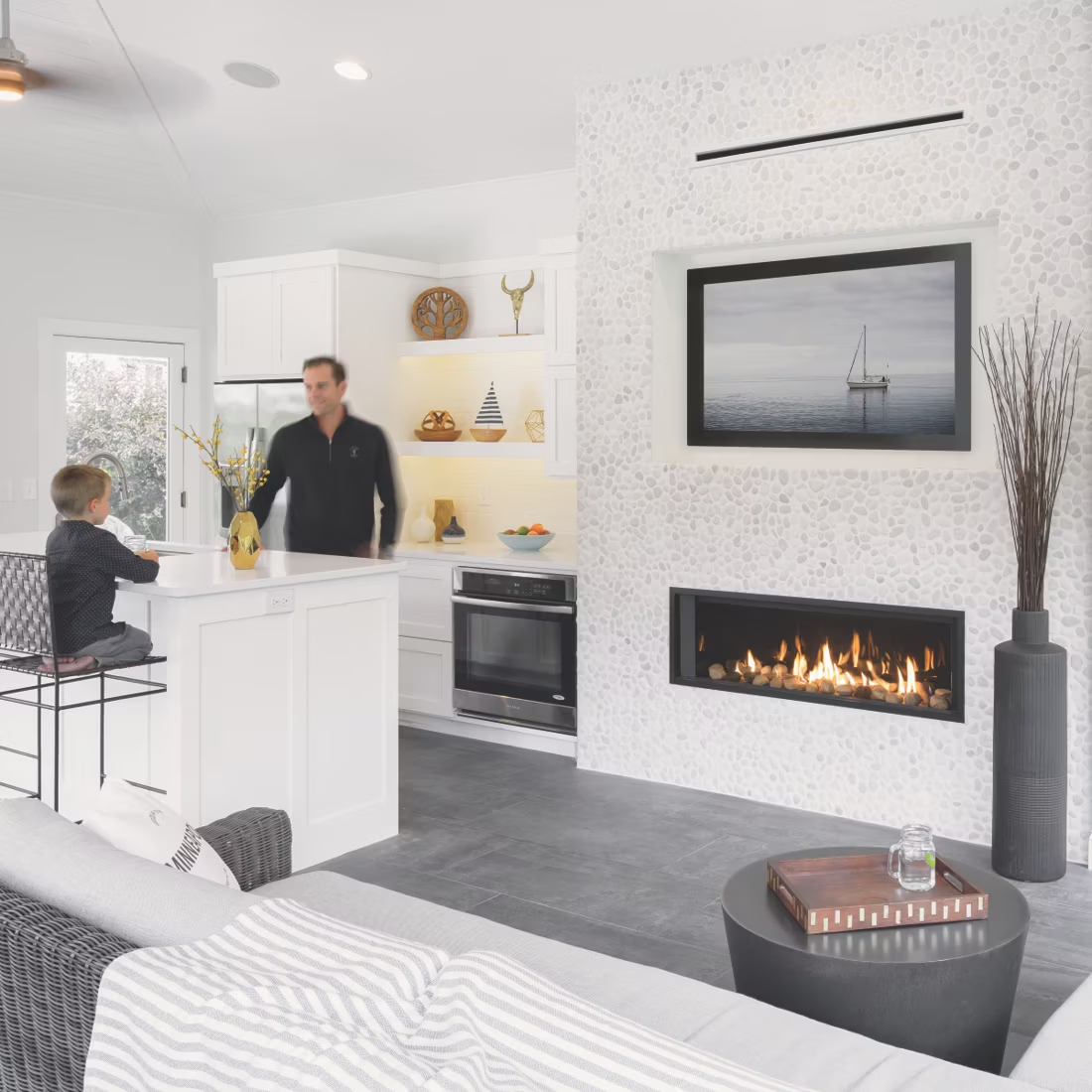
Yes—with an asterisk. Fireplaces are hot and TVs don't like heat. Either put a mantel between them to deflect rising warmth, or choose a fireplace with heat-management technology that creates a cool zone on the wall above—the wall stays around 125 degrees, barely warm, while the room still gets full heat. If you like clean lines and don't want a mantel, heat management is the answer.
Can I install a fireplace myself?
If you're putting a fire in your house on purpose, it's best to work with an expert. Unless you're genuinely experienced in framing, gas line, vent pipe, and the national code on clearances to combustibles, have a professional do it—and ideally the same company that sells you the fireplace, so warranty, service, and liability all live under one roof.
Does a fireplace add value to my home?
On average, a fireplace adds back to the home about the same amount you spent installing it. Add the monthly savings from heating the rooms you actually use instead of the whole house—often hundreds of dollars a year—and the value case is strong before you even count what a fire does for how your family uses the room.
Stove and Fireplace Dealers in Clay County
Find your gas fireplace in Clay County.
Tell us a bit about your home and whether you're on natural gas or propane, and we'll match you with a trusted local dealer and send over your free Project Guide & Parts List—the exact parts, vent kit included, for your Clay County installation.
Find Your Fireplace →