
Add real flame to Apopka's mild winters.
A gas fireplace or log set brings instant ambiance to Central Florida evenings—and real warmth on the handful of nights that dip into the 30s. Find the right unit and connect with a trusted local dealer.
Every Project Starts From One of These Five Situations
Ambiance first, heat second—and that's fine.
Apopka sits at just 85 feet of elevation in climate zone 2A, where winters are genuinely mild—average lows around 44°F and only about 828 heating degree days a year, a small fraction of what a place like Duluth, MN or Fargo, ND racks up in a single January. Wood stoves and pellet stoves are essentially absent here for good reason: the region's oak, mahogany, and pine are plentiful for shade and lumber, but there's no meaningful heating demand to justify a chimney, wood storage, or the humidity headaches that come with stacked firewood in a Central Florida yard. Gas fireplaces are a different story. They're common across Apopka's neighborhoods off Orange Blossom Trail and Rock Springs Road, not as a home's primary heat source but as a real-flame feature that also earns its keep during the occasional hard freeze or the cold fronts that push overnight temps into the 30s.
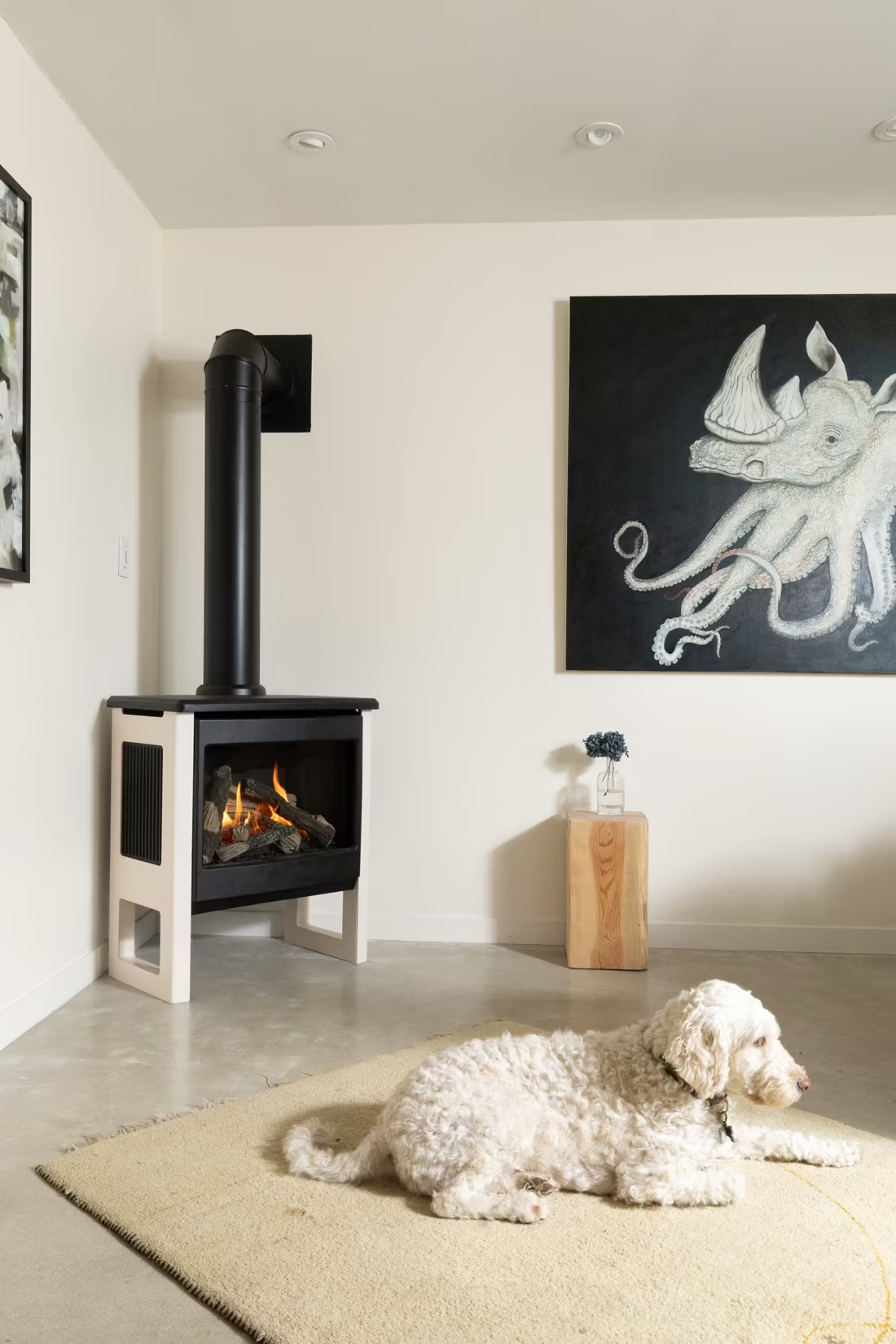
Natural gas mains don't run through most of Apopka's residential subdivisions, so the majority of gas fireplace installs here operate on propane rather than piped natural gas—a small exterior tank for a log set, or a larger buried tank for a full direct-vent fireplace serving a great room. That makes vented gas log sets and direct-vent inserts the two most common projects in Apopka: both deliver real flame and flip-of-a-switch heat without the ash, smoke, or storage that would be impractical in a hot, humid climate like this one.
Three steps. No salesperson until you're ready.
Tell us about your project
Your zip code, your situation, and the fuel you're leaning toward—or let the answers point you to one.
See what's actually available
The brands dealers within 100 miles genuinely carry—real options, never a catalog mirage.
Get your dealer & Project Guide
A trusted local dealer, plus the free Project Guide & Parts List that names every component of the job.
Frequently Asked Questions
How much does a gas fireplace installation cost in Apopka?
For the most common Apopka project—a vented propane log set installed into an existing masonry firebox, or a direct-vent insert with a small exterior propane tank—expect roughly $3,000 to $7,500 depending on the unit, whether a new gas line or tank is needed, and whether the existing chimney needs a liner. New construction or a built-in direct-vent gas fireplace with fresh venting and a larger propane tank setup runs higher, often $8,000 to $12,000. Because so few Apopka homes sit on natural gas mains, propane tank placement and line runs are usually the biggest swing factor in the estimate a local dealer gives you.
Should I use natural gas or propane for my fireplace in Apopka?
Most of Apopka—including the 32712, 32703, and 32768 zip codes—isn't served by natural gas mains, so propane is the standard fuel for gas fireplaces here. That typically means a small standalone tank for a log set or a larger 250- to 500-gallon buried tank for a full direct-vent fireplace, set and maintained by a regional propane supplier. If your street happens to have natural gas service already run for a range or water heater, tying in a fireplace is simpler and cheaper—worth asking your local dealer to check before you commit to a propane setup.
Can I convert my existing wood-burning fireplace to gas in Apopka?
Yes, and it's one of the more common calls local dealers get. Many Apopka homes built in the 1980s and 90s have a masonry wood-burning firebox that's rarely, if ever, used—Florida's humidity and mild winters make wood ash and smoke more trouble than they're worth. Converting to a vented gas log set typically runs on the lower end of the cost range since it uses your existing chimney with a liner and a new propane line; upgrading to a sealed direct-vent gas insert costs more but delivers real heat output and better efficiency than an open log set.
Will my gas fireplace still work during a power outage?
Most modern gas fireplaces with intermittent pilot ignition (IPI) include a battery backup that keeps the unit lighting on demand when the power drops—worth knowing in a region where Duke Energy Florida customers can see multi-day outages after a tropical storm or hurricane moves through Orange County. Valor's gas fireplaces take it a step further: their pilot assembly generates its own electricity through the thermocouple, so there are no batteries to remember or replace. Ask your local dealer about the ignition system on any unit you're considering, especially if hurricane-season reliability matters to you.
What's the difference between vented and vent-free gas fireplaces, and is vent-free legal in Apopka?
Vented gas fireplaces and log sets exhaust combustion byproducts outside through a chimney or direct-vent pipe. Vent-free (ventless) units burn fuel directly into the room and rely on room-size calculations and oxygen depletion sensors to stay safe. Florida permits vent-free units, and they're a common lower-cost choice for Apopka homeowners who mainly want ambiance in a room without existing venting. That said, direct-vent units are generally the better fit if you want real supplemental heat and don't want any combustion byproducts released indoors—a meaningful consideration in a tightly sealed, air-conditioned Florida home.
Do I need a permit to install a gas fireplace in Apopka?
Yes. Depending on your address, permitting runs through either the City of Apopka Building Safety Division or the Orange County Building Division for unincorporated areas, and both require a permit for gas line work and any new venting or firebox installation. Propane tank placement also has to meet setback distances under the Florida Fire Prevention Code. Most established hearth dealers pull these permits as part of the installation, coordinating the gas-fitter and building inspector so you don't have to manage multiple trades yourself.
What size gas fireplace or log set do I need for a Central Florida home?
Because Apopka's heating load is light—828 heating degree days a year is a fraction of what colder states see—most homeowners here size for ambiance and occasional real heat rather than whole-room heating. A 20,000 to 30,000 BTU vented log set or a small-to-mid direct-vent insert comfortably handles a family room or great room and still throws noticeable warmth on the coldest nights. Oversizing is a common mistake in mild climates like this one; a local dealer can right-size based on your room's dimensions and ceiling height rather than defaulting to the biggest available unit.
How often does a gas fireplace need to be serviced in Apopka's climate?
An annual inspection is still recommended even though Apopka fireplaces get lighter use than in colder states—a technician checks the burner, pilot assembly, gas connections, and venting, and cleans the glass and interior. One thing that's more of an issue here than in northern climates: propane lines and pilot assemblies that sit idle for most of the year, especially over Florida's long warm season, are more prone to insect nesting and moisture-related corrosion. A yearly check before the cool season starts catches both.
Why don't more Apopka homes use wood fireplaces?
Wood-burning stoves are essentially not a practical option in Apopka—with only 828 heating degree days a year and average lows around 44°F, there isn't enough sustained cold to justify wood heat, and Central Florida's humidity makes stacked firewood, ash, and creosote more of a maintenance headache than a benefit. Local oak, mahogany, and pine are common for landscaping and lumber, not firewood culture the way they might be in a colder climate zone. Where an existing masonry fireplace already has a wood-burning box, converting it to a vented gas log set is by far the more common local choice—you get real flame and usable heat without the drawbacks wood brings in this climate.
Why is a fireplace insert so efficient?
An insert does two things: it seals the chimney completely, so you stop losing air you already paid to heat, and it radiates warmth into the room through the firebox and glass. Most add a heat-exchange fan that pulls cool room air underneath, wraps it around the hot firebox, and pushes it back out warm. Your home is more efficient before you've even lit the first fire.
What's the difference between an insert and a zero-clearance fireplace?
An insert is a fireplace that slides into a pre-existing wood-burning fireplace—if you don't have one, there's nothing to insert it into. A zero-clearance fireplace is built into a framed wall, which makes it the answer for remodels and new construction. Simple test: existing masonry fireplace means insert; blank or framed wall means zero-clearance.
What is an in-home preview and do I need one?
It's a visit where a hearth professional measures your space, confirms the model you picked actually works in your home, and walks the specs—framing, gas line, venting, finish work—before anything is ordered. Some details you just can't know until you see the house. Never make a down payment without one; it's the single most-skipped step that burns buyers.
Can a fireplace actually lower my heating bill?
Yes—by creating a comfort zone. A furnace heats every square foot of the house just to warm the one room you're in; a gas fireplace on low burns roughly a sixth of the gas a typical furnace does. Set the furnace around 55–60 degrees as a baseline, then heat the rooms your family actually uses. Families who heat this way commonly save $20–$60 a month.
Nearby Dealers
Hearth shops serving Apopka and the surrounding area.
Find your gas fireplace in Apopka.
Tell us a bit about your home and we'll put together a free Project Guide & Parts List for your Apopka gas fireplace project—the right unit, the parts you'll need, and a trusted local dealer to install it.
Find Your Fireplace →