
A Rare Fit for DC Rowhouses—But It Does Exist.
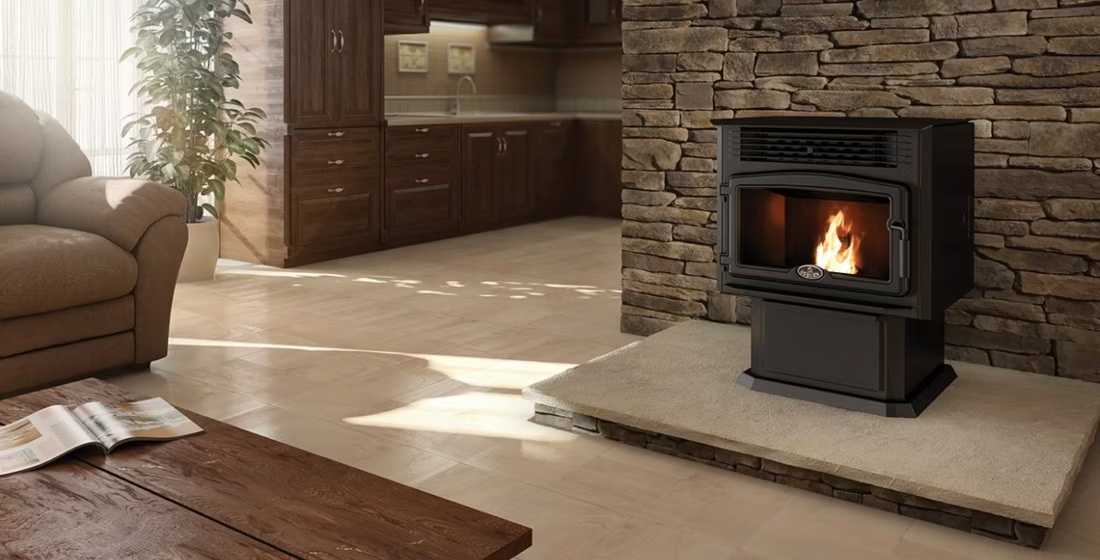
Pellet stoves aren't common in the District, but for the right home—a larger single-family property in Upper Northwest, a garage with storage room, a vacation place outside the Beltway—they can still make sense. We'll help you figure out if yours qualifies.
Every Project Starts From One of These Five Situations
Pellet stoves are the exception, not the rule, in the District.
Washington sits at just 64 feet of elevation in climate zone 4A, with a moderate winter heating load and an average winter low around 28°F—a mild heating season compared to places like Burlington, VT or Duluth, MN, where pellet stoves are a genuine winter workhorse. Combine that with the District's housing stock—attached rowhouses in Capitol Hill, Petworth, and Shaw with shared party walls, limited exterior wall access, and no side yard for venting clearance—and you get a market where pellet appliances are simply rare. Most rowhouse owners and condo residents don't have a practical spot to vent one, let alone store a ton of pellets.
That said, pellet stoves aren't entirely absent from the region. Regional brands like Energex, Hamer Pellet Fuel, and Greene Team Pellet Fuel are sold through hearth dealers based in the Maryland and Virginia suburbs who also serve DC customers, and the appliances show up occasionally in the District's larger detached homes in neighborhoods like Chevy Chase DC, Cleveland Park, and American University Park—places with basements, garages, or utility rooms that can accommodate a hopper and exterior vent. If that's your situation, or you're outfitting a second home in the mountains west of the city, a pellet stove can still be a good match. We're just being upfront that it's the exception here, not the default.
Three steps. No salesperson until you're ready.
Tell us about your project
Your zip code, your situation, and the fuel you're leaning toward—or let the answers point you to one.
See what's actually available
The brands dealers within 100 miles genuinely carry—real options, never a catalog mirage.
Get your dealer & Project Guide
A trusted local dealer, plus the free Project Guide & Parts List that names every component of the job.
Frequently Asked Questions
Are pellet stoves actually available for Washington, DC homes?
Yes, but they're a niche choice. DC's housing is dominated by attached rowhouses and condo/co-op buildings, where exterior wall venting is often blocked by party walls, HOA rules, or a total lack of side yard access—the same constraints that make wood stoves rare here too. Pellet appliances turn up more often in the District's detached single-family homes in Upper Northwest, where there's a basement or garage wall available for the vent pipe and a place to store 40-pound pellet bags. If you're in a rowhouse, a gas insert or electric fireplace is usually the more realistic path; if you own a detached home with some storage space, a pellet stove is worth a real look.
Where do DC homeowners actually buy pellet stoves and pellet fuel?
There isn't much pellet-stove retail infrastructure inside the District itself. Most DC customers end up working with hearth dealers based in the Maryland and Virginia suburbs who deliver and install within the city. Regional pellet brands like Energex, Hamer Pellet Fuel, and Greene Team Pellet Fuel are commonly stocked at those suburban dealers and at feed/farm stores further out in Loudoun, Frederick, and Prince William counties—areas where pellet heat is far more mainstream than it is inside the Beltway. Expect to plan ahead for pellet fuel pickup or delivery rather than finding it at a corner hardware store.
Can I install a pellet stove in a DC rowhouse?
It depends on the house. Pellet stoves vent through a small-diameter PVC or stainless pipe out an exterior wall—much simpler than a masonry chimney—but rowhouses with zero side yard and shared party walls on both sides often have no legal place to terminate that vent without running it out the front or rear, which not every jurisdiction or condo association allows. A rear-facing install with alley or yard access is the most common workaround local installers use. Any installation requires a permit through the DC Department of Buildings, and if you're in a co-op or condo, check your association's rules before you buy—some restrict any exterior venting modifications outright.
What does a pellet stove installation cost in Washington, DC?
For a home where venting is straightforward—an exterior wall with clear side or rear access—a pellet stove installation in the DC area typically runs in the $3,500 to $7,500 range for the unit, venting, and labor, though District labor and permitting costs tend to sit at the higher end of that range compared to surrounding suburbs. Rowhouse installs that require creative venting routes, additional framing, or coordination with a condo board can push costs higher. A local dealer will give you a firm number after seeing your specific wall and floor plan in person.
Do I need a permit to install a pellet stove in DC?
Yes. Any new venting through an exterior wall requires a building permit from the DC Department of Buildings, and the installer will need to meet current fire code clearances for the appliance and vent termination. Most established hearth dealers who work in the District handle this permitting as part of the installation rather than leaving it to the homeowner. If you live in a co-op or condo association, you'll also want board approval before the permit application goes in—that step trips up more DC pellet projects than the city permit itself does.
Will my pellet stove work if the power goes out?
No—this is worth knowing before you buy. Pellet stoves rely on an electric auger to feed fuel and a blower to distribute heat, so they shut down during a power outage unless you add a battery backup. That's a real consideration in DC, where Pepco (Potomac Electric Power Co) service can go down during summer thunderstorms or the occasional winter ice event. At the current Pepco residential rate of about 18.7 cents per kWh, running the auger and blower is inexpensive day to day, but if backup heat during outages is your priority, a wood stove or a gas unit with battery-backup ignition is generally a better fit than pellet.
Given DC's mild winters, is a pellet stove even worth it?
DC's heating season is genuinely mild by national standards—a moderate winter heating load and an average winter low near 28°F, closer to a Mid-Atlantic climate than the sub-zero stretches that make pellet heat a necessity in places like Burlington, VT or International Falls, MN. That means a pellet stove here is almost always a supplemental or ambiance choice rather than a primary heat source. If your goal is lowering a gas or electric heating bill in a large Upper Northwest home, or you want a wood-like fire without the chimney maintenance, it can pencil out. If you're looking for whole-home primary heat, DC's climate doesn't demand it the way colder regions do.
What should I consider instead of a pellet stove in my DC home?
For most DC rowhouses and condos, a direct-vent gas fireplace or insert is the more practical option—natural gas service is widely available across the District, venting requirements are more flexible, and there's no fuel storage to manage. For condo or co-op units where any exterior venting is off the table, an electric fireplace or insert is often the only realistic retrofit, since it needs nothing more than a standard outlet. Pellet stoves remain a good option specifically for detached homes with storage space and exterior wall access—it's a matter of matching the fuel to what your building can actually support.
Pellet vs. gas—which is right for my DC home?
Gas fireplaces are the far more common choice in the District: natural gas service is widely available, venting is simpler for rowhouse and condo construction, and there's no pellet storage or ash to manage. Pellet stoves offer a more wood-like flame and lower running costs than electric resistance heat, but they need a dedicated storage spot for fuel bags, regular hopper loading, and—critically—electricity to run at all. For a typical DC rowhouse or condo, gas usually wins on practicality. For a detached home with a garage or basement to spare, pellet is a legitimate option worth comparing against gas with a local dealer.
Why is a fireplace insert so efficient?
An insert does two things: it seals the chimney completely, so you stop losing air you already paid to heat, and it radiates warmth into the room through the firebox and glass. Most add a heat-exchange fan that pulls cool room air underneath, wraps it around the hot firebox, and pushes it back out warm. Your home is more efficient before you've even lit the first fire.
What's the difference between an insert and a zero-clearance fireplace?
An insert is a fireplace that slides into a pre-existing wood-burning fireplace—if you don't have one, there's nothing to insert it into. A zero-clearance fireplace is built into a framed wall, which makes it the answer for remodels and new construction. Simple test: existing masonry fireplace means insert; blank or framed wall means zero-clearance.
Does a fireplace add value to my home?
On average, a fireplace adds back to the home about the same amount you spent installing it. Add the monthly savings from heating the rooms you actually use instead of the whole house—often hundreds of dollars a year—and the value case is strong before you even count what a fire does for how your family uses the room.
How much should I budget for a fireplace?
For an average home—covering the fireplace, the vent pipe, and basic installation—a budget between $3,900 and $5,500 gives you a lot of options across wood, gas, and pellet. By the time you add finish work, gas line, and electrical, the average complete installation lands between $5,000 and $12,000 all-in. In a remodel or new build, a good rule is to put about 2.5% of the total project cost toward the fireplace.
Pellet Brands Stocked Around Washington
Manufacturers will point you to the nearest stocking dealer.
Find your pellet stove option in Washington, DC.
Tell us about your home—rowhouse, detached, condo, or something outside the city—and we'll be straight with you about whether pellet is a fit. If it is, we'll match you with a trusted local dealer and send over a free Project Guide & Parts List with the exact venting and parts your home needs.
Find Your Fireplace →