
The fireplace option that skips the chimney entirely.
No gas line, no venting, no masonry work—just a fireplace that plugs into what's already in your Capitol Hill rowhouse or Navy Yard condo. Find the right unit and connect with a trusted local dealer.
Every Project Starts From One of These Five Situations
Built for buildings where venting isn't an option.
Washington sits at just 64 feet of elevation in climate zone 4A, with an average winter low of 28°F and roughly 4,048 heating degree days a year—mild compared to a place like Minneapolis or Burlington, VT, but still cold enough that most DC homes run heat from November through March. The real obstacle isn't the weather, it's the housing stock. Rowhouses in Capitol Hill, Georgetown, and Dupont Circle often have decorative masonry fireboxes with flues that are capped, deteriorated, or unsafe to use, while newer high-rise condos in NoMa and Navy Yard were never built with a chimney at all.
That's where electric fireplaces earn their place. They require no gas line, no chimney, and no exterior venting—which matters in a city where any exterior alteration in a historic district triggers review by the DC Historic Preservation Review Board, and where condo and co-op boards are often wary of anything that touches shared building systems. An electric insert can bring a dead Capitol Hill firebox back to life, and a wall-mounted linear unit can add real ambiance and supplemental heat to a Navy Yard condo, all without a permit fight. With Potomac Electric Power Co's residential rate around 18.7 cents per kWh, most DC owners run electric heat as a supplemental, cost-effective option rather than a primary heat source given the district's relatively mild climate.
Three steps. No salesperson until you're ready.
Tell us about your project
Your zip code, your situation, and the fuel you're leaning toward—or let the answers point you to one.
See what's actually available
The brands dealers within 100 miles genuinely carry—real options, never a catalog mirage.
Get your dealer & Project Guide
A trusted local dealer, plus the free Project Guide & Parts List that names every component of the job.
Frequently Asked Questions
How much does an electric fireplace installation cost in Washington, DC?
Plug-in freestanding electric fireplaces need no professional installation beyond an outlet, so many DC condo and rowhouse owners spend $300 to $1,200 on the unit alone. Built-in or wall-mounted linear units that require a dedicated 120V or 240V circuit run higher—typically $1,500 to $4,000 installed—once you factor in an electrician for the new circuit and the custom surround or millwork common in Dupont Circle and Georgetown row homes. Converting an existing masonry fireplace to an electric insert, a popular move in Capitol Hill and Shaw rowhouses with dead flues, typically runs $600 to $2,000 depending on insert size and whether new wiring needs to be run to the firebox.
Do I need a permit for an electric fireplace in DC?
In most cases, no. Because electric fireplaces need no venting, chimney, or gas line, the DC Department of Buildings generally doesn't require a permit for a plug-in unit or a straightforward insert conversion. The exception is a built-in unit that needs a new dedicated electrical circuit—that work requires a licensed electrician and an electrical permit. If you live in a historic district like Georgetown, Capitol Hill, or Dupont Circle, any exterior alteration would normally trigger Historic Preservation Review Board review, but since electric fireplaces don't touch the building's exterior, they're one of the few hearth upgrades that skip HPRB entirely.
What size electric fireplace do I need for my DC rowhouse or condo?
For a typical DC rowhouse living room (often 12 by 15 feet in Capitol Hill or Bloomingdale row homes), a 40 to 50 inch linear electric fireplace or insert provides good visual presence and enough supplemental heat for the room. Studio and one-bedroom condos in NoMa or Navy Yard are usually well served by a compact 30 to 36 inch wall-mounted unit. Because electric units don't need to be sized for BTU output the way a wood or gas appliance does—most top out around 5,000 BTU regardless of size—sizing here is mostly about matching the unit's width to your wall or existing firebox opening, which a local dealer can measure during an in-home visit.
Can I install an electric insert into my existing rowhouse fireplace?
Yes, and it's one of the most common electric projects in DC. Many Capitol Hill, Shaw, and Bloomingdale rowhouses have decorative masonry fireboxes with flues that were capped decades ago or are structurally unsound to reline. An electric insert slides into that existing opening, plugs into a nearby outlet or a newly added circuit, and requires no chimney liner, no venting, and no changes to the flue itself. The mantel and surround stay exactly as they are—you're only replacing what happens inside the firebox, which is why this option is popular in row homes where reopening the chimney for wood or gas would be cost-prohibitive.
What will an electric fireplace actually cost to run on my Pepco bill?
Potomac Electric Power Co's residential rate runs around 18.7 cents per kWh. A typical electric fireplace on its highest heat setting draws about 1,500 watts, or 1.5 kWh per hour—roughly 28 cents an hour to run. Used for ambiance with the heater off, draw drops to under 100 watts and costs pennies an hour. Run four hours a night through a DC winter, the heater setting adds roughly $30 to $35 a month to your bill. Given the district's relatively mild 4,048 heating degree days, most owners use electric fireplaces to supplement central heat in one room rather than replace it.
Electric vs. gas—which is right for my DC home?
Gas fireplaces put out more heat and can serve as a genuine secondary heat source, but installing one in a DC rowhouse usually means running a new gas line and venting through an exterior wall or roof—work that can draw Historic Preservation Review Board scrutiny on street-facing facades in districts like Georgetown or Capitol Hill. Electric requires none of that: no gas line, no exterior penetration, no HPRB review, and most condo or co-op boards approve it without hesitation since it doesn't touch shared building systems. For renters, co-op owners, and anyone in a protected historic rowhouse, electric is usually the path of least resistance; gas makes more sense where you own the property outright and want real supplemental heat output.
Will my electric fireplace still work during a power outage?
No—unlike a battery-backed gas unit, an electric fireplace goes dark the moment the power does. Pepco's grid sees occasional outages from summer thunderstorms and winter ice, though DC's relatively mild climate and lower heating demand (4,048 heating degree days versus roughly 8,000 in a place like Duluth, MN) mean outages tend to be shorter and less consequential here than in colder regions. If backup heat during an outage matters to you, a small battery backup or a supplemental heat plan is worth discussing with your installer, since electric fireplaces on their own aren't an emergency heat source.
What's the difference between an electric fireplace, insert, and wall unit?
A freestanding electric fireplace looks like a stove or cabinet and works in any condo or apartment with a standard outlet—no installation required beyond plugging it in. An electric insert is sized to slide into an existing masonry firebox, which is the common choice for Capitol Hill and Shaw rowhouses with old, unused chimneys. A wall-mounted or linear electric unit is recessed into or hung on a wall, often used in finished basements or English basement rental units that are common throughout DC row homes, and typically requires an electrician to run a dedicated circuit. All three deliver similar heat output; the right choice depends mostly on what your space already has to work with.
Can I install an electric fireplace in my DC condo or co-op without board approval?
In most cases, yes for a freestanding plug-in unit—since it doesn't alter the unit's structure or building systems, it typically falls outside what condo and co-op boards regulate, unlike gas or wood installations that raise venting concerns. A built-in wall unit that requires new wiring is a different story: electrical work touching shared walls sometimes does require co-op board sign-off under building bylaws. It's worth a quick check of your building's rules before ordering a built-in unit, but electric remains the easiest fuel type to get approved across DC's condo and co-op stock.
Do electric fireplaces actually produce heat?
Yes—most put out around 4,800–5,000 BTUs from a standard outlet, which comfortably warms a bedroom, office, or den as a comfort-zone heater. What they won't do is carry a whole house the way wood, gas, or pellet can. Think of electric as ambiance-first with honest supplemental heat: flames on with no heat in July, flames plus warmth in January.
Can I put a TV above my fireplace?
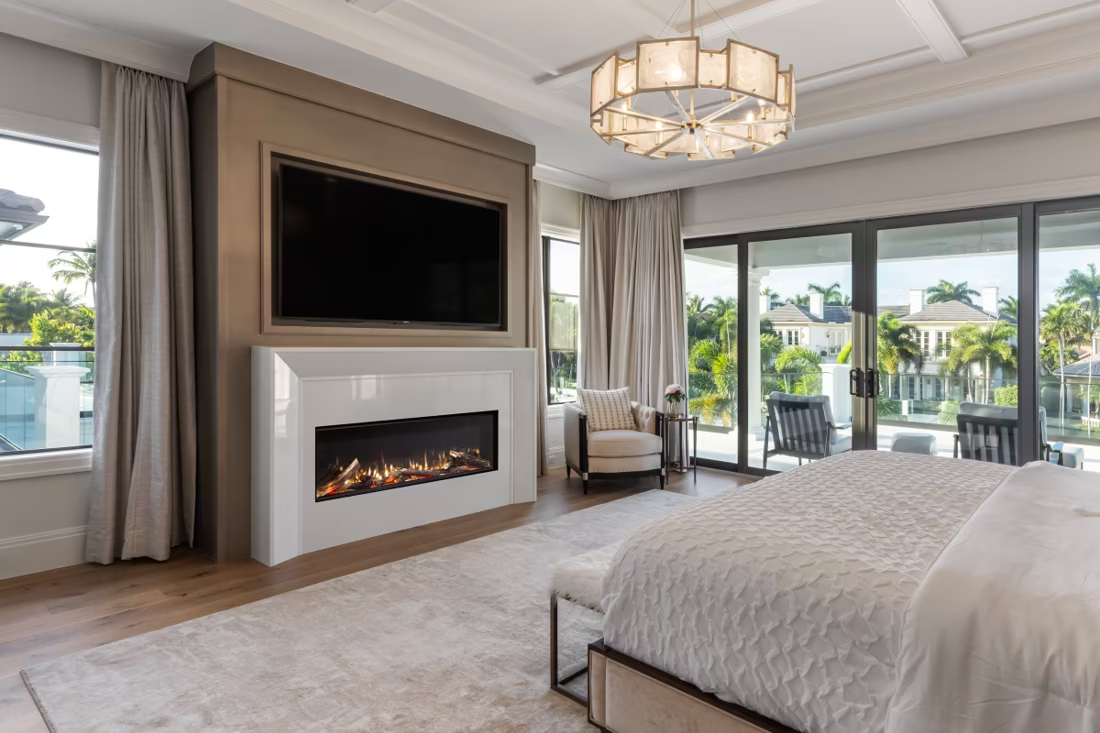
Yes—with an asterisk. Fireplaces are hot and TVs don't like heat. Either put a mantel between them to deflect rising warmth, or choose a fireplace with heat-management technology that creates a cool zone on the wall above—the wall stays around 125 degrees, barely warm, while the room still gets full heat. If you like clean lines and don't want a mantel, heat management is the answer.
What is an in-home preview and do I need one?
It's a visit where a hearth professional measures your space, confirms the model you picked actually works in your home, and walks the specs—framing, gas line, venting, finish work—before anything is ordered. Some details you just can't know until you see the house. Never make a down payment without one; it's the single most-skipped step that burns buyers.
Can I install a fireplace myself?
If you're putting a fire in your house on purpose, it's best to work with an expert. Unless you're genuinely experienced in framing, gas line, vent pipe, and the national code on clearances to combustibles, have a professional do it—and ideally the same company that sells you the fireplace, so warranty, service, and liability all live under one roof.
Electric Service in Washington
An electric fireplace's heater draws about 1,500 watts—pennies per hour at local rates.
Potomac Electric Power Co
Find your electric fireplace in Washington, DC.
Tell us about your rowhouse, condo, or co-op and we'll match you with the right electric fireplace, insert, or wall unit—and connect you with a trusted local dealer through our free Project Guide & Parts List.
Find Your Fireplace →