
Reliable gas heat for Sussex County's coastal winters.
From the boardwalk towns of Rehoboth Beach and Lewes to inland Georgetown, Seaford, and Millsboro, Sussex County homes deal with damp Atlantic winters that call for steady, low-maintenance heat. Find the right gas fireplace, insert, or stove and get matched with a trusted local dealer.
Every Project Starts From One of These Five Situations
Consistent warmth for Delaware's mild, damp winters.
Sussex County stretches across nearly 1,200 square miles of southern Delaware—barrier-island beach towns like Rehoboth Beach and Bethany Beach on one end, inland farm communities like Georgetown, Seaford, and Laurel on the other. At climate zone 4A with winters comparable to a moderate mid-Atlantic heating season and winter lows averaging 25°F, Sussex County isn't fighting the kind of extreme cold you'd see in Fargo, North Dakota—but the Atlantic humidity and Delaware Bay wind chill make older beach cottages and farmhouses feel colder than the thermometer suggests, and a lot of that housing stock was built for summer occupancy, not winter comfort.
Natural gas service runs through Chesapeake Utilities' territory in and around towns like Georgetown, Milford, Seaford, and parts of Lewes, but much of rural Sussex County—including many of the barrier-island and unincorporated communities—relies on propane delivered by regional suppliers like Suburban Propane. Either way, a gas fireplace or insert gives you instant zone heat for a beach rental that only gets used on weekends, a den in a Seaford farmhouse, or a primary living space anywhere in the county, without the wood-stacking and ash cleanup that wood heat requires.
Three steps. No salesperson until you're ready.
Tell us about your project
Your zip code, your situation, and the fuel you're leaning toward—or let the answers point you to one.
See what's actually available
The brands dealers within 100 miles genuinely carry—real options, never a catalog mirage.
Get your dealer & Project Guide
A trusted local dealer, plus the free Project Guide & Parts List that names every component of the job.
Frequently Asked Questions
How much does a gas fireplace installation cost in Sussex County?
A typical gas fireplace or insert installation in Sussex County runs roughly $4,000 to $9,500, depending on the unit, whether you're on natural gas or propane, and how much gas line or venting work is involved. Homes already served by Chesapeake Utilities natural gas in towns like Georgetown or Milford, with a gas line already run to the area of installation, tend to land on the lower end. Homes in rural or barrier-island areas that need a new propane tank set and a longer gas line run typically land closer to the top of that range. Local dealers provide a firm number after seeing the space in person.
Can I convert my existing wood fireplace to gas?
Yes—it's one of the more common projects for older Sussex County homes, particularly farmhouses around Laurel and Seaford with existing masonry fireplaces built for oak and hickory cordwood. A gas insert slides into the existing firebox and uses a stainless liner run up the current chimney, so you keep the look of the original fireplace while eliminating the wood handling. Conversion typically runs $4,000 to $8,000 depending on whether you're tying into natural gas or setting up a propane line, and whether the existing chimney needs relining work first.
Do I need natural gas, or can I use propane?
Either works, and which one you use largely comes down to where in Sussex County you live. If your home is inside or near a Chesapeake Utilities natural gas corridor—parts of Georgetown, Milford, Seaford, and Lewes—a natural gas fireplace is usually the simpler install. Outside those corridors, which covers most of rural Sussex County and the barrier-island communities, propane is the standard choice, either from an existing tank or a new tank set by a supplier like Suburban Propane. Most gas fireplace models can be configured for either fuel; your installer sets the correct orifice and regulator for the one you have.
Will my gas fireplace work during a power outage?
Most will, with the right ignition system. Units with intermittent pilot ignition (IPI) include a battery backup that keeps the fireplace working when the power drops—useful during the nor'easters that regularly knock out power along the Sussex County coast. Valor fireplaces take a different approach: their pilot generates its own electricity through the thermocouple, so there's no battery to remember or replace. If backup heat during a storm matters to you—especially in a beach house that sits empty for stretches—ask your local dealer about the ignition system before you buy.
What's the difference between a gas fireplace, gas insert, and gas stove?
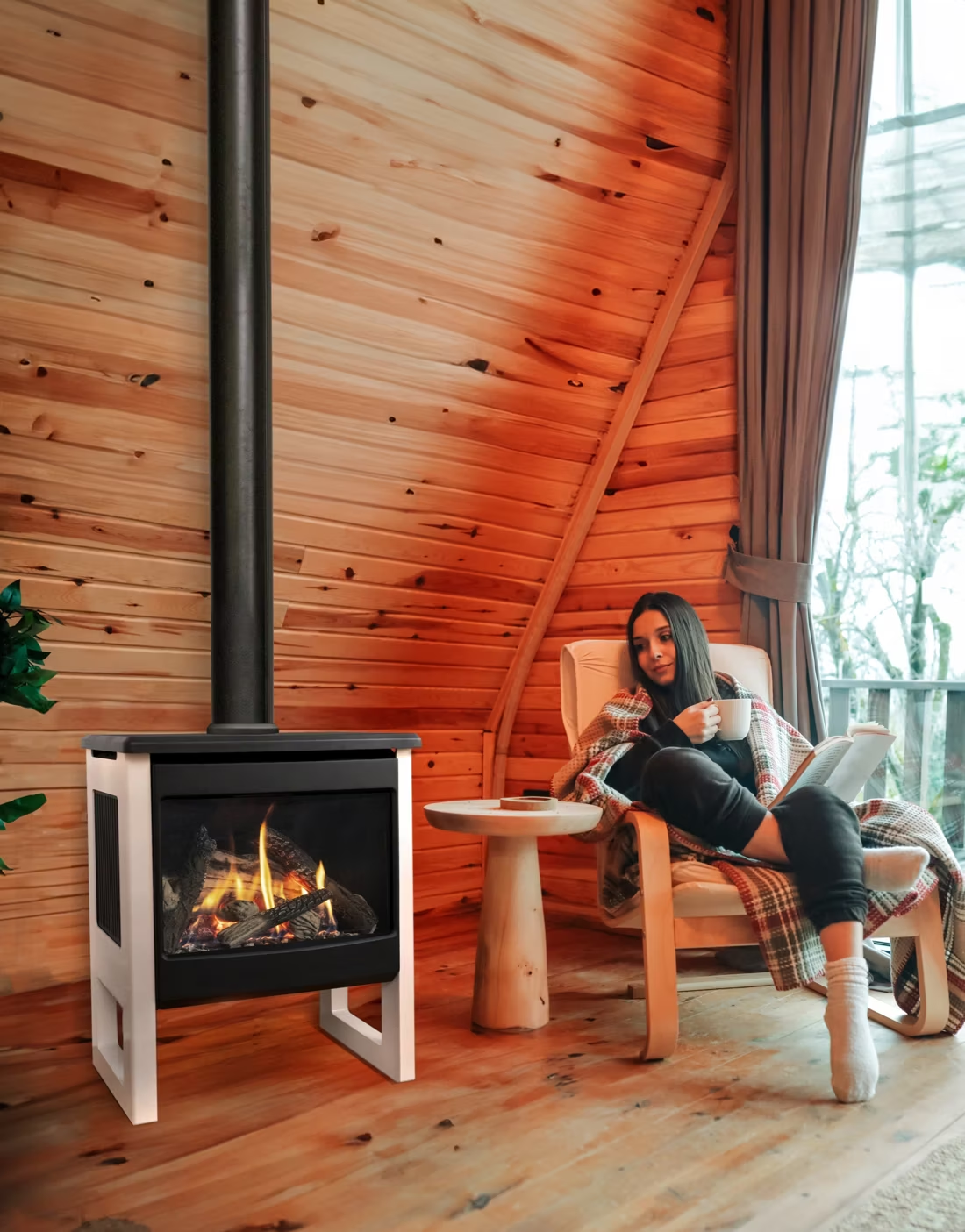
A gas fireplace is a fully built-in unit framed into a wall—the right call for new construction or a remodel in a Sussex County new-build near Millsboro or Milford. A gas insert drops into an existing masonry fireplace opening and uses the existing chimney as its vent path, which makes it the natural choice for older homes around Georgetown, Seaford, and Laurel that already have a working fireplace. A gas stove is a freestanding unit that sits on the floor on its own hearth pad, similar in footprint to a wood stove but running on gas—a good option for a room with no existing fireplace or chimney at all.
Do I need a permit to install a gas fireplace in Sussex County?
Yes—Sussex County requires a building permit for new gas fireplace or insert installations, and any propane system work is subject to Delaware State Fire Marshal requirements for LP gas installations. Most local dealers handle the permitting and coordinate the licensed gas-fitter as part of the install, so you're not left managing separate trades. This matters more than it might seem: gas line sizing and venting done wrong is the leading cause of callbacks and, in worse cases, safety issues.
What's the difference between vented and vent-free gas fireplaces?
Vented (direct-vent) gas fireplaces draw combustion air from outside and exhaust combustion byproducts back outside through a sealed pipe—they're the cleaner, more universally recommended option and what most Sussex County installers default to. Vent-free units burn directly into the room air and are legal in Delaware, but they come with strict room-sizing rules and oxygen depletion sensors, and they release some water vapor and combustion byproducts into your living space. For year-round living spaces and beach houses that sit closed up for stretches between visits, direct-vent units are generally the better choice for indoor air quality. Ask your local dealer to walk through both options for your specific room.
How often should my gas fireplace be serviced?
Plan on an annual inspection, ideally before the fall heating season starts. A technician checks the burner, pilot assembly, venting, and gas connections, and cleans the glass and interior—quick work compared to wood chimney sweeping, but still important, especially for propane systems where regulator and line integrity matter. Expect to pay somewhere in the $150 to $250 range for a standard annual service call from a local dealer.
Gas vs. wood—which is right for my Sussex County home?
Wood—burned with local oak, hickory, or maple—gives you a real fire, lower fuel cost if you're set up to source or cut your own, and heat that keeps working during a power outage. Gas gives you instant on-off convenience, no ash or creosote to manage, and a cleaner look, which matters a lot for a Rehoboth Beach or Bethany Beach rental property where low-maintenance operation between tenants is the priority. Sussex County doesn't have the air-quality restrictions on wood burning that some Western counties do, so the choice here comes down to lifestyle rather than regulation. Plenty of local homes run gas in the main living space and keep a wood option in a den or garage for backup.
Why is a fireplace insert so efficient?
An insert does two things: it seals the chimney completely, so you stop losing air you already paid to heat, and it radiates warmth into the room through the firebox and glass. Most add a heat-exchange fan that pulls cool room air underneath, wraps it around the hot firebox, and pushes it back out warm. Your home is more efficient before you've even lit the first fire.
Why is my open fireplace making my house colder?
Open fireplaces suck—literally. As the fire burns, it consumes air your furnace already paid to heat and pulls it out through the chimney, so the house is actually colder after the fire goes out than before you lit it. An insert fixes this: it seals the chimney, puts fixed glass across the front, and turns that hole in your house into a real heat source.
What is an in-home preview and do I need one?
It's a visit where a hearth professional measures your space, confirms the model you picked actually works in your home, and walks the specs—framing, gas line, venting, finish work—before anything is ordered. Some details you just can't know until you see the house. Never make a down payment without one; it's the single most-skipped step that burns buyers.
Can I install a fireplace myself?
If you're putting a fire in your house on purpose, it's best to work with an expert. Unless you're genuinely experienced in framing, gas line, vent pipe, and the national code on clearances to combustibles, have a professional do it—and ideally the same company that sells you the fireplace, so warranty, service, and liability all live under one roof.
Stove and Fireplace Dealers in Sussex County
Find your gas fireplace in Sussex County.
Tell us a bit about your home—natural gas or propane, existing fireplace or new build—and we'll put together a free Project Guide & Parts List with the exact parts, including the vent kit, and match you with a trusted local dealer in Sussex County.
Find Your Fireplace →