
Real Warmth, Zero Structural Changes.
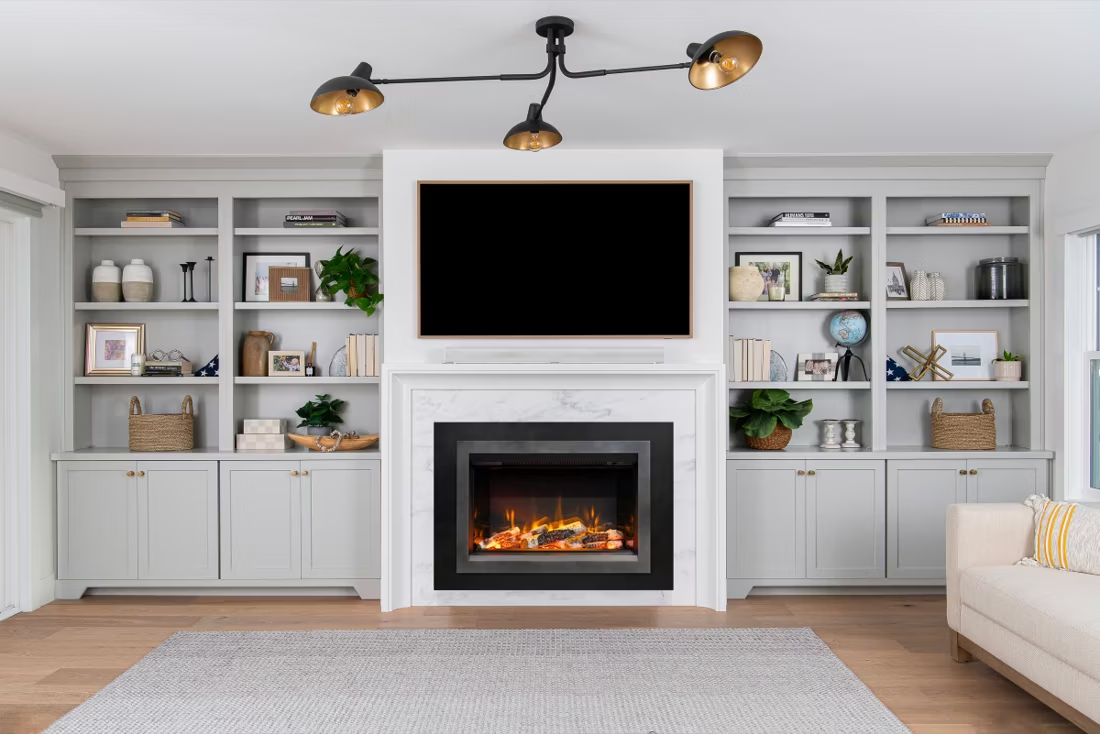
Plug-in and wall-mount electric fireplaces built for military family housing near Dover AFB—no venting, no gas line, no permanent modification to a home you're renting.
Every Project Starts From One of These Five Situations
The easiest heat option for housing you don't own.
Dover Base Housing sits in Kent County at just 20 feet of elevation, in a climate zone (4A) that's genuinely mild compared to the northern tier—winter lows average around 28°F and the area sees a moderate winter heating season, nowhere near what a place like Burlington, VT or Fargo, ND deals with. That means most homes here need supplemental warmth for shoulder-season chill, not a primary heat source to survive January. But the bigger factor shaping fireplace choice here isn't climate—it's housing status. Kent County's surrounding rural areas have plenty of oak, hickory, and maple and a real wood-heat culture, but wood stoves and pellet appliances are essentially off the table inside base housing itself, since family housing units generally prohibit solid-fuel combustion appliances and chimney or venting modifications.
That's what makes electric the practical default for most residents here. A plug-in fireplace or wall-mount insert needs nothing more than a standard outlet—no civil engineering sign-off, no structural changes, and nothing left behind (or fought over in a move-out inspection) when you PCS. Electricity in the area comes from a mix of providers depending on exactly where your unit falls within zip 19901—Delmarva Power, Delaware Electric Cooperative, or the City of Dover's municipal utility—with residential rates running roughly 14.2 to 16.4 cents per kWh. At those rates, running a typical 1,500-watt electric fireplace as evening supplemental heat costs only a few dollars a month, which is part of why it's an easy call for a household that may only be in this house for a two- or three-year assignment.
Three steps. No salesperson until you're ready.
Tell us about your project
Your zip code, your situation, and the fuel you're leaning toward—or let the answers point you to one.
See what's actually available
The brands dealers within 100 miles genuinely carry—real options, never a catalog mirage.
Get your dealer & Project Guide
A trusted local dealer, plus the free Project Guide & Parts List that names every component of the job.
Frequently Asked Questions
How much does an electric fireplace cost to set up in Dover Base Housing?
Most residents here go with a freestanding plug-in unit or a wall-mount insert, both of which typically run $300 to $1,500 for the unit itself and need nothing more than a standard 120V outlet—no electrician, no permit. If you want a recessed, built-in look with a dedicated circuit, that jumps to roughly $1,000 to $3,000 once wiring and wall work are included, and that kind of modification is the one case where you'd want to loop in your housing management office before starting. Given how often military families relocate, the plug-and-play route is by far the more common choice.
Do I need approval from the housing office to install an electric fireplace?
For a standard plug-in or freestanding unit, no—there's no structural or electrical change involved, so it's treated like any other appliance. Wall-mounted units that require anchoring into drywall or a dedicated circuit are a different story: because Dover Base Housing sits on federal installation property rather than a standard civilian rental, any modification to the structure should be cleared with your housing management office first, rather than assumed to be your call the way it might be in an off-base rental.
What type of electric fireplace works best for base housing?
Freestanding electric stoves or mantel-style units are the most popular choice because they arrive fully assembled, need zero installation, and come with you at your next PCS. Wall-mounted flat-panel units are the second most common option for people who want a more built-in look without permanently altering the wall—most mount on a bracket rather than being recessed. Look for a unit with a 1,500-watt heater (roughly 5,000 BTU), which is enough to noticeably warm a bedroom or living room in Dover's mild but genuinely chilly winters without overloading a standard circuit.
Will an electric fireplace actually heat a room here, or is it just for looks?
It depends on what you're asking it to do. A 1,500-watt unit puts out real, useful heat—enough to take the edge off a bedroom or den on a 28°F morning—but it's supplemental heat, not a replacement for your home's central heat pump or furnace. Dover's climate zone (4A) and its moderate winter heating season mean most households only need that kind of top-up heat during shoulder-season cold snaps rather than sustained deep-winter conditions, which is exactly the use case electric fireplaces are built for.
How much will an electric fireplace add to my electric bill?
Depending on which utility serves your specific address in the 19901 area—Delmarva Power, Delaware Electric Cooperative, or the City of Dover's municipal system—residential rates run about 14.2 to 16.4 cents per kWh. Running a 1,500-watt fireplace for around five hours an evening costs roughly 75 to 85 cents a day at those rates, or somewhere around $20 to $25 a month with regular winter evening use. Flame-only mode (no heater running) uses a fraction of that.
Can I take my electric fireplace with me when I PCS?
Yes, and that portability is a big part of why electric is the default choice in base housing. Freestanding units simply unplug and go in the moving truck like any other appliance. Wall-mounted units are only slightly more involved—most come off their mounting bracket in minutes, leaving just the bracket itself (and a couple of screw holes) behind, which is a far smaller move-out concern than a permanently vented gas or wood installation would be.
What about wood stoves or pellet stoves—are those an option here?
Realistically, no. Kent County's surrounding countryside has plenty of oak, hickory, and maple, and wood heat is genuinely common in rural Delaware homes outside the installation. But inside Dover Base Housing, family housing units generally don't allow solid-fuel combustion appliances or chimney modifications, regardless of climate—it's a housing-policy restriction, not a weather one. If you own a home in Kent County outside the base housing footprint, wood and pellet become real options again; inside base housing, electric (and in some units, gas) are the practical choices.
Is a gas fireplace a realistic alternative to electric here?
In units that already have a gas line, a direct-vent gas fireplace or insert is sometimes possible and delivers noticeably more heat than an electric unit. But running new gas line or venting into a base housing unit typically requires the same civil engineering and housing-office approval as any other structural change, which adds time and paperwork that most residents—especially those on a shorter assignment—would rather skip. Electric remains the lower-friction option precisely because it sidesteps that approval process entirely.
What features should I look for in an electric fireplace for a rental like this?
Prioritize a unit with a separate flame-only mode so you can run the ambiance without heat during Delaware's hot, humid summers, plus an adjustable thermostat so you're not stuck at one heat setting. Make sure it's UL-listed—housing inspections and insurance both care about that. And if you're choosing between freestanding and wall-mount, remember that freestanding units require zero commitment to the wall and are the simplest to bring along at your next PCS.
Do electric fireplaces actually produce heat?
Yes—most put out around 4,800–5,000 BTUs from a standard outlet, which comfortably warms a bedroom, office, or den as a comfort-zone heater. What they won't do is carry a whole house the way wood, gas, or pellet can. Think of electric as ambiance-first with honest supplemental heat: flames on with no heat in July, flames plus warmth in January.
Does an electric fireplace need a vent or chimney?
No—that's its superpower. An electric fireplace needs a wall and an outlet, period. No vent pipe, no gas line, no clearances to design around, which is why it works in bedrooms, offices, apartments, and walls where venting a gas or wood unit would be impractical or impossible. Installation is typically the simplest and least expensive of any fireplace type.
Can I install a fireplace myself?
If you're putting a fire in your house on purpose, it's best to work with an expert. Unless you're genuinely experienced in framing, gas line, vent pipe, and the national code on clearances to combustibles, have a professional do it—and ideally the same company that sells you the fireplace, so warranty, service, and liability all live under one roof.
Can a fireplace actually lower my heating bill?
Yes—by creating a comfort zone. A furnace heats every square foot of the house just to warm the one room you're in; a gas fireplace on low burns roughly a sixth of the gas a typical furnace does. Set the furnace around 55–60 degrees as a baseline, then heat the rooms your family actually uses. Families who heat this way commonly save $20–$60 a month.
Nearby Dealers
Hearth shops serving Dover Base Housing and the surrounding area. Every listing shows whether it is a WhyFire partner, a dealer we have verified as authorized for the brands we recommend, or a local business carrying hearth products. No manufacturer pays for placement. How we verify dealers →
Delaware Brick
Byler's Stove Shoppe, Inc
Walls Farm & Garden Center Inc
Electric Service in Dover Base Housing
An electric fireplace's heater draws about 1,500 watts—pennies per hour at local rates.
Delmarva Power
Delaware Electric Cooperative
City Of Dover - (De)
Find your electric fireplace in Dover Base Housing.
Tell us a bit about your home and situation and we'll put together a free Project Guide & Parts List—the right electric fireplace or insert for your space, plus a trusted local dealer who can get it to you before your next cold snap.
Find Your Fireplace →