
Instant Warmth for Wilton Center's Long Connecticut Winters.
Wilton Center runs on propane, not piped gas—and that changes what a good installation looks like. Get matched with a local dealer who knows the difference.
Every Project Starts From One of These Five Situations
Comfort on demand, where the gas main never arrived.
Wilton Center is a small village of about 1,642 people tucked into the town of Wilton in the Western Connecticut region, sitting at roughly 200 feet elevation with winter lows that average 22°F. The area sees a real New England heating season lasting a good chunk of the year—though nowhere near the extremes of a place like Burlington, VT. It's cold enough that a supplemental heat source earns its keep most winters, especially during the shoulder months when running the furnace all day feels like overkill.
There's no natural gas utility serving Wilton Center—the only utilities on record here are electric providers, United Illuminating and Connecticut Light & Power (Eversource). That means almost every 'gas' fireplace installed in this village actually runs on propane, either from a buried tank or an above-ground unit set discreetly near the house. It's a different conversation than a natural-gas hookup, but the end result is the same: flip a switch, get real heat, no wood to split or ash to haul.
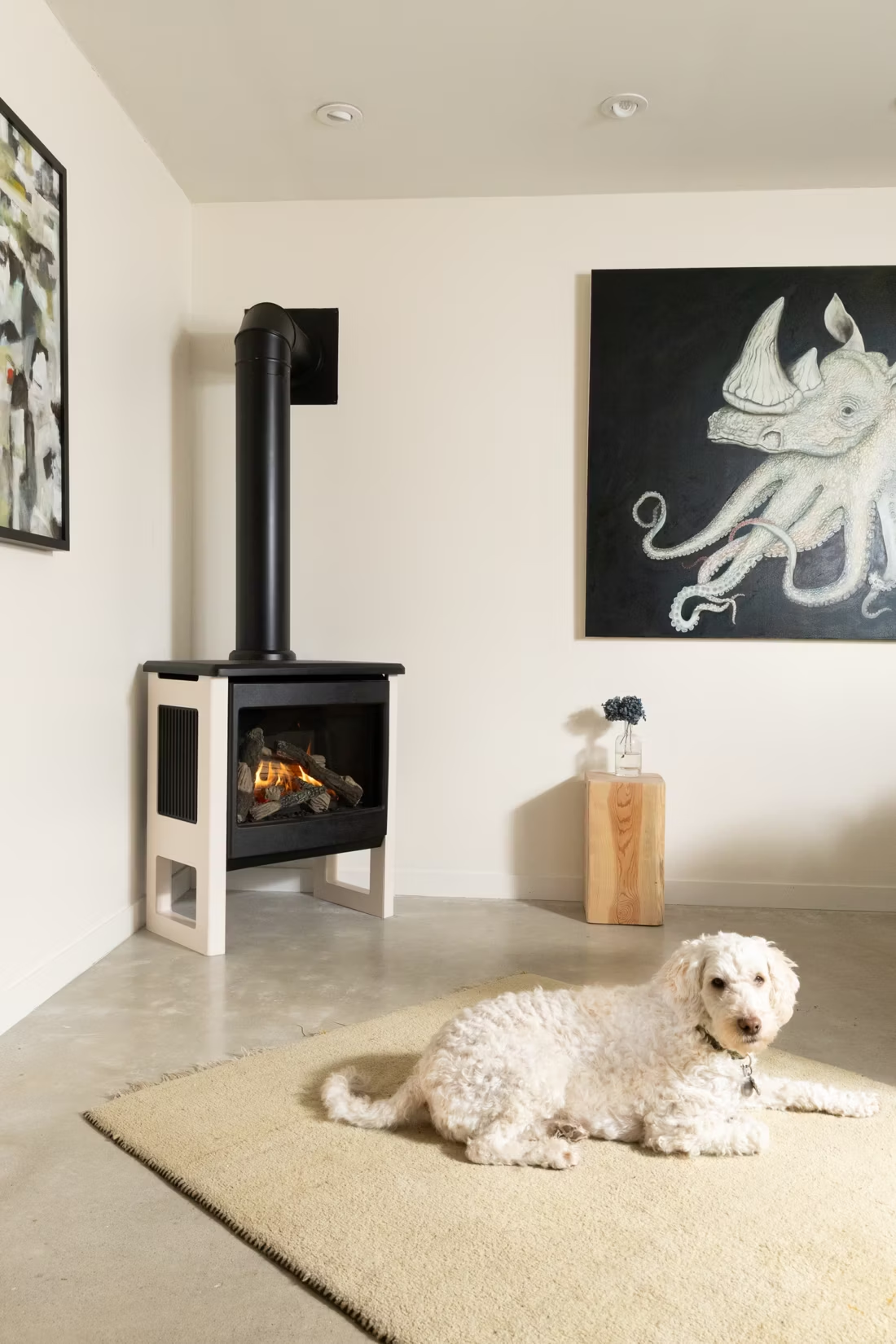
Three steps. No salesperson until you're ready.
Tell us about your project
Your zip code, your situation, and the fuel you're leaning toward—or let the answers point you to one.
See what's actually available
The brands dealers within 100 miles genuinely carry—real options, never a catalog mirage.
Get your dealer & Project Guide
A trusted local dealer, plus the free Project Guide & Parts List that names every component of the job.
Frequently Asked Questions
How much does a gas fireplace installation cost in Wilton Center?
Since Wilton Center runs on propane rather than piped natural gas, most installations here run in the $4,000 to $9,500 range once you account for the appliance, direct-vent installation, and any propane line work from the tank to the unit. If you're starting from scratch—no existing tank, no gas line to the room—expect the higher end once a propane supplier sets a tank and a licensed gas-fitter runs the line. Converting an existing masonry fireplace to a propane insert, using the current chimney as a chase for the vent liner, tends to land toward the middle of that range. A local dealer will give you a firm number after seeing the space.
Can I convert my existing wood fireplace to gas in Wilton Center?
Yes, and it's a common project in this part of Fairfield County, where many homes near the village green have older masonry fireplaces built decades before propane inserts existed. A direct-vent propane insert typically slides into the existing firebox, using a stainless liner run up the current chimney for venting, while a new propane line is run from the tank or existing supply. The conversion keeps the original mantel and surround intact while eliminating the wood handling and drafty damper that come with an open hearth—a trade many Wilton Center homeowners make once wood becomes more chore than charm.
Do I need propane, or is natural gas available in Wilton Center?
Propane is the standard here. There's no natural gas main serving Wilton Center—the utilities on file for the area are United Illuminating and Connecticut Light & Power, both electric providers, not gas. If you want a gas fireplace, you're looking at a propane tank (buried or set discreetly along the house) supplied by a regional propane company. Nearly every gas fireplace, insert, and stove sold today can be configured for propane with the correct orifice and regulator, so fuel choice generally isn't a limiting factor on which model you can buy—it just changes the up-front tank and line work.
Will my gas fireplace work during a power outage?
Most direct-vent propane fireplaces with intermittent pilot ignition (IPI) run on a small battery backup that kicks in automatically when the power drops, so the unit still lights on demand during an outage—as long as the batteries are fresh. That's worth paying attention to in Wilton Center: with residential electric rates from United Illuminating and CL&P running roughly 25 to 31 cents per kWh, running electric space heaters through a multi-day outage gets expensive fast, and a propane fireplace with battery backup (or a Valor unit, which self-generates power through its pilot thermocouple and needs no batteries at all) is a genuinely useful backup heat source for this area's ice-storm outages.
What's the difference between a gas fireplace, gas insert, and gas stove?
A gas fireplace is a fully built-in, framed-in unit—the right call for new construction or a remodel where there's no existing masonry opening. A gas insert is built to slide into an existing masonry firebox, sealing it up and venting through a liner run inside the old chimney. A gas stove is a freestanding cabinet unit that sits on the floor, similar in footprint to a wood stove but running on propane. Given how many Wilton Center homes have older wood-burning fireplaces already in place, an insert is usually the most straightforward and least invasive upgrade for this village's housing stock.
Do I need a permit to install a gas fireplace in Wilton Center?
Yes—installations go through the Town of Wilton Building Department, and propane tank placement also has to meet Connecticut Fire Safety Code setback requirements from the house, property lines, and any windows or vents. A licensed gas-fitter handles the propane line and connection as part of the permitted work. Most hearth dealers serving this area coordinate the building permit, the propane supplier's tank setup, and the final inspection together, so you're not left managing three separate trades on your own.
What's the difference between vented and vent-free gas fireplaces?
Vented (direct-vent) fireplaces pull combustion air from outside and exhaust it back outside through a sealed pipe—they're the cleanest, safest option and the one most local dealers install by default. Vent-free units burn propane directly into the room air with no outside venting; they're legal in Connecticut but come with strict room-size and ventilation requirements, plus an oxygen depletion sensor as a safety feature. For a well-sealed Wilton Center home, a direct-vent unit is almost always the better fit—it delivers real heat without adding any moisture or combustion byproducts to indoor air, which matters more in tightly built newer construction.
How often should my propane fireplace be serviced?
Plan on an annual inspection, ideally before the heating season ramps up in the fall. A technician checks the burner, pilot assembly, venting, and the propane line connections, and cleans the glass and interior. This is quick compared to a wood chimney sweep, but it matters just as much for a propane appliance—regulators and orifices can drift out of adjustment over years of use. Most gas-service technicians in the Wilton area charge in the $150 to $250 range for this visit, and it's a good idea to have the propane supplier check the tank and line at the same time.
Should I consider a wood fireplace instead of gas in Wilton Center?
Wood-burning is genuinely uncommon as a heating choice in Wilton Center—this is a small, densely settled village with tight lots, and there's no local cutting-permit infrastructure the way there is near larger tracts of state or national forest. A handful of homeowners keep an existing wood-burning masonry fireplace for occasional ambiance, often burning oak, maple, birch, or ash sourced from a local firewood dealer rather than self-cut wood. But for anyone prioritizing regular heat—supplemental or otherwise—propane is the far more practical fit here: no wood storage, no ash, no chimney creosote buildup to manage, and instant heat on demand.
Is my gas fireplace wasting gas?
If it was installed more than 15 years ago, probably. Older gas fireplaces keep a standing pilot light burning all the time, and that little flame can cost a couple hundred dollars a year. Newer models use pilot-on-demand ignition—the pilot lights only when you use the fireplace and goes out when you turn it off.
Why is my open fireplace making my house colder?
Open fireplaces suck—literally. As the fire burns, it consumes air your furnace already paid to heat and pulls it out through the chimney, so the house is actually colder after the fire goes out than before you lit it. An insert fixes this: it seals the chimney, puts fixed glass across the front, and turns that hole in your house into a real heat source.
What is an in-home preview and do I need one?
It's a visit where a hearth professional measures your space, confirms the model you picked actually works in your home, and walks the specs—framing, gas line, venting, finish work—before anything is ordered. Some details you just can't know until you see the house. Never make a down payment without one; it's the single most-skipped step that burns buyers.
Can a fireplace actually lower my heating bill?
Yes—by creating a comfort zone. A furnace heats every square foot of the house just to warm the one room you're in; a gas fireplace on low burns roughly a sixth of the gas a typical furnace does. Set the furnace around 55–60 degrees as a baseline, then heat the rooms your family actually uses. Families who heat this way commonly save $20–$60 a month.
Nearby Dealers
Hearth shops serving Wilton Center and the surrounding area. Every listing shows whether it is a WhyFire partner, a dealer we have verified as authorized for the brands we recommend, or a local business carrying hearth products. No manufacturer pays for placement. How we verify dealers →
Hocon Gas Of Norwalk
Hearth Products, LLC
Nordic Stove And Fireplace Center
Best In Backyards
Leahy’s Metered Gas Service
Aida Design Build
Westfair Pool & Spa Inc
Fireplace And Outdoor Living
Black Swan Fireside Hearth & Home
Action Chutes
Fire Glow Distributors, Inc.
Westchester Fireplace
House Of Warmth Stove & Fireplace Shop
The Valley Fireplace
Village Fireplace
Northshore Fireplace
The Trading Post
Find your gas fireplace in Wilton Center.
Tell us about your home and your existing setup—propane tank or none yet—and we'll match you with a trusted local dealer and a free Project Guide & Parts List for your Wilton Center project.### END
Find Your Fireplace →