
Warm Up Wallingford Center Without Splitting a Log.
Instant, flip-of-a-switch heat for the Quinnipiac Valley's cold months. Find the right gas fireplace or insert and connect with a trusted local dealer.
Every Project Starts From One of These Five Situations
Reliable warmth without the wood pile.
Wallingford Center sits at just 113 feet in the Quinnipiac River valley of South Central Connecticut, where winters average lows around 19°F and the region sees a long, cold heating season that stretches from early fall well into spring. That's a real New England heating season—colder and longer than the Mid-Atlantic, though still milder than places like Burlington, VT, which needs even more heating to get through its winter. Many of the colonial and cape-style homes scattered through Wallingford Center's historic district already have a masonry fireplace, and a growing number of owners are converting that old open hearth to gas rather than keeping up with cordwood.
Southern Connecticut Gas Company serves natural gas to much of the greater Wallingford area, and propane remains common for homes in outlying parts of South Central Connecticut outside the gas main footprint. Either fuel path gets you the same result: heat at the flip of a switch, zone heating for the rooms you actually use, and—with the right ignition system—a fireplace that keeps working during the ice storms and nor'easters that periodically knock out power across United Illuminating and Connecticut Light & Power territory.
Three steps. No salesperson until you're ready.
Tell us about your project
Your zip code, your situation, and the fuel you're leaning toward—or let the answers point you to one.
See what's actually available
The brands dealers within 100 miles genuinely carry—real options, never a catalog mirage.
Get your dealer & Project Guide
A trusted local dealer, plus the free Project Guide & Parts List that names every component of the job.
Frequently Asked Questions
How much does a gas fireplace installation cost in Wallingford Center?
Most gas fireplace installations in Wallingford Center run $4,000 to $10,000, depending on the unit, the venting path, and whether new gas line work is required. A direct-vent gas insert dropped into an existing masonry fireplace—common in the colonial and cape homes around the historic district—tends to land on the lower end, especially if the home is already on the gas main. New construction or a built-in fireplace requiring fresh framing, venting, and a gas line run from the meter will sit toward the higher end. A local hearth retailer can give you a firm number after an in-home visit.
Can I convert my existing wood fireplace to gas?
Yes, and it's a common project in Wallingford Center's older housing stock, where many homes built before the 1970s still have a working masonry chimney. A gas insert typically reuses that chimney with a stainless steel liner rather than requiring new venting from scratch, which keeps costs down—usually $4,500 to $9,000 depending on the insert and whether the home already has a gas line nearby. Homes already served by Southern Connecticut Gas are usually the easiest and least expensive conversions; homes relying on propane may need a new or upgraded tank.
Do I need natural gas, or can I use propane?
Either works, and which one makes sense mostly comes down to where you live. Southern Connecticut Gas serves natural gas through much of the Wallingford area, so if your home already has gas heat, a water heater, or a range, adding a fireplace is usually a straightforward tie-in. Homes further out in South Central Connecticut that aren't on the gas main typically run propane instead, supplied by a regional delivery company with an above-ground or buried tank. Nearly every gas fireplace on the market can be configured for either fuel—your installer sets the correct orifice and regulator for whichever you have.
Will my gas fireplace work during a power outage?
Most modern gas fireplaces will, with the right ignition system. Units with IPI (intermittent pilot ignition) run on a battery backup that kicks in automatically when the power drops, so the fireplace lights on demand just like normal. Valor takes a different approach: its fireplaces generate their own electricity through the pilot's thermocouple, so there's no battery to remember at all. That's a genuine advantage in Wallingford Center, where ice storms and nor'easters can knock out United Illuminating or Connecticut Light & Power service for a day or more at a time. Ask your local dealer which ignition system a given model uses before you buy.
What's the difference between a gas fireplace, gas insert, and gas stove?
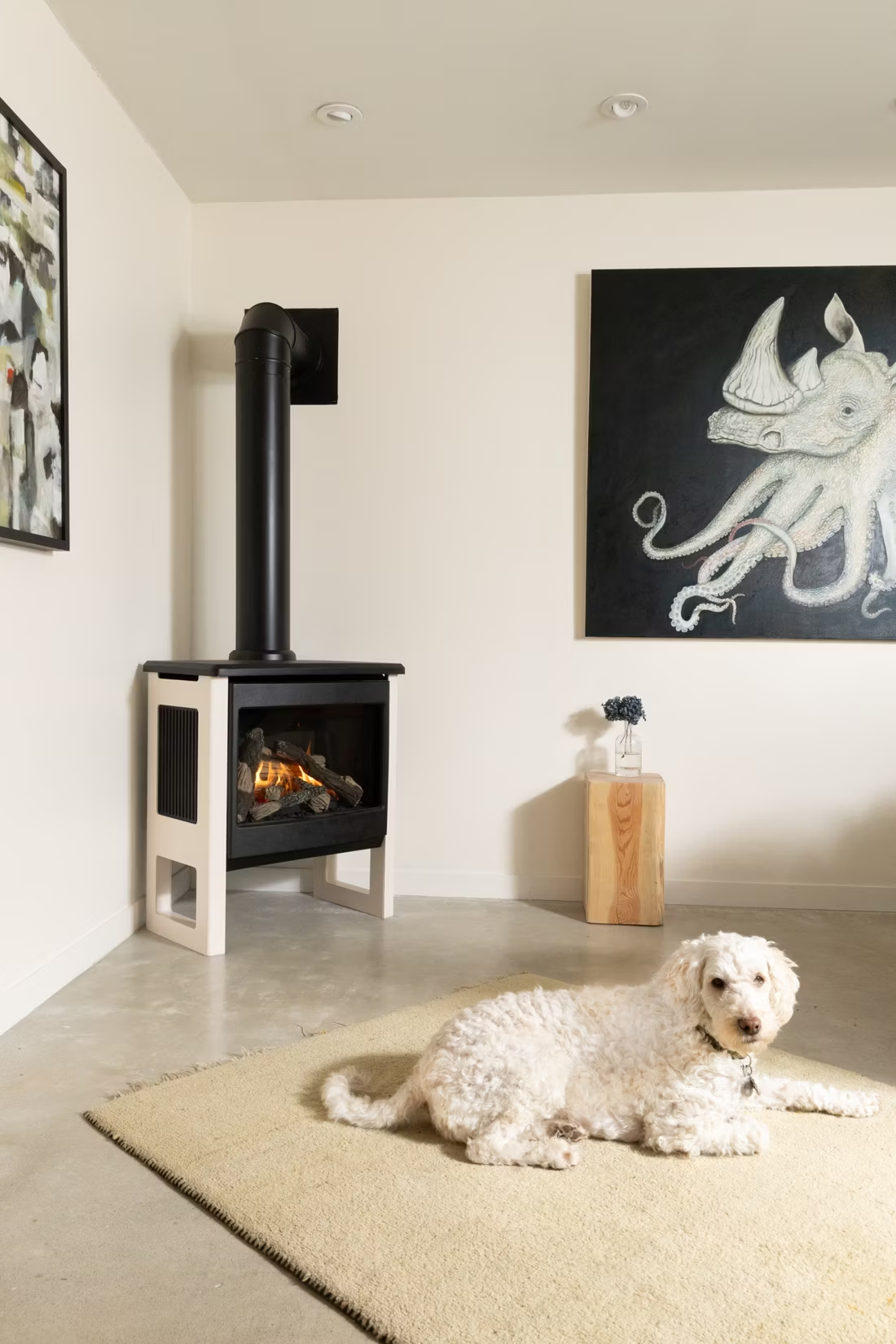
A gas fireplace is a fully built-in unit framed into a wall—the right call for new construction or a major remodel. A gas insert is sized to slide into an existing masonry firebox, which fits a lot of Wallingford Center's older colonial and cape homes that already have a working chimney. A gas stove is freestanding, sitting on the floor like a wood stove but burning gas, and works well in a room without any existing fireplace. For most homeowners here with an old open hearth they want to modernize, an insert is the most common and cost-effective path.
Do I need a permit to install a gas fireplace in Wallingford Center?
Yes. The Wallingford Building Department requires a building permit for the installation, and the gas line work itself must be done or signed off by a licensed gas fitter under the Connecticut State Building Code. Most established hearth retailers handle both the building permit and the gas line coordination as part of the install, so you're not left managing separate trades and inspections yourself.
What's the difference between vented and vent-free gas fireplaces?
Vented (direct-vent or B-vent) fireplaces pull combustion air from outside and exhaust the byproducts back outside through a sealed vent—they're the cleanest, safest, and most universally code-compliant option. Vent-free units burn directly into the room without external venting; they're legal in Connecticut but come with strict room-size, BTU, and oxygen-depletion-sensor requirements under the state fire code, and some homeowners simply prefer not to introduce combustion byproducts into a bedroom or finished basement. For Wallingford Center homes, direct-vent units are by far the more common choice—they deliver real heat output and don't require any compromise on indoor air quality.
How often should my gas fireplace be serviced?
Plan on an annual inspection, ideally in early fall before the heating season starts. A qualified technician checks the burner, pilot assembly, venting, and gas connections, and cleans the glass and interior. It's a much smaller job than sweeping a wood chimney, but skipping it is how pilot and ignition problems go unnoticed until the coldest night of the year. Local gas appliance service providers in the Wallingford area typically charge $150 to $250 for this visit.
Gas vs. wood vs. electric—which makes sense for my Wallingford Center home?
Wood is still viable here—oak, maple, birch, and ash are all common firewood species in South Central Connecticut, and a wood stove keeps working with zero electricity during an outage. But it means handling cordwood and cleaning ash. Electric fireplaces are the simplest to install and need no venting at all, but Connecticut's residential electric rates are among the highest in the country—United Illuminating customers can pay north of $0.31 per kWh—which makes electric heat expensive to run for anything beyond occasional supplemental use. Gas splits the difference: instant, thermostat-controlled heat, no wood handling, and a far lower per-hour operating cost than resistance electric heat, especially if your home is already on the Southern Connecticut Gas main. For most Wallingford Center homeowners upgrading a primary living space, gas is the one that gets used daily.
Why is a fireplace insert so efficient?
An insert does two things: it seals the chimney completely, so you stop losing air you already paid to heat, and it radiates warmth into the room through the firebox and glass. Most add a heat-exchange fan that pulls cool room air underneath, wraps it around the hot firebox, and pushes it back out warm. Your home is more efficient before you've even lit the first fire.
What's the difference between an insert and a zero-clearance fireplace?
An insert is a fireplace that slides into a pre-existing wood-burning fireplace—if you don't have one, there's nothing to insert it into. A zero-clearance fireplace is built into a framed wall, which makes it the answer for remodels and new construction. Simple test: existing masonry fireplace means insert; blank or framed wall means zero-clearance.
Can a fireplace actually lower my heating bill?
Yes—by creating a comfort zone. A furnace heats every square foot of the house just to warm the one room you're in; a gas fireplace on low burns roughly a sixth of the gas a typical furnace does. Set the furnace around 55–60 degrees as a baseline, then heat the rooms your family actually uses. Families who heat this way commonly save $20–$60 a month.
Can I install a fireplace myself?
If you're putting a fire in your house on purpose, it's best to work with an expert. Unless you're genuinely experienced in framing, gas line, vent pipe, and the national code on clearances to combustibles, have a professional do it—and ideally the same company that sells you the fireplace, so warranty, service, and liability all live under one roof.
Nearby Dealers
Hearth shops serving Wallingford Center and the surrounding area. Every listing shows whether it is a WhyFire partner, a dealer we have verified as authorized for the brands we recommend, or a local business carrying hearth products. No manufacturer pays for placement. How we verify dealers →
Neighborhood Chimney Service
Fireplace Surplus
New Haven Masonry
Tani’s Masonry Supply, LLC
Jj Sullivan Inc.
Spotless Chimney Sweeping & Solutions
Fireworks Hearth And Home LLC
Four Seasons Fire & Hearth
Superior Hearth, Spas & Leisure
Best In Backyards
Find your gas fireplace in Wallingford Center.
Tell us about your home and gas setup, and we'll put together a free Project Guide & Parts List—the right unit, the vent kit, and a trusted local dealer to install it.
Find Your Fireplace →