
Clean gas heat built for coastal Connecticut winters.
From direct-vent inserts in a colonial's original masonry fireplace to full remodels, find the right gas unit for a 06880 home and connect with a trusted local dealer.
Every Project Starts From One of These Five Situations
Gas is the natural fit for this corner of Fairfield County.
Staples sits at just 179 feet of elevation near the Long Island Sound, in the 06880 zip code that covers Westport and this stretch of western Connecticut. Winters here are real but moderate by New England standards—average lows near 24°F and a heating season on the lighter side for New England, not as demanding as inland towns like Burlington, VT, but still enough cold, damp months to make supplemental heat worthwhile from late fall through March.
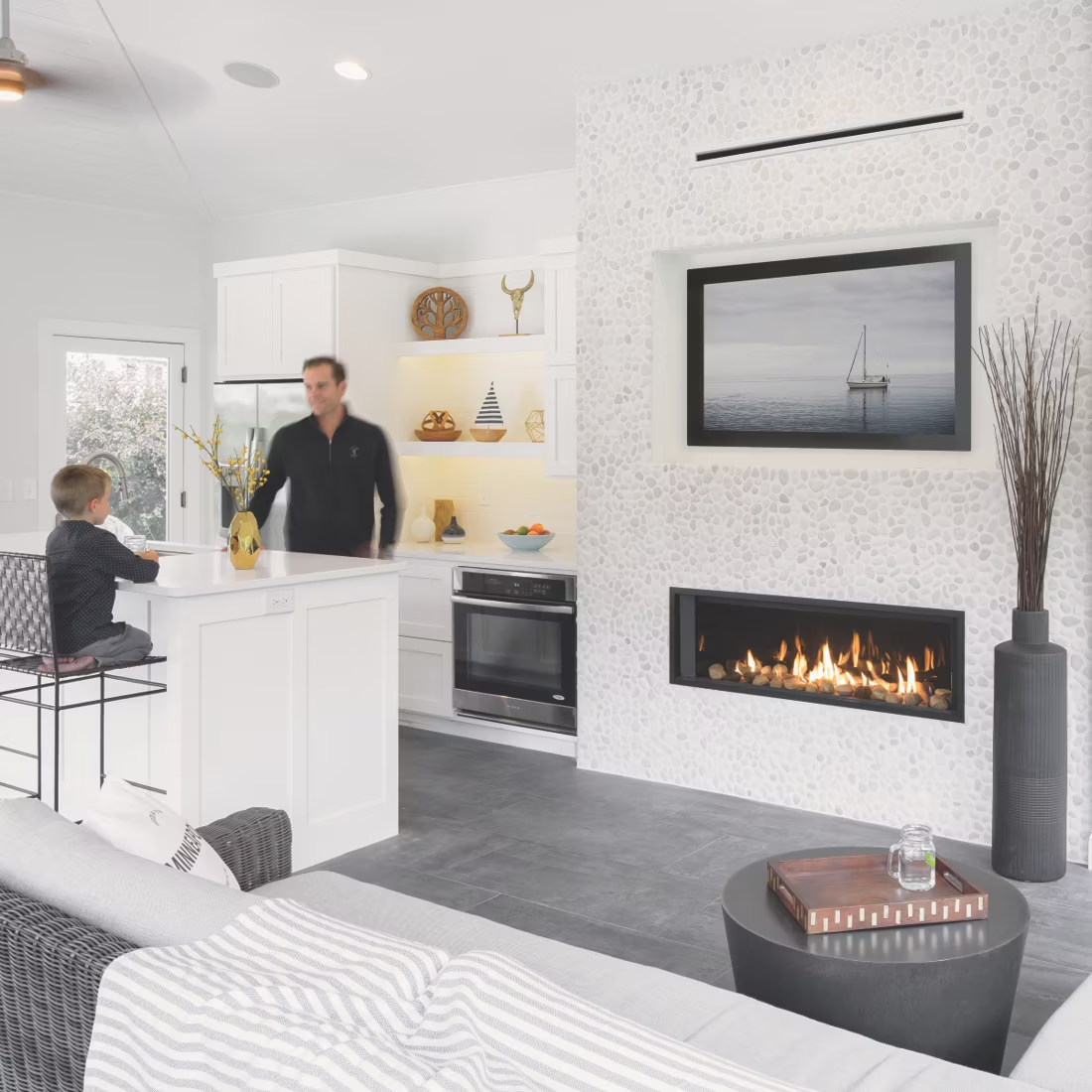
Wood stoves and pellet stoves are essentially absent from this market, not because the climate can't support them but because tight residential lots, historic-district design guidelines, and the lack of anywhere to stack cordwood or store a pellet hopper make them impractical for most properties here. Gas fills that gap. Direct-vent gas fireplaces and inserts have become close to standard in local renovations—dropped into an existing colonial's masonry fireplace or built new during an addition—and with electric rates from United Illuminating and Connecticut Light & Power running well above 25 cents per kWh, gas zone heating also makes financial sense next to whole-home electric heat.
Three steps. No salesperson until you're ready.
Tell us about your project
Your zip code, your situation, and the fuel you're leaning toward—or let the answers point you to one.
See what's actually available
The brands dealers within 100 miles genuinely carry—real options, never a catalog mirage.
Get your dealer & Project Guide
A trusted local dealer, plus the free Project Guide & Parts List that names every component of the job.
Frequently Asked Questions
How much does a gas fireplace installation cost in Staples?
In this part of Fairfield County, a gas fireplace or insert installation typically runs $5,500 to $12,000. The low end covers a direct-vent insert dropped into an existing masonry fireplace on a street already served by natural gas. The higher end applies to full remodels—new gas line runs, custom surrounds, and permitting through the Westport Building Department—or homes on propane that need a new tank. Get a firm number from a local dealer after an in-home walkthrough; older homes with knob-and-tube wiring sometimes need extra electrical work for the blower or ignition system.
Can I convert my existing fireplace to gas?
Yes, and it's one of the most common projects in this area's older colonial and shingle-style homes. A gas insert is set into your existing masonry firebox with a stainless liner run up the original chimney, so the fireplace opening and mantel stay intact while the heat output and convenience improve dramatically. Cost typically lands between $5,000 and $9,500 depending on whether the home already has a gas line nearby or needs one extended from the street. It's a straightforward upgrade for the many Staples-area homes with a disused wood fireplace that hasn't been lit in years.
Do I need natural gas, or is propane more common here?
Both are in use around 06880. Natural gas service reaches many streets closer to the village center, so if your home already runs gas appliances, adding a fireplace is a simple tie-in. On larger, tree-lined lots further from the center—common throughout this part of Westport—propane is often the practical choice, either with an existing tank or a new buried tank installed by a local propane supplier. Nearly every gas fireplace model on the market can be configured for either fuel, so the choice comes down to what's already running to your house.
Will my gas fireplace work during a power outage?
Most will. Nor'easters and coastal storms off the Sound knock out power in this area more often than people expect, and units with IPI (intermittent pilot ignition) include a battery backup that keeps the fireplace lighting on demand even with the grid down—just remember to swap the batteries periodically. Valor fireplaces skip batteries entirely, generating their own current from the pilot's thermocouple, which is worth asking about if storm resilience matters to you. Ask any local dealer which ignition system is on the model you're considering.
What's the difference between a gas fireplace, gas insert, and gas stove?
A gas insert slides into an existing masonry firebox and uses your current chimney as the vent path—the common choice for the area's older homes with an original fireplace. A gas fireplace is a fully built-in unit framed into a wall, typically used in additions or full remodels where there's no existing fireplace to work with. A gas stove is a freestanding cabinet-style unit that sits on the floor, useful in smaller rooms or converted spaces where a built-in isn't practical. Most Staples homeowners with a disused fireplace go the insert route; new construction generally favors a built-in.
Do I need a permit to install a gas fireplace in Staples?
Yes—the Westport Building Department, which covers the 06880 area, requires a building permit and a separate gas permit for any new gas fireplace or insert installation. The gas line work has to be done by a licensed gas-fitter, which is one reason it's worth using an established local hearth dealer rather than a general contractor—they coordinate the gas trade, venting, and inspection sign-off as one job instead of leaving you to manage separate crews.
What's the difference between vented and vent-free gas fireplaces?
Vented (direct-vent) units draw combustion air from outside and exhaust gases back outside through a sealed pipe—they're the cleaner, more universally accepted option and what most dealers in this area install by default. Vent-free units burn directly into the room and are legal in Connecticut with room-size and oxygen-depletion-sensor requirements, but they add moisture and combustion byproducts to indoor air, which is a harder sell in tightly built, well-insulated homes like the ones common around Staples. Given the resale expectations in this market, direct-vent is the far more common choice, though a local dealer can walk you through both if you're weighing options for a small room.
How often should my gas fireplace be serviced?
Plan on an annual inspection, ideally in the fall before the heating season starts. A technician checks the burner, pilot assembly, venting, and gas connections, and cleans the glass and interior—a much lighter job than chimney sweeping but still important, since a dirty or misaligned pilot is the most common cause of a fireplace that won't stay lit. Local gas appliance service providers typically charge $150 to $250 for this visit.
Gas vs. wood vs. electric—which fits a Staples home?
Wood and pellet stoves are rare around here—it's not a climate issue, it's that small lots, historic-district rules, and nowhere to stack a cord of local oak, maple, birch, or ash make them impractical for most 06880 properties. Gas is the default for real heat output: instant on, no ash, and it works with the masonry fireplace most older homes already have. Electric inserts and log sets are worth considering for rooms where venting isn't possible, since they need no gas line or chimney—just know that at United Illuminating and CL&P rates above 25 cents per kWh, an electric unit is better suited to ambiance and light supplemental warmth than to carrying a room through a cold February night.
Why is a fireplace insert so efficient?
An insert does two things: it seals the chimney completely, so you stop losing air you already paid to heat, and it radiates warmth into the room through the firebox and glass. Most add a heat-exchange fan that pulls cool room air underneath, wraps it around the hot firebox, and pushes it back out warm. Your home is more efficient before you've even lit the first fire.
Is my gas fireplace wasting gas?
If it was installed more than 15 years ago, probably. Older gas fireplaces keep a standing pilot light burning all the time, and that little flame can cost a couple hundred dollars a year. Newer models use pilot-on-demand ignition—the pilot lights only when you use the fireplace and goes out when you turn it off.
Can I install a fireplace myself?
If you're putting a fire in your house on purpose, it's best to work with an expert. Unless you're genuinely experienced in framing, gas line, vent pipe, and the national code on clearances to combustibles, have a professional do it—and ideally the same company that sells you the fireplace, so warranty, service, and liability all live under one roof.
Should the dealer who sells my fireplace also install it?
Ideally, yes. A fireplace project involves vent pipe, gas line, electrical, and often tile or stone. Hire three or four separate trades and you own the liability and the game of telephone between them. One company selling and installing means one accountable party, start to finish—ask about factory training, on-time completion records, and what happens if an inspection fails.
Nearby Dealers
Hearth shops serving Staples and the surrounding area. Every listing shows whether it is a WhyFire partner, a dealer we have verified as authorized for the brands we recommend, or a local business carrying hearth products. No manufacturer pays for placement. How we verify dealers →
Hearth Products, LLC
Hocon Gas Of Norwalk
Best In Backyards
Nordic Stove And Fireplace Center
Leahy’s Metered Gas Service
Fireplace And Outdoor Living
Aida Design Build
Westfair Pool & Spa Inc
Northshore Fireplace
Village Fireplace
Black Swan Fireside Hearth & Home
Costello's Hearth & Spa - Smithtown
Long Island Fireplace
The Valley Fireplace
New Haven Masonry
House Of Warmth Stove & Fireplace Shop
The Trading Post
Get matched for your gas fireplace in Staples.
Tell us about your home and we'll put together a free Project Guide & Parts List—the right unit, the vent kit, and a trusted local dealer to install it.
Find Your Fireplace →