
The Fireplace That Doesn't Need a Chimney.
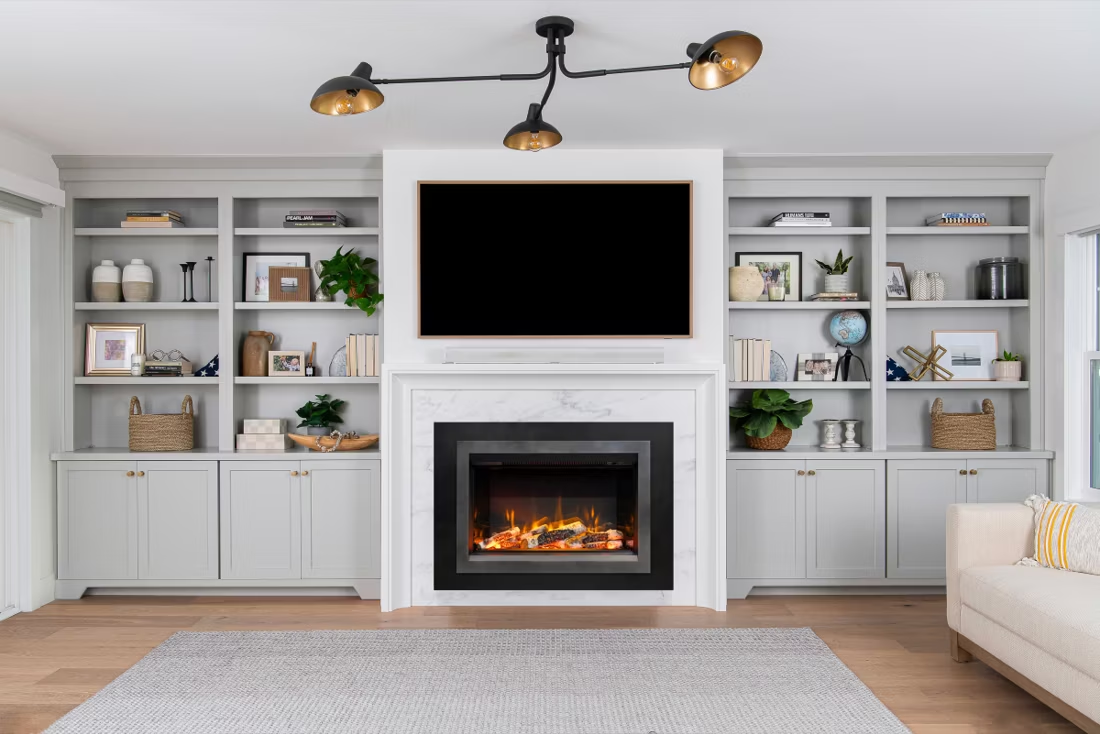
For Old Greenwich's shingle-style colonials, condos near the train station, and coastal cottages without working flues, electric is often the simplest way to add real warmth and ambiance.
Every Project Starts From One of These Five Situations
No masonry, no gas line, no problem.
Old Greenwich sits right on the Long Island Sound at just 14 feet of elevation, and its housing stock leans heavily toward pre-war shingle-style homes, capes, and colonials—many with decorative fireplaces that lost their function decades ago, or none at all. Winters here are moderate by New England standards, with average lows around 22°F and a heating season comparable to much of coastal Connecticut, so most homeowners aren't looking for a primary heat source. They want a real flame look in the family room or a supplemental heat boost on a raw February evening, without opening up a wall or running a flue through a historic roofline.
That's where electric wins. There's no venting, no gas line, and typically no building permit for a plug-in unit—which matters in a town where FEMA flood-zone rebuilds and tight in-town lots make chimney work expensive or impossible. The tradeoff worth knowing: both United Illuminating and Connecticut Light & Power serve homes in this part of Fairfield County at some of the highest residential electric rates in New England (roughly 25 to 31 cents per kWh), so electric fireplaces make the most financial sense as zone heaters for one room—not as a way to heat the whole house.
Three steps. No salesperson until you're ready.
Tell us about your project
Your zip code, your situation, and the fuel you're leaning toward—or let the answers point you to one.
See what's actually available
The brands dealers within 100 miles genuinely carry—real options, never a catalog mirage.
Get your dealer & Project Guide
A trusted local dealer, plus the free Project Guide & Parts List that names every component of the job.
Frequently Asked Questions
How much does an electric fireplace installation cost in Old Greenwich?
Most electric fireplace projects in Old Greenwich fall into two categories. A plug-in insert or wall-mounted unit that drops into an existing firebox or mounts on a wall typically runs $300 to $1,500 installed, since there's no venting or gas line to run. A custom built-in—framed into cabinetry or a new mantel surround, often with a dedicated 120V or 240V circuit pulled by a licensed electrician—usually lands between $2,000 and $5,000 depending on the millwork. Either way, it's almost always cheaper than converting one of Old Greenwich's older masonry fireplaces to gas, since there's no liner or gas piping involved.
Do electric fireplaces actually put out heat, or just look nice?
Both, but the heat is modest by design. Most residential electric fireplaces use a 1,500-watt resistance heater rated around 4,600–5,000 BTU, enough to comfortably warm a single room—a den, a primary bedroom, a sunroom facing the Sound—but not a whole house. Given Old Greenwich's average winter low of 22°F, that's usually plenty for supplemental comfort on top of central heat. If you're hoping to heat an open-concept first floor with one unit, talk to a local dealer about placement and square footage before you buy.
Do I need a permit to install an electric fireplace in Old Greenwich?
A simple plug-in unit that uses an existing outlet generally doesn't require a permit. If you're adding a built-in unit that needs a new dedicated circuit, the electrical work itself requires a licensed electrician and, in most cases, a permit through the Town of Greenwich Building Department, since Old Greenwich falls under the Town of Greenwich's jurisdiction. Any framing or millwork changes to a historic home's façade may also trigger a review if the property sits in a designated historic area—worth a quick call to the building department before you commit to a design.
Electric vs. gas—which makes more sense for my Old Greenwich home?
Gas is the better choice if you want a fireplace that can genuinely heat a room and you already have (or can run) a gas line—natural gas service reaches much of Old Greenwich, and a direct-vent gas insert can put out real BTUs on a cold January night. Electric is the better choice if you don't have a working chimney, live in a condo or rental where venting isn't an option, or simply want ambiance and light supplemental warmth without construction. Given local electric rates near 25 to 31 cents per kWh, gas is also usually cheaper to run for sustained heat—but electric wins on install simplicity and upfront cost every time.
Can I put an electric insert into my existing fireplace?
Yes, and it's one of the most common projects for Old Greenwich's older homes. Many of the town's colonials and capes have a masonry firebox that hasn't held a real fire in years—often because the flue was capped, damaged, or never rebuilt to code. An electric insert slides into that opening with no chimney work, no liner, and no inspection of the existing flue required, since nothing is being vented. It's typically the fastest way to bring a dead fireplace back to life.
What will it cost to run an electric fireplace given local electric rates?
United Illuminating and Connecticut Light & Power both serve this part of Fairfield County, with residential rates currently running roughly 25 to 31 cents per kWh—on the higher end nationally. A typical 1,500-watt unit run on high for five hours costs somewhere between $1.90 and $2.35, and most units use far less on a lower flame-only or eco-heat setting. It's not a cheap way to heat an entire house, but as an evening ambiance-and-warmth routine in one room, the cost is manageable.
What about a wood or pellet stove instead?
Both are genuinely rare in Old Greenwich, and for practical reasons rather than preference. The village is dense and residential, with small in-town lots, no nearby public land for cutting firewood, and a housing stock where many properties are in or near historic and flood-zone overlays that complicate new chimney or venting work. Homeowners further out in Greenwich's backcountry sometimes run a wood stove for a cabin or barn, but within Old Greenwich proper, electric and gas are the practical options—pellet stoves in particular see almost no local demand.
What are the best electric fireplace brands to look at?
Dimplex, Napoleon, and Touchstone all make well-regarded electric inserts and wall-mounted units with realistic flame technology—look for models with adjustable flame color and speed, a separate heater control, and an app or remote for zone control. For a built-in surrounded by custom millwork, a local dealer can also spec a linear electric unit sized to a specific opening width, which matters in older homes where fireplace openings rarely match modern standard sizes.
Are electric fireplaces safe for bedrooms or homes with kids?
Yes—that's one of their real advantages. There's no open flame, no combustion byproducts, no carbon monoxide risk, and the glass front on most units stays cool or warm to the touch rather than hot, which matters in a house with small kids or pets. Because there's no venting or clearance-to-combustible requirement like a wood stove, electric units can go in bedrooms, finished basements, or condo units where a gas or wood appliance simply wouldn't be allowed.
Can I put a TV above my fireplace?
Yes—with an asterisk. Fireplaces are hot and TVs don't like heat. Either put a mantel between them to deflect rising warmth, or choose a fireplace with heat-management technology that creates a cool zone on the wall above—the wall stays around 125 degrees, barely warm, while the room still gets full heat. If you like clean lines and don't want a mantel, heat management is the answer.
Do electric fireplaces actually produce heat?
Yes—most put out around 4,800–5,000 BTUs from a standard outlet, which comfortably warms a bedroom, office, or den as a comfort-zone heater. What they won't do is carry a whole house the way wood, gas, or pellet can. Think of electric as ambiance-first with honest supplemental heat: flames on with no heat in July, flames plus warmth in January.
Does a fireplace add value to my home?
On average, a fireplace adds back to the home about the same amount you spent installing it. Add the monthly savings from heating the rooms you actually use instead of the whole house—often hundreds of dollars a year—and the value case is strong before you even count what a fire does for how your family uses the room.
How much should I budget for a fireplace?
For an average home—covering the fireplace, the vent pipe, and basic installation—a budget between $3,900 and $5,500 gives you a lot of options across wood, gas, and pellet. By the time you add finish work, gas line, and electrical, the average complete installation lands between $5,000 and $12,000 all-in. In a remodel or new build, a good rule is to put about 2.5% of the total project cost toward the fireplace.
Nearby Dealers
Hearth shops serving Old Greenwich and the surrounding area. Every listing shows whether it is a WhyFire partner, a dealer we have verified as authorized for the brands we recommend, or a local business carrying hearth products. No manufacturer pays for placement. How we verify dealers →
Nordic Stove And Fireplace Center
Fireplace And Outdoor Living
Hocon Gas Of Norwalk
The Valley Fireplace
Westchester Fireplace
All Shore Appliance
Village Fireplace
Westfair Pool & Spa Inc
Northshore Fireplace
Hearth Products, LLC
Aida Design Build
County Woodstoves Inc
Flue Tech
Costello's Hearth & Spa - Garden City Park
Hearth Healers
Costello Hearth & Spa - Farmingdale
Sleepy Hollow Stove & Fireplace
Hot Shots Hot Tubs & Spas
Long Island Fireplace
Mcnamara Fireplace And Stove
Electric Service in Old Greenwich
An electric fireplace's heater draws about 1,500 watts—pennies per hour at local rates.
United Illuminating Co
Connecticut Light & Power Co
Find your electric fireplace in Old Greenwich.
Tell us a bit about your home and we'll put together a free Project Guide & Parts List—the right unit, the exact parts, and a trusted local dealer to install it.
Find Your Fireplace →