
Warm Up Fast on the Connecticut Shoreline.
Instant, reliable heat for Milford's damp coastal winters—no wood, no waiting. Find the right gas fireplace or insert and connect with a trusted local dealer.
Every Project Starts From One of These Five Situations
Reliable heat without the wood pile.
Milford sits at just 57 feet above sea level on Long Island Sound, where the marine air keeps winters milder than inland New England but also damp and raw. With a winter heating season that runs roughly from October through April and average winter lows near 24°F, Milford's heating season is real but nowhere near what a Burlington, VT or Duluth, MN homeowner deals with—which is part of why gas fireplaces have become the default choice in newer construction and renovated colonials throughout Devon, Wilcox Park, and the Beach neighborhoods alike.
Southern Connecticut Gas Company serves most of Milford, so homes already on natural gas for the furnace or water heater can typically add a gas fireplace with a straightforward line tap. United Illuminating and Connecticut Light & Power, the area's electric providers, charge among the highest residential rates in the country—0.25 to 0.31 per kWh—which makes gas heat noticeably cheaper to run than electric space heat for shoulder-season use. Milford also has no air quality non-attainment restrictions or wood-burning curtailment days, so a gas installation here is mostly a question of venting path and gas-line routing, not emissions compliance. One local wrinkle worth knowing: coastal salt air accelerates corrosion on exterior venting, so installers here typically spec stainless steel vent caps and terminations rather than standard galvanized parts.
Three steps. No salesperson until you're ready.
Tell us about your project
Your zip code, your situation, and the fuel you're leaning toward—or let the answers point you to one.
See what's actually available
The brands dealers within 100 miles genuinely carry—real options, never a catalog mirage.
Get your dealer & Project Guide
A trusted local dealer, plus the free Project Guide & Parts List that names every component of the job.
Frequently Asked Questions
How much does a gas fireplace installation cost in Milford?
Most gas fireplace installations in Milford run between $4,000 and $10,000, depending on the unit, the venting run, and whether new gas line work is needed. A direct-vent insert dropped into an existing masonry fireplace with gas already nearby sits toward the lower end. A new built-in unit for a remodel—with framing, a fresh gas line, and exterior venting through a coastal wall—lands in the middle to upper range. Because Milford is on the Sound, installers here also budget for stainless steel vent terminations instead of standard galvanized parts, since salt air corrodes cheaper venting within a few years.
Can I convert my existing wood fireplace to gas?
Yes, and it's a common project in Milford's older colonial-era homes around Devon and the historic downtown, most of which have masonry fireplaces original to the house. A gas insert typically runs $4,500 to $9,000, using a stainless steel liner through your existing chimney as the vent path. Homes already served by Southern Connecticut Gas for the furnace or water heater usually see costs on the lower end since the gas line is already close by; homes relying on propane or with the meter far from the fireplace location will run higher due to added line work.
Do I need natural gas, or can I use propane?
Either works, but most of Milford proper—including the areas near Milford Harbor and downtown—has natural gas service through Southern Connecticut Gas. United Illuminating and Connecticut Light & Power are electric providers only; they don't supply gas. If your home is in one of Milford's more outlying pockets without a gas main nearby, propane is a straightforward alternative, delivered and stored in an above- or below-ground tank. Most gas fireplace models can be configured for either fuel with the correct orifice, so the fireplace choice itself isn't limited by which fuel you use.
Will my gas fireplace work during a power outage?
Most will, which matters in a shoreline town like Milford where nor'easters and tropical storm remnants off Long Island Sound regularly knock out power for days at a time. Units with IPI (intermittent pilot ignition) run on standard AA batteries that kick in automatically when the power drops, so the fireplace still lights on demand. Valor's gas fireplaces go a step further—the pilot's thermocouple generates its own electricity, so there's no battery to remember or replace. Given how often Milford loses power during coastal storms, that's worth asking your local dealer about directly.
What's the difference between a gas fireplace, gas insert, and gas stove?
A gas fireplace is a fully built-in unit framed into a wall, typically chosen for new construction or a full remodel. A gas insert slides into an existing masonry firebox and uses the chimney as its vent path—the common choice for Milford's older homes with a fireplace already in place. A gas stove is a freestanding cast-iron or steel unit that sits on the floor like a wood stove but burns gas, useful in a room without any existing chimney or fireplace opening. For most Milford homeowners with an existing fireplace, an insert is the simplest and most cost-effective upgrade.
Do I need a permit to install a gas fireplace in Milford?
Yes—the City of Milford Building Department requires both a building permit and a gas permit for new gas fireplace or insert installations, and the gas line connection must be completed by a licensed gas-fitter. Most local hearth retailers handle the permitting and inspection scheduling as part of the installation, which is one of the practical reasons to work with a certified dealer rather than a general handyman: they coordinate the gas trade, the venting, and the inspection sign-off together.
What's the difference between vented and vent-free gas fireplaces?
Vented (direct-vent) fireplaces pull combustion air from outside and exhaust it back outside through a sealed pipe—they're the standard choice in Connecticut and the most universally recommended option. Vent-free units burn fuel directly into the room without exterior venting; they're technically permitted in Connecticut within specific room-size and ventilation limits, but many Milford installers steer homeowners toward direct-vent units instead, since the added moisture from vent-free combustion compounds the humidity Milford already deals with so close to the Sound. Ask your local dealer which option fits your specific room.
How often should my gas fireplace be serviced?
Plan on an annual inspection, ideally before the fall heating season starts. A certified technician checks the burner, pilot assembly, gas connections, and venting, and cleans the glass and interior—most local service providers charge $150 to $250 for this visit. In Milford specifically, it's also worth having the technician check the exterior vent termination for salt-air corrosion, since coastal homes see venting hardware degrade faster than inland Connecticut properties.
Gas vs. wood—which is right for my Milford home?
Wood offers a real fire, lower fuel costs if you're sourcing local oak, maple, birch, or ash, and heat that doesn't depend on gas or electric service. Gas offers instant on-off convenience, no ash or creosote to manage, and—given that United Illuminating and CL&P charge some of the highest electric rates in the country—a real cost advantage over electric heat for daily use. Milford has no wood-burning restrictions or air quality curtailment days, so both fuels are fully permitted here; the decision usually comes down to whether you want the ritual of tending a fire or the convenience of flipping a switch on a damp February evening.
Is my gas fireplace wasting gas?
If it was installed more than 15 years ago, probably. Older gas fireplaces keep a standing pilot light burning all the time, and that little flame can cost a couple hundred dollars a year. Newer models use pilot-on-demand ignition—the pilot lights only when you use the fireplace and goes out when you turn it off.
Can I put a TV above my fireplace?
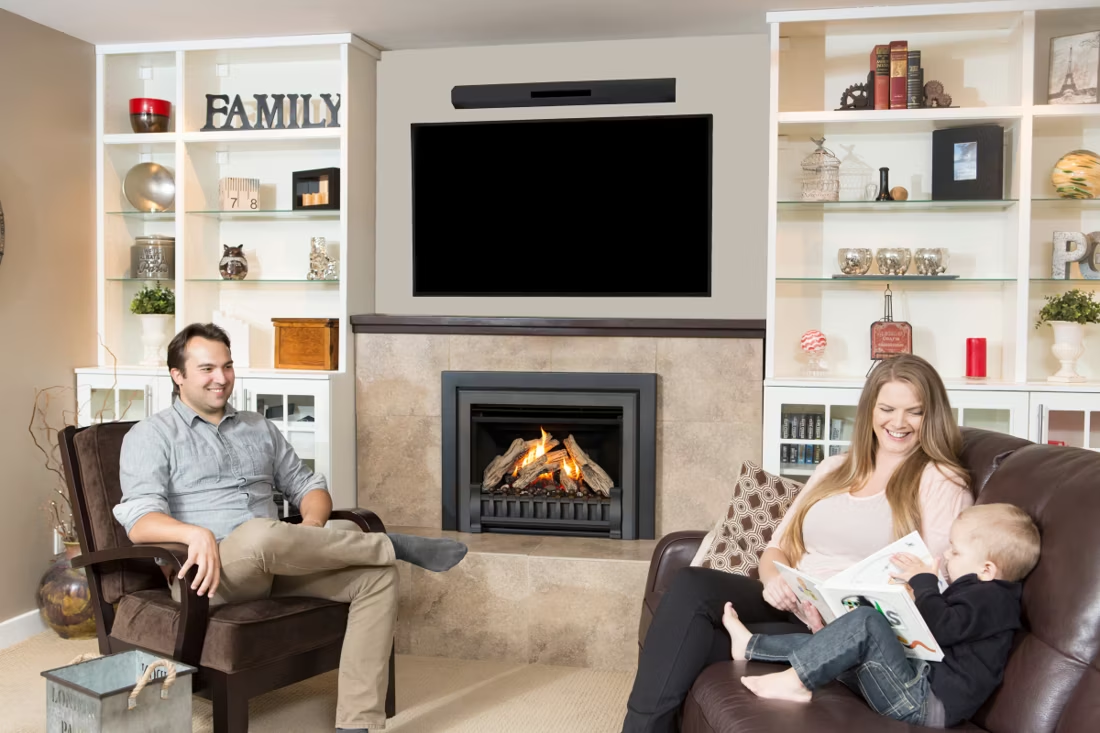
Yes—with an asterisk. Fireplaces are hot and TVs don't like heat. Either put a mantel between them to deflect rising warmth, or choose a fireplace with heat-management technology that creates a cool zone on the wall above—the wall stays around 125 degrees, barely warm, while the room still gets full heat. If you like clean lines and don't want a mantel, heat management is the answer.
How much should I budget for a fireplace?
For an average home—covering the fireplace, the vent pipe, and basic installation—a budget between $3,900 and $5,500 gives you a lot of options across wood, gas, and pellet. By the time you add finish work, gas line, and electrical, the average complete installation lands between $5,000 and $12,000 all-in. In a remodel or new build, a good rule is to put about 2.5% of the total project cost toward the fireplace.
Can a fireplace actually lower my heating bill?
Yes—by creating a comfort zone. A furnace heats every square foot of the house just to warm the one room you're in; a gas fireplace on low burns roughly a sixth of the gas a typical furnace does. Set the furnace around 55–60 degrees as a baseline, then heat the rooms your family actually uses. Families who heat this way commonly save $20–$60 a month.
Nearby Dealers
Hearth shops serving Milford city and the surrounding area. Every listing shows whether it is a WhyFire partner, a dealer we have verified as authorized for the brands we recommend, or a local business carrying hearth products. No manufacturer pays for placement. How we verify dealers →
New Haven Masonry
Hearth Products, LLC
Best In Backyards
Fireplace Surplus
Jj Sullivan Inc.
Hocon Gas Of Norwalk
Tani’s Masonry Supply, LLC
Black Swan Fireside Hearth & Home
Leahy’s Metered Gas Service
Find your gas fireplace in Milford, CT.
Tell us about your home and we'll put together a free Project Guide & Parts List—the exact parts, including the vent kit, for your gas fireplace project—and match you with a trusted local Milford dealer to install it.
Find Your Fireplace →