
Warm Up Your Lakes West Home Without the Woodpile.
Fast, reliable heat for a small Litchfield Hills lake community where propane, not piped gas, does the work. Find the right unit and connect with a trusted local dealer.
Every Project Starts From One of These Five Situations
The practical choice for a small lake community.
Lakes West sits at about 746 feet in the Litchfield Hills of western Connecticut, a small community of roughly 1,350 residents built up around its namesake lakes. Winters here average 18°F on the coldest nights and the area sees a long, demanding heating season—colder than coastal Fairfield County, though still noticeably milder than Burlington, VT's much longer winter heating season further up New England. Many homes here started as lake cottages and have since been winterized into full-time residences, which shapes what kind of heat actually makes sense.
There's no piped natural gas reaching this part of Lakes West, so propane is the standard fuel for a gas fireplace, insert, or stove—most homeowners either tie into an existing tank or have one set alongside a new install. Electric rates from United Illuminating and Connecticut Light & Power run $0.25 to $0.31 per kWh, among the highest in the country, which makes electric resistance heat expensive to run around the clock but fine as supplemental zone heat. True wood-burning setups are genuinely uncommon in Lakes West's smaller lake homes, so a propane fireplace tends to be the fuel that delivers real heat output, instant on-demand warmth, and backup capability when winter ice storms knock out power in the hills.
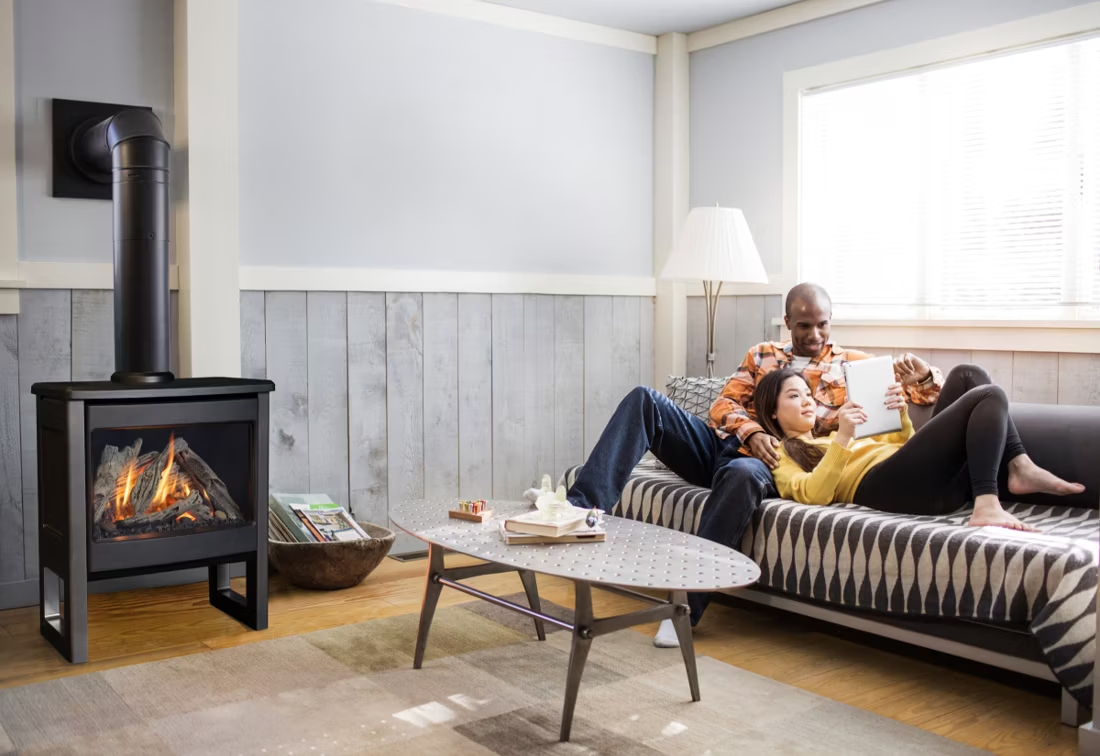
Three steps. No salesperson until you're ready.
Tell us about your project
Your zip code, your situation, and the fuel you're leaning toward—or let the answers point you to one.
See what's actually available
The brands dealers within 100 miles genuinely carry—real options, never a catalog mirage.
Get your dealer & Project Guide
A trusted local dealer, plus the free Project Guide & Parts List that names every component of the job.
Frequently Asked Questions
How much does a gas fireplace installation cost in Lakes West?
A propane fireplace or insert install in Lakes West typically runs $5,500 to $12,000, depending on the unit, venting complexity, and whether a propane tank is already in place. Homes tying into an existing tank and gas line sit at the lower end. Homes needing a new propane tank—a 120- or 250-gallon aboveground or buried tank is common in this area—should budget an additional $600 to $2,000 for the tank and line run. Local propane-certified installers will give a firm number after seeing the home.
Do I need natural gas, or does everyone here use propane?
Propane is the standard fuel for gas fireplaces in Lakes West—there's no municipal natural gas main reaching this community, unlike some of the larger towns in Fairfield and Litchfield counties. Nearly every gas fireplace installed here runs on propane from either a shared or dedicated tank. The good news is that modern gas fireplaces are built to run on either fuel—your installer simply configures the correct orifice and regulator for propane rather than natural gas.
Can I convert an existing wood fireplace to gas or propane?
Yes, and it's a common upgrade for the older lake cottages around Lakes West that still have an original masonry fireplace. A propane insert slides into the existing firebox and vents through the chimney with a stainless liner, typically running $5,000 to $9,500 installed depending on the insert and whether a propane tank needs to be added. Since wood-burning setups are uncommon here to begin with, converting to propane is often the more practical long-term choice—no wood storage, no chimney creosote buildup, and instant heat on cold lake mornings.
Will my propane fireplace still work if the power goes out?
Most propane fireplaces are designed for exactly this. Units with an IPI (intermittent pilot ignition) system run on AA batteries that kick in automatically when the power drops, so the fireplace still lights on demand. Valor units go a step further—their pilot generates its own electricity through the thermocouple, so there's no battery to remember at all. Given how often the Litchfield Hills lose power during winter ice storms, this is worth asking about directly when you're comparing units with a local dealer.
What's the difference between a gas fireplace, insert, and stove?
A gas fireplace is a fully built-in unit framed into a wall—the right choice for new construction or a remodel. A gas insert fits into an existing masonry firebox and uses the current chimney as its vent path, which suits the older lake cottages common in Lakes West. A gas stove is a freestanding cabinet-style unit that sits on the floor, useful in smaller cottage layouts without an existing fireplace. Most Lakes West homeowners upgrading an older lake house go with an insert; those building or renovating from scratch typically choose a built-in fireplace.
Do I need a permit to install a gas fireplace in Lakes West?
Yes—a building permit is required for any new gas or propane fireplace installation, along with a separate permit and inspection for the gas line and, if applicable, the propane tank setup. These are handled through your local town building department. A licensed propane technician or gas-fitter has to sign off on the line work regardless of who sells you the unit, so working with an installer who coordinates both trades saves you from managing separate inspections yourself.
Should I choose a vented or vent-free propane fireplace?
Vented (direct-vent) propane fireplaces draw combustion air from outside and exhaust it back outside through sealed venting—they're the most common and most universally recommended choice, and they deliver strong heat output without any indoor air tradeoffs. Vent-free propane units burn directly into the room and are permitted in Connecticut under strict room-sizing and oxygen-depletion-sensor rules, but many owners of the smaller, tighter lake cottages around Lakes West find the room-size restrictions limiting. For most homes here, a direct-vent unit is the simpler, safer call—ask your local dealer to walk through both options for your specific room.
How often does a propane fireplace need to be serviced?
Plan on an annual inspection, ideally in early fall before the heating season starts. A certified technician checks the burner, pilot assembly, gas connections, and venting, and cleans the glass and interior—a service that typically runs $150 to $250 in this area. This matters even more with propane systems, since tank and regulator issues can affect performance in ways a natural gas hookup wouldn't.
Propane fireplace vs. electric fireplace—which makes more sense in Lakes West?
With electric rates from United Illuminating and Connecticut Light & Power running $0.25 to $0.31 per kWh, running an electric fireplace as a primary heat source gets expensive fast—but as supplemental zone heat or ambiance in a room you don't want to run propane lines to, electric units are cheap to install (often $400 to $1,500) and require no venting at all. A propane fireplace costs more upfront but delivers real heat output and keeps working during a power outage, which matters given how often winter storms hit the hills here. Many Lakes West homeowners end up with propane in the main living space and a small electric unit in a bedroom or den.
Can I put a TV above my fireplace?
Yes—with an asterisk. Fireplaces are hot and TVs don't like heat. Either put a mantel between them to deflect rising warmth, or choose a fireplace with heat-management technology that creates a cool zone on the wall above—the wall stays around 125 degrees, barely warm, while the room still gets full heat. If you like clean lines and don't want a mantel, heat management is the answer.
Why is my open fireplace making my house colder?
Open fireplaces suck—literally. As the fire burns, it consumes air your furnace already paid to heat and pulls it out through the chimney, so the house is actually colder after the fire goes out than before you lit it. An insert fixes this: it seals the chimney, puts fixed glass across the front, and turns that hole in your house into a real heat source.
What is an in-home preview and do I need one?
It's a visit where a hearth professional measures your space, confirms the model you picked actually works in your home, and walks the specs—framing, gas line, venting, finish work—before anything is ordered. Some details you just can't know until you see the house. Never make a down payment without one; it's the single most-skipped step that burns buyers.
Does a fireplace add value to my home?
On average, a fireplace adds back to the home about the same amount you spent installing it. Add the monthly savings from heating the rooms you actually use instead of the whole house—often hundreds of dollars a year—and the value case is strong before you even count what a fire does for how your family uses the room.
Nearby Dealers
Hearth shops serving Lakes West and the surrounding area. Every listing shows whether it is a WhyFire partner, a dealer we have verified as authorized for the brands we recommend, or a local business carrying hearth products. No manufacturer pays for placement. How we verify dealers →
Leahy’s Metered Gas Service
Action Chutes
Aida Design Build
Westfair Pool & Spa Inc
Best In Backyards
Black Swan Fireside Hearth & Home
House Of Warmth Stove & Fireplace Shop
Fire Glow Distributors, Inc.
Hocon Gas Of Norwalk
Hearth Products, LLC
The Trading Post
Nordic Stove And Fireplace Center
Fireplace And Outdoor Living
Route 52 Supplies
Agi Supply Inc
Westchester Fireplace
Find your gas fireplace in Lakes West.
Tell us about your Lakes West home and we'll put together a free Project Guide & Parts List—the exact parts, including the vent kit, and a trusted local dealer who can install it right.
Find Your Fireplace →