
Bring Instant Warmth to Your Lakes East Home.
Zone heat that works the moment you flip a switch, built for the cold lake-country winters around Ridgefield. Find the right electric fireplace and connect with a trusted local dealer.
Every Project Starts From One of These Five Situations
No chimney. No smoke. No permit hassle.
Lakes East sits along the water in the 06877 corner of Ridgefield, at just under 600 feet of elevation, where winter lows average 18°F and the area experiences a winter heating season on par with Madison, WI or Burlington, VT. Despite oak, maple, birch, and ash growing thick around the lake, wood and pellet stoves are genuinely uncommon in this pocket of town. Much of the housing stock is lakefront cottages, condos, and newer construction without a masonry chimney, and tight lot lines near the water leave little room for the clearances a wood stove needs. Electric fireplaces fill that gap cleanly.
Homes here draw power from either United Illuminating or Connecticut Light & Power (Eversource), both of which carry residential rates—roughly $0.25 to $0.31 per kWh—among the highest in the continental U.S. That reality shapes how people use electric fireplaces locally: less as a whole-house heat source and more as targeted zone heat for a living room or primary bedroom, taking pressure off an oil or propane furnace on the coldest nights. No flue, no wood storage, no combustion byproducts—just a unit that plugs in or ties into a dedicated circuit and works instantly.
Three steps. No salesperson until you're ready.
Tell us about your project
Your zip code, your situation, and the fuel you're leaning toward—or let the answers point you to one.
See what's actually available
The brands dealers within 100 miles genuinely carry—real options, never a catalog mirage.
Get your dealer & Project Guide
A trusted local dealer, plus the free Project Guide & Parts List that names every component of the job.
Frequently Asked Questions
How much does it cost to install an electric fireplace in Lakes East?
A freestanding or insert-style plug-in unit typically costs $150 to $700 for the unit itself and needs nothing more than a standard 120V outlet—no installation labor required. A built-in wall unit or mantel package that needs a dedicated 20-amp circuit run by a licensed electrician usually lands between $800 and $2,500 once wiring and finish work are included. Larger linear built-ins with a custom surround, common in newer lakefront remodels, can run $3,000 to $6,000 installed. Connecticut electrician labor rates tend to run above the national average, so get a firm quote from a local pro rather than budgeting off a national average.
Does an electric fireplace actually heat a room, or is it just for looks?
Most units include a 1,500-watt fan-forced or infrared heater rated to comfortably warm 400 to 600 square feet—enough for a living room or bedroom, not a whole Lakes East house at 18°F outdoor lows. Think of it as supplemental zone heat that lets you turn down the furnace or heat pump in the rooms you actually occupy, rather than a replacement for central heat. The flame effect runs independently of the heater, so you can get the visual without the wattage on a mild shoulder-season evening.
How much will an electric fireplace add to my bill given Connecticut's electric rates?
At United Illuminating's or CL&P's residential rates of roughly $0.25 to $0.31 per kWh, running a 1,500-watt heater for five hours costs somewhere between $1.90 and $2.35 a day, or roughly $55 to $70 a month if used every evening through the coldest stretch of winter. Because those rates are among the highest in the country, most Lakes East owners run the heater on a thermostat setting rather than full blast, and use the flame-only mode for ambiance without the heating draw when they don't need the extra warmth.
What's the difference between an electric insert, a wall-mount, and a built-in electric fireplace?
An electric insert slides into an existing masonry firebox—a good option for older Ridgefield-area colonials with a fireplace opening that's no longer used for wood. A wall-mount hangs like a flat-screen TV and works well in lake cottages and condos that have no chimney at all. A built-in gets framed into a wall or custom media console during a remodel, which offers the most design flexibility since there's no venting to route. All three plug into standard household wiring or a dedicated circuit—none require a flue.
Do I need a permit to install an electric fireplace in Lakes East?
A plug-in freestanding or insert unit generally needs no permit since it uses an existing outlet. If you're adding a built-in unit that requires a new dedicated circuit, that electrical work needs a permit through the Town of Ridgefield Building Department and must be done by a licensed Connecticut electrician. Either way, there's no chimney inspection, no venting approval, and no combustion air requirement to satisfy—a real simplification compared to a wood or gas installation.
Why isn't wood or pellet heat more common in Lakes East, given all the oak and maple around here?
It comes down to the housing stock, not the trees. Much of Lakes East is lakefront cottages, condos, and newer builds without a masonry chimney, and the smaller lots near the water don't leave room for the clearances a wood stove or pellet unit needs. Some lake association covenants also limit outdoor wood storage and smoke near shared shoreline. Wood and pellet appliances aren't prohibited outright, but in practice they're rare here—most homeowners choose electric or gas instead of retrofitting a home for solid fuel.
What's the best electric fireplace for supplemental heat in a Connecticut winter?
Look for a unit with a true infrared heating element rather than a basic fan-forced heater—infrared throws heat that feels warmer at a distance, which matters in a drafty older lake house. Thermostat control is worth prioritizing too, since it lets you manage output against Connecticut's high per-kWh cost rather than running the heater at full power by default. Beyond that, most mainstream electric fireplace brands carried by hearth dealers in the area perform similarly—the local dealer can walk you through which model fits your specific room and wall setup.
Will an electric fireplace still work during a winter power outage?
No—an electric fireplace needs grid power to run both the heater and the flame effect, so it goes dark at exactly the moment an ice storm knocks out United Illuminating or CL&P service. That's the honest tradeoff against a wood stove, which keeps working with no power at all. If outage backup heat matters to you, plan around a generator or battery system, or keep a secondary propane heater on hand for storm season.
Electric vs. gas—which is right for my Lakes East home?
Gas fireplaces are also a standard fit in this area and deliver real BTU output that can keep working during an outage if the unit has battery-backed ignition, but they require venting and a gas line, which raises install cost and complexity. Electric skips the venting entirely, installs faster and cheaper, and produces zero combustion byproducts—the tradeoff is a higher cost per BTU given local electric rates, and no heat at all if the power goes out. For lake cottages without a gas line already run, electric is usually the practical default. For full-time homes already plumbed for propane or natural gas, gas often delivers more usable heat per dollar.
Can I put a TV above my fireplace?
Yes—with an asterisk. Fireplaces are hot and TVs don't like heat. Either put a mantel between them to deflect rising warmth, or choose a fireplace with heat-management technology that creates a cool zone on the wall above—the wall stays around 125 degrees, barely warm, while the room still gets full heat. If you like clean lines and don't want a mantel, heat management is the answer.
Does an electric fireplace need a vent or chimney?
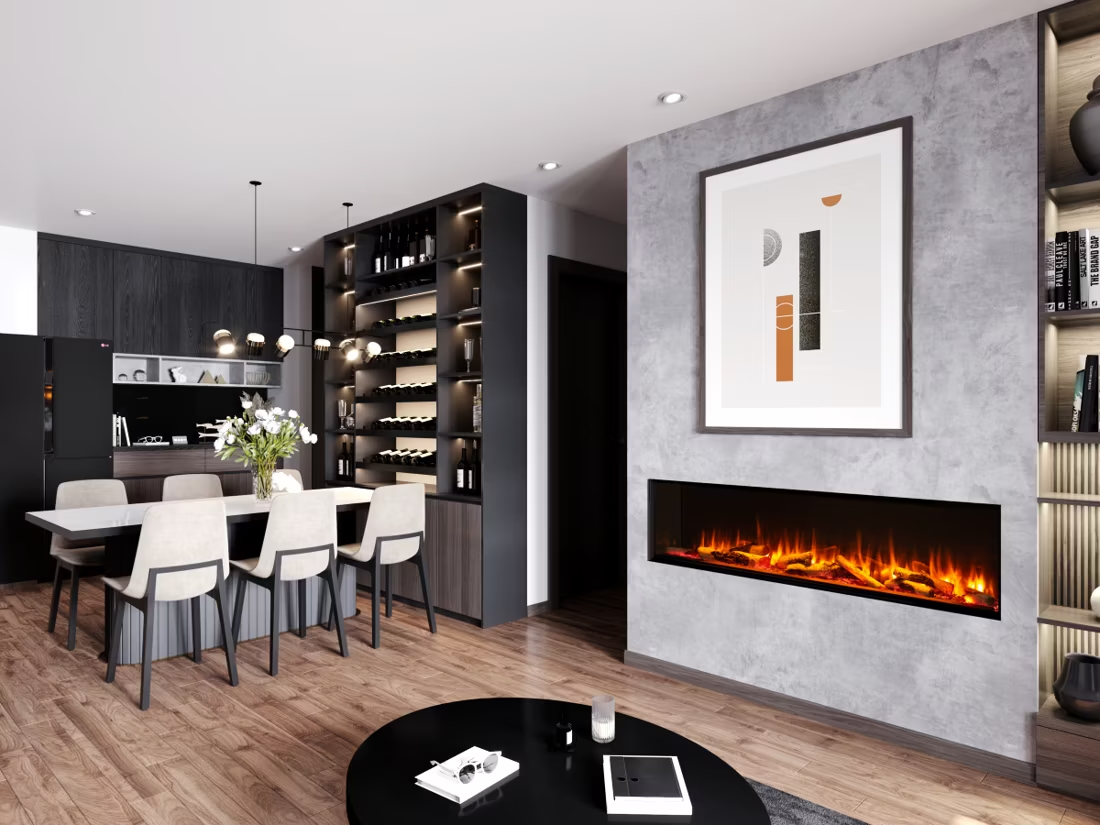
No—that's its superpower. An electric fireplace needs a wall and an outlet, period. No vent pipe, no gas line, no clearances to design around, which is why it works in bedrooms, offices, apartments, and walls where venting a gas or wood unit would be impractical or impossible. Installation is typically the simplest and least expensive of any fireplace type.
Can a fireplace actually lower my heating bill?
Yes—by creating a comfort zone. A furnace heats every square foot of the house just to warm the one room you're in; a gas fireplace on low burns roughly a sixth of the gas a typical furnace does. Set the furnace around 55–60 degrees as a baseline, then heat the rooms your family actually uses. Families who heat this way commonly save $20–$60 a month.
How much should I budget for a fireplace?
For an average home—covering the fireplace, the vent pipe, and basic installation—a budget between $3,900 and $5,500 gives you a lot of options across wood, gas, and pellet. By the time you add finish work, gas line, and electrical, the average complete installation lands between $5,000 and $12,000 all-in. In a remodel or new build, a good rule is to put about 2.5% of the total project cost toward the fireplace.
Preferred Dealer in Lakes East
Marked Preferred because they run on WhyFire's software—so they can show you real pricing and book your appointment right here. No manufacturer pays for placement. How we verify dealers →
Electric Service in Lakes East
An electric fireplace's heater draws about 1,500 watts—pennies per hour at local rates.
United Illuminating Co
Connecticut Light & Power Co
Find your electric fireplace in Lakes East.
Tell us about your home and we'll match you with the right electric fireplace or insert, and hand you a free Project Guide & Parts List built around your project and your recommended local dealer.
Find Your Fireplace →