
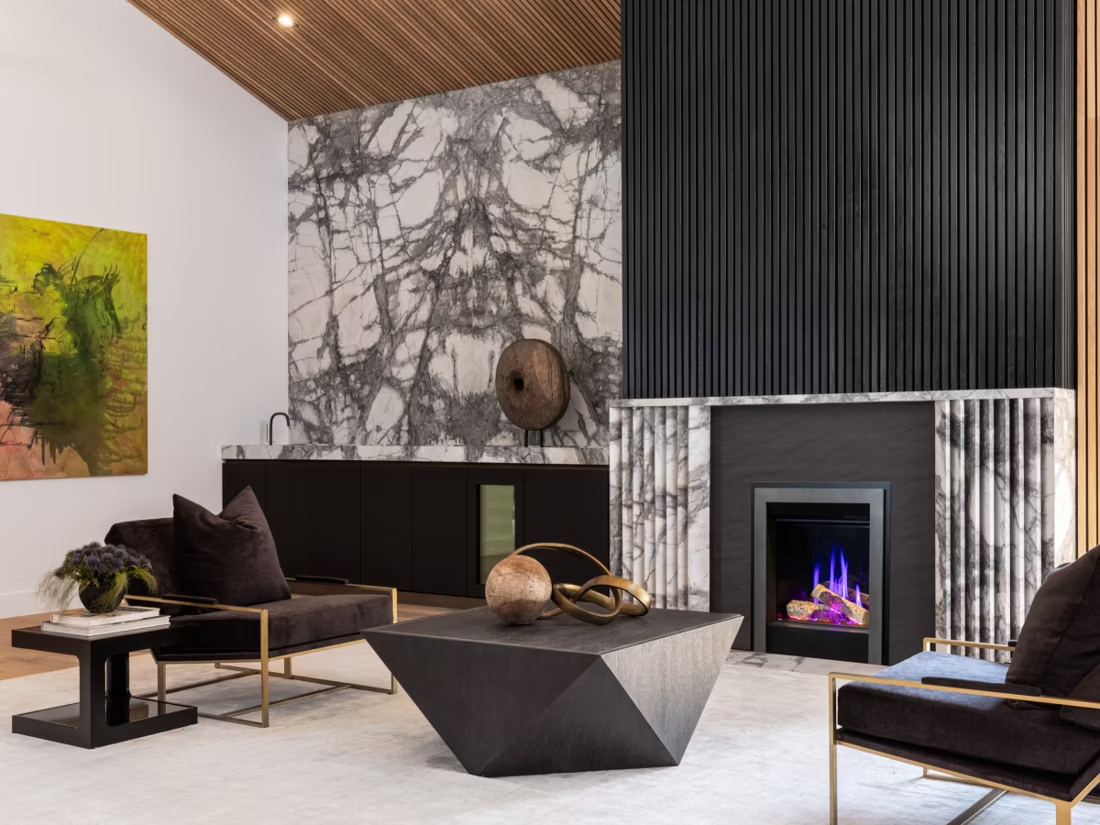
Real heat, real ambiance—no chimney required.
From downtown Bridgeport condos to the historic homes of Black Rock and Southport, electric fireplaces bring warmth and a real flame effect to houses where running a chimney or gas line isn't practical. Find the right unit and connect with a trusted local dealer.
Every Project Starts From One of These Five Situations
The easiest way to add a fireplace to almost any home.
Greater Bridgeport sits on Long Island Sound, and the water moderates things—winter lows average 24°F and the region has a moderate winter heating load, noticeably milder than inland New England cities like Burlington, VT, where the winter heating load climbs much higher. That means an electric fireplace here isn't fighting brutal sub-zero stretches; it's providing supplemental warmth and ambiance in housing stock that ranges from dense mid-rise condos in downtown Bridgeport to Victorian and colonial homes in Black Rock, Fairfield, and the Southport Historic District, where adding a new chimney or running gas line is either impossible or restricted by preservation rules.
That's exactly where electric fireplaces earn their keep. There's no combustion, no venting, and in most cases no gas line—a plug-in unit runs off a standard household outlet, while larger built-ins are hardwired to a dedicated circuit by a licensed electrician. United Illuminating (UI) serves electric accounts throughout Bridgeport, Fairfield, Stratford, Trumbull, and Monroe, and with no air quality non-attainment concerns in the region, there's no smoke-curtailment or emissions issue to work around—just a straightforward install in the exact spot you want a fire. A trusted local dealer can size the unit, confirm the electrical requirements, and pull whatever permit the wall-mounted or built-in model actually needs.
Three steps. No salesperson until you're ready.
Tell us about your project
Your zip code, your situation, and the fuel you're leaning toward—or let the answers point you to one.
See what's actually available
The brands dealers within 100 miles genuinely carry—real options, never a catalog mirage.
Get your dealer & Project Guide
A trusted local dealer, plus the free Project Guide & Parts List that names every component of the job.
Frequently Asked Questions
How much does an electric fireplace installation cost in Greater Bridgeport?
A plug-in freestanding or wall-mounted electric fireplace typically runs $400 to $900 installed, since most units simply need a standard 120V outlet already in place. A built-in electric fireplace set into a wall or existing mantel—the kind popular in Fairfield and Trumbull remodels—usually runs $1,200 to $2,500 once you factor in framing, a dedicated 240V circuit, and an electrician's time. Costs run toward the higher end for older Bridgeport and Black Rock homes with outdated panels that need an electrical upgrade before the new circuit can be added.
Do I need a permit to install an electric fireplace in Greater Bridgeport?
A plug-in unit that uses an existing outlet typically doesn't require a permit. A built-in or wall-mounted unit that requires new wiring or a dedicated circuit does need an electrical permit, pulled through the building department in whichever town you're in—Bridgeport, Fairfield, Stratford, Trumbull, or Monroe each issue their own. Most local dealers coordinate the licensed electrician and the permit as part of the installation, so you're not left tracking down inspections yourself.
Will an electric fireplace actually heat my room, or is it just for looks?
Most electric fireplaces include a built-in heater rated around 4,600 to 5,200 BTU (roughly 1,500 watts), enough to comfortably warm a single room of 300 to 400 square feet—useful supplemental heat during Greater Bridgeport's moderate winters, when lows average 24°F rather than the deep-freeze temperatures found further inland. They're not designed to replace central heat for a whole house, but for a den, sunroom, or bedroom, that heater output makes a real difference on a cold January evening. If you want the flame effect without the heat—say, for a converted three-season porch in summer—most units let you run the visual on its own.
Electric vs. gas fireplace—which is right for my home?
Gas fireplaces deliver more consistent, higher-output heat and a more realistic flame, but they require a gas line and venting, which adds cost and isn't always feasible in a Bridgeport condo or a historic Southport home with limited wall cavities. Electric fireplaces install almost anywhere with an outlet or a simple dedicated circuit, cost less up front, and produce zero combustion byproducts—a real advantage in tightly sealed condos and apartments where venting options are limited. For homeowners along the Sound who want a supplemental heat source without construction, electric is usually the simpler and less expensive path. For a primary living space where higher heat output matters, gas is worth the extra install complexity.
Electric vs. wood fireplace—which makes more sense here?
Wood heat has a real presence in Fairfield County—local oak, maple, birch, and ash are common cordwood species, and plenty of older homes still have working masonry fireplaces. But wood requires an existing or new chimney, annual sweeping, and fuel storage that's tough to manage in a downtown Bridgeport condo or a Stratford duplex with no yard. Electric fireplaces skip all of that: no chimney, no ash, no permit for cutting or hauling wood. For homes with an existing wood-burning fireplace that's rarely used, converting to an electric insert is also a popular way to get instant ambiance without maintaining a chimney that would otherwise sit unused most of the year.
Can I install an electric fireplace in my condo or apartment?
Yes—this is one of the most common electric fireplace projects in Greater Bridgeport's denser neighborhoods, from downtown Bridgeport high-rises to Fairfield and Stratford condo complexes. Because there's no venting or gas line involved, most condo associations approve electric units without issue, though it's still worth checking your HOA's rules on wall-mounted installations and any modifications to shared walls. A freestanding or tabletop electric unit needs no approval at all since it simply plugs into an existing outlet.
Will an electric fireplace work in my historic home without altering the facade?
Yes, and that's often the deciding factor for homeowners in the Southport Historic District or Black Rock's older housing stock. Adding a new chimney or venting penetration to a historic exterior typically requires additional review, but an electric insert or built-in unit needs neither—it can be set into an existing non-working fireplace opening or a new wall cavity without touching the roofline or exterior masonry. That makes it one of the few fireplace options that preserves a historic home's original appearance while still adding usable heat and ambiance.
What happens to my electric fireplace during a power outage?
It won't operate—electric fireplaces depend entirely on utility power, and United Illuminating customers along the Sound do see periodic outages during nor'easters and summer storms. If backup heat during outages matters to you, many Greater Bridgeport homeowners pair an electric fireplace in their main living space with a wood stove or vented gas unit elsewhere in the house as an outage-proof fallback. If backup heat isn't a priority and you mainly want ambiance and supplemental warmth on ordinary days, electric is still the simplest and least expensive option going.
How much maintenance does an electric fireplace need?
Very little compared to wood or gas. There's no chimney to sweep, no gas line to inspect, and no combustion byproducts to worry about. Most upkeep is limited to occasionally dusting the unit, wiping the glass front, and replacing the LED light strips after several years of use—a task most homeowners handle themselves. That low-maintenance profile is part of why electric units are popular in rental properties and second homes around Greater Bridgeport, where nobody wants to schedule annual chimney inspections for a property they're not living in full time.
What fireplace styles should I know before shopping?
Four cover most of the market: screen-front traditional (mesh front, open feel, fits craftsman homes), traditional door set (the classic look you grew up with), modern linear (wide, low, the statement piece for entertaining), and clean face contemporary (no trim—your tile or stone runs right to the fire's edge). Walk in knowing those four terms and you're ahead of most buyers.
Can I put a TV above my fireplace?
Yes—with an asterisk. Fireplaces are hot and TVs don't like heat. Either put a mantel between them to deflect rising warmth, or choose a fireplace with heat-management technology that creates a cool zone on the wall above—the wall stays around 125 degrees, barely warm, while the room still gets full heat. If you like clean lines and don't want a mantel, heat management is the answer.
Can I install a fireplace myself?
If you're putting a fire in your house on purpose, it's best to work with an expert. Unless you're genuinely experienced in framing, gas line, vent pipe, and the national code on clearances to combustibles, have a professional do it—and ideally the same company that sells you the fireplace, so warranty, service, and liability all live under one roof.
How much should I budget for a fireplace?
For an average home—covering the fireplace, the vent pipe, and basic installation—a budget between $3,900 and $5,500 gives you a lot of options across wood, gas, and pellet. By the time you add finish work, gas line, and electrical, the average complete installation lands between $5,000 and $12,000 all-in. In a remodel or new build, a good rule is to put about 2.5% of the total project cost toward the fireplace.
Stove and Fireplace Dealers in Greater Bridgeport County
Find your electric fireplace in Greater Bridgeport.
Tell us about your home and we'll put together a free Project Guide & Parts List—sized to your space and matched with a trusted local dealer who can install it right.
Find Your Fireplace →