
Pellet Heat in Bridgeport: A Realistic Look at Fit.
Pellet stoves are a niche choice in Connecticut's largest city, where natural gas and electric heat dominate—but for the right home, they're a real option worth understanding before you buy.
Every Project Starts From One of These Five Situations
Uncommon here, but not impossible for the right home.
Bridgeport sits at sea level on Long Island Sound, with roughly 5,140 heating degree days a year and winter lows that average in the mid-20s—a real New England heating season, but a milder one than you'll find inland or north, in places like Burlington VT or Buffalo NY. The city's housing stock leans heavily toward dense multi-family triple-deckers, rowhouses, and tightly packed single-family homes in neighborhoods like the East End, West Side, and Black Rock. That density, paired with well-built-out natural gas and electric infrastructure across Fairfield County, means pellet stoves never became part of the local heating culture the way they have in rural New England or the Pacific Northwest.
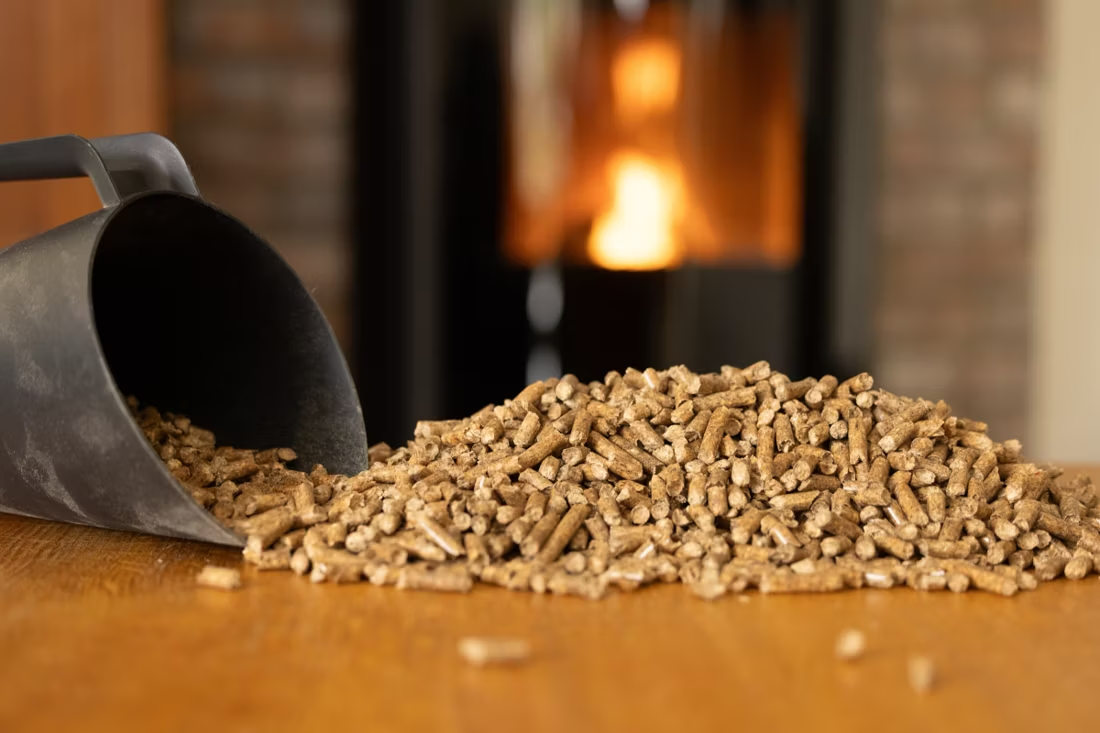
Neither wood nor pellet stoves are common here—there's no cutting-permit culture, no local air-quality curtailment program, and most hearth retailers in the Bridgeport area focus their inventory on gas inserts and fireplaces instead. That said, pellet stoves aren't off the table. A single-family homeowner in a neighborhood like North End or Brooklawn with room for a hopper and a straight exterior wall for venting can still get real value from one, particularly given how expensive electric heat is here. I'd just go in with clear eyes: finding a dealer who stocks and services pellet equipment takes a bit more legwork in Bridgeport than it would in western Massachusetts or Vermont.
Three steps. No salesperson until you're ready.
Tell us about your project
Your zip code, your situation, and the fuel you're leaning toward—or let the answers point you to one.
See what's actually available
The brands dealers within 100 miles genuinely carry—real options, never a catalog mirage.
Get your dealer & Project Guide
A trusted local dealer, plus the free Project Guide & Parts List that names every component of the job.
Frequently Asked Questions
Are pellet stoves actually common in Bridgeport?
Not really—and I'd rather tell you that upfront than oversell it. Bridgeport's housing stock leans heavily toward multi-family triple-deckers and attached homes, and natural gas plus electric heat cover the vast majority of homes here. Wood-burning never took hold in the city the way it has in rural Connecticut, and pellet stoves followed the same pattern. That doesn't mean a pellet stove is a bad idea for your home—it means you're looking at a niche option, not the default, so it's worth confirming a local dealer can actually source, install, and later service one before you commit.
What does a pellet stove installation cost in Bridgeport?
Because so few Bridgeport-area retailers specialize in pellet equipment, pricing varies more than it would in a market where pellet stoves are common. As a general range, expect $3,500 to $6,500 installed for a freestanding pellet stove—covering the unit, a through-wall vent kit, a dedicated electrical outlet for the auger and blower motors, and labor. Converting an existing masonry fireplace to a pellet insert typically runs higher once liner work is factored in. Get a firm number from a dealer who's actually installed pellet equipment in the area, since not every hearth shop in Bridgeport carries it.
Do I need a permit to install a pellet stove in Bridgeport?
Yes. Like any solid-fuel appliance, a pellet stove installation requires a building permit through the City of Bridgeport Building Department, covering the unit's clearances, the through-wall vent termination, and the dedicated electrical circuit it needs. Unlike parts of the West Coast, Bridgeport has no wood-smoke curtailment program or non-attainment restrictions to navigate—the area isn't flagged for winter air quality the way places like the Klamath Basin or California's Central Valley are. So permitting here is mostly about safe installation, not seasonal burn bans.
What pellet brands can I actually buy near Bridgeport?
Regional supply is thinner than in northern New England, but brands like Lignetics, New England Wood Pellet, and Maine Woods Pellet Co. do distribute into Fairfield County through hardware stores, farm supply outlets, and the handful of hearth dealers that carry pellet fuel. Expect to pay roughly $300 to $400 a ton, and plan ahead—pellet demand is lower here than in Vermont or upstate New York, so local stock can sell through faster in a cold snap and truckload delivery isn't always guaranteed on short notice.
Will a pellet stove work in a Bridgeport condo or multi-family unit?
It's tough, and often not allowed. Pellet stoves need a straight run to an exterior wall for venting and a dedicated 120V outlet, which is hard to arrange in a triple-decker or attached rowhouse, and condo associations frequently restrict solid-fuel appliances outright. If you own a single-family home with an exterior wall you can vent through, it's a realistic project. If you're in a multi-family or condo building, check your association's rules before you get attached to the idea—a direct-vent gas insert is usually the more workable path in that kind of unit.
Pellet stove or gas insert—which makes more sense in Bridgeport?
For most Bridgeport homes, gas is the more natural fit—the infrastructure is already there, installers who work on gas fireplaces and inserts are far easier to find locally, and a direct-vent gas unit doesn't require hopper-loading, ash removal, or annual pellet deliveries. A pellet stove earns its keep in a specific scenario: a single-family home with high electric bills where you want a heat source that burns a cheaper fuel than resistance electric, and where gas service isn't already run to the house. Outside that scenario, a gas insert is probably the simpler, better-supported choice in this market.
Will a pellet stove keep working during a power outage?
Not without a backup power source, and that's a genuine limitation worth knowing before you buy. Pellet stoves rely on an electric auger to feed fuel and a blower to distribute heat, so a standard unit shuts down the moment the power does—which matters in a coastal Connecticut winter storm. A small battery backup or a portable generator (even a modest 1,000-1,500 watt unit) will keep most pellet stoves running through an outage. If uninterrupted backup heat during storms is the priority, a wood stove or a battery-backed gas fireplace with IPI ignition is more reliable without added equipment.
Where can I buy pellet fuel in Bridgeport?
Supply is limited compared to places like New York's North Country, but hardware stores and farm and feed suppliers across Fairfield County carry bagged pellets from Lignetics and New England Wood Pellet, typically in 40-pound bags around $6 to $8 each, which works out close to the $300-$400 per ton range mentioned above. Buying a full ton or more before the season starts, rather than by the bag as needed, is the more economical route and avoids the risk of local shelves running low during a hard freeze.
Given Connecticut's high electric rates, is a pellet stove worth it in Bridgeport?
This is actually where pellet heat makes its strongest case here. Bridgeport's electric utilities—United Illuminating and Connecticut Light & Power—carry residential rates around 25 to 31 cents per kWh, among the highest in the country. A pellet stove's auger and blower draw only about 100 to 400 watts, a fraction of what electric resistance heat requires, so the operating cost is overwhelmingly the pellet fuel itself rather than electricity. For a single-family home paying those electric rates for supplemental heat, a pellet stove can meaningfully cut a winter bill—it's one of the few scenarios where the niche choice actually pencils out well in this market.
How often does a pellet stove need cleaning?
A clean pellet stove is a happy pellet stove. Plan on cleaning the burn pot about once a week when you're burning regularly—ash and clinkers gum up the air holes just like a pellet barbecue. Most pellet stove problems trace back to skipped cleaning that nobody explained up front. Some designs make it easy with a trapdoor burn pot: pull a lever and the gunk drops into the ash pan.
What do I measure to size a fireplace insert?
Four numbers tell you what fits: the front width, the front height, the back width, and the overall depth of your existing fireplace opening. Grab a tape measure, jot those down, and snap a photo of the wall—those two things do more to move your project forward than anything else you can do today.
How much should I budget for a fireplace?
For an average home—covering the fireplace, the vent pipe, and basic installation—a budget between $3,900 and $5,500 gives you a lot of options across wood, gas, and pellet. By the time you add finish work, gas line, and electrical, the average complete installation lands between $5,000 and $12,000 all-in. In a remodel or new build, a good rule is to put about 2.5% of the total project cost toward the fireplace.
Can I install a fireplace myself?
If you're putting a fire in your house on purpose, it's best to work with an expert. Unless you're genuinely experienced in framing, gas line, vent pipe, and the national code on clearances to combustibles, have a professional do it—and ideally the same company that sells you the fireplace, so warranty, service, and liability all live under one roof.
Nearby Dealers
Hearth shops serving Bridgeport and the surrounding area. Every listing shows whether it is a WhyFire partner, a dealer we have verified as authorized for the brands we recommend, or a local business carrying hearth products. No manufacturer pays for placement. How we verify dealers →
Hearth Products, LLC
Best In Backyards
Hocon Gas Of Norwalk
New Haven Masonry
Leahy’s Metered Gas Service
Black Swan Fireside Hearth & Home
Nordic Stove And Fireplace Center
Fireplace Surplus
Costello's Hearth & Spa - Smithtown
Pellet Brands Stocked Around Bridgeport
Manufacturers will point you to the nearest stocking dealer.
Find your pellet stove in Bridgeport.
Tell us about your home and we'll confirm whether a pellet stove is a realistic fit—and if it is, match you with a trusted local dealer and send over a free Project Guide & Parts List for your project.
Find Your Fireplace →