
Instant Heat for Windsor's High-Plains Winters.
At 4,775 feet on Colorado's northern high plains, Windsor sees average winter lows of 13°F and a heating season that runs long. Find the right gas fireplace or insert, and connect with a trusted local dealer.
Every Project Starts From One of These Five Situations
The Default Heat Source in Windsor's Newer Subdivisions.
Windsor sits between Fort Collins and Greeley on the Weld County high plains, where dry cold settles in fast and stays—winter lows average 13°F and the town racks up roughly 6,456 heating degree days a year, putting it in the same heating-season range as Buffalo, NY, even though the climate feels nothing alike (Front Range dry cold versus lake-effect snow). Most of Windsor's housing stock was built during the town's rapid growth from the 1990s onward, and gas fireplaces have become the standard heat-and-ambiance feature in that new construction.
Weld County falls inside the Denver Metro/North Front Range ozone nonattainment area, and Colorado's air quality rules limit new wood-burning appliance installations in that zone—one reason wood stoves are largely off the table for new Windsor builds while gas has become the go-to. Natural gas service inside town limits is provided by Public Service Company of Colorado (Xcel Energy), which also serves electric accounts here alongside Poudre Valley REA in the surrounding rural county. A properly sized direct-vent gas fireplace gives Windsor homeowners real radiant heat at the flip of a switch, works as zone heat alongside central HVAC on the coldest nights, and—with the right ignition system—keeps running during winter power outages.
Three steps. No salesperson until you're ready.
Tell us about your project
Your zip code, your situation, and the fuel you're leaning toward—or let the answers point you to one.
See what's actually available
The brands dealers within 100 miles genuinely carry—real options, never a catalog mirage.
Get your dealer & Project Guide
A trusted local dealer, plus the free Project Guide & Parts List that names every component of the job.
Frequently Asked Questions
How much does a gas fireplace installation cost in Windsor?
Most gas fireplace installations in Windsor run between $4,200 and $9,800, depending on the unit, the venting path, and whether new gas line work is required. A direct-vent insert going into an existing masonry fireplace with a gas line already stubbed in sits toward the low end. New builds and remodels that need framing, through-wall venting, and a fresh gas line run—common in Windsor's newer subdivisions—land in the $8,000-$10,500 range. Local dealers will give you a firm number after walking the space.
Can I convert an existing wood-burning fireplace to gas?
Yes, and it's a common project in Windsor's Old Town homes and older county properties that still have a masonry wood fireplace. A gas insert typically runs $4,000 to $7,800 installed, using your existing chimney with a stainless liner as the vent path. Since Colorado's air quality rules in the Front Range nonattainment zone discourage new wood-burning installs, converting an existing wood fireplace to gas is often the more straightforward path for homeowners who want more consistent heat without dealing with those restrictions.
Do I need natural gas service, or can I run a fireplace on propane?
Either works, and which one applies depends on where in Windsor you're located. Inside town limits, Public Service Company of Colorado (Xcel Energy) provides natural gas service, and if your home already has a gas furnace, water heater, or range, adding a fireplace is usually a simple tie-in. Some newer developments and rural properties on the edges of town, particularly areas served by Poudre Valley REA for electric, rely on propane instead. Most gas fireplace models can be set up for either fuel—your installer configures the orifice and regulator to match.
Will my gas fireplace still work if the power goes out?
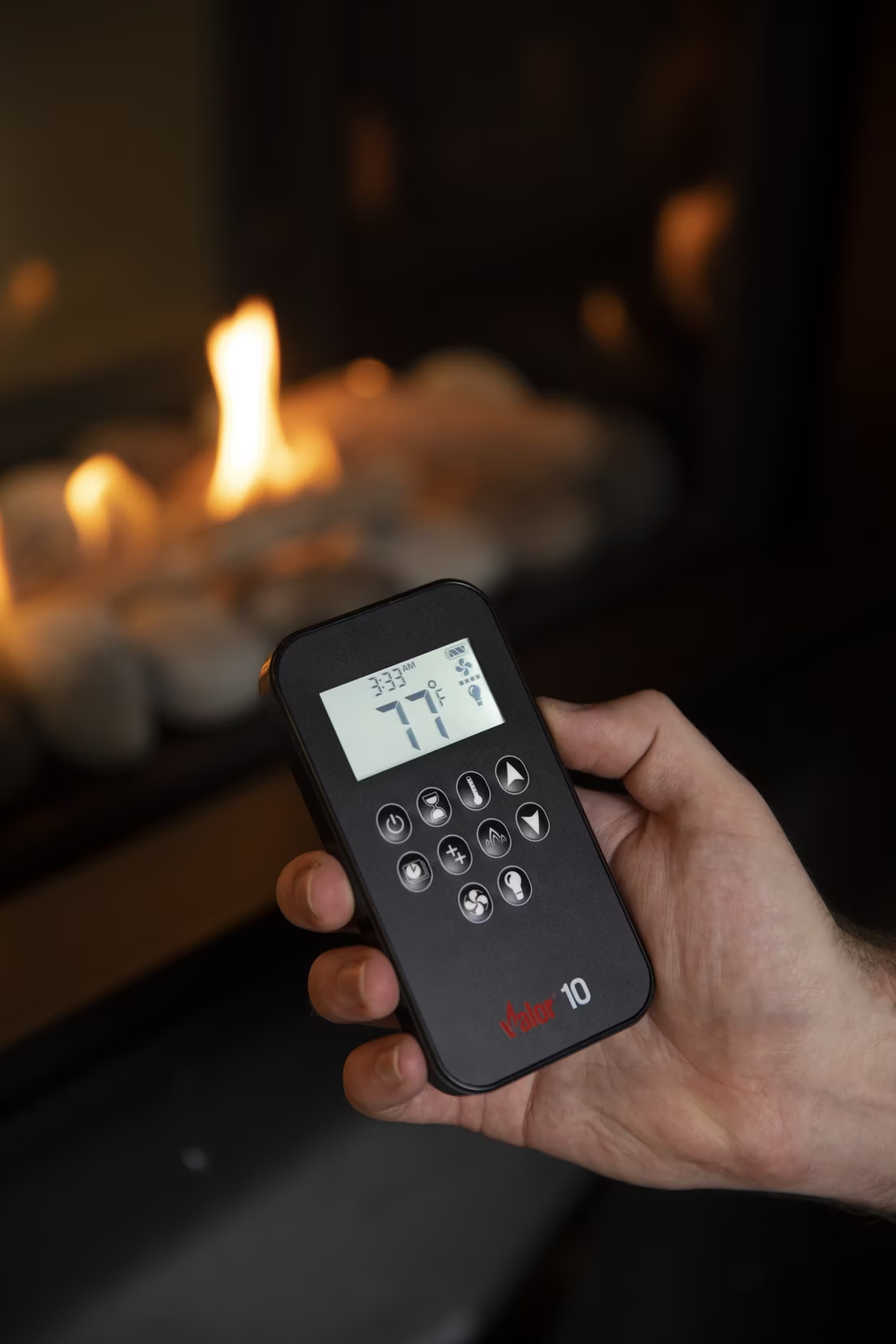
Most direct-vent gas fireplaces with intermittent pilot ignition (IPI) include a battery backup that keeps the unit operational during an outage—useful given how quickly a Windsor winter storm can knock out power along the high plains. Valor units take a different approach: their pilot assembly generates its own electricity through the thermocouple, so there's no battery to remember at all. If backup heat during an outage matters to you, ask your local dealer about the ignition system before you buy.
What's the difference between a gas fireplace, gas insert, and gas stove?
A gas fireplace is a fully built-in unit framed into a wall—the standard choice for new construction, which describes a large share of Windsor's housing. A gas insert drops into an existing masonry fireplace opening and uses the existing chimney as its vent path, which is the right call for Old Town homes with an older wood-burning hearth. A gas stove is a freestanding cast-iron or steel unit that sits on the floor like a wood stove but runs on gas—a good option for a room without an existing fireplace where you don't want to frame in a full built-in unit.
Do I need a permit to install a gas fireplace in Windsor?
Yes. Properties inside town limits go through the Town of Windsor Building Division for both the building permit and the gas line permit; unincorporated pockets of the growth area fall under the Weld County Building Division instead. The gas line work has to be pulled by a licensed gas-fitter regardless of jurisdiction, which is part of why working with an established hearth dealer helps—they coordinate the gas line, venting, and inspection sign-off as one job instead of leaving you to manage separate trades.
What's the difference between vented and vent-free gas fireplaces?
Vented (direct-vent) units draw combustion air from outside and exhaust it back outside through a sealed pipe—they're the standard, code-friendly choice everywhere including Windsor. Vent-free units burn gas directly into the room with no outside venting, and while they're legal in Colorado under specific room-size and ventilation rules, they release some combustion byproducts indoors. Given Weld County's existing air quality concerns—including wildfire smoke that regularly drifts in from mountain fires during summer and fall—most Windsor homeowners and dealers lean toward direct-vent units for both performance and indoor air quality.
How often does a gas fireplace need to be serviced?
Plan on an annual inspection, ideally before the heating season ramps up in October or November. A technician checks the burner, pilot assembly, venting, and gas connections, and cleans the glass and interior—a much lighter lift than wood-stove chimney sweeping, but just as important for safe operation. Local gas appliance service providers typically charge $150 to $225 for a standard annual visit.
Should I install a gas fireplace or an electric one?
Gas delivers real radiant heat—enough to meaningfully offset a furnace on a 13°F night—and, with the right ignition system, keeps working through a power outage. Electric fireplaces install for far less (typically $500 to $1,800, often just a simple 120V plug-in), need no venting or gas line, and can go almost anywhere, but they don't add real supplemental heat the way a gas unit does. With electric rates split between Public Service Company of Colorado at roughly $0.15/kWh and Poudre Valley REA at closer to $0.12/kWh depending on where in Windsor you're located, electric units are a low-cost way to add ambiance to a bedroom or basement, while gas remains the better call for a primary living space that needs to carry real heat load through a Front Range winter.
Why is a fireplace insert so efficient?
An insert does two things: it seals the chimney completely, so you stop losing air you already paid to heat, and it radiates warmth into the room through the firebox and glass. Most add a heat-exchange fan that pulls cool room air underneath, wraps it around the hot firebox, and pushes it back out warm. Your home is more efficient before you've even lit the first fire.
Why is my open fireplace making my house colder?
Open fireplaces suck—literally. As the fire burns, it consumes air your furnace already paid to heat and pulls it out through the chimney, so the house is actually colder after the fire goes out than before you lit it. An insert fixes this: it seals the chimney, puts fixed glass across the front, and turns that hole in your house into a real heat source.
What is an in-home preview and do I need one?
It's a visit where a hearth professional measures your space, confirms the model you picked actually works in your home, and walks the specs—framing, gas line, venting, finish work—before anything is ordered. Some details you just can't know until you see the house. Never make a down payment without one; it's the single most-skipped step that burns buyers.
Does a fireplace add value to my home?
On average, a fireplace adds back to the home about the same amount you spent installing it. Add the monthly savings from heating the rooms you actually use instead of the whole house—often hundreds of dollars a year—and the value case is strong before you even count what a fire does for how your family uses the room.
Nearby Dealers
Hearth shops serving Windsor and the surrounding area.
Find your gas fireplace in Windsor.
Tell us a bit about your home and we'll match you with the right gas fireplace, insert, or stove—plus a free Project Guide & Parts List with the exact venting and parts your local dealer will need for the job.
Find Your Fireplace →