
Real Warmth for Todd Creek Homes—No Chimney Required.
Zone heat for Todd Creek's larger lots and newer homes—no gas line, no chimney, no combustion. Find the right unit and connect with a trusted local dealer.
Every Project Starts From One of These Five Situations
Instant heat without new gas lines or venting.
Todd Creek sits at just over 5,000 feet on the high plains northeast of Denver, in unincorporated Adams County, where winters average lows around 16°F and add up to a long, cold heating season lasting most of the year—real cold, though nothing like the deep freezes of a place like Fargo or International Falls. Many of the area's newer subdivisions and larger acreage properties were built without existing masonry chimneys and without natural gas mains running nearby, which turns a wood-burning fireplace or a new gas line into a far bigger project than most homeowners want to take on just to warm one room.
That's where electric fireplaces have found a real foothold here. Front Range winter inversions trap wildfire smoke and wood smoke low over the Denver metro basin, and Adams County is often among the areas asked to curb wood burning on bad-air days—electric heat sidesteps that issue entirely, with no smoke, ash, or chimney to maintain. United Power, the electric cooperative serving Todd Creek, bills residential customers around 15.75 cents per kWh, and a plug-in insert or wall-mounted unit can add zone heat to a home office, bonus room, or detached barn or tack room on a horse property without trenching a gas line across an acre lot.
Three steps. No salesperson until you're ready.
Tell us about your project
Your zip code, your situation, and the fuel you're leaning toward—or let the answers point you to one.
See what's actually available
The brands dealers within 100 miles genuinely carry—real options, never a catalog mirage.
Get your dealer & Project Guide
A trusted local dealer, plus the free Project Guide & Parts List that names every component of the job.
Frequently Asked Questions
How much does an electric fireplace installation cost in Todd Creek?
A plug-in electric insert or freestanding unit is the cheapest path—most run $300 to $800 for the unit itself, plug straight into a standard 120V outlet, and require zero permitting or electrician work, which fits well with Todd Creek's newer homes that were never built with a chimney or gas line in the first place. A built-in wall unit or mantel-package fireplace with a dedicated 240V circuit is a bigger project, typically $1,500 to $4,000 once an electrician runs new wiring and a carpenter frames the surround. Because Todd Creek is unincorporated Adams County, any new circuit work gets permitted through the Adams County Building Safety Division, and a licensed electrician normally pulls that permit as part of the install.
How much heat does an electric fireplace actually produce?
Most residential electric fireplaces top out around 4,600 to 5,000 BTU (roughly 1,500 watts), enough to comfortably warm a 400 to 500 square foot room as zone heat—not a whole-home replacement given Todd Creek's long, cold heating season lasting most of the year. Locally, that's exactly how homeowners use them: warming a home office, a bonus room over a garage, or a tack room or workshop on a larger acreage property without extending propane lines or paying to run new gas across the property.
Do I need a permit to install an electric fireplace in Todd Creek?
A plug-in unit that runs off an existing outlet needs no permit at all. A built-in electric fireplace that requires a new dedicated circuit does need an electrical permit, pulled through the Adams County Building Safety Division since Todd Creek is unincorporated county land rather than its own municipality. A licensed electrician typically handles that paperwork as part of the installation, so most homeowners never deal with the county directly.
What's the best electric fireplace option for a larger Todd Creek property?
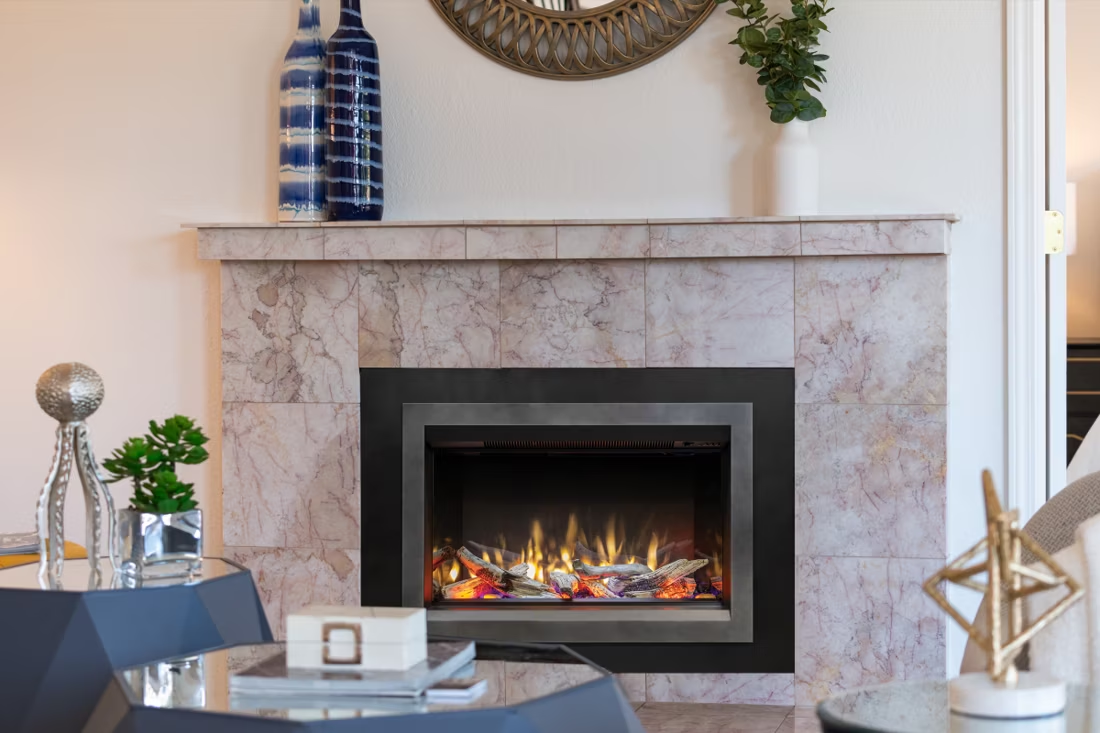
Todd Creek has a fair number of larger lots and equestrian properties, and electric heat has an advantage there: a wall-mounted or built-in unit runs off its own dedicated circuit, so it can go into a detached barn, workshop, or tack room without the cost of trenching a gas line or extending propane service across an acre or more of land. For the main house, a linear built-in over a mantel or a recessed wall unit gives the visual impact of a fireplace in a room that was never framed for venting.
Electric vs. gas—which fits Todd Creek better?
It depends on what's already run to the house. Natural gas mains don't reach every pocket of unincorporated Adams County the way they do inside Denver or Thornton, so many Todd Creek homes rely on propane rather than piped natural gas—which makes a gas fireplace install more involved (tank, regulator, gas line) and pricier up front. Electric skips all of that: no fuel storage, no gas permit, just a circuit. Gas still wins for homeowners who want a fireplace that can double as backup heat during a power outage; electric wins on install simplicity and running a zone-heat unit in a room with no existing gas access.
What about a wood stove instead—is that an option in Todd Creek?
It's uncommon here, and largely by design rather than preference. Most of Todd Creek's newer construction was built without masonry chimneys, and Front Range winter inversions regularly trap wildfire smoke and wood smoke over the Denver metro basin, which is part of why Adams County residents are often asked to curtail wood burning on poor air-quality days. A handful of older or rural properties still keep a wood stove for backup heat—and if you're one of them, the Arapaho-Roosevelt National Forest issues personal-use cutting permits for $5 to $20 per cord during the May-to-October season—but for most Todd Creek homes, electric heat delivers the same ambiance without the smoke, ash, or burn-ban restrictions.
What does it cost to run an electric fireplace in Todd Creek?
United Power bills residential customers around 15.75 cents per kWh. A typical 1,500-watt electric fireplace run on high for a few hours a night costs roughly $0.50 to $0.70 an hour, or about $1.50 to $2.50 for a few hours of evening use—call it $45 to $75 a month if you're running it most winter evenings as supplemental heat in a home office or bonus room. That's noticeably cheaper to operate than most people expect, since electric fireplaces convert nearly all their wattage directly to heat.
Will my electric fireplace work during a power outage?
No—unlike a wood stove or a gas unit with battery-backup ignition, an electric fireplace needs grid power to run, full stop. United Power's service territory does see occasional winter storm outages along the Front Range, so if backup heat during an outage matters to you, an electric fireplace shouldn't be your only heat source. Homeowners who want both the everyday convenience of electric zone heat and outage-proof backup often pair an electric unit in the main living space with a propane appliance or generator for storm coverage.
Electric insert vs. built-in wall unit vs. freestanding—which should I get?
An electric insert drops into an existing fireplace opening (masonry or factory-built) and is the simplest retrofit if you already have a firebox. A built-in wall unit gets framed into new construction or a remodel, usually with a dedicated circuit, and gives the cleanest, most custom look. A freestanding electric stove or mantel unit needs no construction at all—just an outlet and floor space—which makes it the fastest option for a room in an existing Todd Creek home with no fireplace opening to work with. A local dealer can measure your room and walk through which format fits your framing and budget.
Can I put a TV above my fireplace?
Yes—with an asterisk. Fireplaces are hot and TVs don't like heat. Either put a mantel between them to deflect rising warmth, or choose a fireplace with heat-management technology that creates a cool zone on the wall above—the wall stays around 125 degrees, barely warm, while the room still gets full heat. If you like clean lines and don't want a mantel, heat management is the answer.
Do electric fireplaces actually produce heat?
Yes—most put out around 4,800–5,000 BTUs from a standard outlet, which comfortably warms a bedroom, office, or den as a comfort-zone heater. What they won't do is carry a whole house the way wood, gas, or pellet can. Think of electric as ambiance-first with honest supplemental heat: flames on with no heat in July, flames plus warmth in January.
Can I install a fireplace myself?
If you're putting a fire in your house on purpose, it's best to work with an expert. Unless you're genuinely experienced in framing, gas line, vent pipe, and the national code on clearances to combustibles, have a professional do it—and ideally the same company that sells you the fireplace, so warranty, service, and liability all live under one roof.
Does a fireplace add value to my home?
On average, a fireplace adds back to the home about the same amount you spent installing it. Add the monthly savings from heating the rooms you actually use instead of the whole house—often hundreds of dollars a year—and the value case is strong before you even count what a fire does for how your family uses the room.
Nearby Dealers
Hearth shops serving Todd Creek and the surrounding area. Every listing shows whether it is a WhyFire partner, a dealer we have verified as authorized for the brands we recommend, or a local business carrying hearth products. No manufacturer pays for placement. How we verify dealers →
Paramount Remodeling Co
Spa Brokers
Rio Grande Co.
Spa Brokers (Corporate)
Fireplace And Grill Experts - Service Only
Distinctive Mantel Designs
Spa Brokers
Aria Custom Design
Spa Brokers V
Outdoor Kitchen Dist. Inc
Electric Service in Todd Creek
An electric fireplace's heater draws about 1,500 watts—pennies per hour at local rates.
United Power, Inc
Find your electric fireplace in Todd Creek.
Tell us a bit about your home and we'll send a free Project Guide & Parts List for your Todd Creek project—sized, specced, and matched with a trusted local dealer who can install it right.
Find Your Fireplace →