
Real heat, no smoke, for Shaw Heights homes.
Clean, code-friendly heat for a Denver-metro community where wood smoke faces real restrictions. Find the right electric unit and get matched with a trusted local dealer.
Every Project Starts From One of These Five Situations
The cleanest option in a smoke-conscious metro.
Shaw Heights sits in unincorporated Adams County at 5,510 feet, just northwest of Denver, inside the Front Range's ozone and particulate nonattainment area. Winter inversions here trap cold air—and smoke—against the foothills for days at a time, and wildfire smoke drifting down from the mountains adds to the burden most winters. With a winter heating season about as long and demanding as a typical Front Range winter and average winter lows near 19°F, the cold is real, but it's the region's air quality rules, not the climate, that make wood and pellet stoves a rare sight on new installs here.
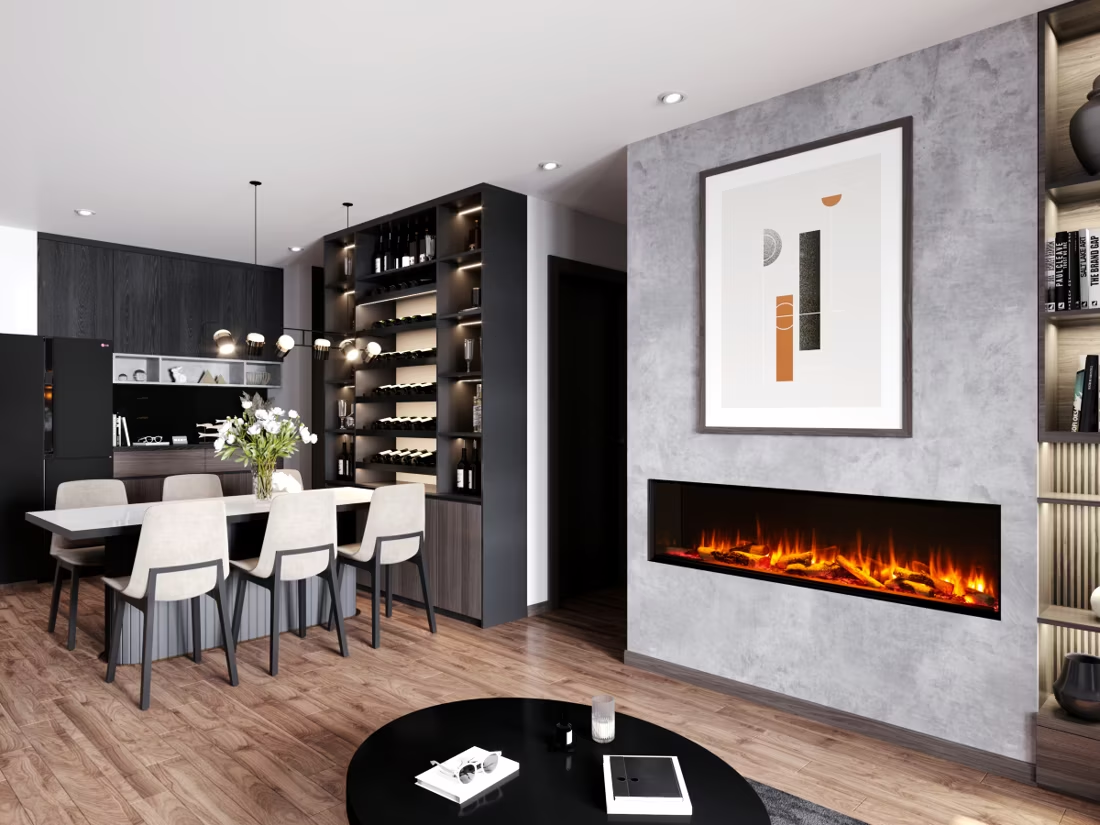
That's part of why electric fireplaces have become the default choice for supplemental heat and ambiance in Shaw Heights. Public Service Company of Colorado (Xcel Energy) serves the area for both electric and natural gas, with residential electric running about 15 cents per kWh. A plug-in or built-in electric unit adds zone heat to a bedroom or living room, needs no chimney or venting, and doesn't add a single particle to the inversion sitting over the metro. For townhomes and smaller lots common in this part of Adams County, that simplicity matters.
Three steps. No salesperson until you're ready.
Tell us about your project
Your zip code, your situation, and the fuel you're leaning toward—or let the answers point you to one.
See what's actually available
The brands dealers within 100 miles genuinely carry—real options, never a catalog mirage.
Get your dealer & Project Guide
A trusted local dealer, plus the free Project Guide & Parts List that names every component of the job.
Frequently Asked Questions
How much does an electric fireplace cost to install in Shaw Heights?
A plug-in electric insert or freestanding unit typically runs $150 to $600 for the unit itself, with no professional installation required—it plugs into a standard 120V outlet. A built-in wall-mount or recessed electric fireplace, which needs a licensed electrician to run a dedicated circuit and finish the surround, usually runs $800 to $2,500 depending on wall construction and whether cabinetry or a mantel is involved. Larger linear or multi-sided built-ins with custom framing can reach $3,000 to $4,500. None of these require chimney or venting work, which is the biggest cost saver compared to gas or wood.
Why don't more homes in Shaw Heights use wood or pellet stoves?
Shaw Heights sits inside the Denver metro nonattainment area for ozone and fine particulates, and Adams County winter inversions can hold wood smoke close to the ground for days. Regional air quality guidance discourages new wood and pellet appliance installs in this part of the Front Range, and several nearby jurisdictions restrict them outright during high-pollution advisories. A small number of older homes still have legacy wood fireplaces, but new installs are uncommon—most homeowners here choose gas or electric instead.
What size electric fireplace do I need for my room?
Most electric fireplace inserts put out 4,600 to 5,200 BTU (roughly 1,500 watts) of supplemental heat, which comfortably takes the chill off a 400 to 1,000 square foot room depending on insulation and ceiling height. For a great room or open-concept living area, look at wider linear units or models rated for larger square footage—a local dealer can size this against your floor plan rather than a rule of thumb, since older Shaw Heights homes and newer townhomes insulate very differently.
Do I need a permit for an electric fireplace in Shaw Heights?
A plug-in unit that uses an existing outlet needs no permit. A built-in electric fireplace that requires a new dedicated circuit does need an electrical permit, pulled through the Adams County Building Division since Shaw Heights is unincorporated. Most licensed electricians and hearth dealers handle that paperwork as part of the installation, so it rarely falls on the homeowner to coordinate directly with the county.
How much will an electric fireplace add to my utility bill?
At Public Service Company of Colorado's residential rate of about 15 cents per kWh, a typical 1,500-watt electric fireplace running 5 hours a day adds roughly $11 to $12 a month to your bill. Most owners use them for zone heating in one room rather than as a whole-house heat source, so actual costs are usually lower—many models also let you run the flame effect with the heater off, which uses only a few watts.
What are good electric fireplace brands for a Colorado home?
Dimplex, Napoleon, and Touchstone all make electric inserts and built-ins with realistic flame technology and reliable heating elements that hold up well in dry, cold Front Range winters. For a home in Shaw Heights, a unit with a thermostat and adjustable heat output is worth the extra cost—it lets you dial in real supplemental warmth on the coldest nights rather than running the flame purely for looks. A local dealer can show you the difference between a basic insert and a heat-focused model in person.
Should I get electric or gas instead?
Public Service Company of Colorado supplies both electric and natural gas to most of Shaw Heights, so both are realistic options. Gas fireplaces put out real heat—often 20,000 to 30,000 BTU—and can serve as genuine supplemental or even primary heat during a hard cold snap, since Adams County still sees stretches near or below 19°F most winters. Electric units are simpler to install, cheaper up front, and produce zero emissions, which matters given the area's air quality status, but they're better suited to ambiance and light supplemental heat than to carrying a room through a deep freeze.
Will my electric fireplace work during a power outage?
No—electric fireplaces need power to run both the flame effect and the heater, so they go dark along with everything else in an outage. This is worth planning around in Shaw Heights, where Front Range winter storms occasionally knock out power for hours at a time. If backup heat during outages is a priority, a battery-backed gas unit is the more resilient choice; electric is best thought of as everyday zone heat and ambiance rather than emergency heat.
What's the difference between an electric fireplace and a space heater?
A space heater is a portable appliance you set on the floor and move room to room; an electric fireplace is built to look and feel like a permanent fixture, with a glass front, cool-touch exterior, and a flame effect that runs independent of the heat. Built-in electric fireplaces also tend to have better safety features—enclosed heating elements and automatic shutoff—which some Adams County homeowners' insurance carriers view more favorably than freestanding space heaters. For a permanent living-room upgrade rather than a temporary heat fix, the fireplace is the better long-term investment.
Does an electric fireplace need a vent or chimney?
No—that's its superpower. An electric fireplace needs a wall and an outlet, period. No vent pipe, no gas line, no clearances to design around, which is why it works in bedrooms, offices, apartments, and walls where venting a gas or wood unit would be impractical or impossible. Installation is typically the simplest and least expensive of any fireplace type.
Can I put a TV above my fireplace?
Yes—with an asterisk. Fireplaces are hot and TVs don't like heat. Either put a mantel between them to deflect rising warmth, or choose a fireplace with heat-management technology that creates a cool zone on the wall above—the wall stays around 125 degrees, barely warm, while the room still gets full heat. If you like clean lines and don't want a mantel, heat management is the answer.
How much should I budget for a fireplace?
For an average home—covering the fireplace, the vent pipe, and basic installation—a budget between $3,900 and $5,500 gives you a lot of options across wood, gas, and pellet. By the time you add finish work, gas line, and electrical, the average complete installation lands between $5,000 and $12,000 all-in. In a remodel or new build, a good rule is to put about 2.5% of the total project cost toward the fireplace.
Can a fireplace actually lower my heating bill?
Yes—by creating a comfort zone. A furnace heats every square foot of the house just to warm the one room you're in; a gas fireplace on low burns roughly a sixth of the gas a typical furnace does. Set the furnace around 55–60 degrees as a baseline, then heat the rooms your family actually uses. Families who heat this way commonly save $20–$60 a month.
Nearby Dealers
Hearth shops serving Shaw Heights and the surrounding area. Every listing shows whether it is a WhyFire partner, a dealer we have verified as authorized for the brands we recommend, or a local business carrying hearth products. No manufacturer pays for placement. How we verify dealers →
Spa Brokers
Spa Brokers
Distinctive Mantel Designs
Aria Custom Design
Rio Grande Co.
Outdoor Kitchen Dist. Inc
Fireplace And Grill Experts - Service Only
Spa Brokers (Corporate)
Spa Brokers V
Proud Souls Barbecue & Provisions
Paramount Remodeling Co
Spa Brokers
Electric Service in Shaw Heights
An electric fireplace's heater draws about 1,500 watts—pennies per hour at local rates.
Public Service Co Of Colorado
Find your electric fireplace in Shaw Heights.
Tell us a bit about your home and we'll put together a free Project Guide & Parts List—the exact unit, mounting or circuit needs, and a trusted local dealer who can get it installed correctly.
Find Your Fireplace →