
Warm, clean heat for Morgan County winters.
Instant, even heat for the South Platte Valley—natural gas in Fort Morgan and Brush, propane across the rest of the county. Find the right unit and connect with a trusted local dealer.
Every Project Starts From One of These Five Situations
Instant heat without the wood pile.
Morgan County sits along the South Platte River in the northeastern Colorado plains, with Fort Morgan, Brush, Wiggins, Log Lane Village, and Hillrose spread across a farming economy that runs on early mornings and long winters. With a heating season about as demanding as Bismarck, North Dakota's and average winter lows near 13°F, the cold here runs about as deep as Bismarck, North Dakota—long stretches of below-freezing days punctuated by wind events that push windchill much lower on the open plains. Homes here need heat that comes on fast and holds steady through a ground blizzard, not just a nice fire for looking at.
Xcel Energy provides natural gas service to Fort Morgan and Brush, covering most of the county's in-town housing stock. Outside those city limits—on the farms and acreages that make up much of Morgan County, including Wiggins and Log Lane Village—propane from regional suppliers is the standard fuel source. Either way, a gas fireplace or insert gives instant, thermostat-controlled heat with none of the smoke, and that matters more in years when wildfire smoke drifts in from the Front Range and mountain fires and lingers over the valley—a growing reason local homeowners choose gas over wood for their primary living spaces.
Three steps. No salesperson until you're ready.
Tell us about your project
Your zip code, your situation, and the fuel you're leaning toward—or let the answers point you to one.
See what's actually available
The brands dealers within 100 miles genuinely carry—real options, never a catalog mirage.
Get your dealer & Project Guide
A trusted local dealer, plus the free Project Guide & Parts List that names every component of the job.
Frequently Asked Questions
How much does a gas fireplace installation cost in Morgan County?
A typical gas fireplace installation in Morgan County runs between $4,500 and $10,000, depending on the unit, the venting path, and whether new gas line work is required. A direct-vent insert going into an existing masonry fireplace with gas already run to that wall sits toward the lower end. A new direct-vent fireplace in a remodel or new-construction home—framing, venting, and a fresh gas line—lands in the middle to upper range. Rural properties on propane that need a new tank set or a longer line run from the meter can push toward the higher end. A local dealer will give you a firm number after walking the space.
Can I convert my existing wood fireplace to gas?
Yes, and it is a common project for Morgan County homes with an older masonry fireplace that no one wants to load with ponderosa pine or pinyon every night anymore. A gas insert drops into the existing firebox and vents through a stainless liner run up your current chimney, so you keep the look of the original fireplace while gaining real, controllable heat output. In Morgan County this typically runs $4,500 to $8,500, with homes already served by Xcel Energy natural gas usually on the lower end and propane conversions running a bit higher once tank and line work are factored in.
Do I need natural gas, or can I run a fireplace on propane?
Either works, and which one you use mostly comes down to where you live in the county. Xcel Energy natural gas service reaches most of Fort Morgan and Brush, so if your home already has a gas furnace or range in one of those towns, adding a fireplace is straightforward. Outside city limits—on the farms and acreages around Wiggins, Log Lane Village, and Hillrose—propane from a regional supplier is the standard fuel, either from an existing tank or a new one set specifically for the fireplace. Most gas fireplace models can be configured for either fuel; your installer sets the correct orifice and regulator for whichever you have.
Will my gas fireplace work during a power outage?
Most modern gas fireplaces will, which matters on the open plains where winter wind events and ice can knock power out for hours at a time. Units with IPI (intermittent pilot ignition) run on a battery backup—typically AA batteries built into the unit—that kicks in automatically the moment power drops, so the fireplace lights on demand just like normal. Valor fireplaces take a different approach: their pilot generates its own electricity through the thermocouple, so there are no batteries to maintain at all. For a Morgan County farmhouse where the power can be out longer than in town, that self-powering design is worth asking your local dealer about directly.
What's the difference between a gas fireplace, gas insert, and gas stove?
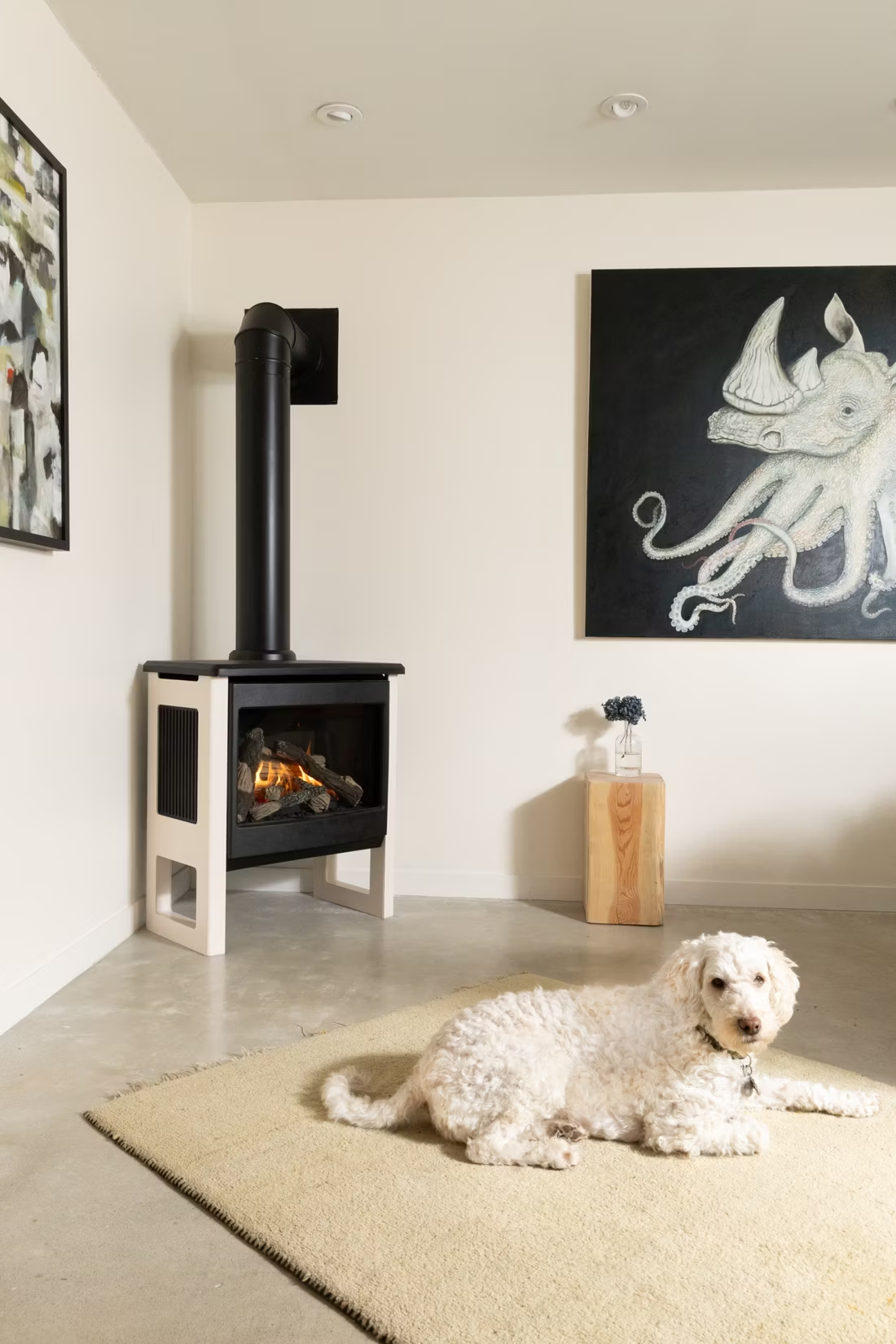
A gas fireplace is a built-in unit installed into a framed wall or new construction opening. A gas insert is sized to slide into an existing masonry firebox, turning a drafty open hearth into a sealed, efficient heat source using the chimney you already have. A gas stove is a freestanding cabinet unit, similar in footprint to a wood stove, that can be placed against most any wall with the right clearances. For the many older homes in Fort Morgan and Brush with an existing wood fireplace, an insert is usually the simplest upgrade. Newer builds or additions without a fireplace already in place are better matched to a built-in fireplace or a freestanding stove.
Do I need a permit to install a gas fireplace in Morgan County?
Yes. New gas fireplace and insert installations require a building permit, and the gas line work itself requires a licensed gas fitter. Homes inside Fort Morgan or Brush city limits go through the city permitting process; homes in unincorporated Morgan County go through the Morgan County Building Department. Most established hearth dealers handle the permit paperwork and coordinate the gas line, venting, and inspection as one job, rather than leaving you to juggle separate contractors for each piece.
What's the difference between vented and vent-free gas fireplaces?
Vented gas fireplaces—direct-vent or B-vent—pull combustion air from outside and exhaust the byproducts back outside through a sealed vent, which keeps the appliance's exhaust entirely out of your living space. Vent-free units burn directly into the room without any outside venting; they're technically more efficient but release some water vapor and trace combustion gases indoors. Colorado building departments, including Morgan County's, place tighter restrictions on vent-free units than many states—they're commonly disallowed in bedrooms and closed rooms, and local code officials review them case by case. For most Morgan County homes, a direct-vent fireplace is the more straightforward, universally approved choice, and it's what most local dealers install by default.
How often should my gas fireplace be serviced?
Plan on an annual inspection, ideally before the county's coldest stretch hits in December and January. A technician checks the burner, pilot assembly, venting, and gas connections, and cleans the glass and interior—a much smaller job than a wood chimney sweep, but still important, since a dirty burner or a misaligned pilot is the most common reason a fireplace won't ignite on the first cold night of the season. Local gas appliance service providers typically charge $150 to $250 for this annual check.
Gas vs. wood—which is right for my Morgan County home?
Wood is still a real option here—ponderosa pine, aspen, pinyon, and juniper are all common locally, and Forest Service cutting permits through the Arapaho-Roosevelt National Forests run just $5 to $20 per cord during the May-to-October season. Wood also keeps working when the power is out, which matters during plains ice storms. Gas, on the other hand, means no hauling or splitting, no ash, and no smoke—a real consideration in a county where wildfire smoke can settle into the valley for days at a stretch during dry summers and falls. For a primary living space where daily convenience matters most, gas is usually the better fit; many Morgan County homes keep wood as a backup option in a shop, garage, or second living area.
Can I put a TV above my fireplace?
Yes—with an asterisk. Fireplaces are hot and TVs don't like heat. Either put a mantel between them to deflect rising warmth, or choose a fireplace with heat-management technology that creates a cool zone on the wall above—the wall stays around 125 degrees, barely warm, while the room still gets full heat. If you like clean lines and don't want a mantel, heat management is the answer.
What's the difference between an insert and a zero-clearance fireplace?
An insert is a fireplace that slides into a pre-existing wood-burning fireplace—if you don't have one, there's nothing to insert it into. A zero-clearance fireplace is built into a framed wall, which makes it the answer for remodels and new construction. Simple test: existing masonry fireplace means insert; blank or framed wall means zero-clearance.
How much should I budget for a fireplace?
For an average home—covering the fireplace, the vent pipe, and basic installation—a budget between $3,900 and $5,500 gives you a lot of options across wood, gas, and pellet. By the time you add finish work, gas line, and electrical, the average complete installation lands between $5,000 and $12,000 all-in. In a remodel or new build, a good rule is to put about 2.5% of the total project cost toward the fireplace.
Does a fireplace add value to my home?
On average, a fireplace adds back to the home about the same amount you spent installing it. Add the monthly savings from heating the rooms you actually use instead of the whole house—often hundreds of dollars a year—and the value case is strong before you even count what a fire does for how your family uses the room.
Stove and Fireplace Dealers in Morgan County
Find your gas fireplace in Morgan County.
Tell us a bit about your home and we'll match you with the right gas fireplace, insert, or stove—plus a free Project Guide & Parts List and a trusted local dealer to install it.
Find Your Fireplace →