
No chimney, no smoke—just heat for Montrose County.
From downtown Montrose out to Olathe and the ranches toward the Black Canyon, electric heat adds warmth and ambiance without a flue, a gas line, or a cord of wood to manage. Find the right unit and get matched with a trusted local dealer.
Every Project Starts From One of These Five Situations
Warmth on demand, without the venting or the smoke.
Montrose County sits in the Uncompahgre Valley at roughly 5,800 feet, ringed by the Grand Mesa-Uncompahgre-Gunnison National Forest and the rimrock above the Black Canyon. Climate zone 5B, an average winter low around 18 degrees, and a long, demanding heating season put the county in solidly cold-climate territory—milder than a place like Helena, Montana, but still cold enough that most homes run a wood stove or gas furnace as primary heat and lean on something else for zone warmth in bedrooms, sunrooms, or a finished basement. Wood heat runs deep here—ponderosa pine, aspen, pinyon, and juniper are all common locally, and permits through the Grand Mesa-Uncompahgre-Gunnison National Forest run $5 to $20 per cord from May through October. Electric fireplaces have found a real niche alongside that tradition, especially in newer subdivisions, condos in town, and additions where running a flue isn't practical.
Delta-Montrose Electric Association (DMEA) serves most of the county with a reliable grid, which makes electric heat a low-hassle option for homeowners who don't want to deal with venting, gas lines, or ash cleanup. It also matters during the county's wildfire smoke season—when red flag warnings and regional smoke advisories make open burning or heavy wood-stove use less appealing, an electric fireplace produces zero combustion byproducts and can still be run for ambiance and supplemental warmth on those days. Plug-in units need nothing more than an outlet; built-in models typically need a dedicated circuit, which is a quick job for a licensed electrician and, in most cases, a small electrical permit through the county rather than a full building permit.
Three steps. No salesperson until you're ready.
Tell us about your project
Your zip code, your situation, and the fuel you're leaning toward—or let the answers point you to one.
See what's actually available
The brands dealers within 100 miles genuinely carry—real options, never a catalog mirage.
Get your dealer & Project Guide
A trusted local dealer, plus the free Project Guide & Parts List that names every component of the job.
Frequently Asked Questions
How much does an electric fireplace installation cost in Montrose County?
Plug-in electric inserts and freestanding stoves generally run $400 to $1,200 installed, since most need nothing more than an existing outlet and a mounting bracket. Built-in wall units and larger linear models run higher, typically $1,200 to $2,500, once you add a dedicated 120V or 240V circuit, some minor framing, and finish trim work. Because DMEA electricity rates are modest for the wattage these units draw, ongoing operating cost is low compared to the install itself—most of what you're paying for is the unit and the electrician's time, not fuel infrastructure like a gas line or a chimney liner.
What size electric fireplace do I need for my home?
Electric fireplaces are almost always zone heat rather than whole-house heat in Montrose County's climate—with a long, demanding heating season and average winter lows around 18 degrees, they're a strong supplement to a wood stove, gas furnace, or heat pump, not a replacement. For a single bedroom or den, a smaller 1,000-1,500 watt insert or freestanding unit is plenty. For an open living area or a sunroom addition, look at a wider linear unit or one rated for 1,500-2,000 sq ft of supplemental coverage. A local dealer can walk through your specific room and tell you honestly whether electric alone will keep up or whether it should pair with your existing primary heat source.
Do I need a permit to install an electric fireplace in Montrose County?
In most cases, no—a plug-in electric insert or stove that runs off a standard outlet doesn't require a permit. Built-in units that need a new dedicated circuit typically require a residential electrical permit, which most licensed electricians pull as part of the job. This is a much lighter process than what's required for wood or gas installs in the county, since there's no combustion appliance, no venting, and no chimney inspection involved. If you're doing a larger remodel that includes framing a niche for the unit, check with the Montrose County Building Department on whether the broader remodel triggers its own permit.
Will my electric fireplace work if the power goes out?
No—this is the honest tradeoff with electric heat. Unlike a wood stove burning local ponderosa pine or aspen, an electric fireplace is entirely dependent on grid power, and it will go dark the moment the power does. Montrose County doesn't see frequent outages, but winter storms and, in fire season, occasional utility power shutoffs can happen. If backup heat during an outage matters to your household, plan on an electric fireplace for daily ambiance and convenience, paired with a wood stove or propane appliance as your true emergency heat source.
What's the difference between an electric fireplace, insert, and stove?
A built-in electric fireplace is designed to be framed into a wall like a TV, often flush-mounted with a linear look. An electric insert is sized to slide into an existing masonry fireplace opening, giving you flame visuals and heat without touching the chimney—a popular option for older Montrose homes with an unused wood fireplace someone wants to simplify. An electric stove is a freestanding cabinet-style unit that mimics a wood stove's look and can go almost anywhere there's an outlet. For homes with an existing fireplace opening that's rarely used for wood, an insert is usually the simplest upgrade.
Are electric fireplaces a good fit for Montrose County's wildfire smoke season?
Yes—this is one of the clearest local advantages. Montrose County deals with real wildfire smoke concerns some summers and falls, and on smoky or red-flag days, running a wood stove for ambiance isn't appealing even outside a formal burn restriction. Electric fireplaces produce no combustion byproducts at all, so they're a genuinely clean option for heat and ambiance regardless of outdoor air quality. It's a big part of why some households that heat primarily with wood or gas still add an electric unit in a second living space.
How much does it cost to run an electric fireplace in Montrose County?
Most electric fireplaces draw around 1,500 watts on the heat setting. At typical DMEA residential rates, that works out to roughly 15 to 20 cents an hour to run on high heat, or just a couple cents an hour for flame-only ambiance mode with the heater off. Compared to running a wood stove through cordwood or a gas insert through a meter, electric is the cheapest fuel to operate per hour—the tradeoff is that it's producing far less total heat output, which is why it works best as a supplement rather than a home's primary source in a climate zone this cold.
Electric vs. wood—which is right for my home?
Wood, using local ponderosa pine, aspen, pinyon, or juniper cut under a Grand Mesa-Uncompahgre-Gunnison National Forest permit, delivers real heat output, works without power during outages, and fits the self-sufficient heating culture common across rural Montrose County. Electric offers instant on-off operation, zero smoke or ash, no chimney to maintain, and a clean option to run during wildfire smoke advisories when burning wood isn't ideal. Many households in the county run both: a wood stove as primary heat in a main living area, and an electric unit in a bedroom, basement, or sunroom for convenient supplemental warmth.
Electric vs. gas—which is right for my home?
Gas fireplaces and inserts put out significantly more heat per hour and can serve as genuine supplemental or even primary zone heat in a Montrose County winter, but they require either a natural gas line or a propane tank, venting work, and a larger upfront investment. Electric units cost far less to install, need no venting or fuel line, and can go almost anywhere with an outlet—but they produce less heat and depend entirely on grid power. For a room where running a gas line isn't practical, or where the goal is ambiance plus light supplemental warmth rather than serious heat, electric is usually the better fit.
Can I put a TV above my fireplace?
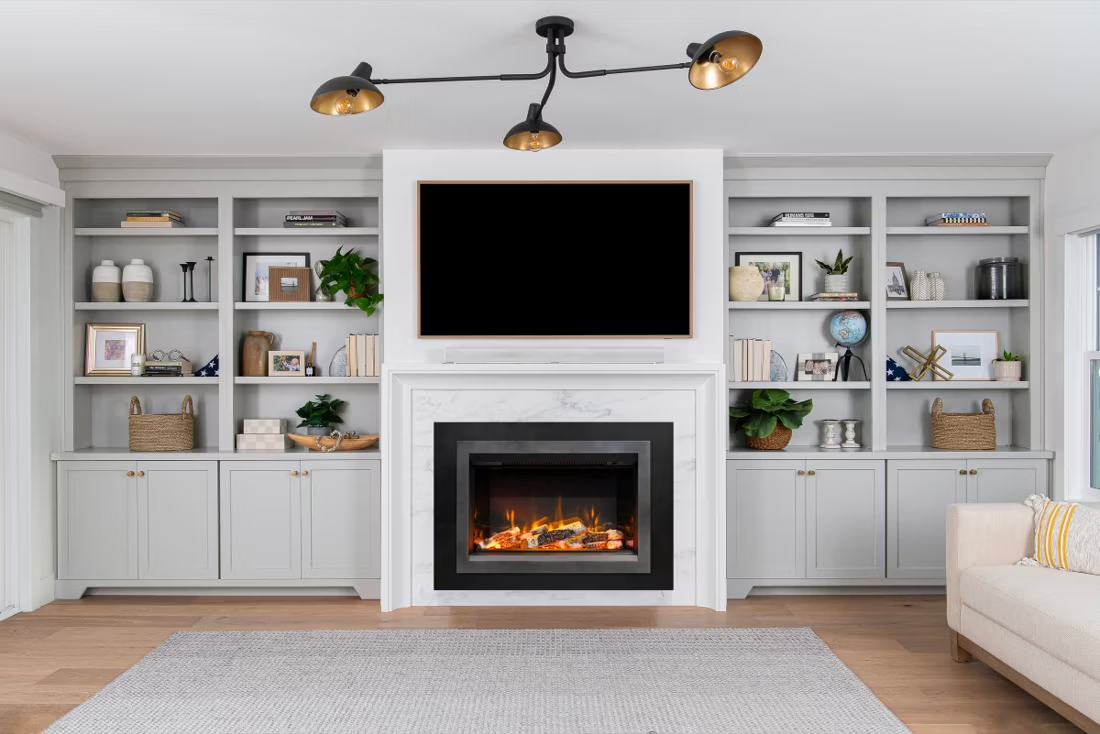
Yes—with an asterisk. Fireplaces are hot and TVs don't like heat. Either put a mantel between them to deflect rising warmth, or choose a fireplace with heat-management technology that creates a cool zone on the wall above—the wall stays around 125 degrees, barely warm, while the room still gets full heat. If you like clean lines and don't want a mantel, heat management is the answer.
Do electric fireplaces actually produce heat?
Yes—most put out around 4,800–5,000 BTUs from a standard outlet, which comfortably warms a bedroom, office, or den as a comfort-zone heater. What they won't do is carry a whole house the way wood, gas, or pellet can. Think of electric as ambiance-first with honest supplemental heat: flames on with no heat in July, flames plus warmth in January.
What is an in-home preview and do I need one?
It's a visit where a hearth professional measures your space, confirms the model you picked actually works in your home, and walks the specs—framing, gas line, venting, finish work—before anything is ordered. Some details you just can't know until you see the house. Never make a down payment without one; it's the single most-skipped step that burns buyers.
How much should I budget for a fireplace?
For an average home—covering the fireplace, the vent pipe, and basic installation—a budget between $3,900 and $5,500 gives you a lot of options across wood, gas, and pellet. By the time you add finish work, gas line, and electrical, the average complete installation lands between $5,000 and $12,000 all-in. In a remodel or new build, a good rule is to put about 2.5% of the total project cost toward the fireplace.
Stove and Fireplace Dealers in Montrose County
Find your electric fireplace in Montrose County.
Tell us about your home and your space, and we'll match you with a trusted local dealer and put together a free Project Guide & Parts List—the exact parts for your electric fireplace project in Montrose County, plus who to call to get it installed right.
Find Your Fireplace →