
Gas Heat Built for Longmont's Front Range Winters.
Instant, reliable heat for a city that sits near 5,000 feet with winter lows averaging 14°F. Find the right gas unit and connect with a trusted local dealer who knows the altitude.
Every Project Starts From One of These Five Situations
Clean heat that's built for the altitude.
Longmont sits at nearly 5,000 feet at the base of the Front Range, where winters bring a long, cold heating season and winter nights regularly settle into the teens. Wood heat isn't really part of the local picture here—between wildfire smoke concerns that build through late summer and fall and a broader Front Range shift toward cleaner-burning appliances, new wood-burning installations are uncommon across Longmont's 80501, 80503, and 80504 zip codes. Gas has become the default choice instead.
Most of incorporated Longmont has natural gas service through Xcel Energy, which makes adding or upgrading a gas fireplace straightforward for homeowners who already have gas appliances. One detail that trips up out-of-town installers: at just under 5,000 feet, many gas fireplace models require a high-altitude orifice or regulator kit to burn correctly—something a local dealer who works this elevation every day will already have on hand. Done right, a gas fireplace delivers instant, consistent heat at the flip of a switch, works as zone heating alongside central HVAC, and—with the right ignition system—keeps running through the power outages that come with Front Range windstorms and spring blizzards.
Three steps. No salesperson until you're ready.
Tell us about your project
Your zip code, your situation, and the fuel you're leaning toward—or let the answers point you to one.
See what's actually available
The brands dealers within 100 miles genuinely carry—real options, never a catalog mirage.
Get your dealer & Project Guide
A trusted local dealer, plus the free Project Guide & Parts List that names every component of the job.
Frequently Asked Questions
How much does a gas fireplace installation cost in Longmont?
Across the Denver-Boulder corridor, a typical gas fireplace installation runs roughly $4,500 to $11,000 depending on the unit, the venting path, and whether new gas line work is needed. A direct-vent insert into an existing masonry fireplace with gas already run to the room sits on the lower end. A new built-in unit in a remodel or addition—with framing, venting, and a fresh gas line—lands in the middle to upper range. Because Longmont sits close to 5,000 feet, factor in a modest add-on for a high-altitude orifice or regulator kit, which most local installers already stock. A firm number comes after an in-home consultation.
Can I convert my existing wood fireplace to gas in Longmont?
Yes, and it's one of the more common projects in Longmont's older neighborhoods, where many bungalows and split-levels built before the 1990s still have open masonry fireplaces. With rising wildfire smoke concerns each summer and fall and a general Front Range shift away from new wood-burning appliances, converting an existing wood fireplace to a gas insert has become a popular way to keep the look of the original hearth while getting cleaner, on-demand heat. The insert typically vents through a stainless liner run up your existing chimney, and cost depends mainly on whether a new gas line needs to be run to the fireplace.
Do I need natural gas, or can I use propane, for a gas fireplace in Longmont?
Either works, but which one you use often comes down to where you live. Most of incorporated Longmont has natural gas service through Xcel Energy, so if your home already has gas appliances, adding a fireplace is a straightforward tie-in. Homes in unincorporated Boulder County or on the edges of town without gas mains typically run on propane, either from an existing tank or a new tank installed by a local propane supplier. Most gas fireplace models can be configured for either fuel—your installer sets the correct orifice and regulator pressure during installation, along with any high-altitude adjustment your elevation requires.
Will my gas fireplace work during a power outage?
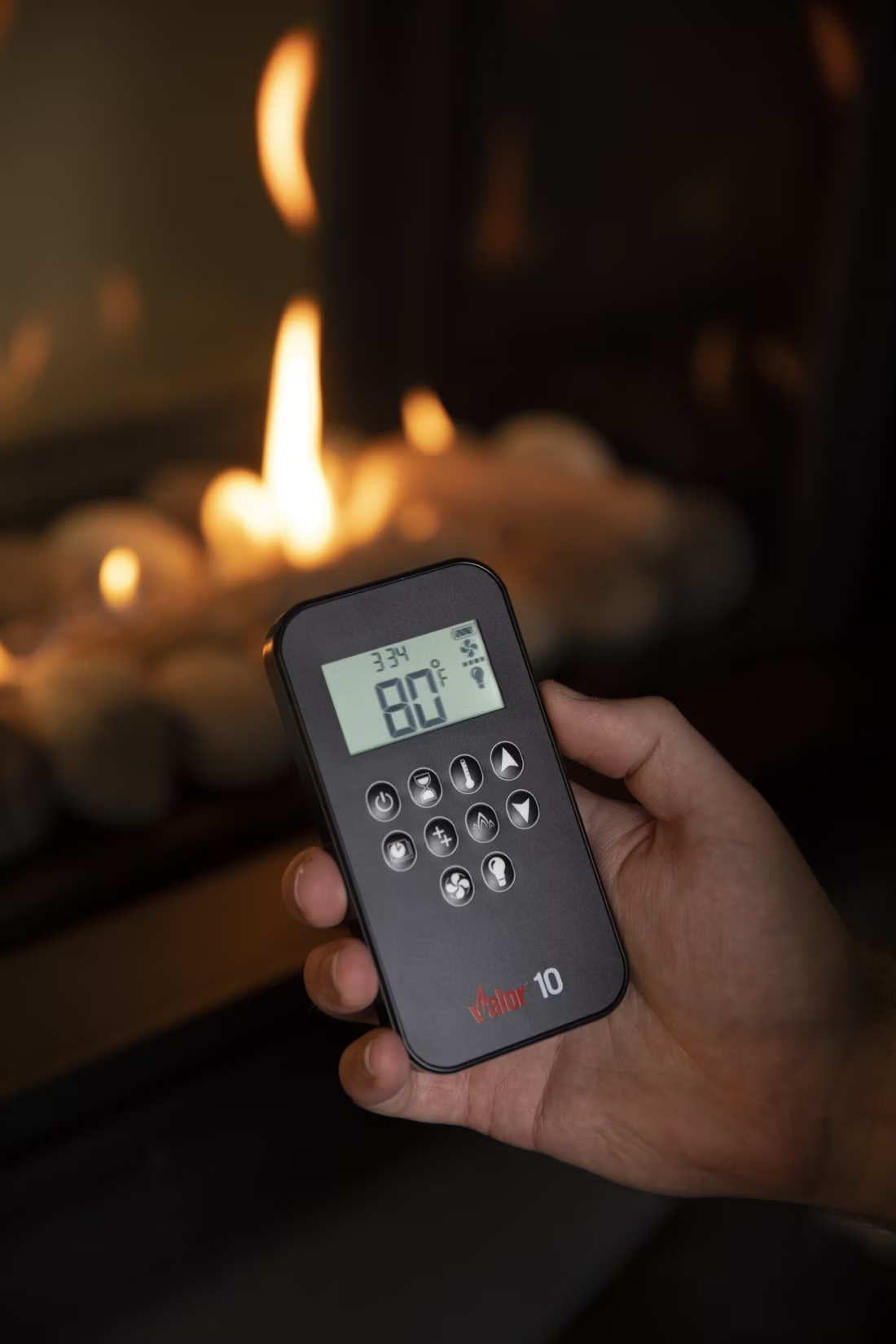
Most modern gas fireplaces will, which matters in Longmont given how often spring windstorms and heavy wet snow along the Front Range knock out power for hours at a time. Units with IPI (intermittent pilot ignition) run on a small battery backup that kicks in automatically when the power drops, so the fireplace still lights on demand. Valor fireplaces take a different approach—their pilot assembly generates its own electricity through the thermocouple, so there's no battery to remember or replace. Either way, ask your local dealer about the ignition system before you buy if outage backup matters to you.
What's the difference between a gas fireplace, gas insert, and gas stove?
A gas fireplace is a fully built-in unit framed into a wall, typically chosen for new construction or a remodel. A gas insert drops into an existing masonry fireplace opening and uses your existing chimney as the vent path—the right call for older Longmont homes near downtown with a real hearth already in place. A gas stove is a freestanding unit that sits on the floor, useful in newer subdivisions or additions that were never built with a fireplace opening at all. Which one fits depends mostly on what you're starting with, not personal preference.
Do I need a permit to install a gas fireplace in Longmont?
Yes. Inside city limits, the City of Longmont Building Division requires a building permit and a separate gas permit for any new gas fireplace or line work; homes in unincorporated Boulder County go through Boulder County Community Planning & Permitting instead. The gas line itself has to be run or modified by a licensed gas fitter. Most established local hearth dealers handle all of this as part of the installation, including coordinating the final inspection, so you're not left juggling separate trades.
Should I get a vented or vent-free gas fireplace in Longmont?
Vented direct-vent units draw combustion air from outside and exhaust it back outside—they're the standard recommendation almost everywhere, including Longmont. Vent-free units burn directly into the room and rely on an oxygen depletion sensor (ODS) to shut off if oxygen drops too low, but those sensors are calibrated for specific elevation ranges, and many manufacturers restrict or derate vent-free operation above roughly 4,500 to 7,000 feet. At nearly 5,000 feet, Longmont sits right in that gray zone, which is part of why most local dealers steer homeowners toward vented direct-vent fireplaces here—they perform consistently regardless of elevation and don't require a judgment call about room size and ventilation.
How often should my gas fireplace be serviced?
Plan on an annual inspection, ideally before the heating season ramps up in October or November. A certified technician checks the burner, pilot assembly, venting, and gas connections, cleans the glass and interior, and confirms the unit is burning correctly at Longmont's elevation. This is a lighter service than chimney sweeping for a wood appliance, but it's still important—a gas fireplace that's burning improperly at altitude can produce excess soot on the glass or reduced heat output. Most local service providers charge in the $150 to $250 range for a standard annual visit.
Gas vs. wood—why does almost everyone in Longmont choose gas?
Wood heat hasn't disappeared entirely—cutting permits are still available through the Arapaho-Roosevelt National Forests for $5 to $20 per cord during the May-through-October season, and some longtime Longmont homes still burn wood in existing fireplaces. But new wood-burning installations are genuinely uncommon here. Between the smoke that settles into the valley during wildfire season and a broader Front Range preference for cleaner-burning appliances, gas has become the practical default for anyone adding or replacing a fireplace. It lights instantly, produces no ash or creosote, and doesn't add to the air quality concerns Longmont already deals with each summer and fall.
Why is a fireplace insert so efficient?
An insert does two things: it seals the chimney completely, so you stop losing air you already paid to heat, and it radiates warmth into the room through the firebox and glass. Most add a heat-exchange fan that pulls cool room air underneath, wraps it around the hot firebox, and pushes it back out warm. Your home is more efficient before you've even lit the first fire.
Why is my open fireplace making my house colder?
Open fireplaces suck—literally. As the fire burns, it consumes air your furnace already paid to heat and pulls it out through the chimney, so the house is actually colder after the fire goes out than before you lit it. An insert fixes this: it seals the chimney, puts fixed glass across the front, and turns that hole in your house into a real heat source.
What is an in-home preview and do I need one?
It's a visit where a hearth professional measures your space, confirms the model you picked actually works in your home, and walks the specs—framing, gas line, venting, finish work—before anything is ordered. Some details you just can't know until you see the house. Never make a down payment without one; it's the single most-skipped step that burns buyers.
How much should I budget for a fireplace?
For an average home—covering the fireplace, the vent pipe, and basic installation—a budget between $3,900 and $5,500 gives you a lot of options across wood, gas, and pellet. By the time you add finish work, gas line, and electrical, the average complete installation lands between $5,000 and $12,000 all-in. In a remodel or new build, a good rule is to put about 2.5% of the total project cost toward the fireplace.
Nearby Dealers
Hearth shops serving Longmont and the surrounding area. Every listing shows whether it is a WhyFire partner, a dealer we have verified as authorized for the brands we recommend, or a local business carrying hearth products. No manufacturer pays for placement. How we verify dealers →
Paramount Remodeling Co
Quality Energy Installation
Cedar Supply Lumber
Spa Brokers
Advanced Comfort
Get your Longmont gas project mapped out.
Tell us about your home and we'll match you with a trusted local dealer and send over a free Project Guide & Parts List—a plan for your gas fireplace project in Longmont, including the exact vent kit and parts your installer will need.
Find Your Fireplace →