
Clean, instant heat for Las Animas County that skips the wildfire smoke.
Natural gas in Trinidad through Black Hills Energy, propane across the rest of Las Animas County—find the right fireplace, insert, or stove and connect with a trusted local dealer.
Every Project Starts From One of These Five Situations
Reliable warmth across the high plains and foothills.
Las Animas County stretches from the Sangre de Cristo foothills west of Trinidad out across nearly 4,700 square miles of high plains toward the Comanche National Grassland and the New Mexico line. Trinidad sits at roughly 6,025 feet, and the county's climate zone (4B) runs cooler than Denver but milder than true cold-climate benchmarks—Helena, Montana or Bismarck, North Dakota rack up far more heating degree days than Las Animas County's 4,845. Still, winter lows average 22°F, and overnight temperatures in the foothill ranch country regularly dip into the teens. With a population of just over 10,000 spread across small towns like Trinidad, Aguilar, and Branson, most households here already burn ponderosa pine, pinyon, and juniper for at least part of the winter—but wildfire smoke, a growing summer and fall concern across southern Colorado, has more homeowners looking at gas as a clean, no-smoke option for daily use.
Natural gas service is available in Trinidad and a handful of surrounding towns through Black Hills Energy, even though the ground beneath much of Las Animas County sits on the Raton Basin, one of the country's most productive coalbed methane fields—the gas produced here mostly moves to pipeline markets, not directly into rural homes. Outside the Black Hills Energy service area, propane is the standard fuel, delivered by regional suppliers to ranch and rural properties across the county. Either way, a direct-vent gas fireplace or insert gives you heat on demand without hauling wood, without adding particulates to the air during a smoke advisory, and—with the right ignition system—heat that still works when a winter storm knocks out power.
Three steps. No salesperson until you're ready.
Tell us about your project
Your zip code, your situation, and the fuel you're leaning toward—or let the answers point you to one.
See what's actually available
The brands dealers within 100 miles genuinely carry—real options, never a catalog mirage.
Get your dealer & Project Guide
A trusted local dealer, plus the free Project Guide & Parts List that names every component of the job.
Frequently Asked Questions
How much does a gas fireplace installation cost in Las Animas County?
Expect to spend roughly $3,800 to $9,500 for a typical gas fireplace or insert installation in Las Animas County, with the final number driven by three things: whether you're on natural gas or propane, whether an existing masonry chimney can be used for venting, and how far the installer has to travel. In Trinidad, where Black Hills Energy natural gas lines already run to most homes, a direct-vent insert into an existing fireplace tends to land on the lower end. Out in the ranch country around Aguilar or Branson, adding or upsizing a propane tank pushes costs toward the higher end, and installers may add a trip charge for the drive. Ask your local dealer for a firm, in-home quote before committing to a model.
Can I convert my existing wood fireplace to gas?
Yes, and it's a common upgrade in Las Animas County's older homes, many of which were built with masonry fireplaces during the county's coal-mining boom decades ago. A gas insert slides into the existing firebox and vents through a stainless liner run up your current chimney, so you keep the look of the original fireplace while gaining real heat output and losing the ash and creosote. The gas line matters more here than in most counties—homes in Trinidad already served by Black Hills Energy are the easiest conversions, while rural homes need a propane line run or an existing tank tapped, which adds cost and lead time.
Is natural gas available in Las Animas County, or do I need propane?
It depends on where you live. Black Hills Energy provides natural gas service in Trinidad and a few of the surrounding incorporated communities, so if your home already has gas appliances there, adding a fireplace is usually a straightforward tap into the existing line. Outside those service boundaries—which covers most of the county's ranch land and smaller communities like Aguilar, Branson, Kim, and Model—propane is the standard, delivered and stored in a tank on the property. It's a bit of local irony: Las Animas County sits on the Raton Basin, one of the more productive coalbed methane fields in the country, but that production moves to pipeline markets, not into most rural driveways. Either fuel works fine in a modern direct-vent fireplace; your dealer will set up the correct orifice and regulator for whichever you have.
Will my gas fireplace still work if the power goes out?
Most direct-vent gas fireplaces with intermittent pilot ignition (IPI) include a battery backup—typically standard AA batteries built into the control module—that keeps the unit fully operational during an outage. That matters in Las Animas County, where winter storms rolling off the Sangre de Cristo foothills can knock out power to rural lines for hours at a time. A few brands, notably Valor, skip batteries altogether: their pilot generates its own electricity through a thermocouple, so the fireplace lights and runs with zero reliance on stored power or the grid. If backup heat during outages is a priority for your property, ask your local dealer about the ignition system before you buy.
What's the difference between a gas fireplace, gas insert, and gas stove?
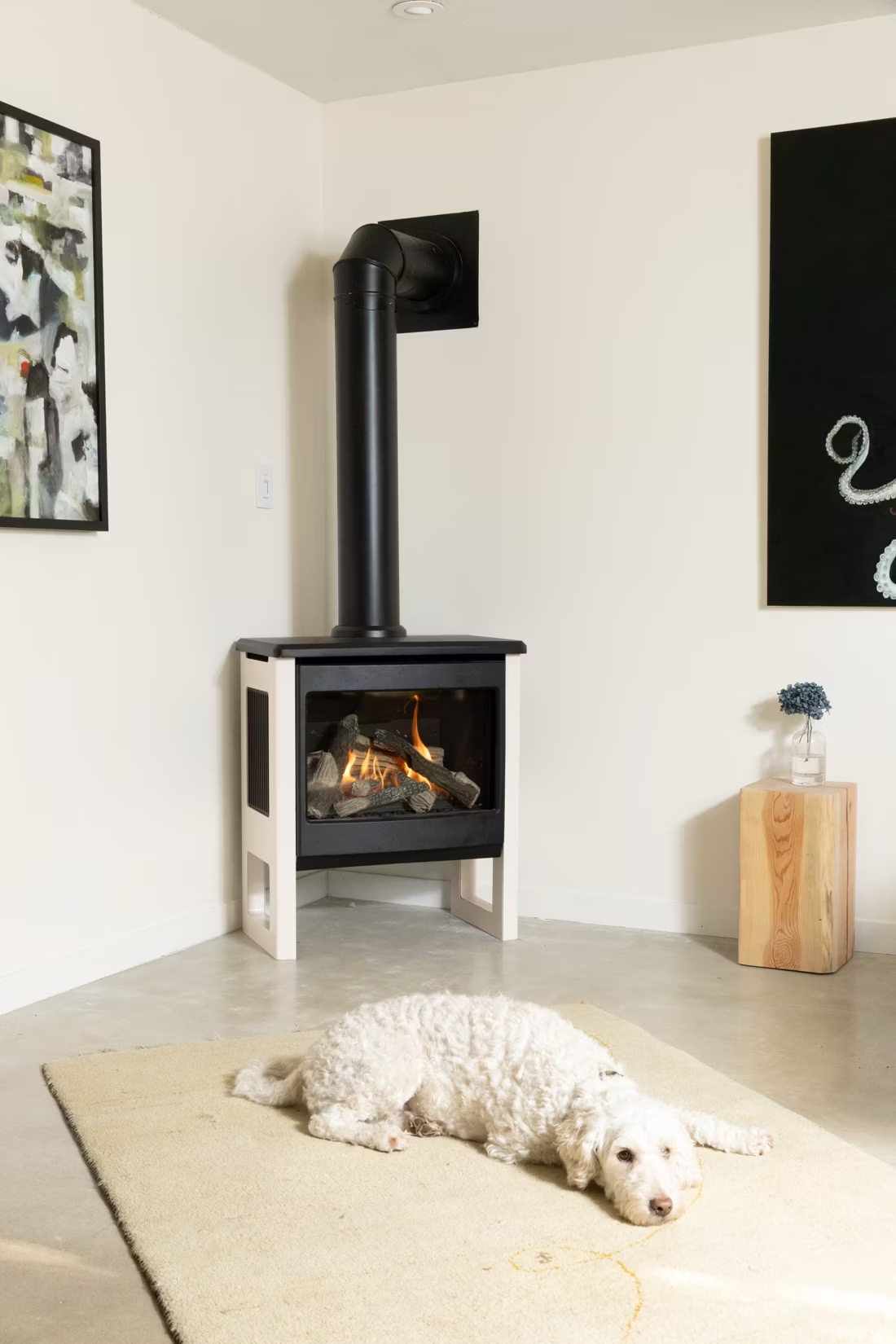
A gas fireplace is a fully framed, built-in unit—the right choice for new construction or a remodel where there's no existing masonry opening. A gas insert is sized to slide into an existing wood-burning fireplace, which is common in older Trinidad homes and converts a drafty, rarely-used hearth into an efficient heat source. A gas stove is a freestanding, cast-iron-style unit that sits on a hearth pad, similar in footprint to a wood stove but burning gas—a good fit for ranch homes and cabins without an existing fireplace opening. Most Las Animas County homeowners upgrading an existing hearth go with an insert; new builds and additions usually call for a built-in fireplace or a freestanding stove.
Do I need a permit to install a gas fireplace in Las Animas County?
Yes. Inside Trinidad city limits, permits are issued through the City of Trinidad; in the unincorporated county—which covers the majority of Las Animas County—permits go through the county building department. Both a building permit and a gas line permit are typically required, and the gas line work needs a licensed gas-fitter regardless of whether you're on natural gas through Black Hills Energy or a propane tank. Most established hearth dealers coordinate the permitting, venting, and gas-fitting as one job, which is worth factoring in when you're comparing a big-box purchase against a local installer.
Does elevation affect gas fireplace installation in Las Animas County?
It can. Trinidad sits at roughly 6,025 feet, and parts of the county in the Sangre de Cristo foothills run higher still. Gas appliances lose a small percentage of rated BTU output for every 1,000 feet above sea level, and manufacturers require an orifice adjustment or a factory-derated model above certain altitude thresholds—typically starting around 4,500 to 5,000 feet. A local installer who routinely works at Las Animas County's elevation will know which models ship with the correct high-altitude kit and which ones need field adjustment; a dealer used to installing at sea level may not catch this, which is one more reason to work with someone familiar with the local terrain.
How often should a gas fireplace be serviced?
Plan on an annual inspection, ideally before the coldest stretch of winter sets in. A qualified technician checks the burner, pilot assembly, venting, and gas connections, and cleans the glass and interior—a much lighter job than a wood-stove chimney sweep, but still important, especially for propane units in rural Las Animas County where a service call means more drive time. Most local gas appliance technicians charge somewhere in the $150–$250 range for a standard annual visit.
Gas or wood—which makes more sense for my home?
Wood remains deeply practical in Las Animas County: ponderosa pine, pinyon, and juniper are locally abundant, Forest Service cutting permits through the Pike-San Isabel National Forests run about $5 to $20 per cord, and a wood stove keeps working with zero electricity during an outage. Gas trades that self-sufficiency for convenience and clean air—no smoke to manage during wildfire season advisories, no ash, and heat at the flip of a switch or a wall thermostat. A lot of households here end up with both: wood as the workhorse heat source they've always relied on, and a gas fireplace or insert in the main living space for easy daily use and to cut down on indoor smoke exposure when outdoor air quality is already rough.
What's the difference between an insert and a zero-clearance fireplace?
An insert is a fireplace that slides into a pre-existing wood-burning fireplace—if you don't have one, there's nothing to insert it into. A zero-clearance fireplace is built into a framed wall, which makes it the answer for remodels and new construction. Simple test: existing masonry fireplace means insert; blank or framed wall means zero-clearance.
Can I put a TV above my fireplace?
Yes—with an asterisk. Fireplaces are hot and TVs don't like heat. Either put a mantel between them to deflect rising warmth, or choose a fireplace with heat-management technology that creates a cool zone on the wall above—the wall stays around 125 degrees, barely warm, while the room still gets full heat. If you like clean lines and don't want a mantel, heat management is the answer.
What is an in-home preview and do I need one?
It's a visit where a hearth professional measures your space, confirms the model you picked actually works in your home, and walks the specs—framing, gas line, venting, finish work—before anything is ordered. Some details you just can't know until you see the house. Never make a down payment without one; it's the single most-skipped step that burns buyers.
Does a fireplace add value to my home?
On average, a fireplace adds back to the home about the same amount you spent installing it. Add the monthly savings from heating the rooms you actually use instead of the whole house—often hundreds of dollars a year—and the value case is strong before you even count what a fire does for how your family uses the room.
Stove and Fireplace Dealers in Las Animas County
Find your gas fireplace in Las Animas County.
Tell us about your home and we'll match you with a trusted local dealer and send over a free Project Guide & Parts List—the exact parts, vent kit, and recommended installer for your gas fireplace project in Las Animas County.
Find Your Fireplace →