
Instant Heat for Lafayette's Front Range Winters.
With winter lows averaging 19°F and a long, demanding heating season each year, Lafayette homes lean on clean-burning gas for daily comfort. Find the right unit and connect with a trusted local dealer.
Every Project Starts From One of These Five Situations
Clean heat for a growing Front Range community.
Lafayette sits at 5,261 feet on the edge of Boulder County, where winter lows average 19°F and the heating season runs long—meaningfully colder than nearby Denver but only about three-quarters the winter heating load of mountain towns like Bozeman, MT. Wood smoke is a real concern here: Boulder County enforces winter high-pollution advisories and burn restrictions tied to wildfire smoke and inversion events, which is a big reason wood and pellet appliances are uncommon inside city limits. Gas has become the default heat source in most Lafayette subdivisions, from the older neighborhoods near Old Town to newer builds off South Boulder Road.
Public Service Company of Colorado (Xcel Energy) serves natural gas throughout Lafayette, so most homes already have a gas line to the water heater, range, or furnace—which makes adding a fireplace or insert straightforward. A direct-vent gas fireplace delivers instant, thermostat-controlled heat without the ash, smoke, or burn-day restrictions that come with wood, works as zone heat alongside central HVAC, and—with the right ignition system—can keep running during the power outages that occasionally hit the Front Range during high-wind events.
Three steps. No salesperson until you're ready.
Tell us about your project
Your zip code, your situation, and the fuel you're leaning toward—or let the answers point you to one.
See what's actually available
The brands dealers within 100 miles genuinely carry—real options, never a catalog mirage.
Get your dealer & Project Guide
A trusted local dealer, plus the free Project Guide & Parts List that names every component of the job.
Frequently Asked Questions
How much does a gas fireplace installation cost in Lafayette?
Most gas fireplace installations in Lafayette run $4,500 to $11,000, depending on the unit, the venting path, and whether new gas line work is needed. A direct-vent insert into an existing masonry fireplace with a gas line already nearby sits toward the lower end. New construction or remodels requiring framing, a fresh gas line run, and full venting land in the middle to upper range. Because Lafayette sits at 5,261 feet, some units also need a manufacturer-specified altitude derate kit to burn correctly—your local installer will factor that into the quote.
Can I convert my existing wood fireplace to gas?
Yes, and it's a common project in Lafayette's older homes near Old Town and the neighborhoods built before natural gas service expanded. A gas insert typically installs into the existing masonry firebox using a stainless liner run through the current chimney, which keeps the exterior look while eliminating ash cleanup and smoke. Given Boulder County's periodic burn restrictions during winter pollution advisories, converting an old wood-burning fireplace to gas also means you're never affected by a burn ban. Expect a conversion in the $4,500 to $9,500 range depending on the insert and whether new gas line work is required.
Do I need natural gas service, or can I use propane?
Most Lafayette addresses fall within Public Service Company of Colorado's (Xcel Energy) natural gas service territory, so if your home already has gas appliances, adding a fireplace is usually a simple tie-in. Propane is the fallback for a smaller number of properties on the outskirts of town or in unincorporated Boulder County where gas mains haven't been extended. Nearly every gas fireplace model can be configured for either fuel—your installer sets the correct orifice and regulator for whichever you have.
Will my gas fireplace work during a power outage?
Most modern gas fireplaces will, provided they use IPI (intermittent pilot ignition) with battery backup—the unit switches to battery power automatically when the grid drops and lights on demand just like normal. That matters in Lafayette, where downslope wind events off the Front Range foothills occasionally knock out power for hours at a time. Valor fireplaces take a different approach: their pilot assembly generates its own electricity through the thermocouple, so there are no batteries to remember or replace. Ask your local dealer which ignition system is on any unit you're considering.
What's the difference between a gas fireplace, gas insert, and gas stove?
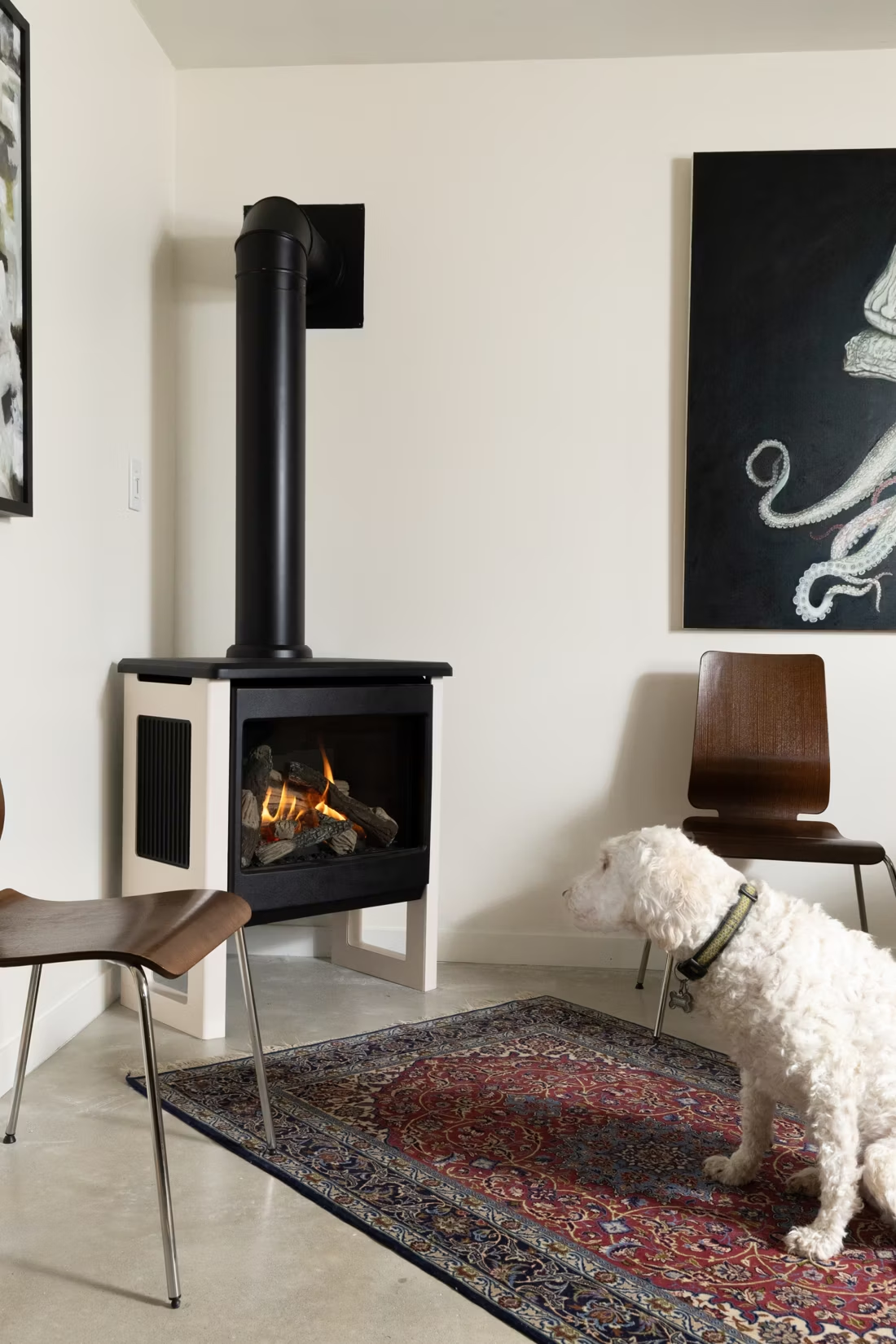
A gas fireplace is a fully built-in unit framed into a wall—the standard choice for new construction or a major remodel. A gas insert slides into an existing masonry firebox and uses the existing chimney as its vent path, which is the more common route for Lafayette's older housing stock. A gas stove is a freestanding cast-iron or steel unit that sits on the floor like a wood stove but burns gas—a good fit for a room with no existing fireplace and no interest in framing one in. Most Lafayette homeowners converting an existing wood fireplace choose an insert; new-build owners usually go with a built-in fireplace.
Do I need a permit to install a gas fireplace in Lafayette?
Yes. The City of Lafayette Building Division requires a building permit for new gas fireplace installations, and any new or modified gas line work requires a licensed gas-fitter and its own permit inspection. For properties outside city limits in unincorporated Boulder County, permitting runs through Boulder County's building department instead. Reputable local hearth dealers coordinate the gas line, venting, and inspection sign-off as part of the installation, so you're not left managing separate trades.
Should I get a vented or vent-free gas fireplace in Lafayette?
Vented (direct-vent) units draw combustion air from outside and exhaust it back outside through sealed venting—they're the standard, code-friendly choice almost everywhere, including Lafayette. Vent-free units burn directly into the room and rely on an oxygen depletion sensor (ODS) calibrated for standard sea-level atmosphere; most manufacturers caution against vent-free use above roughly 4,500 to 8,500 feet because thinner air can throw off that calibration. At 5,261 feet, Lafayette sits squarely in that caution zone, which is one more reason local dealers steer most homeowners here toward direct-vent units instead.
How often should my gas fireplace be serviced?
Plan on an annual inspection, ideally before the heating season ramps up in the fall. A certified technician checks the burner, pilot assembly, venting, gas connections, and any battery or electronic ignition components, and cleans the glass and interior. This is a much lighter lift than wood-stove chimney sweeping but still important—a blocked vent or degraded gasket is the most common cause of service calls on Front Range gas units. Expect to pay in the neighborhood of $150 to $250 for a standard annual visit from a local hearth service provider.
Why doesn't Lafayette have more wood or pellet stove options?
Wood and pellet appliances are uncommon in Lafayette, largely because Boulder County enforces winter high-pollution advisories and burn restrictions tied to wildfire smoke and temperature inversions along the Front Range. Combined with widespread natural gas service from Public Service Company of Colorado, most homeowners here simply default to gas rather than dealing with burn-day limits. There are still a handful of Lafayette residents who cut their own firewood—ponderosa pine, aspen, and juniper are common species, and permits through the Arapaho-Roosevelt National Forest run $5 to $20 per cord during the May-to-October season—but that's typically for a cabin or second property in the mountains, not a primary heat source inside city limits.
Why is a fireplace insert so efficient?
An insert does two things: it seals the chimney completely, so you stop losing air you already paid to heat, and it radiates warmth into the room through the firebox and glass. Most add a heat-exchange fan that pulls cool room air underneath, wraps it around the hot firebox, and pushes it back out warm. Your home is more efficient before you've even lit the first fire.
What's the difference between an insert and a zero-clearance fireplace?
An insert is a fireplace that slides into a pre-existing wood-burning fireplace—if you don't have one, there's nothing to insert it into. A zero-clearance fireplace is built into a framed wall, which makes it the answer for remodels and new construction. Simple test: existing masonry fireplace means insert; blank or framed wall means zero-clearance.
How much should I budget for a fireplace?
For an average home—covering the fireplace, the vent pipe, and basic installation—a budget between $3,900 and $5,500 gives you a lot of options across wood, gas, and pellet. By the time you add finish work, gas line, and electrical, the average complete installation lands between $5,000 and $12,000 all-in. In a remodel or new build, a good rule is to put about 2.5% of the total project cost toward the fireplace.
Can a fireplace actually lower my heating bill?
Yes—by creating a comfort zone. A furnace heats every square foot of the house just to warm the one room you're in; a gas fireplace on low burns roughly a sixth of the gas a typical furnace does. Set the furnace around 55–60 degrees as a baseline, then heat the rooms your family actually uses. Families who heat this way commonly save $20–$60 a month.
Nearby Dealers
Hearth shops serving Lafayette and the surrounding area. Every listing shows whether it is a WhyFire partner, a dealer we have verified as authorized for the brands we recommend, or a local business carrying hearth products. No manufacturer pays for placement. How we verify dealers →
Spa Brokers
Paramount Remodeling Co
Spa Brokers
Distinctive Mantel Designs
Aria Custom Design
Rio Grande Co.
Fireplace And Grill Experts - Service Only
Outdoor Kitchen Dist. Inc
Spa Brokers (Corporate)
Find your gas fireplace in Lafayette.
Tell us a bit about your home and we'll match you with a trusted local dealer and send over a free Project Guide & Parts List—the exact parts, vent kit, and installer recommendation for your Lafayette gas fireplace project.
Find Your Fireplace →