
Instant heat for La Plata County's long, cold winters.
From Durango's river valley to the ranches around Bayfield and Ignacio, gas fireplaces deliver dependable warmth without the wood pile. We match you with a trusted local dealer who knows the terrain.
Every Project Starts From One of These Five Situations
Reliable heat for a county that runs cold six months a year.
La Plata County sits at the edge of the San Juan Mountains, with Durango at roughly 6,500 feet and outlying communities climbing higher toward the Continental Divide. With winter lows averaging near 13°F and a long, sustained heating season, this county sees winters comparable to Bozeman, Montana. Homes here need heat that starts fast and keeps up through months of sustained cold, not just the occasional cold snap.
Wood heat has deep roots in La Plata County thanks to easy access to ponderosa pine and aspen through San Juan National Forest cutting permits, but many homeowners—especially in newer construction around Durango and in second homes used seasonally—prefer the flip-a-switch convenience of gas. Whether your home is served by natural gas lines or relies on a propane tank, a properly sized and vented gas fireplace or insert gives you zone heat you can rely on during a hard freeze, without hauling wood or tending coals.
Three steps. No salesperson until you're ready.
Tell us about your project
Your zip code, your situation, and the fuel you're leaning toward—or let the answers point you to one.
See what's actually available
The brands dealers within 100 miles genuinely carry—real options, never a catalog mirage.
Get your dealer & Project Guide
A trusted local dealer, plus the free Project Guide & Parts List that names every component of the job.
Frequently Asked Questions
How much does a gas fireplace installation cost in La Plata County?
A typical gas fireplace or insert installation in La Plata County runs from roughly $4,000 to $10,000, depending on the unit, the venting path, and whether new gas line work is required. Converting an existing masonry fireplace with a gas line already nearby tends to land on the lower end. New construction or a remodel that requires framing, direct-vent piping through an exterior wall, and a fresh gas or propane line run pushes costs toward the higher end. Homes outside Durango's natural gas service area that need a new propane tank set should budget for that as a separate line item from the installer's estimate.
Do I need natural gas, or can I run a fireplace on propane?
Either works, and which one you use largely depends on where in La Plata County you live. Natural gas service reaches much of Durango and the immediate surrounding area; outside that footprint—including large stretches of the county around Bayfield, Ignacio, and the more rural valleys—propane is the standard fuel, supplied by regional propane companies and stored in an on-site tank. Most gas fireplace models can be configured for either fuel with the correct orifice and regulator, so your choice is really about your existing utility hookup, not the appliance itself.
Can I convert my existing wood fireplace to gas?
Yes, and it's a common project for older Durango-area homes with an existing masonry fireplace. A gas insert typically slides into the existing firebox and vents through a stainless liner run up the original chimney, which keeps the exterior look intact while dramatically improving efficiency and eliminating ash and creosote buildup. Costs generally run $4,000 to $8,500 depending on the insert and whether the home is on natural gas or needs propane. Given the wildfire smoke concerns that affect the region in dry summers, some homeowners also appreciate that converting to gas removes one more source of particulate smoke from the household during high-risk stretches.
Will my gas fireplace still work if the power goes out?
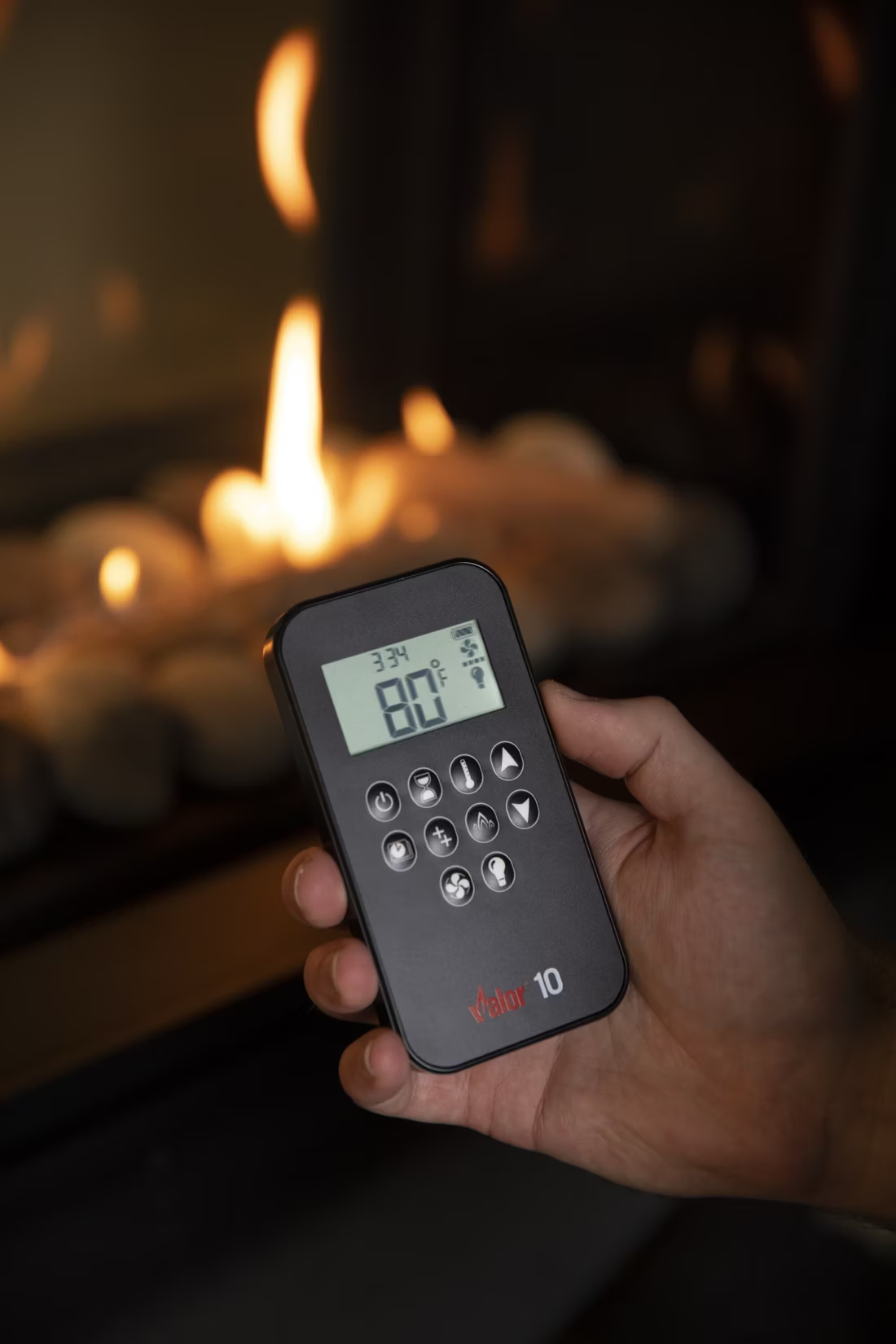
Most modern gas fireplaces will, provided they use intermittent pilot ignition (IPI) with a battery backup—the unit lights on demand off AA batteries when line power drops, which matters in a county where winter storms and wind events regularly knock out power in outlying areas around Bayfield and Ignacio. Valor units take a slightly different approach: their pilot assembly generates its own electricity through the thermocouple, so there's no battery to remember to replace. Ask your local dealer about the ignition system on any model you're considering, especially if the fireplace is meant to double as backup heat.
What size gas fireplace or insert do I need for my home?
Sizing depends on square footage, ceiling height, insulation, and elevation—homes higher up toward the mountains around Hermosa or the upper Animas Valley generally need more output than a comparable home down in the Durango valley floor. As a rough guide, smaller direct-vent units suit single rooms or cabins, while larger inserts and fireplaces can handle open-concept great rooms as supplemental or even primary zone heat. A local dealer will size the BTU output to your specific home during an in-home visit—oversizing wastes fuel and can shorten cycling life, while undersizing leaves you cold on the worst nights of a long, Bozeman-caliber winter.
Do I need a permit to install a gas fireplace in La Plata County?
Yes—both a building permit and, for new or modified gas piping, a mechanical or gas permit are typically required, whether the project is within Durango city limits or unincorporated La Plata County. Most established local dealers handle the permitting and inspection scheduling as part of the installation, coordinating the gas line work, venting, and framing so you're not juggling separate trades and separate inspections.
What's the difference between vented and vent-free gas fireplaces?
Vented (direct-vent) units draw combustion air from outside and exhaust it back outside through a sealed pipe, which is why they're the standard recommendation almost everywhere, including La Plata County. Vent-free units burn directly into the room and release some combustion byproducts indoors, which means they carry strict room-sizing and ventilation requirements and aren't legal or recommended in every state. For a well-sealed, energy-efficient home at Durango's elevation, a direct-vent unit is generally the safer, more universally supported choice, and it's what most local dealers will steer you toward for a primary living space.
How often does a gas fireplace need to be serviced?
An annual inspection is recommended for any gas-burning appliance, including direct-vent fireplaces and inserts. A qualified technician checks the burner, pilot assembly, venting, and gas connections, and cleans the glass and interior components—a much lighter task than sweeping a wood chimney, but still important for safety and warranty compliance. Plan for this before the coldest part of the season arrives, since technician schedules around Durango fill up fast once temperatures drop.
Gas vs. wood—which makes more sense for a La Plata County home?
Wood remains popular here thanks to inexpensive San Juan National Forest cutting permits—$5 to $20 per cord through the May-to-October season—and abundant local ponderosa pine, aspen, and pinyon-juniper. It also keeps working during a power outage, which matters in outlying parts of the county. Gas wins on convenience: instant on-off operation, no ash or creosote, and no exposure to wildfire-smoke-related outdoor air quality issues that can complicate wood storage and burning in dry, high-fire-risk stretches of the year. Plenty of local homes run both—wood for backup and ambiance, gas for daily use in the main living space.
Why is a fireplace insert so efficient?
An insert does two things: it seals the chimney completely, so you stop losing air you already paid to heat, and it radiates warmth into the room through the firebox and glass. Most add a heat-exchange fan that pulls cool room air underneath, wraps it around the hot firebox, and pushes it back out warm. Your home is more efficient before you've even lit the first fire.
Does a gas fireplace work when the power is out?
Yes—modern gas fireplaces have a battery backup for the ignition system that lasts for weeks, so no power equals no problem. Your furnace can't say that: no electricity, no blower, no heat. It's one of the most common reasons families add a fireplace, and worth confirming on any model you're considering.
What is an in-home preview and do I need one?
It's a visit where a hearth professional measures your space, confirms the model you picked actually works in your home, and walks the specs—framing, gas line, venting, finish work—before anything is ordered. Some details you just can't know until you see the house. Never make a down payment without one; it's the single most-skipped step that burns buyers.
How much should I budget for a fireplace?
For an average home—covering the fireplace, the vent pipe, and basic installation—a budget between $3,900 and $5,500 gives you a lot of options across wood, gas, and pellet. By the time you add finish work, gas line, and electrical, the average complete installation lands between $5,000 and $12,000 all-in. In a remodel or new build, a good rule is to put about 2.5% of the total project cost toward the fireplace.
Stove and Fireplace Dealers in La Plata County
Find your gas fireplace in La Plata County.
Tell us a bit about your home and we'll match you with a trusted local dealer and a free Project Guide & Parts List—the exact parts, vent kit, and recommendation for your La Plata County gas fireplace project.
Find Your Fireplace →