
Quiet, safe heat for Colorado's most remote high country.
At 8,000-plus feet in Hinsdale County—population 521, and often the last county in Colorado to lose its snowpack—an electric fireplace or stove delivers clean, smoke-free warmth with no chimney, no wood to haul, and no venting through a log wall. Tell us about your cabin or home and we'll match you with a trusted local dealer who knows what actually works up here.
Every Project Starts From One of These Five Situations
Ambient heat that doesn't fight your air quality or your isolation.
Hinsdale County is the least populated county in Colorado—521 people spread across roughly 1,100 square miles of San Juan Mountain terrain, most of it national forest. Lake City, the county seat, sits near 8,671 feet, and the county falls in IECC climate zone 7—the same severity bracket as International Falls, Minnesota, but at altitude, where thin air and long winters combine for a heating season that runs from September into May. Slumgullion Pass and Highway 149 close or become dicey in storms, and a meaningful share of homes here are seasonal cabins used by owners who don't want to manage a woodpile, a chimney, or a wood-cutting permit from the Rio Grande or Gunnison National Forest every time they arrive.
That's where electric fireplaces and stoves earn their place. There's no venting to run through log construction, no clearance-to-combustible headaches in a small cabin, and no smoke—which matters directly in a county where wildfire smoke is already a recognized air quality concern in late summer and fall. The tradeoff is real, though: electric units run on the grid, and the rural electric cooperative serving scattered properties across Hinsdale County's mountain terrain isn't immune to outages during heavy winter storms. Most homeowners here treat an electric fireplace as ambiance or zone heat for a living room or loft, not as the sole heat source for a home that has to survive a week of sub-zero nights on Slumgullion Pass.
Three steps. No salesperson until you're ready.
Tell us about your project
Your zip code, your situation, and the fuel you're leaning toward—or let the answers point you to one.
See what's actually available
The brands dealers within 100 miles genuinely carry—real options, never a catalog mirage.
Get your dealer & Project Guide
A trusted local dealer, plus the free Project Guide & Parts List that names every component of the job.
Frequently Asked Questions
How much does an electric fireplace installation cost in Hinsdale County?
Electric fireplaces and stoves are among the least expensive hearth products to install, typically running $500 to $1,800 for the unit and a licensed electrician's time to run a dedicated circuit if one isn't already in place—no chimney, no gas line, no masonry work required. Given how remote Lake City and the surrounding subdivisions are, expect a modest travel surcharge if your electrician or installer is coming from Gunnison or Montrose, which is common for county trades work. Built-in models that require framing into a wall cost more than plug-in freestanding stoves or inserts that drop into an existing masonry opening.
What size electric fireplace do I need for a cabin or home at this elevation?
Electric heaters are rated in BTU output rather than square footage capacity for cold-climate primary heat, and at Hinsdale County's altitude and zone 7 severity, most homeowners size an electric unit for supplemental warmth in one room—a great room, loft, or bedroom—rather than whole-home heating. A 1,500-watt unit will comfortably take the chill off a well-insulated 300-400 square foot space; older cabins with log walls and less insulation will feel the difference less on the coldest nights. If you're trying to heat more square footage than that as your primary source, a local dealer will likely steer you toward a wood or propane appliance instead, with electric added for ambiance.
Where can I find a certified installer near Lake City?
Because electric fireplace installation is primarily electrical work rather than venting or masonry, you want a licensed electrician familiar with dedicated-circuit and load calculations—not necessarily a hearth specialist. Given Hinsdale County's small year-round population, many licensed tradespeople who work in Lake City are based out of Gunnison or Montrose and travel in on a schedule, so booking ahead matters, especially before winter access gets harder on Highway 149. A trusted local dealer coordinates this for you rather than leaving you to find and schedule an electrician on your own.
What's the difference between an electric fireplace, insert, and stove?
An electric fireplace is typically a built-in unit set into a wall or mantel surround, often used in new construction or remodels. An electric insert is sized to slide into an existing masonry fireplace opening—a common choice for older Lake City homes and cabins that have a fireplace but no interest in maintaining a wood-burning chimney. An electric stove is a freestanding, stove-shaped unit that plugs in and can sit almost anywhere with an outlet, including cabins with no existing fireplace at all. For a lot of second homes here, a freestanding stove is the simplest option since it needs no structural opening.
Do I need a permit to install an electric fireplace in Hinsdale County?
Most electric fireplace and stove installations require only an electrical permit for the dedicated circuit, handled through the Hinsdale County building department rather than a full building permit process—there's no venting, chimney, or gas line involved. If you're framing a new built-in unit into a wall as part of a remodel, that portion of the work may fall under standard building permit rules. A local installer will tell you exactly what applies to your specific project before work starts.
Is an electric fireplace a good primary heat source for a Hinsdale County winter?
Generally, no—not on its own. Climate zone 7 conditions at 8,000-plus feet mean long stretches of sub-zero overnight temperatures, and resistance electric heat gets expensive fast when it's asked to carry a whole home through that kind of cold. Most Hinsdale County homeowners use electric fireplaces and stoves for zone heat in a single room, for ambiance, or as a smoke-free supplement alongside a wood stove or propane furnace that handles the bulk of the heating load. If your goal is a warm, glowing focal point without adding to woodsmoke during already-smoky late summers, electric does that job well—just don't expect it to replace your primary heat.
Will my electric fireplace work during a power outage?
No—electric fireplaces and stoves stop working the moment the power does, and that matters in a county where winter storms and downed lines can knock out the rural electric grid for stretches, particularly in outlying areas away from Lake City proper. If you're relying on your fireplace for real heat and not just ambiance, plan on a wood stove, propane appliance, or a generator as backup. Several homeowners in the county pair an electric unit for everyday convenience with a wood stove that can carry the house if the lights go out.
Does an electric fireplace help with wildfire smoke and air quality concerns?
Yes, in a direct way—electric units produce zero combustion byproducts and no smoke of their own, which is relevant in Hinsdale County given the wildfire smoke that regularly affects air quality across the San Juan region in late summer and fall. On days when smoke is already thick from regional fires, an electric fireplace lets you have a fire-like focal point without adding a wood stove's exhaust to the mix. It's one of the more common reasons homeowners here choose electric for a secondary unit even when they keep a wood stove as primary heat.
Electric vs. wood—which makes more sense for a Hinsdale County cabin?
Wood is the traditional choice at this elevation, and local species like ponderosa pine, aspen, pinyon, and juniper are all commonly burned across the county—wood also keeps working when the power doesn't, which matters given how remote and storm-prone this terrain is. Electric wins on simplicity: no chimney to sweep, no wood to split and haul up a mountain road, no cutting permits, and no smoke during already-smoky wildfire seasons. For a seasonal cabin used mainly in summer and fall, or as a secondary source of ambiance and zone heat in a home already heated by wood or propane, electric is often the practical pick. For a home that needs to survive a week without grid power in January, wood remains the safer primary bet.
Can I put a TV above my fireplace?
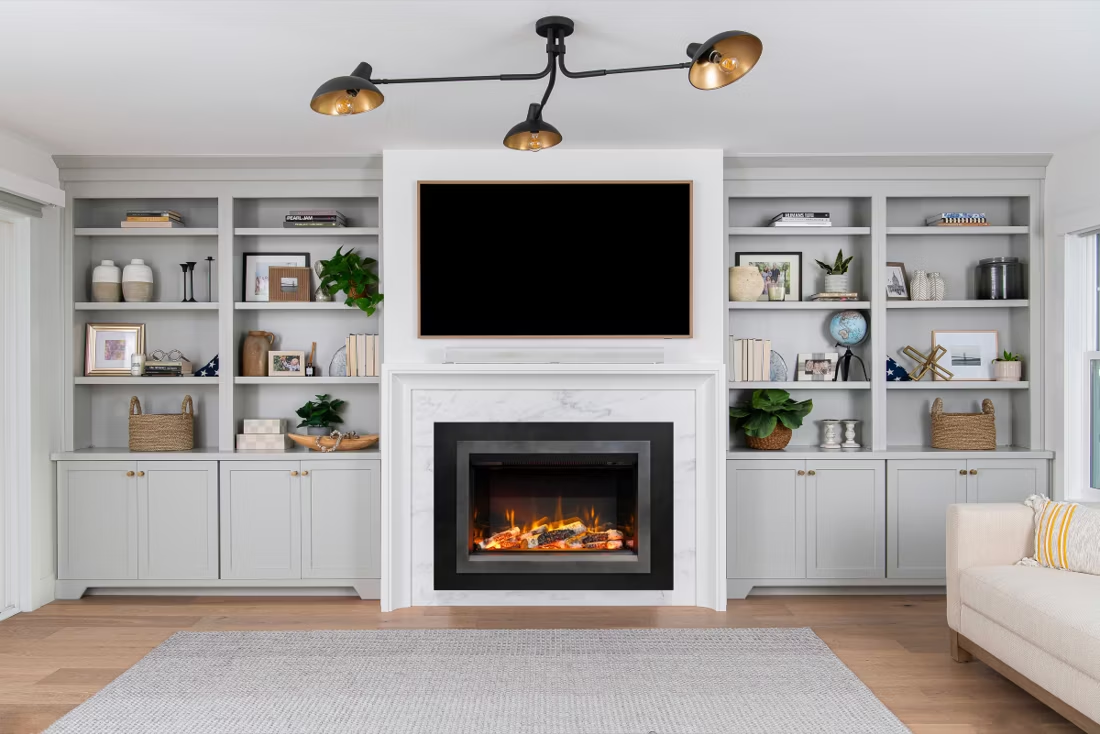
Yes—with an asterisk. Fireplaces are hot and TVs don't like heat. Either put a mantel between them to deflect rising warmth, or choose a fireplace with heat-management technology that creates a cool zone on the wall above—the wall stays around 125 degrees, barely warm, while the room still gets full heat. If you like clean lines and don't want a mantel, heat management is the answer.
Does an electric fireplace need a vent or chimney?
No—that's its superpower. An electric fireplace needs a wall and an outlet, period. No vent pipe, no gas line, no clearances to design around, which is why it works in bedrooms, offices, apartments, and walls where venting a gas or wood unit would be impractical or impossible. Installation is typically the simplest and least expensive of any fireplace type.
What is an in-home preview and do I need one?
It's a visit where a hearth professional measures your space, confirms the model you picked actually works in your home, and walks the specs—framing, gas line, venting, finish work—before anything is ordered. Some details you just can't know until you see the house. Never make a down payment without one; it's the single most-skipped step that burns buyers.
How much should I budget for a fireplace?
For an average home—covering the fireplace, the vent pipe, and basic installation—a budget between $3,900 and $5,500 gives you a lot of options across wood, gas, and pellet. By the time you add finish work, gas line, and electrical, the average complete installation lands between $5,000 and $12,000 all-in. In a remodel or new build, a good rule is to put about 2.5% of the total project cost toward the fireplace.
Find your electric fireplace in Hinsdale County.
Tell us about your cabin or home in Hinsdale County and we'll match you with a trusted local dealer, plus send a free Project Guide & Parts List with the exact components—including any electrical work needed—for your electric fireplace or stove project.
Find Your Fireplace →