
Real Flame, No Flue, No Fuss.
No venting, no gas line, no chimney—just clean zone heat that fits Highlands Ranch's builder-grade great rooms and HOA covenants. Find the right unit and connect with a trusted local dealer.
Every Project Starts From One of These Five Situations
Built for HOA covenants and Colorado's clean-air rules.
Highlands Ranch sits at 5,818 feet on the southern bench of the Denver metro area, in unincorporated Douglas County, with winter lows averaging 19°F and a long, cold heating season—cold enough that supplemental heat genuinely matters in bonus rooms, finished basements, and primary suites. But this is a master-planned community built largely from the late 1980s through the 2000s, governed by Highlands Ranch Community Association design covenants, and it sits in a Denver-metro airshed that deals with winter ozone concerns and periodic wildfire smoke. That combination is why wood and pellet stoves are essentially a non-factor here, even though ponderosa pine, aspen, and pinyon-juniper firewood is easy to come by from nearby Arapaho-Roosevelt National Forest permits ($5–$20 per cord, May–October season).
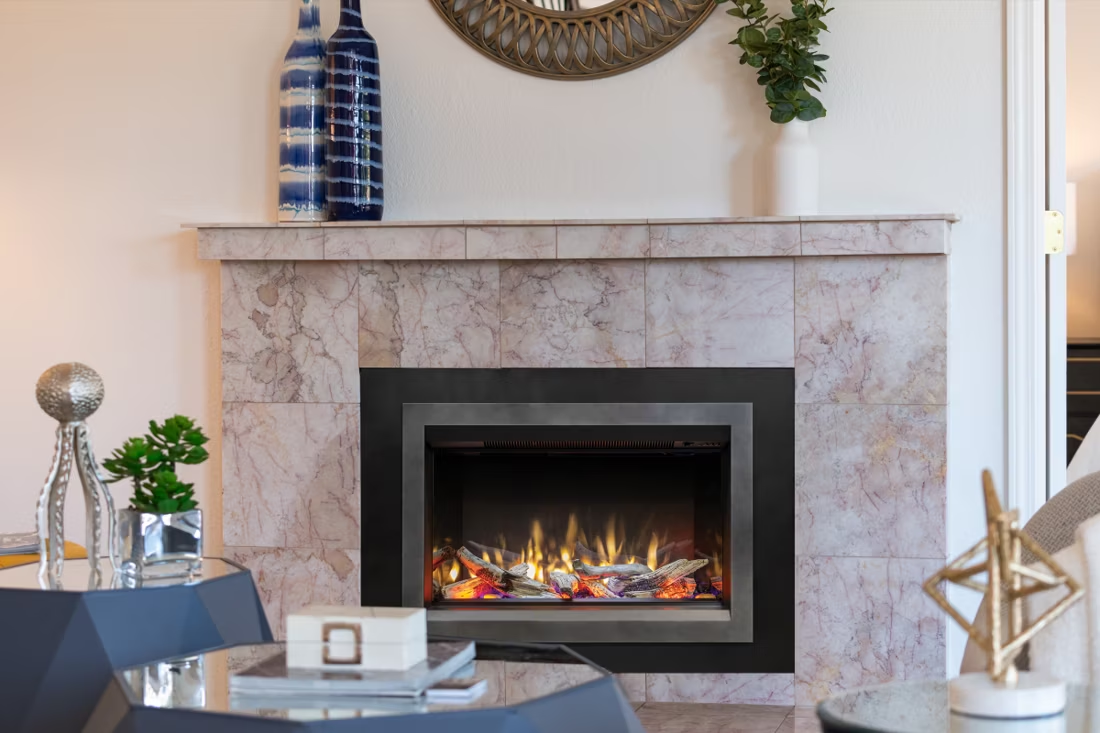
Electric fireplaces fill the gap cleanly. There's no exterior venting to run past an HRCA architectural review, no gas line to trench, and no chimney to maintain—a freestanding unit plugs into a standard 120-volt outlet, and a built-in linear model needs little more than a dedicated circuit from an electrician. With Public Service Company of Colorado (Xcel Energy) billing residential power at roughly $0.1505 per kWh, running one as zone heat in a bonus room or basement is inexpensive, and unlike a gas appliance at 5,818 feet, there's no altitude-adjusted orifice or combustion air calculation to get right. It's the simplest of the four fuel types to install correctly in this community.
Three steps. No salesperson until you're ready.
Tell us about your project
Your zip code, your situation, and the fuel you're leaning toward—or let the answers point you to one.
See what's actually available
The brands dealers within 100 miles genuinely carry—real options, never a catalog mirage.
Get your dealer & Project Guide
A trusted local dealer, plus the free Project Guide & Parts List that names every component of the job.
Frequently Asked Questions
How much does an electric fireplace installation cost in Highlands Ranch?
A plug-in freestanding electric fireplace or mantel package typically runs $300–$800 installed in Highlands Ranch, since there's no venting or gas work involved—most of that cost is the unit itself and placement. A built-in linear electric fireplace recessed into a framed media wall, which is popular in the community's two-story builder homes, usually runs $1,500–$4,500 once you factor in framing, a dedicated electrical circuit, and finish work around the opening. Either way, installs are typically a one-day job, which is a real contrast to the multi-day timeline for a vented gas or wood project.
Why don't more Highlands Ranch homes use wood or pellet stoves?
It's mostly a combination of covenants and air quality. Much of Highlands Ranch falls under Highlands Ranch Community Association design guidelines that restrict exterior venting and rooftop flues, and the Denver metro area deals with winter ozone non-attainment plus periodic wildfire smoke advisories that make solid-fuel burning a harder sell for local building departments and homeowners alike. A small number of detached homes on larger Douglas County lots outside the tightest HRCA sections still keep a wood stove for backup heat, and Arapaho-Roosevelt National Forest cutting permits ($5–$20 per cord, May through October) are available to anyone who wants to cut their own firewood—but it's a minority use case here. Electric and gas are the standard fireplace choices in this community.
Electric vs. gas fireplace—which is right for my Highlands Ranch home?
Gas delivers a more realistic flame and higher heat output, but it requires a gas line, proper venting, and—at 5,818 feet—an altitude-adjusted orifice that a qualified installer needs to size correctly. Electric needs none of that: no gas line, no venting, and no altitude derating, which makes it the easier retrofit for townhomes, condos, and any section of Highlands Ranch where running new gas or exterior venting is impractical. The tradeoff is that electric fireplaces won't run without power, while a gas unit with battery-backup ignition can. For a lot of the community's townhome and condo product, electric ends up being the default simply because it's the least invasive option to install.
Will an electric fireplace actually heat my room in Highlands Ranch's winters?
With winter lows averaging 19°F and a long, cold heating season, a typical electric fireplace running around 1,500 watts (roughly 4,600–5,000 BTU) can comfortably supplement heat in a single room of 400–1,000 square feet—a home office, a finished basement, or a primary suite. It won't replace your forced-air furnace for whole-home heating through a Front Range winter, and it isn't meant to. At Xcel Energy's $0.1505/kWh residential rate, running one on heat mode costs around $0.23 an hour, which makes it a reasonable way to take the load off central heat in the room you actually use most.
Do I need a permit for an electric fireplace in Highlands Ranch?
Highlands Ranch is unincorporated Douglas County, so any required permits go through the Douglas County Building Division. A plug-in freestanding electric fireplace typically needs no permit at all. A built-in unit that requires a new dedicated electrical circuit usually needs an electrical permit, and if the project touches an exterior wall or the home's facade, Highlands Ranch Community Association's Architectural Review Committee may require a submission before work starts. Most local dealers handle the county paperwork and can advise on whether your project needs HRCA sign-off.
What type of electric fireplace fits best in a Highlands Ranch home?
Highlands Ranch is dominated by two-story builder homes from the 1990s and 2000s with drywall great rooms, and a built-in linear electric fireplace recessed into a framed media wall is the most popular option for that layout—it gives a modern, flush look without altering the home's exterior. For finished basements, which are common throughout the community, a freestanding electric stove or mantel package is an easy add since it needs no structural changes. In the townhome and condo sections, a wall-mounted unit saves floor space and avoids any exterior modification altogether.
What does an electric fireplace cost to run with Xcel Energy rates?
At Public Service Company of Colorado's residential rate of about $0.1505 per kWh, most electric fireplaces draw 750–1,500 watts on their heat setting, which works out to roughly $0.11–$0.23 per hour of use. For a typical pattern of two to three hours of evening use through a Colorado winter, that's around $10–$20 a month. Running the unit in flame-only mode without heat draws well under 100 watts, so ambiance-only use costs next to nothing.
Will my electric fireplace work during a power outage?
No—this is one honest limitation worth knowing before you buy. Electric fireplaces need continuous grid power to run the heating element, blower, and flame effect, so they go dark the moment the power does. That's a real consideration in Highlands Ranch, where winter storms along the Front Range occasionally knock out power for hours at a time. If backup heat during outages matters to you, a gas fireplace with battery-backup ignition is the better fit—many Highlands Ranch homeowners end up with electric in one room for everyday convenience and gas in the main living area for both ambiance and outage resilience.
Does Highlands Ranch's elevation affect electric fireplace installation?
No. Highlands Ranch sits at 5,818 feet, an elevation that requires gas fireplace installers to account for altitude-adjusted orifices and combustion air supply so the unit burns correctly. Electric fireplaces have no combustion process at all, so there's no altitude derating and no adjustment needed—performance and heat output are identical to a sea-level install. It's one of the reasons electric ends up being the most straightforward of the fuel options to get right in this part of Douglas County.
Do electric fireplaces actually produce heat?
Yes—most put out around 4,800–5,000 BTUs from a standard outlet, which comfortably warms a bedroom, office, or den as a comfort-zone heater. What they won't do is carry a whole house the way wood, gas, or pellet can. Think of electric as ambiance-first with honest supplemental heat: flames on with no heat in July, flames plus warmth in January.
Can I put a TV above my fireplace?
Yes—with an asterisk. Fireplaces are hot and TVs don't like heat. Either put a mantel between them to deflect rising warmth, or choose a fireplace with heat-management technology that creates a cool zone on the wall above—the wall stays around 125 degrees, barely warm, while the room still gets full heat. If you like clean lines and don't want a mantel, heat management is the answer.
Does a fireplace add value to my home?
On average, a fireplace adds back to the home about the same amount you spent installing it. Add the monthly savings from heating the rooms you actually use instead of the whole house—often hundreds of dollars a year—and the value case is strong before you even count what a fire does for how your family uses the room.
What is an in-home preview and do I need one?
It's a visit where a hearth professional measures your space, confirms the model you picked actually works in your home, and walks the specs—framing, gas line, venting, finish work—before anything is ordered. Some details you just can't know until you see the house. Never make a down payment without one; it's the single most-skipped step that burns buyers.
Nearby Dealers
Hearth shops serving Highlands Ranch and the surrounding area. Every listing shows whether it is a WhyFire partner, a dealer we have verified as authorized for the brands we recommend, or a local business carrying hearth products. No manufacturer pays for placement. How we verify dealers →
Midtown Chimney Fireplace Store
Spa Brokers
Spa Brokers Iii
Proud Souls Barbecue & Provisions
Thoshini LLC
Outdoor Kitchen Dist. Inc
Western Fireplace Supply
Spa Brokers
Spa Brokers V
Aria Custom Design
Distinctive Mantel Designs
Spa Brokers
Fireplace And Grill Experts - Service Only
Rio Grande Co.
Spa Brokers (Corporate)
Electric Service in Highlands Ranch
An electric fireplace's heater draws about 1,500 watts—pennies per hour at local rates.
Public Service Co Of Colorado
Find your electric fireplace in Highlands Ranch.
Tell us a bit about your home and we'll put together a free Project Guide & Parts List for your electric fireplace project—including the exact parts and your recommended local dealer in Highlands Ranch.
Find Your Fireplace →