
Real flame look, zero smoke, anywhere the power reaches in Garfield County.
From Glenwood Springs to Rifle to Carbondale, electric fireplaces add heat and glow without a chimney, a wood pile, or a burn-ban headache. Find the right unit and connect with a trusted local dealer.
Every Project Starts From One of These Five Situations
Heat and glow without a flue, a permit fight, or a smoke advisory.
Garfield County runs from the floor of Glenwood Canyon up through the Grand Valley, with towns sitting anywhere from 5,300 feet at Rifle to over 6,100 feet in Carbondale. Winters here are genuinely cold—an average low around 13°F and a heating load that puts the county in the same territory as Duluth, MN. Most of the surrounding backcountry falls under White River National Forest and the Grand Mesa-Uncompahgre-Gunnison National Forest, where cutting permits run May through October at $5 to $20 a cord. That's a fine option for a wood stove, but Garfield County also sees real wildfire smoke concerns most summers, and stage-one or stage-two fire restrictions occasionally spill into shoulder-season burn limits—periods when an electric unit simply keeps running with no emissions and no restrictions to check.
Electricity is delivered across the county by Xcel Energy in the Rifle-Silt-New Castle-Parachute corridor and Holy Cross Energy around Glenwood Springs and Carbondale, so grid power reaches nearly every finished living space in the county—even where running a gas line or building a new masonry chimney isn't practical. That makes electric fireplaces a strong fit for finished basements, rental units, condos in Glenwood Springs, and vacation homes along the Roaring Fork corridor where owners want ambiance and quick supplemental warmth without maintaining a wood supply or scheduling an annual chimney sweep. Most models are zero-clearance to combustibles, plug into a standard outlet or a dedicated 120/240V circuit, and can be up and running the same day they're delivered.
Three steps. No salesperson until you're ready.
Tell us about your project
Your zip code, your situation, and the fuel you're leaning toward—or let the answers point you to one.
See what's actually available
The brands dealers within 100 miles genuinely carry—real options, never a catalog mirage.
Get your dealer & Project Guide
A trusted local dealer, plus the free Project Guide & Parts List that names every component of the job.
Frequently Asked Questions
How much does an electric fireplace installation cost in Garfield County?
Most electric fireplace projects in Garfield County run $300 to $2,500. A plug-in insert that slides into an existing masonry firebox or a small freestanding stove sits at the low end—no electrician needed. A built-in wall unit or a linear electric fireplace that requires a dedicated 240V circuit and some framing work runs toward the middle and upper end, especially if a local electrician has to run new wire to a Carbondale or Glenwood Springs home with an older panel. There's no venting, chimney, or gas line to budget for, which is the main reason electric projects cost a fraction of a wood or gas install in this climate.
Do I need a permit to install an electric fireplace in Garfield County?
Usually not for a plug-in unit—those are treated like any other appliance. If your install requires a new dedicated electrical circuit or built-in framing, an electrical permit is typically required. Inside Glenwood Springs, Rifle, or Carbondale, that permit goes through the city's own building department; in unincorporated parts of the county, it runs through the Garfield County Building Department. Most local dealers coordinate the electrician and any inspection as part of the install, so homeowners rarely have to manage the paperwork themselves.
Does an electric fireplace actually put out real heat, or is it just for looks?
Most electric fireplaces produce 4,000 to 9,000 BTUs from a built-in fan heater, which is enough to noticeably warm a single room but not enough to serve as primary heat in a county with a long, demanding winter heating season and winter lows around 13°F. Think of it as zone heat: it takes the edge off a home office in New Castle or a finished basement in Silt without running the furnace harder, and the flame effect runs independent of the heater, so you can have the visual with or without the warmth. For whole-home heating in this climate, electric is best paired with a central system, not relied on alone.
What's the difference between an electric insert, a wall-mounted unit, and an electric stove?
An electric insert is built to slot into an existing wood-burning masonry fireplace, instantly converting a drafty open hearth in an older Glenwood Springs or Rifle home into a clean, thermostat-controlled heat source. A wall-mounted or built-in linear unit is designed for new construction or remodels—recessed into a wall or media center with no fireplace required. A freestanding electric stove mimics a traditional wood stove's footprint and works well in a cabin or workshop where there's no existing firebox to convert. Most homeowners converting an old fireplace go with an insert; most new-build or remodel projects go with a linear wall unit.
Will my electric fireplace work during a power outage?
No—electric fireplaces require grid power to run the heater, fan, and flame effect, so they go dark the moment the power does. Xcel Energy and Holy Cross Energy both maintain solid service across the county, but outages do happen during heavy snow events, especially around Glenwood Canyon closures and higher-elevation lines near Carbondale. If backup heat during outages matters to your household, many local dealers recommend pairing an electric unit for daily ambiance with a wood stove or gas appliance elsewhere in the house for true emergency heat.
Can I convert my existing wood fireplace to electric?
Yes, and it's a common project for older homes in Glenwood Springs and Rifle with an existing masonry firebox that's rarely used. An electric log insert or full electric insert drops into the opening, plugs into a nearby outlet or a newly run circuit, and eliminates the need for firewood, chimney sweeps, or ongoing air-quality concerns from wood smoke. The chimney itself can stay capped and unused, or in some cases gets removed entirely during a remodel—a local dealer can walk through both options.
What's the best electric fireplace for a cold Garfield County home?
For rooms where supplemental heat matters, look for units with a higher-output fan heater (around 5,000 watts / 4,700-plus BTU) and a thermostat rather than a single on/off heat setting—that lets you actually hold a temperature in a drafty older home near Rifle or New Castle rather than cycling on full blast. Brands like Dimplex, Napoleon, and Amantii are common in mountain-region installs because their heaters are built for real winter use, not just ambiance. If the goal is mostly visual with occasional light heat—say, a condo in downtown Glenwood Springs—a lower-wattage linear unit is plenty and costs less to run.
How does an electric fireplace compare to a wood stove for a Garfield County home?
Wood stoves burning local species like ponderosa pine, aspen, or pinyon-juniper deliver far more total heat and keep working through a power outage—a real consideration on the county's higher, more remote stretches. But wood means sourcing fuel (Forest Service permits through White River National Forest run $5 to $20 a cord, May through October only), annual chimney sweeps, and burning that can be restricted during wildfire-season smoke advisories. Electric skips all of that: no permit season to track, no smoke to manage, and heat that's available the moment you flip a switch, limited only by the size of the room you're heating. Many households in the county end up with both—wood or gas as the serious heat source, electric for a bedroom, basement, or secondary living space.
Are there rebates for electric fireplaces in Colorado?
Some electric heating upgrades qualify for state or utility efficiency incentives, though standalone decorative electric fireplaces typically don't carry the same rebate weight as full heat-pump systems. It's worth asking Xcel Energy or Holy Cross Energy directly about any current efficiency programs before you install, since offerings change year to year. A local dealer familiar with both utility territories can usually tell you on the spot whether a specific model or circuit upgrade qualifies for anything currently on the table.
Can I put a TV above my fireplace?
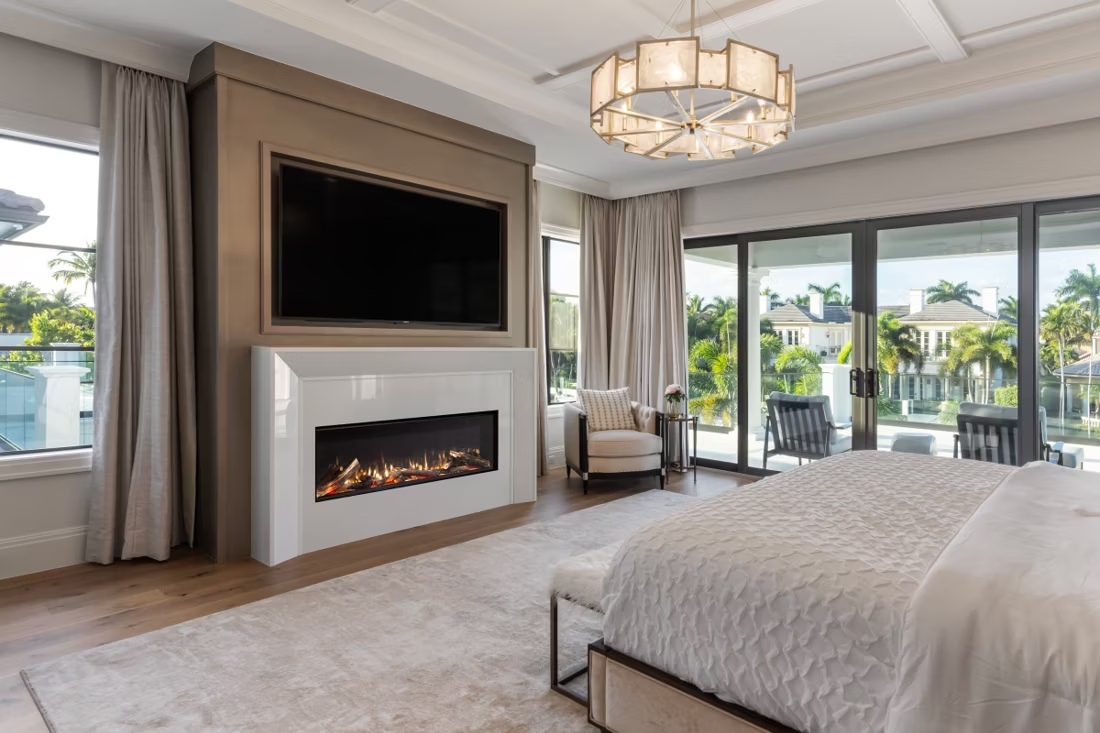
Yes—with an asterisk. Fireplaces are hot and TVs don't like heat. Either put a mantel between them to deflect rising warmth, or choose a fireplace with heat-management technology that creates a cool zone on the wall above—the wall stays around 125 degrees, barely warm, while the room still gets full heat. If you like clean lines and don't want a mantel, heat management is the answer.
Do electric fireplaces actually produce heat?
Yes—most put out around 4,800–5,000 BTUs from a standard outlet, which comfortably warms a bedroom, office, or den as a comfort-zone heater. What they won't do is carry a whole house the way wood, gas, or pellet can. Think of electric as ambiance-first with honest supplemental heat: flames on with no heat in July, flames plus warmth in January.
Can I install a fireplace myself?
If you're putting a fire in your house on purpose, it's best to work with an expert. Unless you're genuinely experienced in framing, gas line, vent pipe, and the national code on clearances to combustibles, have a professional do it—and ideally the same company that sells you the fireplace, so warranty, service, and liability all live under one roof.
What is an in-home preview and do I need one?
It's a visit where a hearth professional measures your space, confirms the model you picked actually works in your home, and walks the specs—framing, gas line, venting, finish work—before anything is ordered. Some details you just can't know until you see the house. Never make a down payment without one; it's the single most-skipped step that burns buyers.
Stove and Fireplace Dealers in Garfield County
Find your electric fireplace in Garfield County.
Tell us about your home and we'll match you with a trusted local dealer serving Garfield County, plus a free Project Guide & Parts List laying out the right electric fireplace or insert, the exact parts needed, and the install approach for your space.
Find Your Fireplace →