
Instant heat, no chimney, for homes across Fremont County.
From Cañon City to Florence, Penrose, Coal Creek, and up toward Wetmore, electric fireplaces give Fremont County homeowners real zone heat without a flue, a cord of wood, or a gas line. Tell us about your space and we'll match you with a trusted local dealer.
Every Project Starts From One of These Five Situations
Warmth without a wood pile or a flue to maintain.
Fremont County runs from the Arkansas River valley floor at Cañon City, roughly 5,330 feet, up into the foothills of the Wet Mountains near Wetmore and Coal Creek, where elevations push past 7,000 feet. With 5,440 heating degree days and average winter lows around 18°F, this is a climate that genuinely needs a heat source beyond central HVAC in a lot of older homes—but it's not so brutal that every household is running a wood stove around the clock. That's exactly the gap electric fireplaces fill: a clean, on-demand supplemental heat source for a den, a basement, an addition, or a mobile home living room that doesn't call for a chimney, a gas line, or a cutting permit.
Wildfire smoke is the county's main air quality concern, and during dry summers the Pike-San Isabel National Forest periodically tightens fire restrictions that affect both outdoor burning and the appetite some homeowners have for adding another combustion source indoors. Electric fireplaces sidestep that entirely—no smoke, no particulates, no seasonal burn advisories to track. Most homes in and around Cañon City and Florence get electric service through Black Hills Energy, while Sangre de Cristo Electric Association, a rural cooperative, serves much of the outlying county toward Wetmore and Coal Creek. Either way, a plug-in unit is usually a same-day project; a hardwired built-in typically means running a dedicated 20-amp circuit, which is where a licensed electrician and a quick permit through the Fremont County Building Department come in.
Three steps. No salesperson until you're ready.
Tell us about your project
Your zip code, your situation, and the fuel you're leaning toward—or let the answers point you to one.
See what's actually available
The brands dealers within 100 miles genuinely carry—real options, never a catalog mirage.
Get your dealer & Project Guide
A trusted local dealer, plus the free Project Guide & Parts List that names every component of the job.
Frequently Asked Questions
How much does an electric fireplace installation cost in Fremont County?
Plug-in electric fireplace inserts and stoves—the kind that drop into an existing opening or sit against a wall—typically run $400 to $1,500 installed, since they just need a standard outlet. Built-in wall units or larger mantel-surround electric fireplaces that require a dedicated 20-amp circuit run higher, often $1,200 to $2,500, once you factor in the electrician's time to run new wiring, especially in older Cañon City and Florence homes where panel capacity can be tight. Local dealers will quote the difference once they know whether you're working with an existing electrical setup or starting from scratch.
Can an electric fireplace actually heat a room in Fremont County's winters, or is it just for looks?
A quality electric insert or stove with a 4,000–5,000 watt heater (roughly 5,000 BTU) can genuinely take the edge off a 300–400 square foot room even on an 18°F night, which covers most bedrooms, dens, and basement rec rooms. Where it struggles is heating a whole open-concept living area or a drafty older farmhouse near Wetmore or Coal Creek as a sole heat source—for those, electric works best paired with your existing furnace rather than replacing it. Brands like Dimplex and Napoleon build electric units with real heater cores rather than decorative-only flame effects; ask your local dealer to spec wattage against your actual room size, not just the opening dimensions.
Do I need a permit for an electric fireplace in Fremont County?
A basic plug-in electric fireplace or insert generally doesn't require a permit since it's no different from plugging in a space heater. If you're installing a built-in unit that needs a new dedicated circuit, that electrical work typically requires a permit through the Fremont County Building Department, and it should be pulled by a licensed electrician regardless of whether you technically need the paperwork—improperly wired circuits are a real fire risk, particularly in older housing stock common around Cañon City and Florence.
Electric vs. wood—which makes more sense for my Fremont County home?
Wood remains standard heat here—ponderosa pine, aspen, pinyon, and juniper are all locally available, and cutting permits through the Pike-San Isabel National Forest run $5 to $20 per cord during the May-through-October season. Wood also keeps working when the power's out, which matters for rural stretches served by the Sangre de Cristo Electric Association co-op where outages can run longer during winter storms. Electric wins on convenience and air quality—no ash, no chimney maintenance, and no contribution to smoke during dry-season fire restrictions. A lot of Fremont County households land on both: wood or a gas insert for the main living space, and electric for a bedroom, a rental unit, or a basement where running a flue isn't practical.
Will my electric fireplace still work if the power goes out?
No—and this is worth being direct about. Electric fireplaces are entirely dependent on grid power, so during an outage they go dark along with everything else. For homes on Sangre de Cristo Electric Association's rural lines, where winter storm outages can stretch longer than in town, an electric fireplace should be treated as a comfort and convenience upgrade, not backup heat. If losing heat during outages is a real concern for your household, pair an electric unit in your main living space with a wood stove or a battery-backed gas fireplace elsewhere in the home.
Electric vs. gas fireplace—which is the better fit?
Gas fireplaces put out considerably more heat—often 20,000+ BTU for a direct-vent unit—and can be configured to run on battery backup during outages, which matters given the county's occasional winter storm outages. Electric fireplaces put out less heat but install almost anywhere with no venting, no gas line, and no combustion byproducts, which makes them the simpler choice for a basement remodel, a manufactured home, or a rental property in Penrose or Coal Creek where adding gas service isn't worth the cost. If you need serious supplemental heat for a larger room, ask your local dealer about gas options; if you want simple, clean zone heat with an easy install, electric is usually the more practical call.
What size electric fireplace do I need for my Fremont County home?
For a bedroom or home office up to roughly 300 square feet, a compact insert or wall-mount unit with a 4,000–5,000 watt heater is usually enough, even with average winter lows near 18°F. For larger open rooms or higher-ceilinged spaces common in newer Cañon City construction, look at units rated for 400+ square feet or plan on it as supplemental heat alongside your furnace rather than the primary source. Elevation and drafts matter more than square footage alone—an older, leakier home near Wetmore will need more heater capacity than a newer, well-sealed home in town at the same size. A local dealer can walk your space and make a specific recommendation.
Which utility serves my home, and does that affect electric fireplace running costs?
Most of Cañon City and Florence get electric service through Black Hills Energy, while Sangre de Cristo Electric Association, a member-owned rural cooperative, covers much of the outlying county toward Wetmore and Coal Creek. Running an electric fireplace a few hours a day for supplemental heat typically adds a modest amount to a monthly bill—a 1,500-watt heater run 4 hours a day works out to roughly $15 to $25 a month depending on the current rate. It's worth checking your specific rate with your provider if you're planning to lean on electric heat heavily through the winter.
Is an electric fireplace a good option for a manufactured or mobile home in Fremont County?
Yes—electric is often the easiest hearth upgrade for the manufactured and mobile homes common in Penrose and Coal Creek. Wood stoves and gas fireplaces in manufactured housing come with additional HUD code requirements around clearances and venting that can complicate or block an installation. A plug-in or low-amp electric insert avoids most of that entirely, since there's no combustion and no venting to route through a manufactured home's roof or wall assembly. Confirm amperage needs against your home's electrical panel with a local dealer before buying, especially in older units.
Can I put a TV above my fireplace?
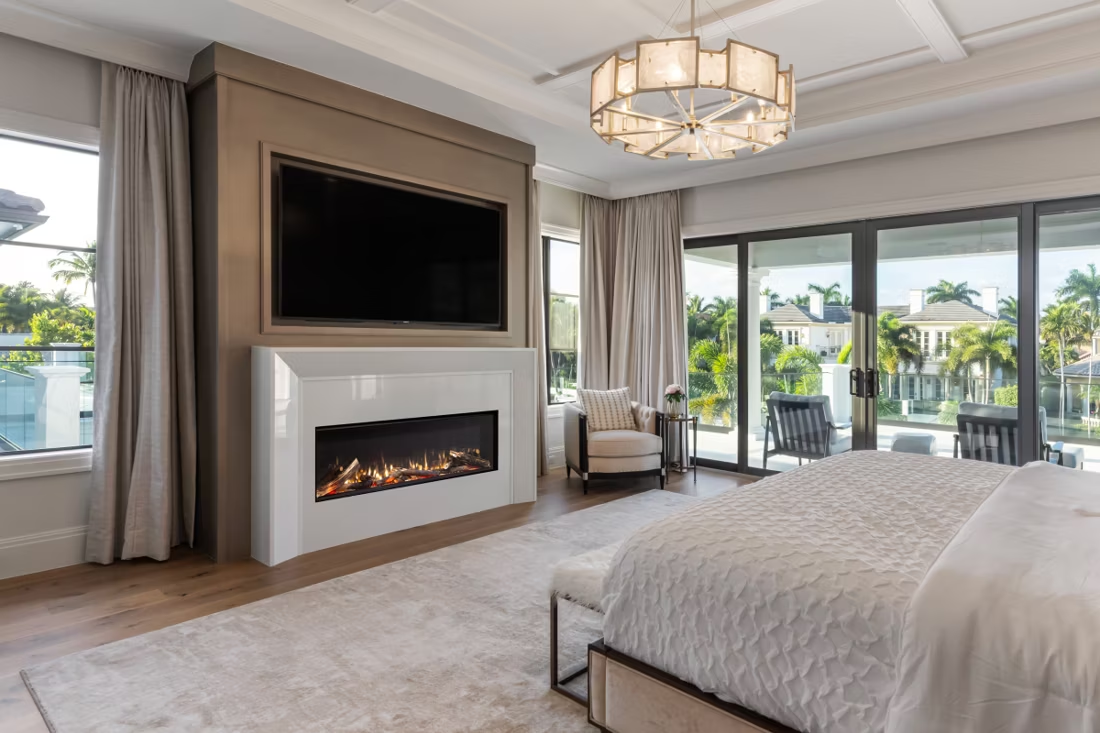
Yes—with an asterisk. Fireplaces are hot and TVs don't like heat. Either put a mantel between them to deflect rising warmth, or choose a fireplace with heat-management technology that creates a cool zone on the wall above—the wall stays around 125 degrees, barely warm, while the room still gets full heat. If you like clean lines and don't want a mantel, heat management is the answer.
Does an electric fireplace need a vent or chimney?
No—that's its superpower. An electric fireplace needs a wall and an outlet, period. No vent pipe, no gas line, no clearances to design around, which is why it works in bedrooms, offices, apartments, and walls where venting a gas or wood unit would be impractical or impossible. Installation is typically the simplest and least expensive of any fireplace type.
Does a fireplace add value to my home?
On average, a fireplace adds back to the home about the same amount you spent installing it. Add the monthly savings from heating the rooms you actually use instead of the whole house—often hundreds of dollars a year—and the value case is strong before you even count what a fire does for how your family uses the room.
Can a fireplace actually lower my heating bill?
Yes—by creating a comfort zone. A furnace heats every square foot of the house just to warm the one room you're in; a gas fireplace on low burns roughly a sixth of the gas a typical furnace does. Set the furnace around 55–60 degrees as a baseline, then heat the rooms your family actually uses. Families who heat this way commonly save $20–$60 a month.
Stove and Fireplace Dealers in Fremont County
Find your electric fireplace in Fremont County.
Tell us about your home and we'll match you with a trusted local Fremont County dealer and send over a free Project Guide & Parts List—the exact unit, wiring needs, and recommended dealer for your space.5:0
Find Your Fireplace →