
No chimney needed in a National Historic Landmark District.
At 9,518 feet with winter lows averaging 9°F and a brutal, long heating season, Cripple Creek asks a lot of any heat source. We'll help you find a trusted local dealer who knows what plugs in, what needs a circuit, and what the historic district will actually allow.
Every Project Starts From One of These Five Situations
The easiest fireplace to add to a 19th-century building.
Cripple Creek is one of the highest incorporated towns in Colorado, and the climate numbers show it—a brutal, long heating season puts it in the same range as Fargo or International Falls, with winter lows averaging 9°F and routine drops well below that. Much of downtown sits inside the Cripple Creek–Victor Gold Mining District, a National Historic Landmark, where exterior alterations to Victorian-era brick and frame buildings—including new chimney penetrations or flue runs—are tightly restricted. That single fact pushes a lot of local demand toward electric fireplaces, which need nothing more than an outlet or a dedicated circuit.
Wood still does real heavy lifting here—ponderosa pine, aspen, pinyon, and juniper are all cut locally, and the Pike-San Isabel National Forests issue cutting permits for $5 to $20 per cord from May through October. But for a condo above a casino on Bennett Avenue, a bedroom addition, or any space where running new venting isn't practical or permitted, an electric insert or built-in solves the problem instantly. Core Electric Cooperative serves the area at roughly $0.1504 per kWh, so electric heat costs more per BTU than cordwood, but it produces zero particulate emissions—a real advantage during the wildfire-smoke stretches that periodically bring burning restrictions to Teller County.
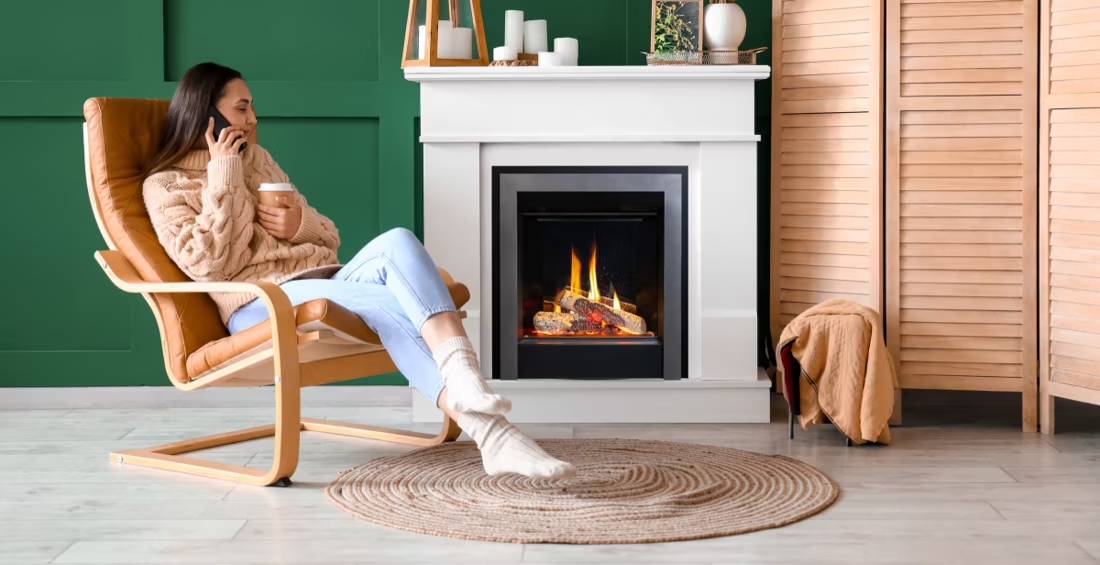
Three steps. No salesperson until you're ready.
Tell us about your project
Your zip code, your situation, and the fuel you're leaning toward—or let the answers point you to one.
See what's actually available
The brands dealers within 100 miles genuinely carry—real options, never a catalog mirage.
Get your dealer & Project Guide
A trusted local dealer, plus the free Project Guide & Parts List that names every component of the job.
Frequently Asked Questions
How much does an electric fireplace installation cost in Cripple Creek?
A plug-in electric insert or freestanding unit that runs on a standard 120V outlet typically lands between $300 and $900 installed, with no electrical or building work required beyond mounting. A hardwired built-in—common when someone wants a flush, no-cord look in a remodel—usually runs $1,500 to $3,000 once an electrician runs a dedicated 120V or 240V circuit. If your building is inside the Cripple Creek–Victor Gold Mining District, the no-venting nature of electric is the real cost saver: you skip the historic review that a new chimney penetration would trigger.
Will an electric fireplace still work during a winter power outage?
No, and that matters in a town served by Core Electric Cooperative where mountain storms at 9,518 feet can knock out power for hours or longer. An electric fireplace is entirely dependent on grid power, so it offers zero backup heat during an outage—unlike a wood stove burning local pinyon or juniper, which keeps working with no electricity at all. Most households here that rely on electric for a secondary room or a historic unit still keep a wood or propane source elsewhere in the house for exactly this reason.
Can I install an electric fireplace in a historic downtown building?
This is usually the easiest fuel option for historic properties in Cripple Creek. Because the Cripple Creek–Victor Gold Mining District is a National Historic Landmark, exterior changes—new flues, wall penetrations, roof jacks—go through a review process that can slow down or block a wood or gas installation. An electric insert or built-in needs no venting and no exterior modification, so it sidesteps that review almost entirely. You'll still want to confirm panel capacity with a licensed electrician if you're adding a hardwired 240V unit, but there's no historic-preservation hurdle to clear.
What size electric fireplace do I need for a Cripple Creek home?
Given a brutal, long heating season and winter lows around 9°F, an electric fireplace here is realistically a supplemental or ambiance heat source for a single room, not a whole-house solution—the wattage ceiling on standard electric units (typically 4,600-5,200 BTU, roughly 1,500 watts) just can't keep pace with this elevation's heating load on its own. For a bedroom, den, or sunroom addition, that's plenty. For a primary living space, most local dealers will pair electric with a wood stove or gas unit sized to actually carry the house through a Teller County winter.
What does it cost to run an electric fireplace in Cripple Creek?
At Core Electric Cooperative's residential rate of about $0.1504 per kWh, a typical 1,500-watt electric fireplace costs roughly 23 cents an hour to run on its heat setting, or around $2.70 for a 12-hour stretch. Left on flame-only mode with the heater off, the draw is closer to 50-100 watts and costs pennies an hour—which is how a lot of owners here actually use them, for ambiance in a casino-district condo or a sunroom, saving the heater function for genuinely cold nights.
Electric vs. wood—which makes more sense for a Cripple Creek property?
Wood wins on raw heat output and outage resilience—ponderosa pine and aspen cut under a $5-$20 Pike-San Isabel National Forest permit will carry a house through a sustained cold snap with no dependence on the grid. Electric wins on simplicity: no chimney, no historic-district review, no cutting or stacking, and zero emissions during the wildfire-smoke seasons when burning bans sometimes apply across Teller County. Most owners of historic downtown buildings or secondary rooms choose electric for convenience, while anyone heating a full home through a Cripple Creek winter still leans on wood or gas as the primary source.
What's the best use case for an electric fireplace in a town like this?
The strongest fit is a space where venting isn't practical or allowed—a condo or loft above one of the casinos on Bennett Avenue, a bedroom in a protected Victorian storefront building, or a short-term rental where guests want ambiance without managing a wood stove. It's a weaker fit as the sole heat source for a full-time residence at this elevation, where a brutal, long heating season demands more sustained output than a 1,500-watt unit can realistically deliver night after night.
How much maintenance does an electric fireplace need?
Very little, which is part of the appeal here. There's no chimney to sweep, no creosote to monitor, and no annual inspection required the way a wood stove burning local pinyon or juniper needs. Maintenance is mostly dusting the unit, occasionally cleaning the glass, and replacing an LED ember bed or heater element after years of use—a fraction of the upkeep a wood or gas system demands through a Teller County heating season that often runs six months or longer.
Are there rebates for installing an electric fireplace in Cripple Creek?
Core Electric Cooperative periodically runs efficiency rebate programs for electric heating equipment, and it's worth checking their current offerings before you buy since programs and funding change from year to year. There isn't a Cripple Creek-specific wood-stove-style buyback program for electric units the way some Colorado mountain towns offer for solid-fuel upgrades, so the main financial case for electric here is avoiding the cost of venting work in a historic building rather than chasing a rebate.
Can I put a TV above my fireplace?
Yes—with an asterisk. Fireplaces are hot and TVs don't like heat. Either put a mantel between them to deflect rising warmth, or choose a fireplace with heat-management technology that creates a cool zone on the wall above—the wall stays around 125 degrees, barely warm, while the room still gets full heat. If you like clean lines and don't want a mantel, heat management is the answer.
Does an electric fireplace need a vent or chimney?
No—that's its superpower. An electric fireplace needs a wall and an outlet, period. No vent pipe, no gas line, no clearances to design around, which is why it works in bedrooms, offices, apartments, and walls where venting a gas or wood unit would be impractical or impossible. Installation is typically the simplest and least expensive of any fireplace type.
What is an in-home preview and do I need one?
It's a visit where a hearth professional measures your space, confirms the model you picked actually works in your home, and walks the specs—framing, gas line, venting, finish work—before anything is ordered. Some details you just can't know until you see the house. Never make a down payment without one; it's the single most-skipped step that burns buyers.
Should the dealer who sells my fireplace also install it?
Ideally, yes. A fireplace project involves vent pipe, gas line, electrical, and often tile or stone. Hire three or four separate trades and you own the liability and the game of telephone between them. One company selling and installing means one accountable party, start to finish—ask about factory training, on-time completion records, and what happens if an inspection fails.
Nearby Dealers
Hearth shops serving Cripple Creek and the surrounding area. Every listing shows whether it is a WhyFire partner, a dealer we have verified as authorized for the brands we recommend, or a local business carrying hearth products. No manufacturer pays for placement. How we verify dealers →
We’ve paused dealer listings for this connection today. Enter your zip or postal code above to find dealers near you, or come back tomorrow.
Popular Electric Brands
Where each brand came from, what's inside it today, and every current model. No brand pays to be here. Not every dealer carries every brand, so enter your zip code to see what's sold near Cripple Creek.
Fireplace Xtrordinair
Fireplace Xtrordinair, now often called FireplaceX, is the fireplace brand of Travis Industries, Inc., of Mukilteo, Washington.
5 electric models →DaVinci
DaVinci Custom Fireplaces is a brand of Travis Industries, Inc., of Mukilteo, Washington, the company behind Lopi and Fireplace Xtrordinair.
5 electric models →Kozy Heat
Kozy Heat was founded in 1976 by Dudley Hussong in Lakefield, Minnesota, and incorporated as Hussong Manufacturing Co., Inc. in 1978.
3 electric models →Forge & Flame
Forge & Flame is the stove brand Hearth & Home Technologies introduced in August 2023 to bring Vermont Castings, Harman, and Quadra-Fire under one name.
1 electric model →Electric Service in Cripple Creek
An electric fireplace's heater draws about 1,500 watts—pennies per hour at local rates.
Core Electric Cooperative
Get your free Project Guide & Parts List for a Cripple Creek electric fireplace.
Tell us about your building—historic storefront, condo, or standalone home—and we'll help you find a trusted local dealer and send a free Project Guide & Parts List with the right unit, circuit requirements, and install plan for your space.
Find Your Fireplace →