
Real Ambiance Without Open Flame.
For homes tucked into the ponderosa pine and juniper forest of Castle Pines Village, electric fireplaces deliver real ambiance and zone heat without a chimney, a gas line, or an open flame. Find the right unit and connect with a trusted local dealer.
Every Project Starts From One of These Five Situations
Heat and ambiance without the wildfire risk.
Castle Pines Village sits at 6,325 feet in the foothills southwest of Denver, surrounded by ponderosa pine, juniper, and pinyon that place the entire gated community squarely in the wildland-urban interface. Winters here average a low around 18°F, with a heating season that's long and cold—closer to Helena, Montana than most Front Range suburbs. Wildfire smoke is a recurring seasonal concern, and the Village's architectural covenants generally restrict or heavily regulate open-flame appliances given the surrounding forest.
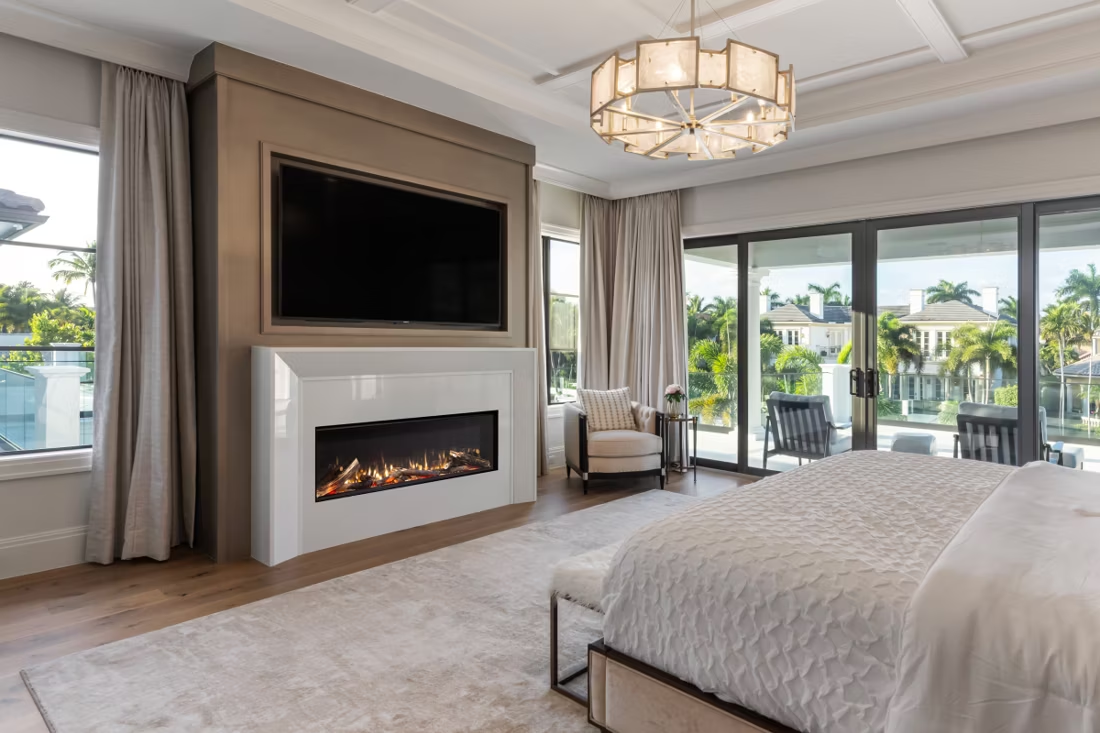
That combination—dry, forested terrain and a covenant-controlled community—is exactly why electric fireplaces and inserts have found a real niche here. There's no chimney, no venting, no gas line, and no ember or spark risk, which makes electric an easy fit for a bonus room, primary suite, basement, or a tired old masonry fireplace opening that a homeowner wants to bring back to life without touching the flue. Running off Core Electric Cooperative power at roughly 15 cents per kWh, an electric unit adds real ambiance and supplemental warmth at a cost most residents never notice on the monthly bill.
Three steps. No salesperson until you're ready.
Tell us about your project
Your zip code, your situation, and the fuel you're leaning toward—or let the answers point you to one.
See what's actually available
The brands dealers within 100 miles genuinely carry—real options, never a catalog mirage.
Get your dealer & Project Guide
A trusted local dealer, plus the free Project Guide & Parts List that names every component of the job.
Frequently Asked Questions
How much does an electric fireplace or insert installation cost in Castle Pines Village?
Plug-in electric inserts and wall-mount units run $500 to $1,500 installed in most Castle Pines Village homes, since there's no venting, gas line, or chimney work involved—just a dedicated outlet and, for built-in models, some trim carpentry to fit the existing opening. Hardwired 240-volt built-ins, which draw more current and often get set into custom cabinetry or a great-room feature wall, run higher—typically $1,500 to $3,500 once an electrician runs a dedicated circuit. Local hearth dealers can walk you through both options during a home visit.
Can I install a wood-burning stove in Castle Pines Village instead?
It's uncommon, and for good reason. The Village sits in the wildland-urban interface, surrounded by ponderosa pine, juniper, and pinyon forest, and the gated community's architectural covenants generally restrict or closely regulate open-flame appliances given the wildfire exposure. Firewood cutting permits are technically available nearby through the Arapaho-Roosevelt National Forests, running $5 to $20 per cord during the May-through-October season, but that's for backcountry or cabin use, not typical inside the Village itself. Most residents who want a real wood fire do it at a mountain property elsewhere and rely on gas or electric at home.
What's the difference between an electric insert, a wall-mount unit, and a freestanding electric stove?
An electric insert is built to slide into an existing masonry or zero-clearance fireplace opening, giving you a finished, built-in look without touching the chimney. A wall-mount, or linear, unit hangs on the wall like a large screen and works well in great rooms, primary suites, or basements where you want a modern focal point without any masonry at all. A freestanding electric stove looks like a traditional wood stove but plugs in, which suits a den or bonus room where you want stove styling without a hearth pad or vent. Most Castle Pines Village projects lean toward inserts replacing an underused masonry fireplace, or linear wall-mounts in newer remodels.
Will an electric fireplace actually keep a room warm at Castle Pines Village's elevation?
It supplements a room's heat rather than replacing your furnace. Most electric fireplaces put out 4,600 to 9,000 BTU from a built-in fan heater—enough to comfortably warm a single room on an evening near the winter average low of 18°F, but not enough to heat a whole home at 6,325 feet, where winters are as long and cold as Helena, Montana. Treat it as zone heat for a great room or primary suite, with your central system, or a gas fireplace elsewhere in the house, handling the coldest nights.
Do I need a permit to install an electric fireplace in Castle Pines Village?
Plug-in units generally don't require a permit since they run off a standard outlet like any other appliance. Hardwired 240-volt built-ins typically do require an electrical permit through the Douglas County Building Division, since a licensed electrician needs to run a dedicated circuit to the unit. Because Castle Pines Village is covenant-controlled, it's also worth checking with the HOA's Architectural Review Committee before any visible or structural change, even for a straightforward insert swap.
What are the best electric fireplace brands for a Castle Pines Village home?
Dimplex, Napoleon, and Amantii all make electric inserts and linear units with realistic flame technology—layered LED flame effects and ember beds that read as genuine fire rather than a glowing box, which matters in the finished great rooms common in this community. Amantii and Napoleon both offer multi-sided and see-through units suited to open-concept remodels. A local dealer can show you the flame effect in person and match the unit to your existing fireplace opening or wall dimensions.
Electric vs. gas—which is right for my Castle Pines Village home?
Gas fireplaces, typically propane out here rather than piped natural gas, deliver more real heat output and can serve as a genuine backup heat source during a power outage—a real consideration in this forested, occasionally storm-exposed setting. Electric fireplaces cost far less to install, need no venting or gas line, produce zero emissions or open flame, and can go almost anywhere there's an outlet, including rooms where gas line or venting isn't practical. Many homes here use both: gas in the main living area for real heat, electric in a secondary room, basement, or primary suite for ambiance.
How much does it cost to run an electric fireplace with Core Electric Cooperative rates?
At Core Electric Cooperative's residential rate of about 15 cents per kWh, running a typical electric fireplace on its 1,500-watt heater setting costs roughly 22 to 23 cents an hour—a few dollars for an evening of use. Running it in flame-only mode with the heater off, common in shoulder seasons or as pure ambiance, draws a fraction of that, often under 100 watts. It's a fuel cost most homeowners never notice on the monthly bill, which is part of why electric units are popular in secondary rooms that don't need dedicated heat.
Where can I find a local dealer to install an electric fireplace in Castle Pines Village?
Rather than guessing at big-box options, the fastest path is matching with a trusted local hearth dealer who understands the covenant requirements in this community, can size the right unit for your fireplace opening or wall, and coordinates any electrical work directly for hardwired models. That's what Find My Fireplace does—we're a neutral matching service, not a retailer, so we point you to a dealer who actually carries and installs electric fireplaces in the Castle Pines Village area rather than whoever paid for placement.
Do electric fireplaces actually produce heat?
Yes—most put out around 4,800–5,000 BTUs from a standard outlet, which comfortably warms a bedroom, office, or den as a comfort-zone heater. What they won't do is carry a whole house the way wood, gas, or pellet can. Think of electric as ambiance-first with honest supplemental heat: flames on with no heat in July, flames plus warmth in January.
Can I put a TV above my fireplace?
Yes—with an asterisk. Fireplaces are hot and TVs don't like heat. Either put a mantel between them to deflect rising warmth, or choose a fireplace with heat-management technology that creates a cool zone on the wall above—the wall stays around 125 degrees, barely warm, while the room still gets full heat. If you like clean lines and don't want a mantel, heat management is the answer.
Can a fireplace actually lower my heating bill?
Yes—by creating a comfort zone. A furnace heats every square foot of the house just to warm the one room you're in; a gas fireplace on low burns roughly a sixth of the gas a typical furnace does. Set the furnace around 55–60 degrees as a baseline, then heat the rooms your family actually uses. Families who heat this way commonly save $20–$60 a month.
Should the dealer who sells my fireplace also install it?
Ideally, yes. A fireplace project involves vent pipe, gas line, electrical, and often tile or stone. Hire three or four separate trades and you own the liability and the game of telephone between them. One company selling and installing means one accountable party, start to finish—ask about factory training, on-time completion records, and what happens if an inspection fails.
Nearby Dealers
Hearth shops serving Castle Pines Village and the surrounding area. Every listing shows whether it is a WhyFire partner, a dealer we have verified as authorized for the brands we recommend, or a local business carrying hearth products. No manufacturer pays for placement. How we verify dealers →
Midtown Chimney Fireplace Store
Western Fireplace Supply
Thoshini LLC
Spa Brokers
Spa Brokers Iii
Spa Brokers
Proud Souls Barbecue & Provisions
Outdoor Kitchen Dist. Inc
Spa Brokers V
Aria Custom Design
Distinctive Mantel Designs
Spa Brokers
Fireplace And Grill Experts - Service Only
Spa Brokers (Corporate)
Rio Grande Co.
Electric Service in Castle Pines Village
An electric fireplace's heater draws about 1,500 watts—pennies per hour at local rates.
Core Electric Cooperative
Find your electric fireplace in Castle Pines Village.
Tell us about your space and we'll match you with a trusted local dealer and send over your free Project Guide & Parts List—a plan for your electric fireplace project in Castle Pines Village, including the exact parts and their recommended unit.
Find Your Fireplace →